Fire extinguisher questions and answers collected from what shop owners, facility managers and safety officers in Saudi Arabia ask: which extinguisher fits which fire, what the kilogram figure means, where and how high to mount it, how often it is inspected and what moves the price. Each answer is short and links to the detailed article.
See the fire extinguishers on AZEIDK’s Saudi product pages, and AZEIDK’s fire fighting systems.
Key takeaways
- The extinguisher is chosen by fire class first, then by size and fire rating.
- NFPA 10 sets placement, monthly inspection, annual maintenance and test intervals; Saudi Civil Defense requirements apply on site.
- Extinguishers sold in Saudi Arabia need a certificate of conformity under the SASO technical regulation.
Choosing the right extinguisher
1. What are the fire classes A, B, C, D and K?
Class A is ordinary solids such as wood, paper and cloth; B is flammable liquids; C is energised electrical equipment; D is combustible metals; K is cooking oils and fats. Every extinguisher works by removing an element of the fire triangle. See the fire triangle and extinguisher classes.
2. Which extinguisher types does AZEIDK supply?
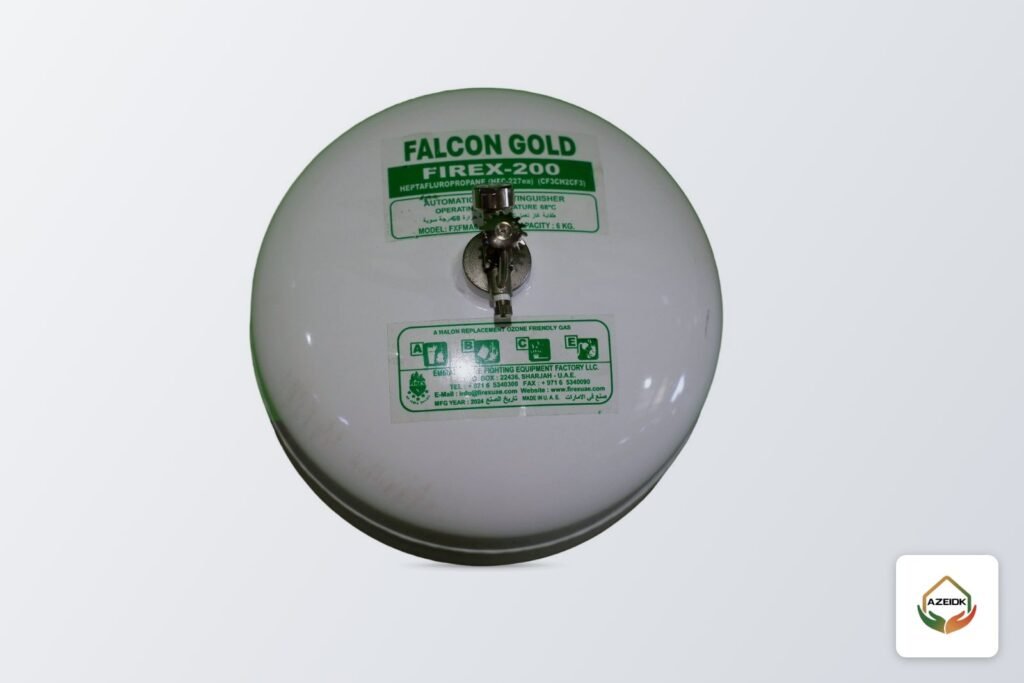
The Saudi site lists seven Falcon Gold models: dry powder in 1, 6 and 50 kg, CO2 in 6 and 10 kg, a 25-litre foam unit and a 6 kg gas unit, alongside other brands. See fire extinguisher types and uses.
3. What does a 6 kg extinguisher mean?
The kilogram figure is the weight of agent, not the total: the Falcon Gold 6 kg powder unit weighs 8.5 kg in total per its datasheet. Two units of the same size can also have different fire ratings. See fire extinguisher sizes.
4. Which extinguisher is used on electrical fires and in server rooms?
CO2 is the usual choice: it displaces oxygen around the flame, leaves no residue and is used on flammable liquids and energised equipment, but it is not relied on for wood and paper fires. See CO2 fire extinguishers.
5. Which extinguisher is right for a commercial kitchen?
A wet chemical unit rated for cooking oil fires (Class K, or Class F in the European system). It cools the oil and forms a soapy layer that seals it from the air. See the kitchen fire extinguisher.
6. What does a rating such as 2-A:10-B:C mean?
It is a UL rating to ANSI/UL 711; European units are rated to EN 3 in a form such as 13A/89B, and there is no official conversion between the two. See UL listed fire extinguisher ratings.
Placement questions
7. How many extinguishers does a floor need?
Under NFPA 10, Class A units are distributed by floor area and hazard and checked against a maximum travel distance of 22.9 m (75 ft); Class K units sit within 9 m (30 ft) of the cooking hazard. See the NFPA 10 guide.
8. At what height is an extinguisher mounted?
Units up to 18.14 kg gross weight are mounted with the top no higher than 1.53 m, heavier units no higher than 1.07 m, with at least 102 mm clear below. See the fire extinguisher sign and mounting.
9. Does a fire extinguisher ball replace a portable extinguisher?
No. Buildings need portable extinguishers selected and placed under the Saudi Fire Code (SBC 801) and Civil Defense requirements, with NFPA 10 as the technical reference. See the fire extinguisher ball.
Inspection and maintenance questions
10. How often is an extinguisher inspected and maintained?
NFPA 10 calls for a monthly inspection by trained staff (no more than 31 days apart), annual maintenance by a certified person, and internal examination and hydrostatic testing at type-specific intervals. See fire extinguisher maintenance and recharging.
11. Does a fire extinguisher expire?
A rechargeable unit has no fixed expiry date; it stays in service while it passes maintenance and tests on time. A non-rechargeable unit is removed no later than 12 years after manufacture. See how to read the label and inspection tag.
12. How do I read the pressure gauge?
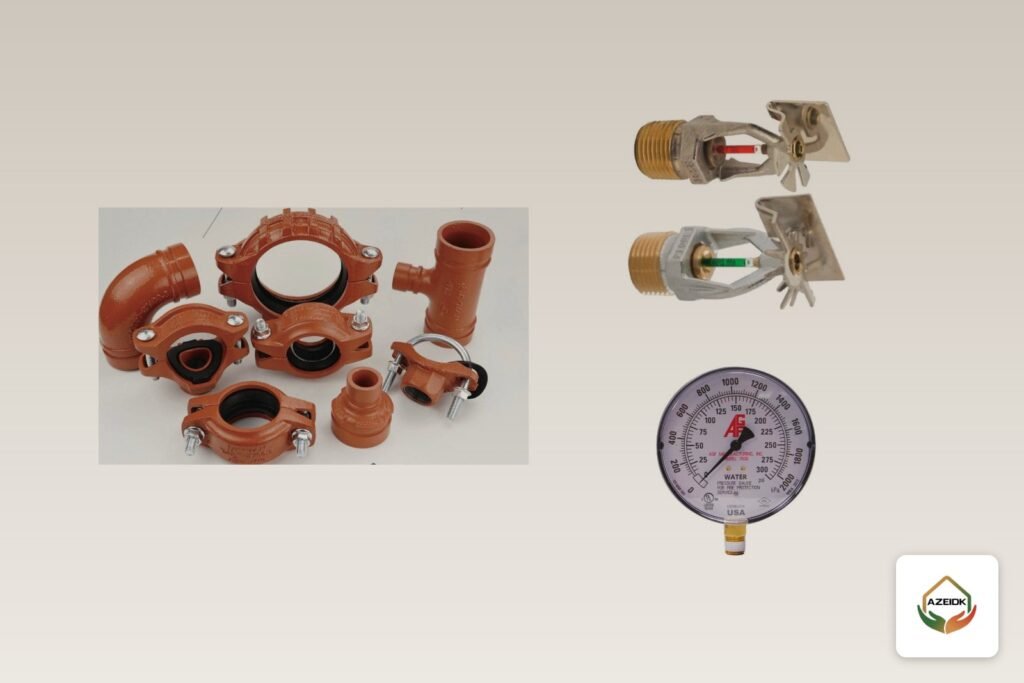
Needle in the green means the unit is charged; left of green means low pressure and right of green means too high, and in both cases the unit needs a technician. See the fire extinguisher pressure gauge.
13. What do the colour bands on an extinguisher mean?
Under EN 3 practice the body stays red with a small band showing the agent: cream for foam, blue for powder, black for CO2, yellow for wet chemical and green for clean agents. US practice does not use the band. See the fire extinguisher colour code.
Use and cost questions
14. How do I use a fire extinguisher?
Follow PASS: Pull the pin, Aim at the base of the flames, Squeeze the handle and Sweep from side to side until the flames are out, keeping an exit behind you. See how to use a fire extinguisher.
15. What sets the price of a fire extinguisher?
Not weight alone: the agent, capacity and fire rating, the approval mark, the cylinder and valve build, a valid SABER certificate, the maintenance and recharging cost over the unit’s life, and the quantity and scope of supply. See fire extinguisher price factors.
Frequently asked questions
Is one extinguisher type enough for the whole building?
Rarely. Offices may suit multipurpose powder, while kitchens need wet chemical and electrical rooms CO2 or clean agent, so the selection follows the hazard in each area.
Who can recharge and test extinguishers?
Annual maintenance and recharging need a certified person, and hydrostatic testing needs trained and certified people, usually under a maintenance contract with tags and records.
Need extinguishers for a shop, office or facility? Tell us the activity, the area and the number of floors, and the AZEIDK team will propose the types, sizes and quantities and handle supply and maintenance. Request a quote from AZEIDK
Related guides
- Fire Pump Replacement: When Repair Is Enough, When You Need a New Pump, and the Assessment and Commissioning Steps
- Civil Defense Readiness Platform: What It Is, Who Uses It and How It Relates to Salamah
- Hot Work Permits in Running Facilities: Welding and Cutting Indoors, Fire Watch and Checklist
- Fire Pump Calculation: Flow, Pressure, the 150%/65% Curve and Jockey Pump Sizing per NFPA 20