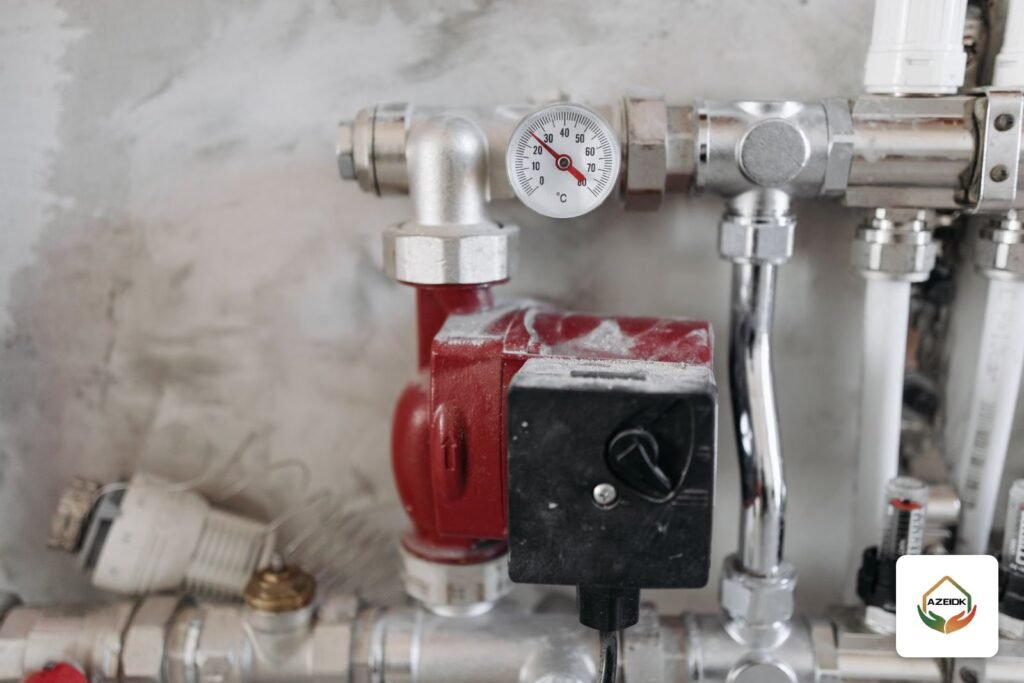
Fire system maintenance for sports clubs means a periodic inspection and testing programme covering fire alarm, fire fighting networks, fire pumps, hose cabinets and extinguishers across every club building: indoor halls, pools and their plant rooms, spectator stands, offices and restaurants. A sports club differs from an ordinary building because it has several buildings and its occupancy swings between a normal day and a match day, so the maintenance schedule is built around that.
For what any contract should cover before you sign, see our fire system maintenance contract guide for Saudi Arabia.
This article covers what a maintenance contract includes for a sports club, how inspection is split across facilities, reference frequencies in NFPA standards, and what to record for inspections and licence renewal. AZEIDK provides preventive and periodic maintenance for fire systems, and sector solutions are on the gyms and sports facilities page.
Key takeaways
- The fire system contract covers alarm, fire fighting, pumps, hose cabinets, extinguishers and special suppression; CCTV and low current sit in a separate contract.
- Split the club into facilities, each with its own checklist: halls, pools, stands, kitchens, pump and electrical rooms.
- Schedule visits away from matches and events, and add a full inspection before the season or a tournament.
- Every visit ends with a report, defects and corrective actions, and an updated maintenance log for inspections and licence renewal.
- Reference frequencies come from NFPA 25, NFPA 72, NFPA 10 and manufacturer instructions, per the edition the authority adopts.
In this article
- What does a sports club fire maintenance contract include?
- Splitting inspection across club facilities
- Fire system maintenance for sports clubs: reference frequencies
- Scheduling visits around seasons and events
- Reports, maintenance log and licence renewal
- Evaluating a maintenance company for your club
- The club’s role between maintenance visits
- Frequently asked questions
- Summary
What does a sports club fire maintenance contract include?
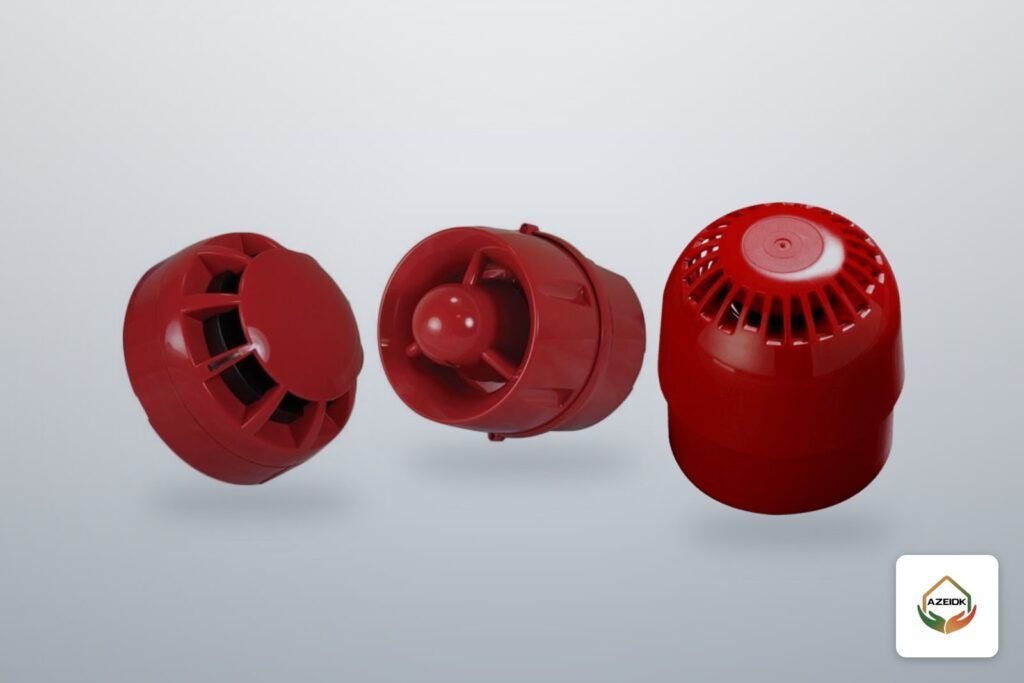
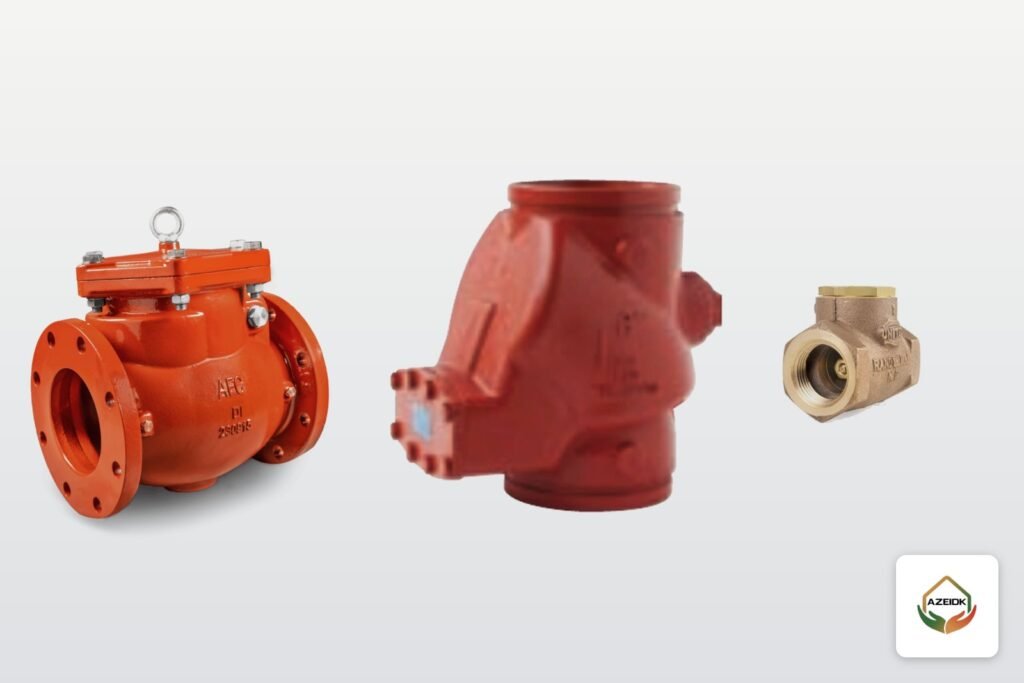
AZEIDK’s preventive maintenance contract covers alarm panels, detectors, manual call points and notification devices; fire pumps, valves, hose cabinets and sprinklers; special suppression systems; and fire extinguisher maintenance by AZEIDK’s own team. A contract can combine preventive and corrective work and either name the spare parts included or cover labour and inspection only.
Clubs should keep contracts clearly separate: one for fire, safety and alarm systems, another for cameras, access control, gates and networks. Mixing them leaves systems without a clear owner. Where another contractor installed the systems, maintenance starts with a site survey to assess their condition.
Splitting inspection across club facilities
| Facility | Common systems | Maintenance watch points |
|---|---|---|
| Indoor halls and covered courts | Beam detectors, sounders and beacons, hose cabinets, sprinklers where fitted | Lift access needed; beam paths clear of newly suspended items |
| Gym floor and class studios | Smoke detectors, extinguishers, manual call points | New equipment must not hide extinguishers or hose cabinets |
| Indoor pool and plant rooms | Detectors suited to humidity, extinguishers in pump and electrical rooms | Humidity effects on devices, enclosures and terminations |
| Stands and spectator areas | Hose cabinets, notification devices, voice evacuation where fitted | Cabinets accessible and not used for storage |
| Restaurants and cafeterias | Kitchen suppression, extinguishers | Service per the system manufacturer, coordinated with hood cleaning |
| Fire pump room | Electric or diesel pump, jockey pump, valves, controllers | Routine runs and recorded pressures |
| External areas | Outdoor fire hydrants | Access on busy days and around temporary parking |
Fire system maintenance for sports clubs: reference frequencies
The inspection plan follows manufacturer instructions, Civil Defense requirements and the NFPA standards adopted in the design. Common examples are below; intervals can change between editions, so check the adopted edition:
| Item | Reference frequency | Standard |
|---|---|---|
| Diesel fire pump no-flow run | Weekly | NFPA 25 |
| Electric fire pump no-flow run | Monthly | NFPA 25 |
| Fire pump flow test | Annual | NFPA 25 |
| Sealed control valve inspection | Weekly | NFPA 25 |
| Locked or electrically supervised valves | Monthly | NFPA 25 |
| Standpipe hose connections | Annual | NFPA 25 |
| Extinguisher visual inspection | Monthly | NFPA 10 |
| Extinguisher maintenance | Annual | NFPA 10 |
| Detector and alarm device testing | Per NFPA 72 tables, mostly annual | NFPA 72 |
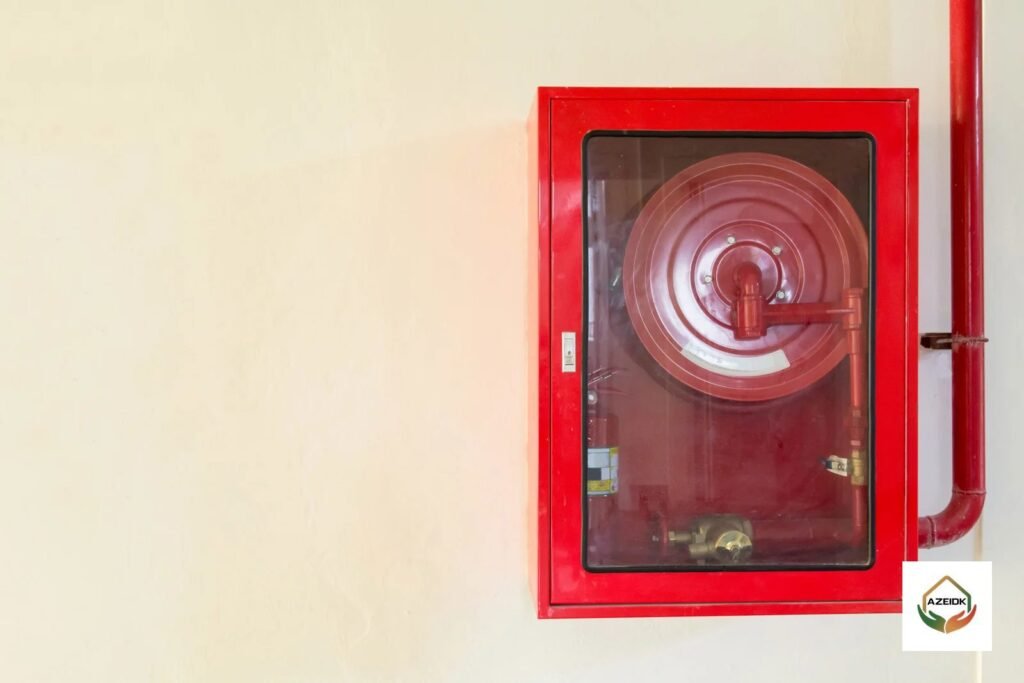
For cabinet checks see fire hose cabinet maintenance, and for extinguishers see fire extinguisher maintenance and refill.
Scheduling visits around seasons and events
A sports club does not run at the same rhythm all year: match days, tournaments, camps and quiet months. So:
- Set monthly visits on days without matches or large events.
- Run a full inspection of all systems and facilities before the season or before hosting a tournament.
- Coordinate work that needs a lift inside halls, such as beam detectors, with class and training schedules.
- When any part of a system is isolated during maintenance, inform club management and restore it before the technician leaves.
Reports, maintenance log and licence renewal
Each visit produces a report of what was inspected, results, observations and recommended corrective actions, and an updated maintenance log that can be shown at inspections or licence renewal. In a multi-building club, split the report by facility so management knows exactly where defects are. Keep with the log an updated device layout, a list of extinguisher numbers and service dates, and pump test results, so they are easy to retrieve for the authority or when changing maintenance contractor.
Recurring club findings include an extinguisher moved or hidden by new equipment, a hose cabinet used for storage, a detector covered during painting and never uncovered, and a broken call point cover in a play area. Small defects, but they surface at inspection if left.
Faults needing repair or replacement move to corrective maintenance. The difference and how each is written into the contract are in preventive vs corrective fire maintenance.
Evaluating a maintenance company for your club
- Does it provide a written visit schedule per system and per facility?
- Does the report show actual results (pressures, readings, devices tested) or just a signature?
- Does the team know the installed alarm panel and have its software?
- Is emergency response time defined in the contract?
- Does the contract state which spare parts are included and which are not?
For broader comparison criteria see fire maintenance companies in Riyadh.
The club’s role between maintenance visits
Periodic maintenance does not replace simple daily attention from the club’s facilities team. Problems found at inspection often arise between visits, through a changed hall layout, event set-up or small fit-out works.
- Alarm panel: the supervisor checks the display daily and reports any fault or isolated zone at once.
- Corridors and exits: equipment and temporary barriers are never stored in front of hose cabinets, extinguishers or exits, especially on match days.
- Works inside the club: painting, welding or ceiling changes are notified to the maintenance contractor in advance so affected detectors are isolated properly and restored afterwards.
- False alarms: the system is not switched off to avoid alarms during events; the cause, such as stage smoke machines or steam near showers, is found and fixed by correct design.
- Observation log: the club records faults it notices with dates, which helps the technician on the next visit.
This cooperation keeps the log clean at inspection and the systems genuinely ready when needed.
Frequently asked questions
What does a sports club fire maintenance contract cover?
Alarm and detectors, fire pumps, valves, hose cabinets and sprinklers, extinguishers, and special suppression such as kitchen systems where fitted.
Does it cover the club’s cameras and gates?
No. Cameras, access control, gates and networks are in a separate contract from fire systems.
How often are extinguishers checked?
NFPA 10 sets a monthly visual inspection and annual maintenance, alongside manufacturer instructions and authority requirements.
How often is the fire pump run?
Under NFPA 25, diesel pumps run at no flow weekly and electric pumps monthly, with an annual flow test, per the adopted edition.
When should the whole club be inspected?
Before the season or before hosting a tournament or large event, in addition to routine visits.
Does AZEIDK maintain systems installed by others?
Yes, after a site survey to assess the systems and define the scope.
Summary
Sports club fire maintenance works when it is split by facility, scheduled around the season, and every visit ends with a clear report and updated log. For general club requirements see gym fire safety requirements.
Need a fire maintenance contract for your club? Send us the list of facilities and installed systems, and we will arrange a survey and propose a visit schedule and written scope. Contact the AZEIDK team
Related guides
- Prequalification Fire Contractor File: What Owners and Main Contractors Ask For
- Souq Fire Safety: Extinguishers, Wireless Alarms and Shared CCTV for Adjoining Shops
- MOMAH Warehouse Requirements in Saudi Arabia: Fire Safety Clauses and Civil Defense Approval Before Licensing
- KD Industries (KDI) in Saudi Arabia: Fire Sprinkler Pipes