FM-200 questions and answers collected from what data centre managers, consultants and maintenance engineers in Saudi Arabia ask about FM-200 and other clean agent systems: whether the gas is safe for people, how fast it discharges, how it compares with Novec 1230, inert gases and CO2, and how the system is tested and maintained. Each answer is short and links to the detailed article.
See AZEIDK’s special fire suppression systems and the American Fire Control FM-200 system on the Saudi product pages.
Key takeaways
- FM-200 (HFC-227ea) is a clean agent for enclosed rooms that people enter, such as server, telecom and control rooms.
- It works only as a listed system in a tight room, with a correct release sequence and regular maintenance.
- Figures here come from NFPA 2001 and the sources cited in the linked articles; the listed design manual and the approved design are the final reference.
Basic FM-200 questions
1. What is an FM-200 system?
A system that floods a closed room with HFC-227ea, a halocarbon clean agent stored as a liquefied gas. It suits rooms people enter where cylinder space is tight, and leaves no water or residue on equipment. See the FM-200 fire suppression system.
2. Is FM-200 safe for people?
At typical design concentrations, yes: the usual design concentration is about 7%, below the no observed adverse effect level (NOAEL) of 9.0%, and the lowest observed adverse effect level is 10.5%. Occupants still leave the room during the pre-discharge alarm. See is FM-200 safe for humans.
3. How fast does FM-200 discharge?
NFPA 2001 sets a maximum discharge time of 10 seconds for halocarbon agents, so nozzle size, pattern (180° or 360°) and height come from the listed flow calculation. See FM200 nozzles.
4. What is NFPA 2001?
The NFPA Standard on Clean Agent Fire Extinguishing Systems, covering the design, installation, testing and maintenance of halocarbon and inert gas systems. CO2 systems follow NFPA 12 instead. See the NFPA 2001 guide.
Choosing the agent
5. FM-200, Novec 1230, inert gas or CO2?
There is no single best agent. FM-200 and FK-5-1-12 suit occupied rooms with little cylinder space, inert gases suit owners who want zero global warming impact and have room for more cylinders, and CO2 belongs in normally unoccupied hazards because it is lethal at extinguishing concentrations. See clean agent comparison.
6. Is Novec 1230 still available?
Yes. The agent is FK-5-1-12; 3M completed its exit from PFAS manufacturing at the end of 2025, but other companies offer the same agent, and the US EPA still lists it as acceptable for total flooding. See Novec 1230 after 3M.
7. What about the environmental status of FM-200?
HFC-227ea has a global warming potential of 3,220 per the US EPA. Saudi Arabia accepted the Kigali Amendment on 10 September 2025, with its HFC limit starting at baseline in 2028, which owners with HFC-free policies take into account. See fire suppression gases compared.
Room and control questions
8. What is a room integrity test?
A door fan test that measures the room’s leakage area and predicts how long the agent will be held. NFPA 2001 requires the design concentration to be held for at least 10 minutes, or long enough for trained personnel to respond. See room integrity testing.
9. How does the release sequence work?
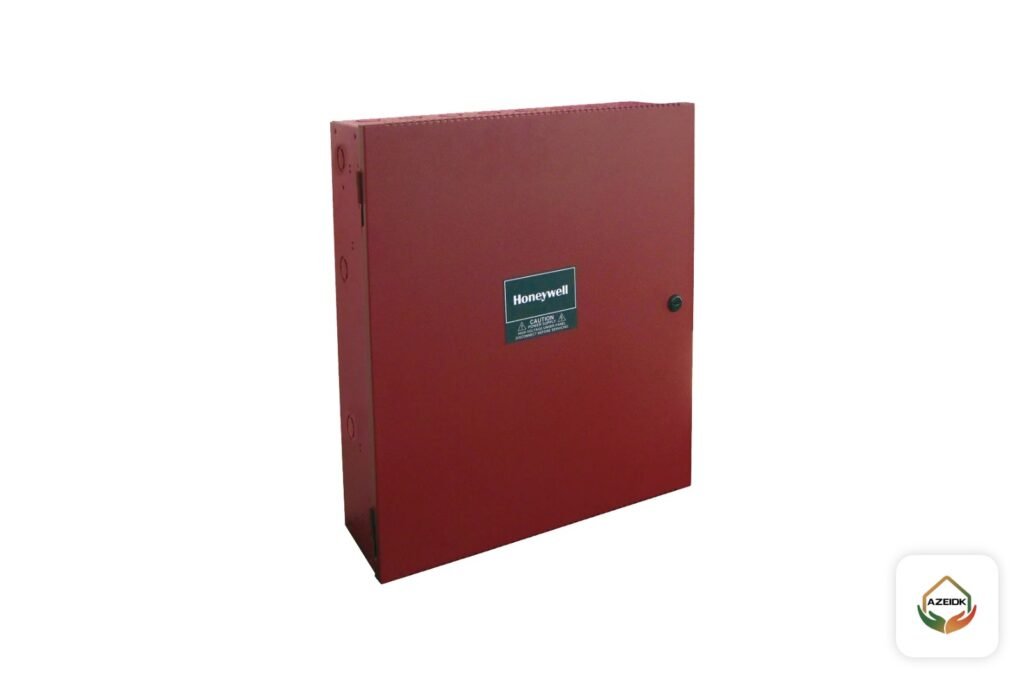
The gas suppression panel starts a countdown after detection, a Hold button suspends it, Abort cancels it, and at the end the release signal reaches the cylinder solenoid. See the gas suppression release sequence.
10. When is a reserve cylinder bank needed?
When the room must stay protected after a discharge. The reserve is a second bank with the same agent quantity on the same network, switched in by a selector; the authority having jurisdiction decides its size. See main and reserve cylinders.
Installation and maintenance questions
11. How is an FM-200 system installed?
In a fixed order: cylinders on brackets, piping and nozzles at the sizes from the listed flow calculation software, then the releasing panel, manual release, abort switch and detectors, then commissioning. See FM200 installation.
12. How often is an FM-200 system maintained?
Under NFPA 2001, agent quantity and pressure are checked at least every six months, with refill or replacement if agent loss exceeds 5% or pressure loss exceeds 10%; the system is tested annually without discharge, the enclosure is inspected annually and hoses are tested every 5 years. See FM-200 system maintenance.
13. How is the agent quantity checked without removing the cylinder?
With a liquid level indicator that measures the height of the liquefied agent inside the cylinder; the reading is converted to weight with the manufacturer’s chart. See the FM-200 liquid level indicator.
14. What do UL 2166 and FM 5600 approvals cover?
A listing covers the complete system as tested: agent, cylinders, valves, piping, nozzles, the flow calculation method and the design manual, not a label on the cylinder alone. See clean agent system approval.
15. Is a portable FM-200 extinguisher enough for a server room?
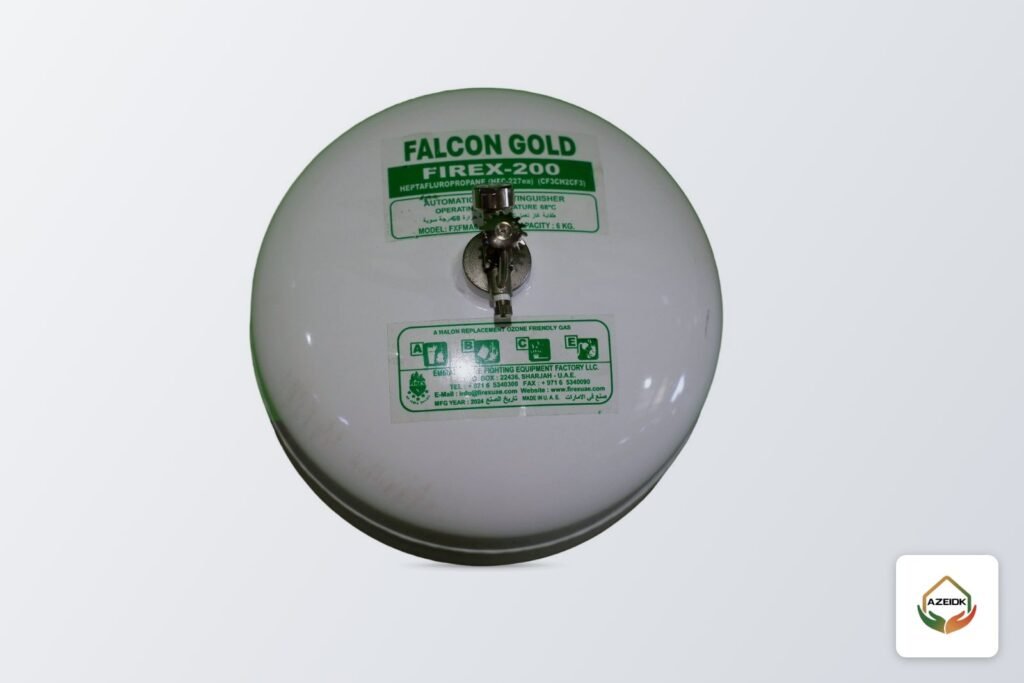
It is a first-response tool for a person in the room; Falcon Gold units run from 1 to 12 kg. A room that needs automatic protection needs a fixed system. See the FM-200 fire extinguisher.
Frequently asked questions
Can the agent quantity be estimated from the room size?
Only as a rough idea. The design quantity comes from the listed system’s design manual, the room volume, temperature and design concentration, checked by a design and calculation review.
What happens after a discharge?
The room is ventilated before re-entry, the cause is investigated, and the cylinders are refilled or the reserve bank is switched in, followed by a recorded test.
Protecting a server, telecom or control room? Send the room dimensions and use, and the AZEIDK team will propose a suitable clean agent system and handle supply, installation, room integrity testing and maintenance. Request a quote from AZEIDK
Related guides
- LPCB Certification: What It Means for Fire Protection Equipment
- Huawei Enterprise Networking in Saudi Arabia: Switches and Wi-Fi Access Points
- Fire System Maintenance Companies in Riyadh: How to Measure Performance and Switch Without a Gap
- Dahua Intercom Door Stations: VTO3311Q-WP and VTO6631 for Villas vs VTO9541D-S3 Face Recognition for Apartment Buildings