A method statement and an inspection and test plan (ITP) are documents most Saudi consultants ask for before fire fighting works start. The first explains how the work will be carried out step by step; the second sets what is inspected, when and who signs. This guide is for contractors and consultants and covers sprinkler networks, pipework and valves. Fire alarm has its own AZEIDK guide: Fire Alarm Testing and Commissioning Method Statement and ITP.
Key takeaways
- The method statement is approved before work starts and relies on approved shop drawings and materials.
- Core content: scope, references, roles, equipment, work sequence, safety, inspection and testing, and records.
- The ITP sets hold points and witness points for every stage.
- The NFPA 13 hydrostatic test for sprinkler systems is normally 200 psi for two hours, or 50 psi above working pressure where that exceeds 150 psi.
- Every point in the plan must close with a signed record that goes into the handover file.
In this article
- Method statement vs ITP: what is the difference?
- When is the method statement submitted?
- Contents of a fire fighting method statement
- The work sequence as written in the method statement
- Inspection and test plan: an example for sprinkler works
- Common reasons a method statement is returned
- How AZEIDK helps
- Frequently asked questions
- Conclusion
Method statement vs ITP: what is the difference?
The method statement describes the work: materials, tools, order of steps and how risks are controlled. The inspection and test plan is a control table: for each activity it gives an acceptance criterion, a reference, the type of consultant involvement and the record that proves the check was made. The ITP is usually attached to the method statement and both are approved together.
When is the method statement submitted?
After shop drawings and materials are approved, and before work starts on site. The consultant reviews it against the approved drawings, so submitting it on unapproved drawings achieves little. Drawing content is covered in Fire Protection Shop Drawings: Content and Approval, and material approval in Material Submittal for Fire and Security Equipment.
Contents of a fire fighting method statement
| Section | What goes in it |
|---|---|
| Purpose and scope | Systems covered (sprinklers, hose cabinets, risers, pump room) and areas or floors |
| References | Project specification, approved drawings with revision numbers, NFPA 13, NFPA 14 and NFPA 20 as applicable, manufacturer instructions |
| Roles and responsibilities | Project manager, site engineer, safety officer, QA/QC engineer and technicians |
| Equipment and tools | Cutting and roll grooving machines, sprinkler wrenches, test pump, calibrated pressure gauges |
| Work sequence | Steps from material receipt to testing, detailed below |
| Safety | Work at height, hot work, pipe lifting, risk assessment |
| Inspection and testing | Reference to the attached ITP |
| Records | Inspection request forms and test reports to be handed over |
The work sequence as written in the method statement
- Material receipt and inspection: an MIR for each delivery, as in Material Inspection Request (MIR) for Fire and ELV Materials.
- Setting out: mark pipe routes, hanger and sprinkler positions from the approved drawings, coordinated with other trades.
- Hangers: types and spacing as approved; see Sprinkler Pipe Hanger Spacing and Supports Under NFPA 13.
- Pipe preparation and joining: cutting and grooving or threading as approved, following the manufacturer’s instructions, as in Grooved Coupling Installation and Roll Grooving.
- Valves and accessories: control valves, flow and tamper switches, test and drain connections.
- Sprinklers: installed with the dedicated wrench and with protective caps kept on until the right stage, as in Victaulic Sprinkler Installation.
- Flushing and hydrostatic test: see Fire Fighting Hydrostatic Pressure Test.
- Operational tests: main drain, inspector’s test and waterflow alarm, as in Sprinkler System Acceptance Tests.
Inspection and test plan: an example for sprinkler works
| Activity | Acceptance criterion | Consultant involvement | Record |
|---|---|---|---|
| Material receipt | Matches approval and certificates | Hold point | MIR |
| Hanger installation | Approved types and spacing | Witness point | WIR |
| Pipe and fitting installation | Approved drawings and manufacturer instructions | Witness point | WIR |
| Hydrostatic test | NFPA 13, no pressure loss and no leaks | Hold point | Test report |
| Ceiling close-up | After test acceptance | Hold point | WIR |
| Operational and alarm tests | Waterflow alarm time and drain readings | Hold point | Contractor’s test certificate |
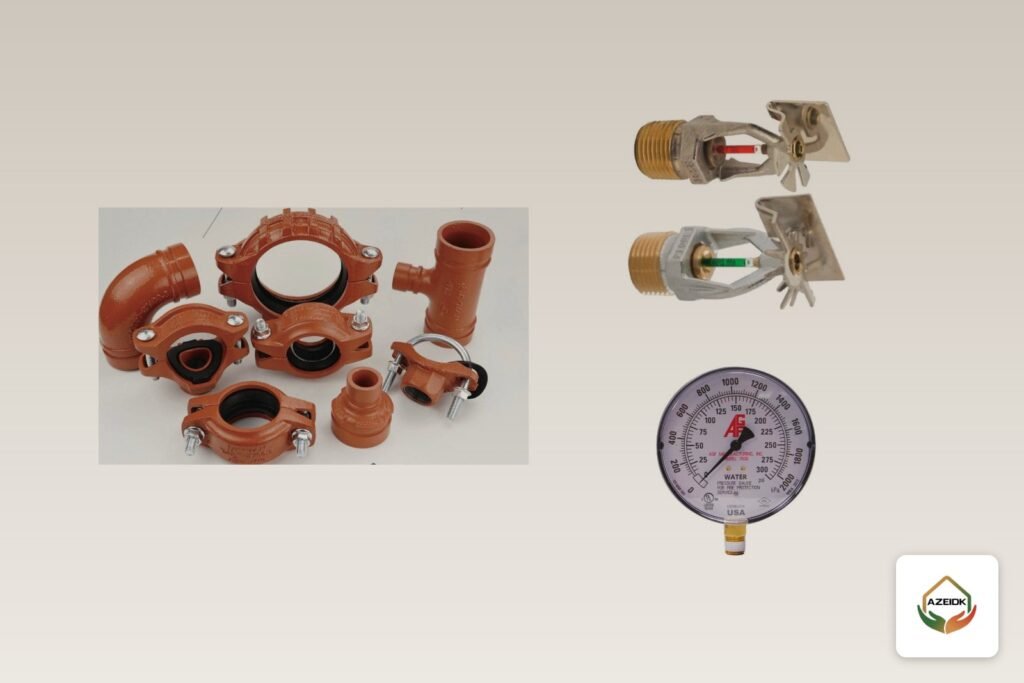
A hold point means work does not proceed without the consultant’s signature. At a witness point the consultant is notified and may attend; work continues if they do not attend at the agreed time. Test gauges must be calibrated, such as the AGF Model 7500 pressure gauge.
Common reasons a method statement is returned
- Generic text copied from another project, without this project’s systems and drawing numbers.
- No risk assessment for work at height and hot work.
- Acceptance criteria not given in numbers, such as test pressure and duration.
- An ITP that does not say who signs each point.
- No coordination with fire alarm for flow switches and valve supervision.
How AZEIDK helps
AZEIDK provides installation and implementation and testing, commissioning and handover for fire fighting systems. The testing service includes written test procedures for each system before work starts, functional test results, and a snag list with retesting after correction. To discuss your project, use the quote request form.
Frequently asked questions
Who writes the method statement?
The fire fighting contractor writes it; the consultant reviews and approves it before work starts.
Is one method statement enough for all fire works?
It is better to separate the larger systems: sprinkler networks, the pump room, fire alarm and special suppression, because their steps and tests differ.
What is the hydrostatic test pressure for a sprinkler system?
Under NFPA 13 it is normally 200 psi for two hours without loss, or 50 psi above the maximum working pressure where that exceeds 150 psi. The approved project specification is the final reference.
What is the difference between a hold point and a witness point?
Work cannot pass a hold point without the consultant’s signature. At a witness point the consultant is invited, and work continues if they do not attend at the set time.
Where are ITP records kept?
In the quality file during construction, then in the handover file, as described in Fire Systems Handover Documents.
Conclusion
A clear method statement and a specific ITP save weeks of correspondence. Write the steps in site language, tie them to the approved drawings, and give every point an acceptance criterion and a record, and final acceptance becomes a natural continuation of what was documented during the work.
Related guides
- Intrusion Alarm Systems: Components, Design and Integration
- Outdoor Motion Detector for Perimeters and Yards: Selection, Placement and False Alarms
- Voice Evacuation in Sports Halls and Covered Arenas: Clarity Against Reverberation, Speaker Layout and Fire Alarm Link
- Fire System Maintenance Contracts in Saudi Arabia: Key Clauses