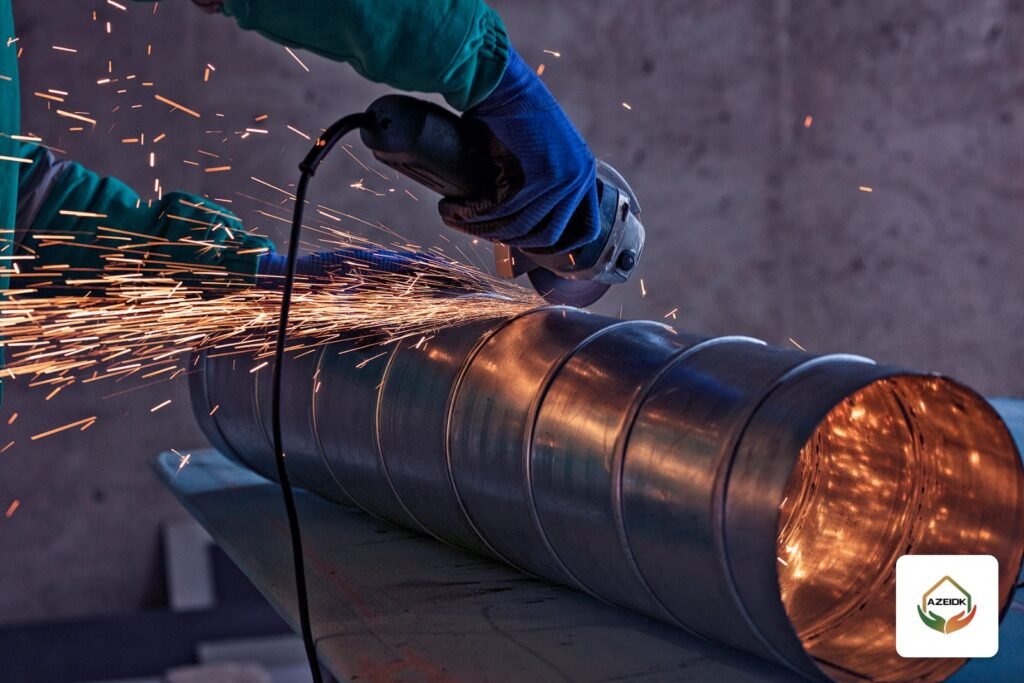
A hot work permit is a short work document a facility issues before any job that produces flame, sparks or heat: welding, oxy cutting, grinding, soldering and torch-applied insulation. It matters most in running facilities such as a mall, factory, hotel or hospital, where a contractor comes in to fix a pipe or fit a bracket while the building is full of people and goods, and the false ceiling above hides cables and insulation.
This guide explains when a permit is needed, who is responsible for what, the checklist before, during and after the work, the role of the fire watch and how alarm detectors in the work zone are handled. AZEIDK carries out fire system work under its installation and execution service and annual maintenance contracts, working under each facility’s permits.
Key points
- The common international reference is NFPA 51B, fire prevention during welding, cutting and other hot work.
- The well-known rule: remove combustibles within 11 m (35 ft) of the work or protect them with fire-resistant covers.
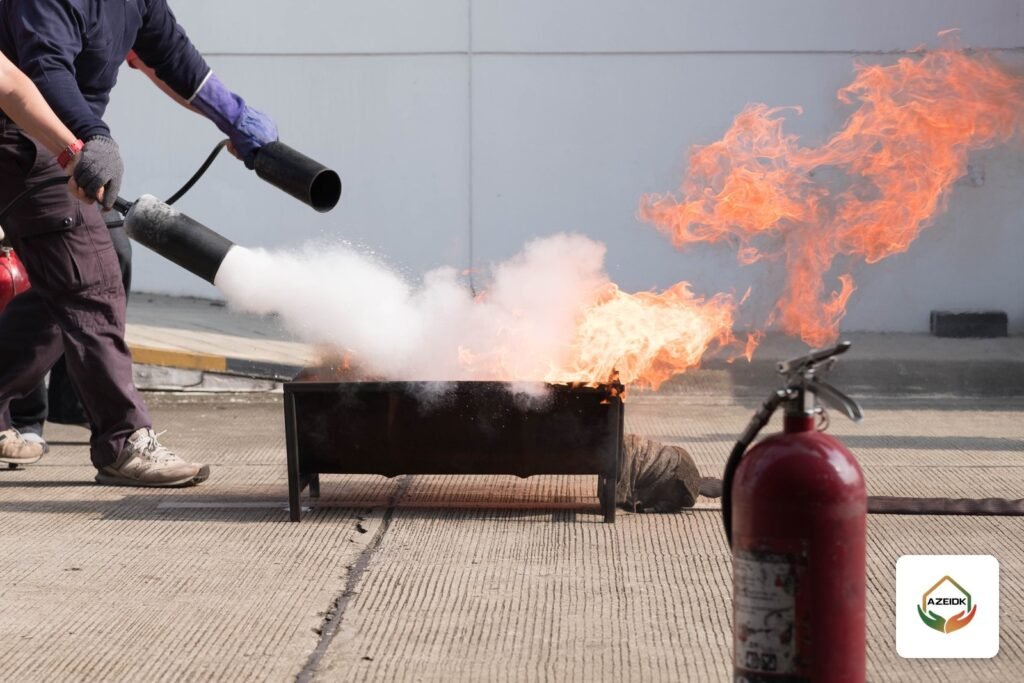
- A fire watch stays during the work and after it for the period the permit sets, with a suitable extinguisher.
- Detector isolation covers the work zone only, for the shortest time, and is restored and recorded.
When is a hot work permit needed?
Any work outside a designated workshop that produces flame or sparks needs a permit, especially in these places:
- Inside shops and mall corridors, during or outside trading hours.
- Above or near false ceilings with cables, insulation and dust.
- In warehouses near racking, cardboard and plastics.
- In kitchens near hoods and grease ducts.
- In electrical and generator rooms and near diesel tanks.
If the job can be done cold, for example with mechanical joints or cold cutting, that is the first choice because it removes the hazard altogether.
Who does what?
| Party | Responsibility |
|---|---|
| Facility safety officer | Inspects the area, issues the permit, sets conditions and duration, and signs the close-out |
| Contractor | Follows the conditions, brings equipment and protective covers, and stays within the set place and time |
| Fire watch | Watches sparks and where they land during and after the work, with an extinguisher and a radio |
| Alarm system controller | Isolates only the detectors needed, restores them and records it |
Checklist before work starts
- Sprinklers in the area are in service with valves open.
- Combustibles within 11 m removed or covered with fire-resistant blankets.
- Openings in floors and walls where sparks could fall through are sealed.
- No flammable vapours or gases, measured where in doubt.
- A suitable extinguisher beside the work; selection in NFPA 10 extinguisher guide, and a wheeled CO2 extinguisher can serve large areas.
- The fire watch named, with a way to reach the control room.
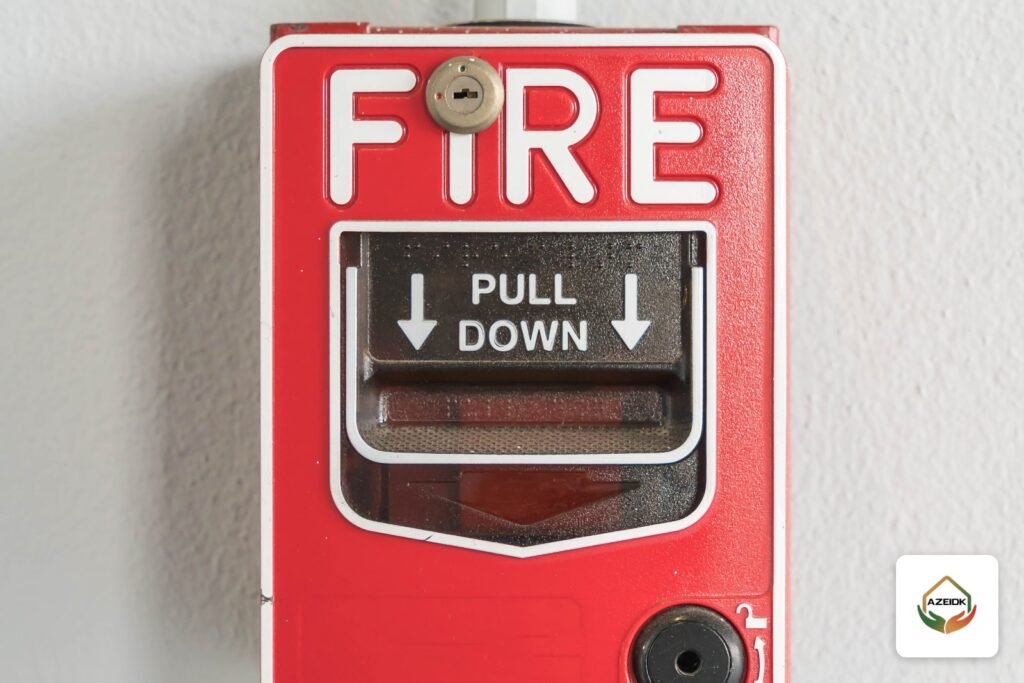
Alarm detectors in the work zone
Welding and grinding fumes trigger smoke detectors, and the answer is not to switch off the whole panel. Only the specific detector or zone is isolated for the duration of the work, security is informed, then it is restored and tested. The right method is in isolating fire detectors during welding. If isolation will be long or cover a large part of the system, apply the fire watch procedure for system impairments.
After the work
Most hot work fires start not during welding but some time after, from a spark that fell into an opening, insulation or cardboard and smouldered. So the fire watch stays after the work for the period set in the permit, checks the area, adjacent spaces and the floor below, then detectors are restored and the permit is signed off. The permit is filed in the fire safety log book.
Frequently asked questions
Does grinding need a hot work permit?
Yes, because it throws sparks that can travel and ignite combustibles, just like welding.
How long does the fire watch stay after the work?
The permit sets it in line with NFPA 51B, facility policy and the nature of the area; the fire watch must not leave before the period ends and the area is checked.
Can the whole alarm panel be switched off during welding?
That is not advisable. Only the specific detector or zone is isolated, and the rest of the building stays protected.
Planning alterations or maintenance in a running facility? AZEIDK carries out fire system work with coordinated detector isolation, restoration and records. Contact AZEIDK
Related guides
- ZKTeco FaceDepot-7B Face Recognition Terminal: Capacity, Recognition Distance, Lock Wiring and the Hikvision Alternative
- Fire System Maintenance Contract Cost in Saudi Arabia: What Drives the Price (Systems, Area, Visits and Spare Parts)
- Fire Alarm False Alarms: Causes and How to Reduce Them
- Hikvision DVR 4 Channel: DS-E04HQHI-B vs DS-E04HGHI-E and Compatible Cameras