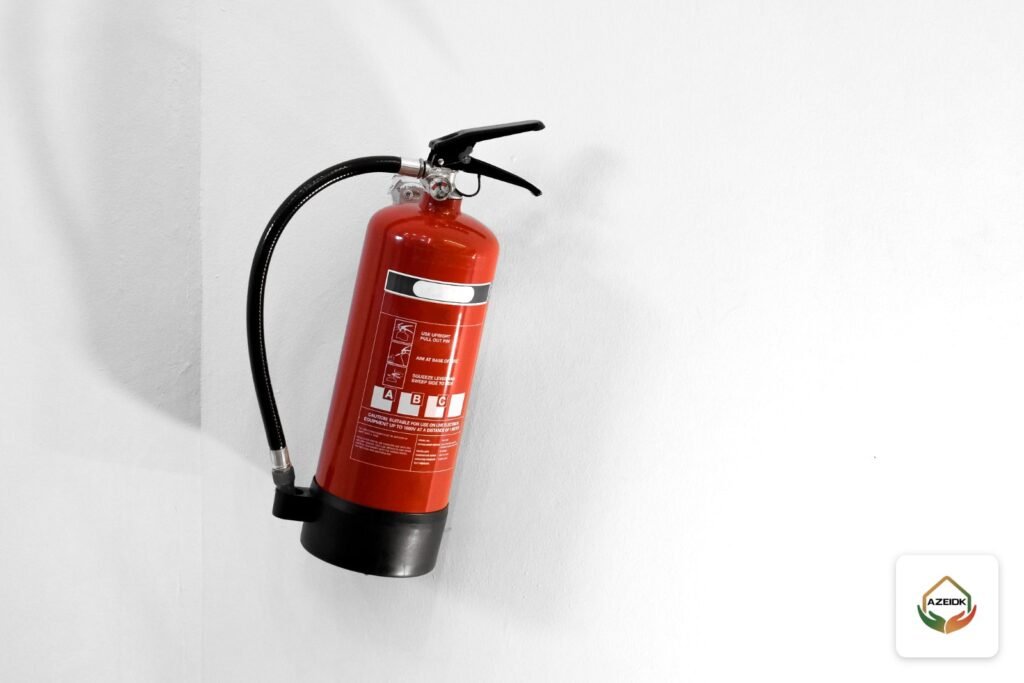
A fire extinguisher ball is not a substitute for a portable fire extinguisher under the requirements applied in Saudi Arabia. Buildings need portable extinguishers selected and placed under the Saudi Fire Protection Code (SBC 801) and Civil Defense requirements, with NFPA 10 as the technical reference, and we found nothing in the published requirements that accepts a ball in their place. The US Consumer Product Safety Commission (CPSC) also warned in 2023 that some extinguisher balls fail to put out fires, and UL has stated that it has not evaluated or certified these balls. This article explains what the ball is, why it does not replace an extinguisher, and what to rely on when equipping your facility.
Key takeaways
- A fire extinguisher ball is thrown into a fire or mounted above a risk; heat breaks it open and it releases extinguishing powder.
- Extinguisher requirements in Saudi Arabia rest on SBC 801 and Civil Defense requirements, with NFPA 10 as the reference for selection, placement and maintenance.
- On 1 June 2023 the CPSC warned that several extinguisher ball brands do not meet UL 299, UL 711 or NFPA 10 and urged consumers to stop using them.
- On 29 April 2022 UL stated it has not evaluated extinguisher balls and that UL marks on some of them are counterfeit or unauthorised.
- The Saudi technical regulation for fire control materials and equipment requires a certificate of conformity before equipment is placed on the market.
In this article
- What is a fire extinguisher ball?
- Does Civil Defense accept a fire extinguisher ball instead of an extinguisher?
- What did the CPSC and UL say about extinguisher balls?
- Extinguisher ball vs portable extinguisher
- What does the Saudi technical regulation for fire equipment say?
- The right alternative: an extinguisher matched to the hazard
- Questions to ask before buying any extinguishing device
- Frequently asked questions
- Conclusion
What is a fire extinguisher ball?
It is a ball roughly the size of a hand, with a light shell filled with extinguishing powder. It is marketed for two uses: you throw it into the fire, or you mount it on a bracket above a likely ignition point so it bursts when flames reach it. The idea appeals to homes, cars and small kitchens because it needs no training in pulling, squeezing and aiming.
Ease of use does not make it approved firefighting equipment. A portable extinguisher is tested against standards that cover agent quantity, discharge time, range and its rating for each fire class. The ball has no known certification standard from the bodies that certify extinguishers, as shown below.
Does Civil Defense accept a fire extinguisher ball instead of an extinguisher?
The practical answer: do not rely on it as a replacement. Fire protection in Saudi buildings is based on SBC 801 and the requirements of the General Directorate of Civil Defense. What they call for are portable extinguishers whose type, number and locations follow the occupancy and hazard, with NFPA 10 used as the technical reference. We cover these basics in our NFPA 10 portable fire extinguishers guide.
We found no mention of extinguisher balls, and no acceptance of them as a substitute, in the published Civil Defense requirements or in the Saudi technical regulation for fire control materials and equipment. So if a facility is preparing for a safety inspection or a safety certificate, what counts is portable extinguishers of the right types and numbers. The certificate steps are covered in our Salamah certificate guide.
If an owner wants to add a ball as an extra item, treat it as an addition on top of the required extinguishers, never in place of them, and check with the authority before counting it toward any requirement.
What did the CPSC and UL say about extinguisher balls?
CPSC warning, 1 June 2023
The CPSC issued Product Safety Warning 23-214 on 1 June 2023 covering several brands of extinguisher balls sold online. It stated that these products can fail to extinguish a fire, which could lead to serious injury and death. The reasons it gave include:
- No pressure gauge or pressure indicator.
- No locking device to prevent accidental discharge, no self-closing valve and no discharge nozzle.
- They do not meet UL 299, UL 711 or NFPA 10, the standards for fire extinguishers.
The CPSC urged consumers to stop using them and to buy only extinguishers certified to UL 299 and UL 711 and marked accordingly.
UL notice, 29 April 2022
UL published notice 22PN-06 stating that extinguisher balls sold by various retailers carry counterfeit UL marks or unauthorised references to UL. UL said it has not evaluated extinguisher balls and does not plan to develop requirements to certify them, and advised keeping a UL certified extinguisher within easy reach.
So any extinguisher ball labelled “UL Listed” deserves suspicion. If you are reviewing supply offers, ask for the certification number and check it in the certifier’s own database.
Extinguisher ball vs portable extinguisher
| Item | Fire extinguisher ball | Portable fire extinguisher |
|---|---|---|
| Technical reference | No known UL certification standard, per UL’s notice | NFPA 10 for selection, placement and maintenance; test standards such as UL 711 for rating |
| Readiness indicator | No pressure gauge, per CPSC | Pressure gauge or indicator on stored-pressure units |
| Discharge control | Bursts once with no aiming | Nozzle or hose and valve to direct agent at the base of the fire |
| Inspection and maintenance | No known periodic inspection procedure | Periodic inspection, maintenance and recharge under the adopted reference |
| Saudi market conformity | Not named in the fire control equipment regulation | Regulation requires a certificate of conformity before sale; its standards include SASO GSO ISO 7165 for portable extinguishers |
What does the Saudi technical regulation for fire equipment say?
The Technical Regulation for Fire Control Materials and Equipment issued by the Saudi Standards, Metrology and Quality Organization (SASO) covers extinguishing equipment, fire pumps, extinguishing agents and their parts. Key points:
- Covered products may not be placed on the market without a certificate of conformity from a notified body.
- Firefighting products must be specifically designed and manufactured for firefighting.
- The listed standards include SASO GSO ISO 7165 for the performance and construction of portable extinguishers and SASO GSO ISO 11602-2 for inspection and maintenance.
- The supplier must provide a user, installation and maintenance manual and a technical file that includes a declaration of conformity.
The regulation excludes fire alarm and firefighting systems, which fall under the fire protection code, while portable extinguishers are within its scope. When buying any extinguishing equipment, ask for the certificate of conformity and the datasheet; do not rely on the label alone.
The right alternative: an extinguisher matched to the hazard
Instead of a ball, choose the extinguisher for the materials present:
- Dry powder extinguishers for general use in many areas; see our powder fire extinguisher guide.
- CO2 extinguishers for electrical rooms and equipment; see our CO2 fire extinguisher guide.
- Foam extinguishers for flammable liquids, and wet chemical extinguishers for cooking oil in commercial kitchens.
- An automatic ceiling-mounted extinguisher where a specific spot needs automatic protection; see our article on the automatic ceiling fire extinguisher.
For a first estimate of extinguisher numbers and placement, use AZEIDK’s fire extinguisher calculator, then review the result with the designer. Falcon Gold and other extinguisher types are listed under fire extinguishers, and extinguisher maintenance is available within our annual maintenance contracts.
Questions to ask before buying any extinguishing device
- Does it have a valid certificate of conformity for the Saudi market?
- Does it carry a certification mark you can verify in the certifier’s database?
- Does it have a clear rating for the fire class (A, B, C or K, depending on the system used)?
- Can it be inspected periodically so you know it is ready?
- Will the consultant or the authority accept it toward the building’s requirements?
If the answer to any of these is no, the device cannot meet a requirement in your facility.
Frequently asked questions
Do fire extinguisher balls work?
The CPSC warned that several extinguisher balls on sale can fail to extinguish a fire, and UL says it has not evaluated them. There is no recognised basis for relying on them as primary firefighting equipment.
Can a shop keep an extinguisher ball instead of an extinguisher?
No. The requirement is portable extinguishers of the right type and number for the occupancy under the Saudi code and Civil Defense requirements. A ball can only be an extra.
Is an extinguisher ball marked UL certified?
According to UL’s April 2022 notice, UL has not evaluated extinguisher balls, and some packaging carries counterfeit or unauthorised marks. Always check the certification number in the certifier’s database.
Does AZEIDK sell fire extinguisher balls?
No, AZEIDK does not list extinguisher balls among its products. AZEIDK supplies portable extinguishers of all common types, automatic extinguishers and extinguisher maintenance.
How is an extinguisher ball different from an automatic ceiling extinguisher?
An automatic extinguisher is a pressurised container of agent with a head that operates at a set temperature, mounted above the protected spot. The ball is a shell that bursts from heat or impact, with no pressure gauge or valve, per the CPSC.
How do I know an extinguisher is compliant in Saudi Arabia?
Ask the supplier for the certificate of conformity issued under the fire control materials and equipment regulation, the datasheet and a certification mark you can verify.
Conclusion
A fire extinguisher ball is a simple idea, but it does not replace a portable extinguisher under Saudi building requirements, and both the CPSC and UL have warned about it. Equip your facility with extinguishers suited to the hazard, placed correctly, inspected regularly and backed by conformity certificates you can verify. Anything else you add should be an extra, not a substitute.
Need the right extinguishers for your facility or a check of their placement? Send your activity type and floor area, and we will suggest the types and numbers. Talk to the AZEIDK team
See the AZEIDK Salamah certificate and Civil Defense licence service.
Related guides
- CCTV Layout Plan: How to Read CCTV Drawing Symbols and Prepare a Shop Drawing
- Are Sprinklers Mandatory? Civil Defense Sprinkler Requirements Under Saudi Fire Code SBC 801
- Fire Extinguisher Bracket (Stand / Holder): Wall, Floor and Vehicle Types and How to Choose by Extinguisher Size
- General Contracting for Factories and Warehouses in Saudi Arabia: Structure, MEP and Fire Systems Under One Contract