The facility manager’s monthly checklist is the visual round the building’s own team carries out every month on fire and security systems, between visits from the maintenance contractor. It does not replace the technical tests a licensed contractor performs, but it catches early what is most often found during inspection visits: a missing extinguisher, a closed valve, a covered detector, a fire door wedged open, or a camera that stopped recording weeks ago.
This checklist covers ten systems in one round, and every item can be checked by a trained staff member without opening any equipment. The full technical tables for weekly, quarterly and annual work are in the fire protection maintenance checklist, and planning visits across the year is covered in the preventive maintenance plan.
Key points
- The monthly round is visual: is the device in place, undamaged, unobstructed, and showing normal status?
- Some items are monthly in the codes themselves, such as extinguisher inspection under NFPA 10 and the emergency lighting test under NFPA 101.
- Every finding is recorded and passed to the maintenance contractor; the facility team does not try to repair suppression equipment or alarm panels itself.
- Salamah licence renewal needs a valid maintenance contract with a licensed company, and a monthly round makes the contractor’s visit faster and clearer.
In this article
- How to organise the round
- 1. Fire alarm system
- 2. Sprinkler system
- 3. Fire pump
- 4. Fire extinguishers
- 5. Fire hose cabinets
- 6. Emergency lighting and exit signs
- 7. Kitchen hood suppression
- 8. FM-200 gas suppression
- 9. CCTV system health
- 10. Access control
- After the round: what to do with the findings
- Frequently asked questions
How to organise the round
- Fix one day each month and one person responsible for the round.
- Use a building layout with numbered extinguishers, hose cabinets, valves and panels.
- Print the checklist below or turn it into a phone form, with a photo field for each finding.
- Start at the fire alarm panel room and the pump room, then the floors from top to bottom, then kitchens, server rooms and car parks.
1. Fire alarm system
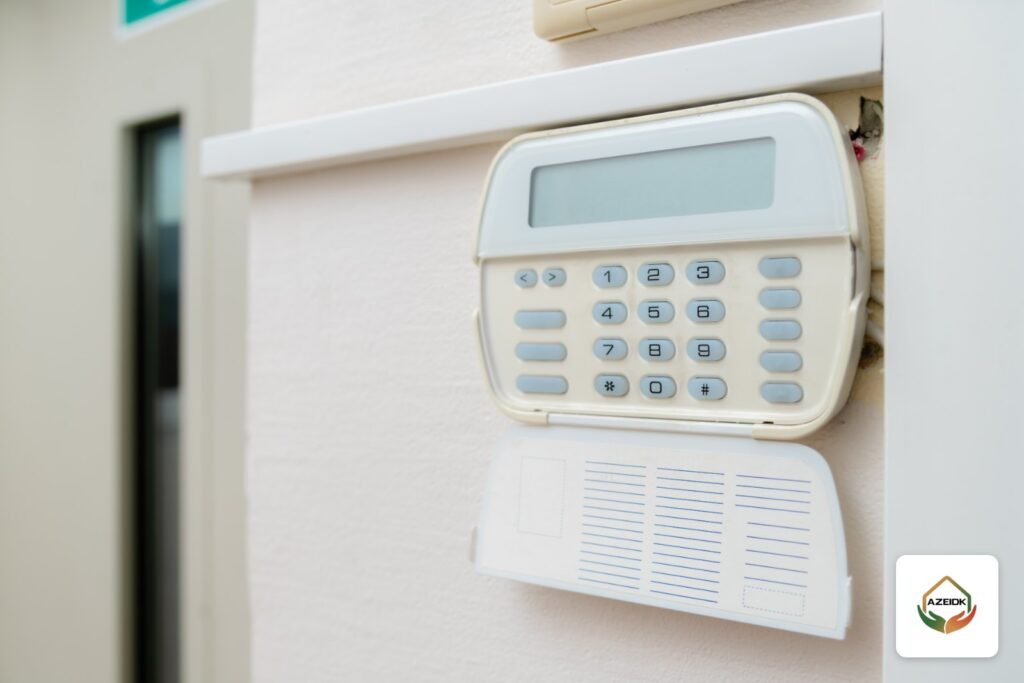
- The panel shows normal, with no fault or supervisory messages and no disabled zones without a recorded reason.
- Mains supply and battery indicators are healthy.
- Detectors are not covered with bags, paint or decor, and have not been moved during fit-out work.
- Manual call points are visible, unobstructed and their covers intact.
Technical testing of detectors and sounders under NFPA 72 is the contractor’s job, explained in fire alarm periodic inspection and maintenance.
2. Sprinkler system
- Control valves are open, and sealed valves have intact seals. NFPA 25 calls for sealed valves to be inspected weekly, and locked or electronically supervised valves monthly.
- No sprinkler is painted, covered or has anything hung from it, and none is broken or leaking.
- Clearance below sprinklers is kept, with no storage reaching up close to the heads.
- The spare sprinkler cabinet is in place with its wrench.
Valve inspection and exercising is covered in fire protection valve maintenance.
3. Fire pump
- The pump controller is in automatic mode with no visible alarms.
- Suction and discharge valves are open, with no visible leaks.
- The diesel pump fuel tank is filled as required, and the pump room is clean with working ventilation.
- The run log is up to date: NFPA 25 requires diesel pumps to be run weekly, and electric pumps monthly in most cases.
Details are in electric fire pump maintenance and diesel engine maintenance.
4. Fire extinguishers
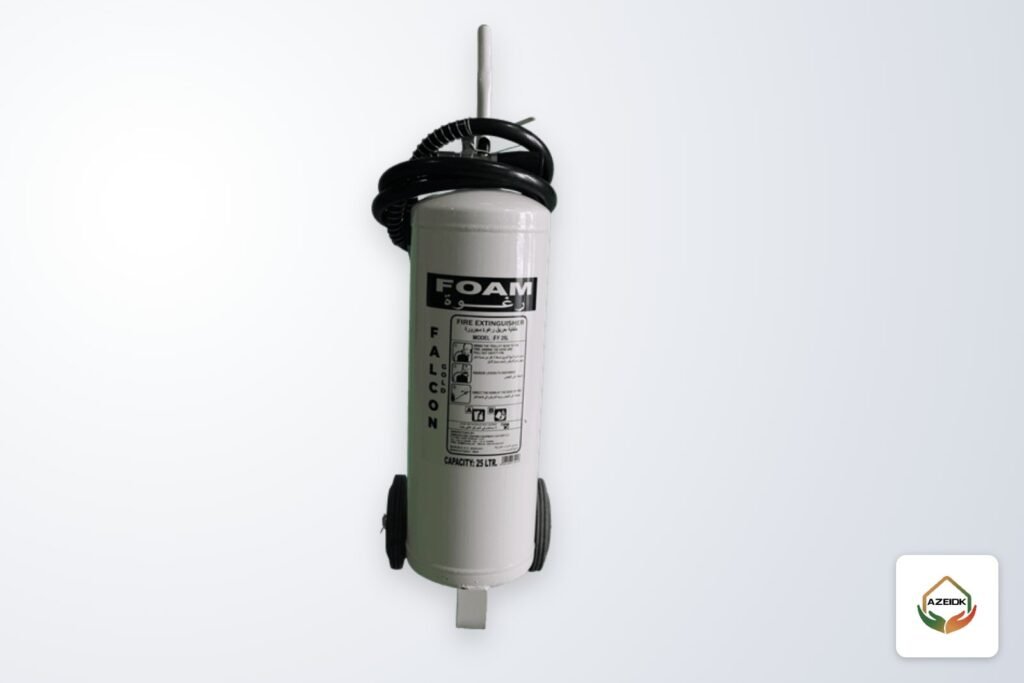
This item is monthly in the code itself: NFPA 10 requires extinguishers to be inspected at intervals of about 30 days.
- The extinguisher is in its designated place, visible and unobstructed.
- The safety pin and tamper seal are intact, and the gauge is in the green zone.
- No rust, damage or blocked hose.
- The maintenance tag is present and in date.
How to read the tag is explained in the extinguisher inspection tag.
5. Fire hose cabinets
- The cabinet is unobstructed, opens easily and its glass or door is intact.
- The hose is racked or reeled in place with its nozzle, and the valve does not leak.
- The sign is visible.
Technical checks are in fire hose cabinet maintenance.
6. Emergency lighting and exit signs
- A monthly functional test of at least 30 seconds under NFPA 101, using the test button or by cutting the circuit.
- Exit signs are lit, readable and their arrows point the right way.
- Escape routes and exit doors are not locked or blocked, and fire doors close by themselves and are not wedged open.
The full checklist is in emergency lighting and exit sign inspection, and fire doors in fire-rated door inspection and maintenance.
7. Kitchen hood suppression
NFPA 17A requires a monthly inspection by the owner or the owner’s representative for wet chemical systems.
- The manual pull station is visible and unobstructed.
- Nozzle caps are in place, and no cooking appliance has been moved from under its nozzles.
- Seals and the cylinder gauge are in order, and the semiannual service tag is in date.
- A Class K extinguisher is in place near the cooking line.
Details are in kitchen fire suppression inspection and maintenance.
8. FM-200 gas suppression
- The control panel shows normal, and the abort and manual release switches are visible and protected.
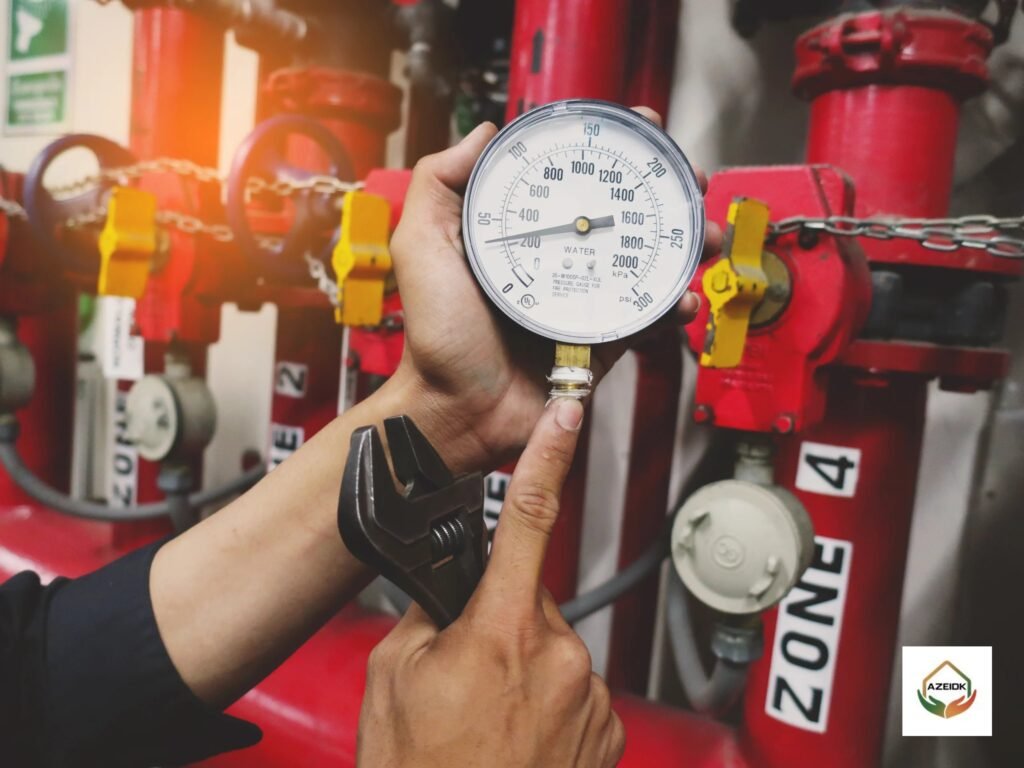
- Cylinder pressure gauges read in the normal range.
- The room is sealed: doors close, and no new openings in walls or ceiling since the last check.
- Warning signs on the doors are in place.
NFPA 2001 requires the contractor to check cylinder weight and pressure every six months, as described in FM-200 system maintenance.
9. CCTV system health
- Every camera shows an image, with no lost channels.
- Recording is continuous and the number of stored days covers the required period.
- Hard drive status is healthy and the recorder time is correct.
- Night images are clear at entrances and car parks.
The detailed list is in the monthly CCTV check.
10. Access control
- Readers work and doors lock and release normally.
- Exit buttons and emergency break-glass units are intact and visible.
- Doors on escape routes release on a fire alarm signal; this function is tested with the contractor.
- No doors are propped open, defeating the system.
Details are in access control system maintenance.
After the round: what to do with the findings
| Finding type | Example | Action |
|---|---|---|
| Urgent | Closed sprinkler valve, faulty alarm panel, pump left in manual | Notify the contractor at once and apply the fire system impairment and fire watch procedure |
| Quick fix | Blocked extinguisher, covered detector, wedged fire door | Corrected by the facility team the same day and recorded |
| Next visit | Maintenance tag close to expiry, weak emergency unit | Added to the contractor’s work order |
The signed checklist is filed in the fire safety log book, where it shows follow-up during inspections and at Salamah licence renewal.
Frequently asked questions
Does the monthly round replace a maintenance contract?
No. The round is a visual check by the facility team; technical tests and repairs are carried out by a Civil Defense-licensed maintenance company under a maintenance contract.
Who should carry out the monthly round?
The safety officer or a facilities technician after simple training on the checklist, with the facility manager signing off the result.
Which items are monthly in the codes themselves?
They include extinguisher inspection under NFPA 10, the 30-second emergency lighting test under NFPA 101, the owner’s inspection of kitchen systems under NFPA 17A and inspection of locked or supervised valves under NFPA 25.
How long does the round take?
It depends on the size of the facility, but a numbered layout and a fixed route make it shorter month after month.
Want your monthly round tied to one maintenance contract for fire and security systems? AZEIDK offers annual maintenance contracts and corrective maintenance for fire alarm, suppression, CCTV and access control systems. Request a quote
Related guides
- Fire Systems Maintenance Contract for Office Buildings and Towers: After-Hours Visits, Fit-Outs and Records
- Dahua Intercom Door Stations: VTO3311Q-WP and VTO6631 for Villas vs VTO9541D-S3 Face Recognition for Apartment Buildings
- Dry Pipe Sprinkler System: Dry Pipe Valve, Air Compressor and Water Delivery Time
- FM200 Calculation for a Room: Formula, Design Concentration, Temperature Factor and Cylinder Size