A fire safety log book is the file a facility keeps to prove that its fire protection systems are actually inspected, tested and maintained. It holds the list of installed systems, maintenance visit reports, test results, faults and the corrective action taken, impairment periods and extinguisher tags. A facility needs it ready for Civil Defense visits and for Salamah licence renewal.
This guide is written for owners, safety officers and facility managers. It covers what goes into the log for each system (fire alarm, sprinklers, fire pumps and extinguishers), how long each record should be kept under NFPA standards, and how a maintenance contractor’s reports support the renewal file.
Key takeaways
- In the official sources we reviewed we found no single published template for the safety log. What is required depends on the activity and on the competent authority.
- A missing safety log was among the violations Civil Defense recorded at cutting and welding workshops, as Al Watan reported in 2021.
- According to NFSA, NFPA 25 makes the owner responsible for keeping sprinkler and water-based system records and sets out what each record must contain.
- Acceptance and initial test records are kept for the life of the system; periodic inspection records for a set period after the next activity of the same type.
- A maintenance contract alone is not enough. Signed visit reports and observations closed with documented action are what support renewal.
In this article
- What is a fire safety log book and why does it matter at a Civil Defense inspection?
- What should a facility’s fire safety log contain?
- Fire system maintenance records: what to log for each system
- Deficiencies and impairments: the part most often neglected
- How long should fire system maintenance records be kept?
- How do maintenance reports support Salamah licence renewal?
- Evacuation drills and training: do they belong in the safety log?
- Common mistakes in fire safety log books
- Frequently asked questions
- Conclusion
What is a fire safety log book and why does it matter at a Civil Defense inspection?
An inspection assesses the condition of the systems on site, but it is wise for the facility to also have evidence ready that these systems are maintained regularly: when they were last checked, by whom, what was found and whether it was fixed. That evidence is the safety log. It can be a paper binder or an electronic system; what matters is that it is organised and available on request.
A missing log can count as a violation in its own right, separate from the condition of the systems. In April 2021, Al Watan newspaper reported that Civil Defense had recorded violations at cutting and welding workshops, including having no safety officer or no safety log. In the official sources we reviewed we found no unified template for the log that applies to every activity, so its content is built on the standards adopted in the system design and on what the competent authority asks for that activity.
If your facility is preparing for an inspection or a licence renewal and you want the file organised and its gaps identified, this is part of AZEIDK’s Civil Defense approval support service. The licensing decision always rests with the competent authority.
What should a facility’s fire safety log contain?
Splitting the log into fixed sections helps the inspector find what he needs quickly and lets the safety officer see the gaps before the visit. The table below is a practical layout we suggest; it is not an official list.
| Log section | Content | Prepared by |
|---|---|---|
| Facility and system data | Current licence and expiry date, list of installed systems with locations and models, safety officer and contact details | Owner |
| Handover documents | As-built drawings, O&M manuals, acceptance test certificates | Installation contractor |
| Maintenance contract and visit schedule | Current contract, scope per system, agreed visit schedule | Maintenance company and owner |
| Inspection and test reports | A signed, dated report for every visit stating what was checked and the result | Maintenance company |
| Deficiency and corrective action log | Each observation, date found, action taken and date closed | Maintenance company and owner |
| Impairment log | When a system or part of it was taken out of service, why, the interim measures and when it was restored | Safety officer |
| Civil Defense observations | Previous inspection reports and how each item was resolved | Owner |
Handover documents have their own article: fire systems handover documents. The point here is that a copy stays in the log for the life of the system, not only in the contractor’s archive.
Fire system maintenance records: what to log for each system
Fire alarm system
Since the 2013 edition, according to Electrical Contractor magazine, NFPA 72 has had a chapter on documentation (Chapter 7) covering the Record of Completion at handover and the record of inspection and testing afterwards. Keep the result of every periodic test of the panel, detectors, manual call points and batteries, plus any change to the panel programming together with its test. The test schedules themselves are covered in our article on fire alarm maintenance.
Sprinklers, water-based systems and fire pumps
According to the National Fire Sprinkler Association (NFSA), NFPA 25 requires records of all inspection, testing and maintenance to be kept. They are the owner’s responsibility and must be made available to the authority having jurisdiction on request. Each record states:
- The activity: inspection, test or maintenance.
- The organisation that carried it out.
- The frequency of the activity.
- The result and the date.
- The name and contact details of the qualified person who performed it.
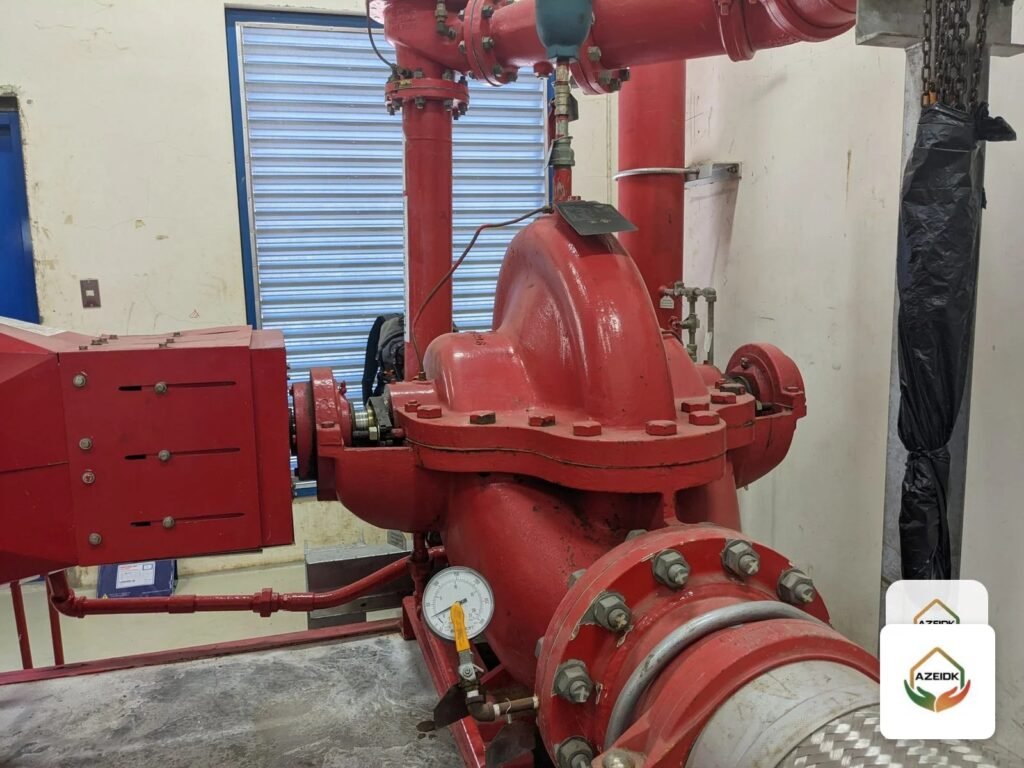
For fire pumps, keep the periodic run log: date, suction and discharge pressure, run time and any observation on the pump, driver or controller. What is checked in each run is explained in our electric fire pump maintenance article.
Fire extinguishers
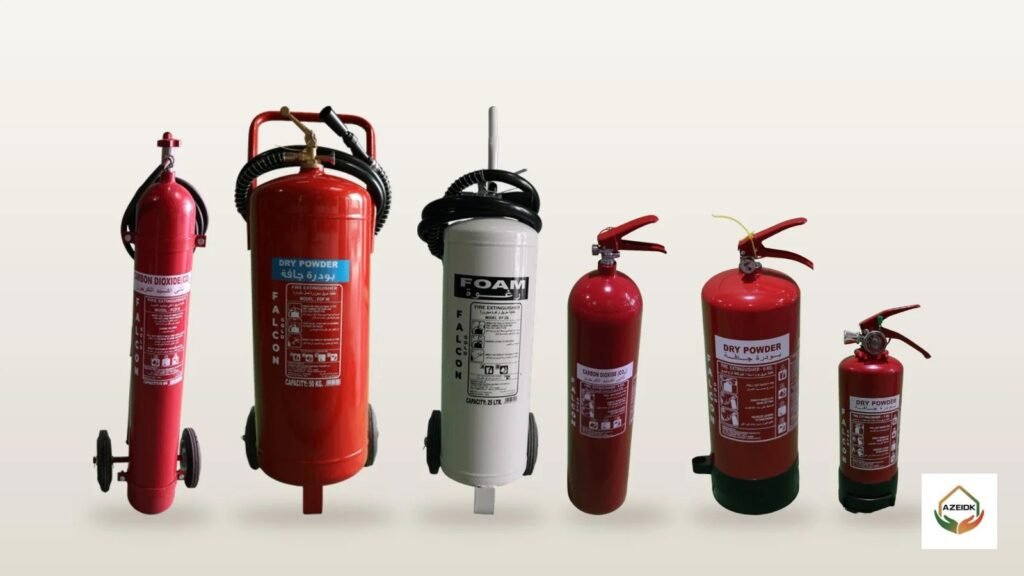
The tag on the extinguisher is part of the record, but it is not enough on its own. NFPA 10, as quoted by ASHE (in a 2018 post that does not state the edition), requires records showing that at least the last 12 monthly inspections were performed. So old tags should not be thrown away when replaced unless another record exists. Monthly and annual checks are covered in fire extinguisher maintenance and recharging.
Deficiencies and impairments: the part most often neglected
A visit report that says “faulty detector on the second floor” with nothing to show it was fixed weakens the file. Give every observation a line in the corrective action log: reference number, date, description, responsible party, action, date closed and the reference of the post-repair test report.
An impairment, meaning a system or part of it taken out of service for maintenance or a fault, is addressed in Chapter 15 of NFPA 25. NFSA summarises what is required: notify the relevant parties, tag the fire department connection and closed valves, apply interim measures or a fire watch where needed, then complete and document acceptance testing before returning the system to service. Log all of this with dates. A valve closed for maintenance and left closed is one of the most serious findings an inspection can reveal.
How long should fire system maintenance records be kept?
The period depends on the type of record. The table summarises what the cited sources report; if the competent authority requires a longer period, that period applies.
| Record type | Retention | Reference |
|---|---|---|
| Acceptance and initial test records, as-built drawings, hydraulic calculations | Life of the system | NFPA 25 (2020 edition, Section 4.3) as reported by NFSA |
| Periodic ITM records for water-based systems | One year after the next activity of the same type | NFPA 25 as reported by NFSA |
| Fire alarm test records | Until the next test and one year after, as FacilitiesNet reports from an earlier edition of NFPA 72 | NFPA 72 (documentation and retention sit in Chapter 7 in recent editions; check the adopted edition) |
| Monthly extinguisher inspections | Evidence of at least the last 12 monthly inspections | NFPA 10 as quoted by ASHE |
An example: an annual main drain test done in 2025 is kept until one year after the 2026 test, that is, until 2027. By the same rule, a five-year test report is kept for about six years, as NFSA points out. In practice, the safest approach is not to discard any periodic report until a year has passed since the next report of the same type, and to keep an electronic copy.
The clause numbers and periods in this table come from the cited sources, not directly from the standards, and they can change between NFPA editions. The reference is the edition adopted in the system design, and whatever the competent authority requires where it differs.
How do maintenance reports support Salamah licence renewal?
According to the Salamah portal guide published by Elm, indirect (high-risk) activities need a contract with an approved safety company, uploaded maintenance contracts and then a Civil Defense inspection. We covered validity, the renewal window and documents in our article on Salamah licence renewal, so we will not repeat them here.
What the safety log adds is proof that the contract was actually carried out. At inspection, the condition of the systems is what is assessed, and a continuous series of visit reports shows that maintenance has been ongoing since the last licence. Three things strengthen the renewal file:
- Complete visit reports on the agreed schedule, without long gaps.
- Observations closed with post-repair test reports, not general photos.
- A match between the systems listed in the contract and what is actually installed on site.
Under AZEIDK’s preventive maintenance contracts, the client receives a report after every visit with results, observations and recommended corrective actions, plus an updated maintenance log that can be presented at inspection or licence renewal. If you received observations after a previous visit, see common Civil Defense inspection notes and how to fix them.
Evacuation drills and training: do they belong in the safety log?
If the facility runs evacuation drills or extinguisher training, or its activity requirements call for them, it is useful to keep those records in the same file: date, number of participants, time taken and observations. These records are prepared by facility management or the training provider. AZEIDK does not provide drills or training; its role in the log is limited to inspection, testing and maintenance reports for the systems.
Common mistakes in fire safety log books
- Relying on the maintenance contract: a valid contract with no visit reports does not prove maintenance was done.
- Leaving reports with the maintenance company: According to NFSA, NFPA 25 makes records the owner’s responsibility. Keep your own copy, especially if you change company.
- Reports without signature, date or technician name: date, performing organisation and the qualified person’s name are part of the record content NFPA 25 lists, according to NFSA, and a signature is good practice that shows accountability.
- Observations left open for months: a faulty detector or an overdue extinguisher with no closure.
- No impairment log: a valve closed for maintenance with no tag and no record of reopening.
- Lost handover documents: they are needed at the first modification or inspection, and recreating them later is costly.
Frequently asked questions
What is a fire safety log book?
A paper or electronic file that brings together the list of fire systems, their inspection, test and maintenance reports, faults and repairs, impairment periods and handover documents, ready to show Civil Defense on request.
Is there an official Civil Defense safety log template?
We found no single published template for all activities in the official sources we reviewed. Follow what the competent authority asks for your activity and base the content on the standards adopted in the system design.
How long should fire system maintenance records be kept?
Handover documents for the life of the system. Periodic water-based system records for one year after the next activity of the same type under NFPA 25, as reported by NFSA. A longer period required by the competent authority takes precedence.
Who keeps the maintenance records: the owner or the maintenance company?
The maintenance company prepares the reports; the owner keeps the records and makes them available to the authority on request, under NFPA 25 as explained by NFSA.
Is the extinguisher tag enough as a record?
The tag is part of the record, but NFPA 10, as quoted by ASHE, requires evidence of at least the last 12 monthly inspections, so keep the old tags or an alternative log.
Is a maintenance contract enough for Salamah renewal?
The contract is required for some activities, but it does not prove system condition. Regular reports and closed observations are what support the file at inspection.
Conclusion
A fire safety log is not a file put together in the last week before an inspection. It is the outcome of documented maintenance visits throughout the year: signed and dated reports, observations closed with clear action, impairments logged from start to finish, and handover documents kept for the life of the system. When the file is kept in order, inspection and licence renewal become a review of what already exists.
Is your facility’s safety log ready for the next Civil Defense visit? The AZEIDK team can review your current file, identify the gaps and organise maintenance reports into a log that is ready to present. Talk to the AZEIDK team
Related guides
- Fire Systems Cost in Saudi Arabia: What Drives the Price
- Dry Powder Fire Extinguishers: ABC vs BC, Where to Use Them and Where Not
- Fire Alarm Supplier in KSA: Distributor vs Supplier vs Contractor and How to Verify Authorization
- Fire System Maintenance Companies in Dammam and Al Khobar: Contracts for Industrial Facilities and Warehouses