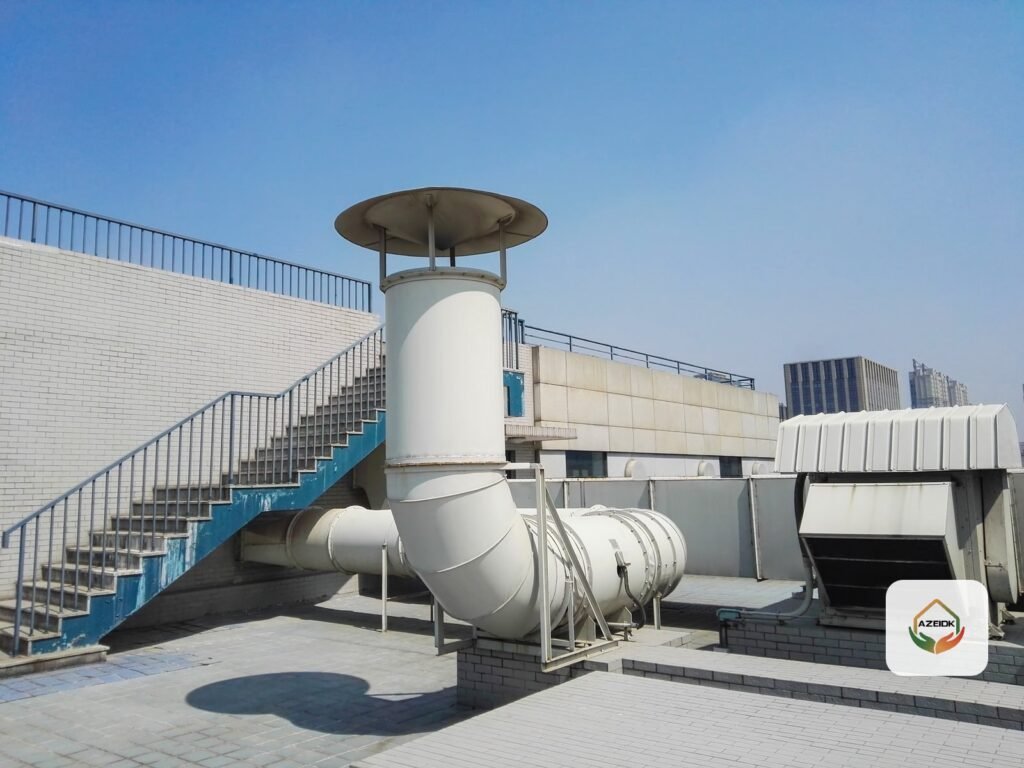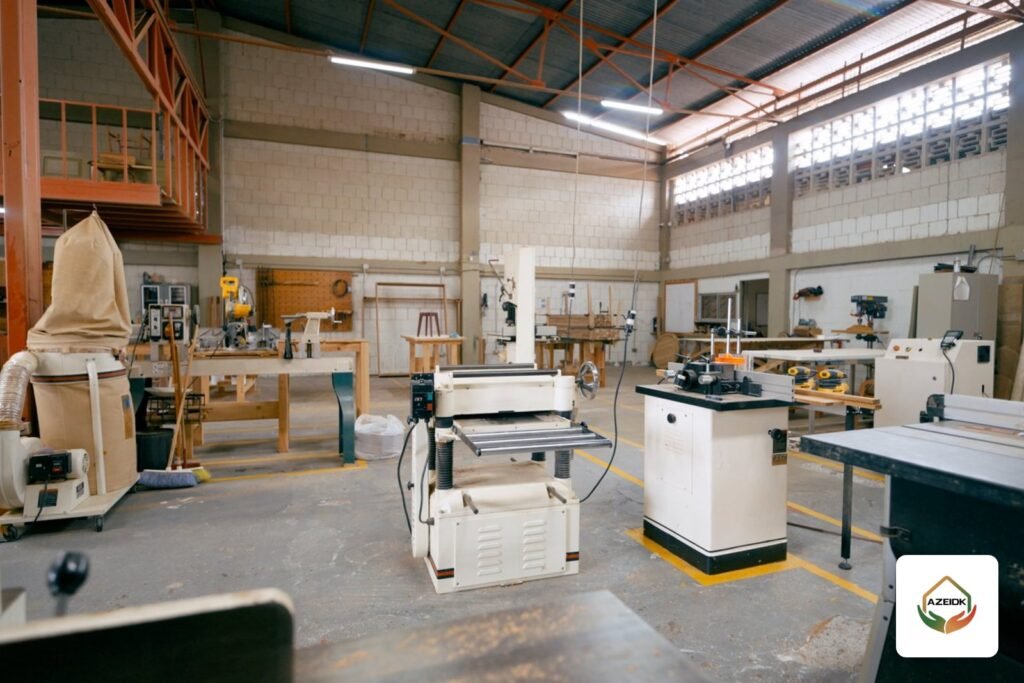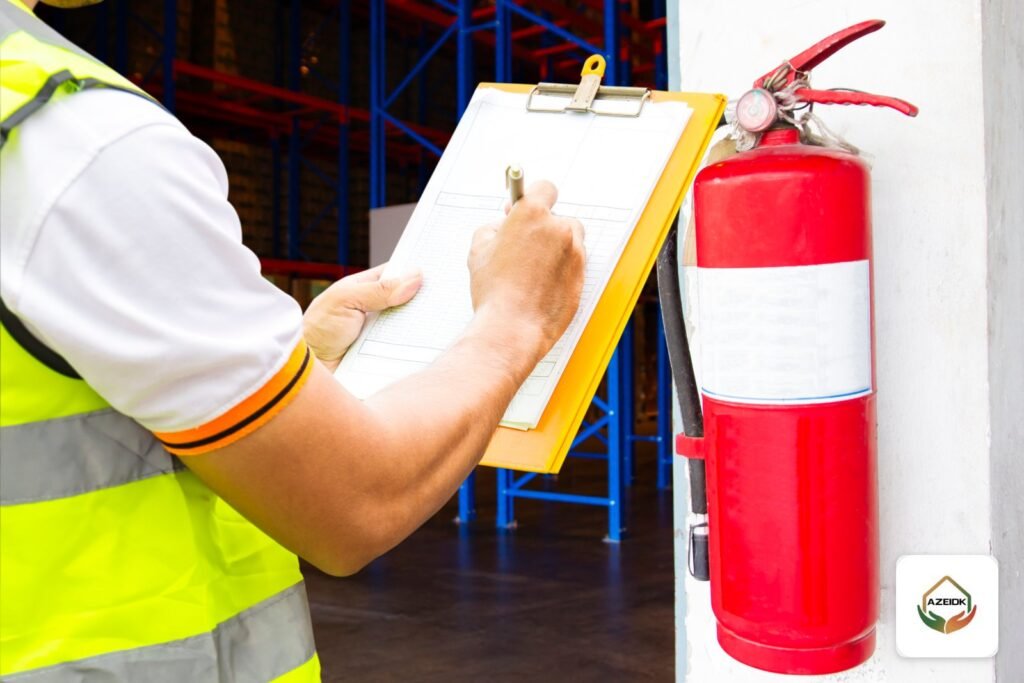
A civil defense inspection is the site visit in which a Civil Defense safety inspector checks that the fire systems and safety equipment in a facility are in place, working and maintained, that emergency exits are clear, and that maintenance records are ready. Good preparation starts at least two weeks before the visit: an internal check of the systems, a complete document file, and a named person to walk the inspector through the building. This article gives a practical list of what is usually checked, a preparation timeline and what to do after the visit. If you need help sorting out the requirements and following the application on the Salamah platform, see AZEIDK’s Civil Defense approval support service.
Key takeaways
- High-risk (indirect) activities on Salamah go through Civil Defense inspection procedures before the licence is issued, after contracting a safety company and providing maintenance contracts.
- The Saudi Fire Code SBC 801 (2024 edition) has sections in Chapter 1 on the duties and powers of the fire official, inspections, maintenance and violations.
- The inspector sees the site as it is on the day: a panel in fault, a blocked extinguisher or a locked exit shows immediately, however tidy the paperwork.
- Keep one file with the licence, maintenance contract, latest maintenance reports, safety equipment installation certificate and evacuation plan.
- Nobody can guarantee the outcome of an inspection; the decision belongs to the authority. Your job is to remove findings before the inspector arrives.
In this article
- When does a civil defense inspection visit happen?
- What does the Civil Defense safety inspector check on site?
- How to prepare for a civil defense inspection: a practical timeline
- The file to show the inspector
- Mistakes we see before and during the visit
- After the visit: findings and violations
- Where AZEIDK helps before the visit
- Frequently asked questions
- Conclusion
When does a civil defense inspection visit happen?
It depends on the activity and its licensing route on Salamah. The Salamah guide published by Elm divides activities into two routes: direct, low to medium-risk activities that Civil Defense licenses directly once the safety tools invoice or technical report data is entered, and indirect, high-risk activities that, according to the same guide, require a contract with a safety company and maintenance contracts, after which Civil Defense inspection procedures start before the licence is issued.
Besides licensing visits, Civil Defense carries out field inspection tours, for example its announced tours of tourist accommodation, commercial sites and public gathering places in Madinah during Ramadan 2024, as reported by the Saudi Press Agency. Readiness is therefore an everyday condition, not preparation for a single appointment.
| Type of visit | When it happens | What matters |
|---|---|---|
| Pre-licence inspection | Indirect (high-risk) activities, after contracting a safety company and providing maintenance contracts | Systems fully installed and running, maintenance contract in place |
| Renewal or amendment visit | May be required when renewing or amending a Salamah licence, depending on the activity route and the authority's decision | Continuous maintenance, site matching the licence data |
| Field tour | As part of Civil Defense field tours of facilities | Daily readiness: exits, extinguishers, fire alarm panel |
For licence types and renewal steps, see Renewing a Salamah Civil Defense licence.
What does the Civil Defense safety inspector check on site?
The table follows the route an inspector usually walks, from the entrance to the plant rooms. It is a practical preparation list, not an official text; the requirements come from the Saudi Fire Code SBC 801 and the Civil Defense conditions for your activity.
| Item | What the inspector notices | What to prepare |
|---|---|---|
| Emergency exits and escape routes | Locked exit, route used for storage, exit signs off | Clear the routes, unlock exits, check emergency lighting and exit signs |
| Fire extinguishers | Blocked or missing unit, broken seal, gauge outside the green zone, outdated tag | Walk every unit against the layout plan; service or replace as needed |
| Fire alarm panel | Faults, disabled zones, weak batteries | Fix the cause of each fault, not just silence it; test a sample of detectors and sounders |
| Sprinklers and fire hose cabinets | Painted or damaged sprinkler, blocked cabinet or missing hose | Remove obstructions, replace damaged sprinklers like for like, check hoses and nozzles |
| Pump room and valves | Pump controller in manual, main valve closed, room used as a store | Return the controller to automatic, confirm valves are open, clear the room |
| Fire department connection | Blocked by cars or goods, missing caps, unclear sign | Keep access clear, fit caps and sign |
| Evacuation plan | No plan board, or one that no longer matches the building | Update the board after any layout change |
| Maintenance records | No recent reports, or reports that do not match the site | Latest maintenance contractor reports and fault log in one file |
These items have a basis in the code: SBC 801 (2024) has Section 906 on portable fire extinguishers, Section 1032 on maintenance of the means of egress, Section 404 on fire safety, evacuation and lockdown plans, and Section 109 on maintenance.
How to prepare for a civil defense inspection: a practical timeline
Most findings recorded on the day could have been caught by an internal walk a few days earlier. Split the preparation into three stages.
Two weeks or more before the visit
- Ask your maintenance contractor for an inspection and test visit with a written report of faults, repairs done and parts needed.
- Check that the site matches the licence data: activity, area and number of floors. If the facility has been extended or its activity has changed, deal with it through a licence amendment request on Salamah before the visit.
- Order long-lead parts early, such as matching sprinkler heads or fire alarm panel batteries.
- Use AZEIDK’s interactive Salamah inspection checklist to record the status of each item.
Two or three days before
- Walk all exits, corridors and stairs and remove any temporary storage.
- Check every extinguisher: seal, gauge, tag, location, mounting height and sign.
- Confirm the fire alarm panel shows normal with no faults or disablements, and the pump controller is in automatic.
- Assemble the paper file and an electronic copy.
On the day
- A responsible person who knows the building and holds the keys to pump rooms, panels and roofs.
- A technician from the maintenance contractor if needed, especially for buildings with fire pumps or special suppression systems.
- No works that impair the systems that day, such as disabling alarm zones for unrelated maintenance.
The file to show the inspector
Documents do not make up for an unready site, but missing ones lengthen the visit and invite findings. Prepare the following as relevant to your activity:
| Document | Issued by | Note |
|---|---|---|
| Salamah licence or application | Civil Defense via Salamah | Printed copy, data matching the site |
| Maintenance contract | Approved safety company | Required for indirect activities per the platform guide |
| Latest maintenance and test reports | Maintenance contractor | Including faults and repairs |
| Safety equipment installation certificate | The installing safety company | Issued after the equipment and systems are installed |
| Technical report | Approved engineering office | For some direct activities |
| Evacuation plan and drawings | Owner or consultant | Updated to the current building |
For organising records and retention, see Fire safety log book and maintenance records.
Note how maintenance contracts are split: one contract covers fire, alarm and safety systems, and a separate contract covers low current systems and CCTV. The Civil Defense file relies on the first one; details are on our preventive and periodic maintenance page.
Mistakes we see before and during the visit
- Silencing the alarm panel instead of repairing it: the fault stays in the panel memory and shows in testing, and the building is left without real protection.
- Buying extinguishers at the last minute without matching the hazard: an extinguisher unsuited to the fire type in that area is still a finding.
- Preparing only the visible areas: the inspector goes into the warehouse, pump room and roof, not just the front.
- Maintenance reports that do not match the site: a report saying all is well while the panel shows faults weakens the whole file.
- No one who knows the building: an escort without keys or system locations makes the visit longer.
After the visit: findings and violations
The result is acceptance, findings to correct, or a violation, as decided by the inspector and the authority. SBC 801 has a section on violations (Section 112). Read each finding as written, classify it as design, installation, maintenance or documentation, fix it and record the repair with photos and test results before resubmitting. We cover these steps in Common Civil Defense inspection notes and how to fix them, and violation types, inquiry and payment in Civil Defense violations and fines.
Where AZEIDK helps before the visit
Under the Civil Defense approval support service, AZEIDK defines what your activity needs after a site visit, provides a requirements list, a gap report and a prioritised remediation plan, prepares the drawings and reports file, submits and follows the application on Salamah, and resolves findings from a previous inspection before resubmission. AZEIDK issues the safety equipment installation certificate for the systems it installs. The Salamah technical report is issued by approved engineering offices, and the licensing decision belongs to the authority and cannot be guaranteed in advance.
Frequently asked questions
What does a Civil Defense inspector check in a shop or facility?
Usually the emergency exits and escape routes, extinguishers, the fire alarm panel, sprinklers and hose cabinets where installed, the pump room and the evacuation plan, followed by the maintenance records. The detail varies with the activity and size of the facility.
Does every facility need an inspection before a Salamah licence?
No. Per the Salamah platform guide, direct low to medium-risk activities are licensed directly using the safety tools invoice or technical report, while indirect high-risk activities go through inspection procedures before the licence is issued.
What is the Civil Defense safety section people refer to?
It is the phrase many people use for the safety function of the Civil Defense directorate in their region. Licence applications, renewals and amendments are submitted online through the Salamah platform.
Which documents should I prepare for the safety inspector?
The licence or Salamah application, the maintenance contract, the latest maintenance reports, the safety equipment installation certificate, the technical report if your activity needs one, and an updated evacuation plan.
Does AZEIDK issue the Salamah technical report?
No. Approved engineering offices issue the technical report. AZEIDK issues the safety equipment installation certificate and prepares, submits and follows the file under its Civil Defense approval support service.
What should I do if the inspector records findings?
Read each finding as written, fix the cause rather than the symptom, retest and document the repair before resubmitting. Check similar items elsewhere in the building so the finding does not repeat.
Conclusion
A civil defense inspection needs no special effort when maintenance is regular. What makes the difference is an honest internal walk before the visit, fixing the causes of faults rather than hiding them, a tidy document file and a person on site who knows the building. After the visit, every finding that is fixed and documented makes the next renewal easier.
Inspection coming up, or findings from a previous visit? Send the facility activity, area and latest maintenance report, and our team will define the gaps and the remediation plan with you. Talk to the AZEIDK team
Related guides
- Fire Pump Parts: Mechanical Seals, Bearings, Diesel Batteries and Filters, and Why Genuine Parts Matter
- Fire System Warranty: Provisional and Final Acceptance vs Maintenance
- CCTV Media Converter: When Remote Cameras Need Fibre and How to Choose
- ZYCOO in Saudi Arabia: SIP Intercom, Network Paging and IP PBX Integration