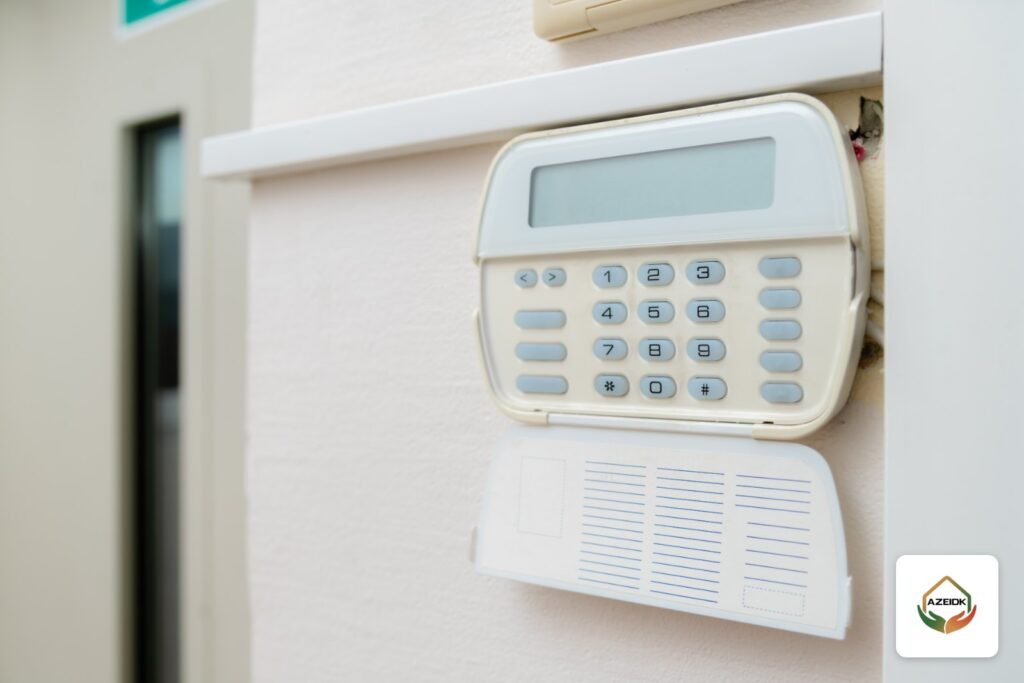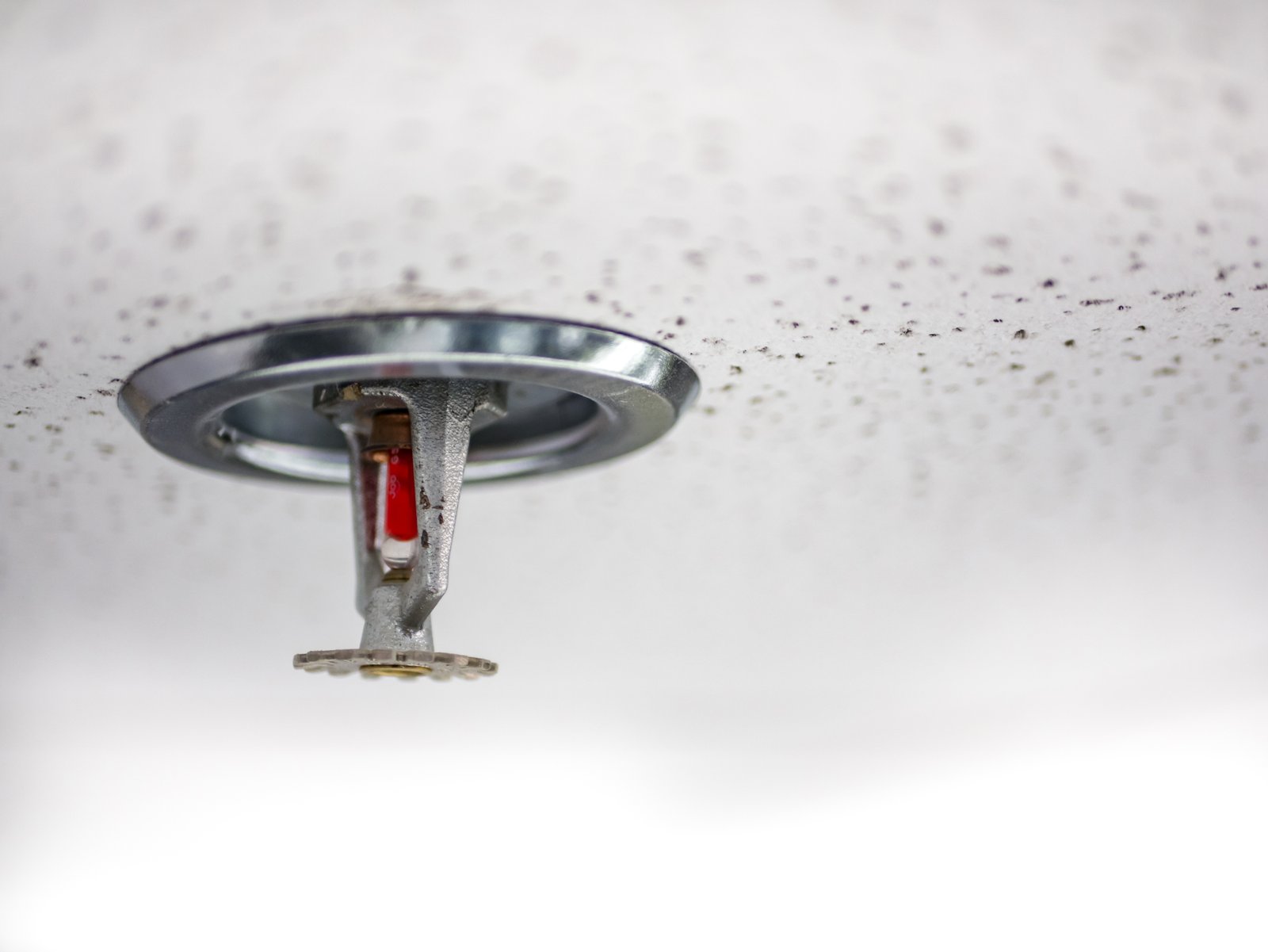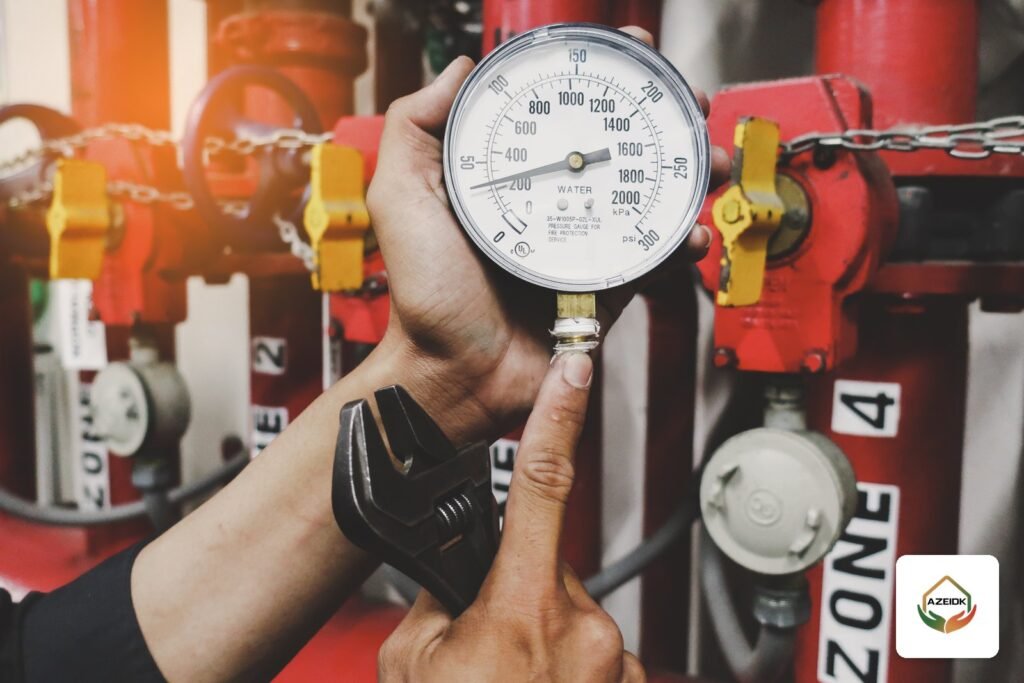
A fire alarm maintenance checklist for a Saudi facility should not stand alone. Fire alarm devices, sprinklers and valves, fire pumps and portable extinguishers each follow their own NFPA schedule: NFPA 72 for alarms, NFPA 25 for water-based systems and NFPA 10 for extinguishers. This page puts all four on one checklist, sorted by system and by frequency, so a facility manager can see what is due each week, month, quarter, half-year and year.
Every frequency below was checked against NFPA committee reports or an authoritative summary; anything we could not verify was left out. Each section links to our detailed guide for that system, and to AZEIDK’s preventive and periodic maintenance contracts, which turn this checklist into scheduled visits with a report for each one.
Key takeaways
- Most fire alarm field devices are inspected every six months and functionally tested once a year under NFPA 72 Chapter 14.
- Sprinkler control valves are inspected weekly, monthly or quarterly depending on how they are secured or supervised, and operated through their full range once a year.
- Diesel fire pumps run weekly; electric pumps generally run monthly, with weekly runs in specific cases. Every fire pump gets an annual flow test.
- Extinguishers are inspected at intervals of no more than 31 days and maintained annually, and the annual tag records who did the work and when.
In this article
- What does Saudi regulation require, and where do NFPA frequencies fit?
- Master checklist: what is due, and when?
- Fire alarm system maintenance checklist (NFPA 72 Chapter 14)
- Fire sprinkler maintenance checklist (NFPA 25)
- Fire pump maintenance checklist (NFPA 25 Chapter 8)
- Fire extinguisher maintenance checklist (NFPA 10)
- Operation and maintenance manual for a fire alarm system: what should it contain?
- From checklist to maintenance contract
- Frequently asked questions
What does Saudi regulation require, and where do NFPA frequencies fit?
The legal reference is the Saudi Fire Protection Code (SBC 801). The 2024 edition of the Saudi Building Code has been mandatory since 30 June 2025, and the General Directorate of Civil Defense enforces it, with safety licences issued and renewed through the Salamah platform. SBC 801 refers to NFPA standards for alarm, water-based systems and extinguishers. The edition that applies is the one the code refers to or the authority accepts, so the maintenance contract should name it.
NFPA frequencies come with tolerance windows. NFPA 25, for example, treats an “annual” task as one done 9 to 15 months after the previous one. Manufacturer instructions and any stricter requirement from Civil Defense or the insurer take precedence over the general schedule.
Master checklist: what is due, and when?
| Frequency | Fire alarm (NFPA 72) | Sprinklers, valves and standpipes (NFPA 25) | Fire pumps (NFPA 25) | Extinguishers (NFPA 10) |
|---|---|---|---|---|
| Weekly | Inspect control equipment not monitored by a supervising station | Inspect unlocked, unsupervised control valves | Pump room inspection; diesel no-flow run of at least 30 minutes | – |
| Monthly | – | Inspect locked control valves; air or nitrogen gauges on dry, preaction and deluge systems (quarterly where monitored); dry pipe valve exterior | Electric no-flow run of at least 10 minutes (weekly in specific cases) | Inspection at intervals of no more than 31 days |
| Quarterly | Inspect flame (radiant energy) detectors | Inspect electrically supervised valves, water pressure gauges, waterflow alarm devices, alarm valve exterior, fire department connection and hose valves; test mechanical waterflow alarms | – | – |
| Semiannual | Inspect smoke detectors, call points, notification appliances, trouble signals and battery date marks; test VRLA batteries | Test vane-type and pressure switch waterflow alarms and valve supervisory signals | – | – |
| Annual | Functional test of the control unit, smoke and heat detectors, call points, notification appliances and transmission equipment | Inspect sprinklers, pipe, hangers and spare sprinklers; main drain test; operate control valves; dry pipe trip test | Flow test at no flow, 100% and 150% of rated flow | Annual maintenance by a certified technician, with a new tag |
| Longer | Smoke detector sensitivity: within one year of installation, then every alternate year | 3 years: dry pipe full-flow trip test. 5 years: internal pipe assessment, gauge replacement or calibration, standpipe flow test | – | 6-year maintenance for stored-pressure dry chemical units; hydrostatic test every 5 or 12 years by type |
Fire alarm system maintenance checklist (NFPA 72 Chapter 14)
NFPA 72 separates inspection (a visual check without operating the device) from testing (operating it and confirming that the panel and outputs respond). Table 14.3.1 sets inspection frequencies and Table 14.4.3.2 sets testing frequencies. We checked these values against the 2022 edition tables as reproduced in the committee’s first draft report for the 2025 edition; confirm them against the edition adopted for your building.
| Component | Task | Frequency |
|---|---|---|
| Control equipment monitored by a supervising station | Inspect fuses, interfaced equipment, lamps and LEDs, primary power | Annually |
| Control equipment monitored by a supervising station | Inspect trouble signals | Semiannually |
| Control equipment not monitored | Same inspection items | Weekly |
| Batteries | Inspect month/year of manufacture marking | Semiannually |
| VRLA batteries | Test temperature, charger, cell voltage and ohmic value | Semiannually |
| Smoke detectors, manual call points, sounders and strobes | Inspect condition, mounting, obstructions, covers | Semiannually |
| Flame detectors | Inspect condition and line of sight | Quarterly |
| Control unit functions and trouble signals | Functional test | Annually |
| Smoke detectors | In-place test with smoke or listed aerosol entering the chamber | Annually |
| Restorable heat detectors, call points, notification appliances | Functional test | Annually |
| Supervising station transmission equipment | Signal transmission and receipt | Annually |
Preventive maintenance for a fire alarm system: the visit itself
A preventive maintenance visit on a fire alarm system starts by notifying occupants and any monitoring station, reviewing the panel event log, and isolating outputs to lifts or suppression per the cause and effect matrix. It ends with every isolation restored, the panel clear, and results recorded by device address. Sensitivity testing does not replace the annual functional test. The full programme, with the reasoning behind each item, is in our guide to fire alarm maintenance and periodic testing under NFPA 72.
Fire sprinkler maintenance checklist (NFPA 25)
For sprinklers, valves and standpipes, the frequencies below follow NFPA 25 (2026 edition) as reflected in the committee’s second revision report, its errata, and current industry summaries. Our NFPA 25 inspection, testing and maintenance guide explains each task and the impairment procedure.
| Component | Task | Frequency |
|---|---|---|
| Control valves | Inspect position and access | Weekly if unlocked and unsupervised; monthly if locked; quarterly if electrically supervised |
| Control valves | Operate through full range and return to normal | Annually |
| Gauges | Inspect; replace or compare with a calibrated gauge | Water pressure gauges quarterly; air or nitrogen gauges monthly, or quarterly where monitored; replace or compare every 5 years |
| Waterflow alarm devices | Inspect; test | Inspect quarterly; test mechanical devices (water motor gongs) quarterly and vane or pressure switch devices semiannually (NFPA 25, 13.2.3) |
| Sprinklers, pipe, fittings, hangers, spare sprinklers | Visual inspection from floor level | Annually |
| Main drain | Flow test and compare with previous results | Annually, or quarterly where supply passes through a backflow preventer or pressure reducing valve |
| Fire department connection and hose valves | Inspect | Quarterly |
| Dry pipe valve | Trip test; full-flow trip test | Annually; every 3 years |
| Internal piping | Internal assessment | Every 5 years |
| Standpipes | Flow test | Every 5 years |
Sprinklers themselves are sample tested or replaced by age and type, starting at 50 years for standard-response sprinklers. Hose cabinets have their own routine, covered in fire hose cabinet maintenance.
Fire pump maintenance checklist (NFPA 25 Chapter 8)
- Weekly pump room inspection: room temperature not below about 4°C (40°F), suction, discharge and bypass valves open, no leaks, gauges reading normally, controller showing power on and no alarms, jockey pump in automatic.
- No-flow (churn) run: diesel pumps weekly for at least 30 minutes. Electric pumps monthly for at least 10 minutes, with weekly runs in specific cases such as certain high-rise buildings, vertical turbine pumps and limited service controllers.
- Annual flow test: at no flow, 100% and 150% of rated flow, recording suction and discharge pressure, speed, and voltage and current on each phase. Degradation of more than 5% from the acceptance or manufacturer’s curve must be investigated.
The full lists are in our electric fire pump maintenance checklist and diesel fire pump engine maintenance guides.
Fire extinguisher maintenance checklist (NFPA 10)
| Level | Interval | Performed by |
|---|---|---|
| Inspection: in place, visible, accessible, gauge in the green, seal intact, full by weight or heft | When placed in service, then at intervals of no more than 31 days | Trained facility staff |
| Annual maintenance per the manufacturer’s service manual | No more than one year | Certified technician |
| Six-year maintenance (emptied and examined) | Every 6 years for stored-pressure dry chemical units that require a 12-year hydrostatic test | Certified technician |
| Recharge | After any use, or when inspection shows the need | Certified technician |
| Hydrostatic test | 5 years for water, foam (AFFF) and CO2; 12 years for stored-pressure dry chemical with mild steel or aluminium shells | Trained and certified tester |
The fire extinguisher maintenance card (inspection tag)
The tag hanging from each extinguisher is the visible record of this programme. Under NFPA 10, the monthly inspection is recorded with the date and the inspector’s name or initials, on the tag, a checklist or an electronic record. The annual maintenance tag shows the month and year, the person who did the work and the name of the service agency. A six-year maintenance label, a verification-of-service collar after recharge, and a hydrostatic test label or cylinder stamp complete the history. A tag alone does not prove the unit is serviceable; the gauge, seal and weight still have to agree with it. Gauge reading, expiry and refilling are covered in our fire extinguisher maintenance and recharging guide.
Operation and maintenance manual for a fire alarm system: what should it contain?
A checklist only works if the technician knows how the system was designed. Chapter 7 of NFPA 72, added in the 2013 edition, lists minimum documentation where it is required by governing codes. A fire alarm O&M file handed over at completion should include:
- a written narrative of the system’s intent and description;
- riser diagram and record (as-built) floor plans showing every device;
- the sequence of operations, as an input/output (cause and effect) matrix or narrative;
- manufacturers’ datasheets and published installation, operation and maintenance instructions, including the owner’s manual;
- battery and notification circuit voltage drop calculations;
- the completed record of completion and acceptance test results;
- a record copy of the site-specific software for software-based panels;
- the periodic inspection and testing requirements, and where records are kept and who can access them.
Our article on fire system handover documents and O&M manuals covers the full handover package, and the fire safety log book guide explains how visit reports are kept for Civil Defense inspections.
From checklist to maintenance contract
A checklist tells you what is due. A contract makes sure it gets done, by whom and with what record. AZEIDK’s preventive and periodic maintenance service covers fire alarm, firefighting and related safety systems under one contract, with extinguisher maintenance carried out by AZEIDK’s own maintenance team. Low current systems such as CCTV, access control, intercom and networks are handled under a separate contract. When you define the scope, list each system, its frequency per this checklist, the NFPA edition adopted, and the report each visit must produce.
Frequently asked questions
How often should a fire alarm system be maintained?
Under NFPA 72, most devices are inspected every six months and functionally tested every year. Unmonitored control equipment is inspected weekly and flame detectors quarterly. VRLA batteries are tested semiannually.
What is on a fire alarm preventive maintenance checklist?
Panel functions and trouble signals, batteries and charger, smoke and heat detectors, call points, sounders and strobes, interfaces to other systems, and signal transmission to any monitoring station, each with its NFPA 72 frequency.
How often should fire sprinklers be inspected?
Sprinklers, pipe and hangers are inspected annually from floor level. Control valves are checked weekly to quarterly depending on supervision, and the main drain is tested at least annually.
How often should a fire pump be run?
Diesel fire pumps run weekly for at least 30 minutes. Electric pumps generally run monthly for at least 10 minutes, or weekly in specific cases. All fire pumps get an annual flow test.
What is written on a fire extinguisher maintenance card?
The month and year of annual maintenance, the person who performed it and the service agency’s name. Monthly inspections add the date and the inspector’s initials.
Do NFPA frequencies replace Civil Defense requirements in Saudi Arabia?
No. SBC 801 and Civil Defense are the binding framework. NFPA frequencies are the technical reference the code points to, applied with the manufacturer’s instructions.
Need a maintenance schedule for your building? Send us the list of systems and equipment on site, and we will propose a preventive maintenance scope and visit frequency based on this checklist. Talk to the AZEIDK team
Related guides
- Factory and Warehouse Networks: Industrial Wi-Fi, Fiber Between Buildings and Network Rooms
- Context Plus Addressable Heat Detectors: Applications and Installation Basics
- Kitchen Fire Suppression System Price in Saudi Arabia: What Drives the Cost (Hood Length, Appliances, Automatic Gas Shut-off) and How to Compare Quotations
- Fire Alarm Maintenance: Periodic Inspection and Testing Under NFPA 72 and SBC 801