Fire protection valve inspection and maintenance comes down to three practical tasks: routine inspection to confirm every valve is open and sealed, locked or supervised; an annual exercise that operates each control valve through its full range and returns it to normal; and testing of the supervisory (tamper) switches and the alarm valve trim. NFPA 25, 2026 edition, sets the frequency of each item according to how the valve is secured.
This article covers OS&Y gate, butterfly, check and alarm valves, their supervisory switches and the visit report, as part of AZEIDK’s preventive and periodic fire system maintenance contracts.
Key Takeaways
- Control valves that are neither locked nor supervised are inspected weekly, locked valves monthly and electrically supervised valves quarterly, per the Chapter 13 table of NFPA 25 (2026).
- Every control valve is operated annually through its full range and returned to normal, and a valve status test follows whenever a riser control valve is closed and reopened.
- Valve supervisory switches are tested semiannually, and a supervisory signal should appear before the handwheel completes two revolutions.
- Alarm valves get a quarterly external inspection and a 5-year internal inspection with their strainers; check valves get a 5-year internal inspection.
- NFPA 25 is a technical reference. The edition that applies to a facility is set by the Saudi Building Code (SBC 801) references and Civil Defense requirements.
In this article
- Why Does Valve Maintenance Start With Valve Position?
- Fire Protection Valve Inspection and Maintenance Schedule per NFPA 25 (2026)
- What Is Checked on a Control Valve Weekly or Monthly?
- Annual Exercise of OS&Y and Butterfly Valves: How Is It Done?
- Testing the Tamper Switch Every Six Months
- Alarm Valve and Trim: What Is Inspected?
- Check Valves: When Are They Opened Internally?
- What Should the Valve Maintenance Report Record?
- Common Mistakes in Fire Valve Maintenance
- Fire Valve Maintenance Within AZEIDK Maintenance Contracts
- Frequently Asked Questions
- Conclusion
Why Does Valve Maintenance Start With Valve Position?
The most dangerous fault in a sprinkler network never shows up in a pressure test: a control valve left closed, or partly closed, after maintenance or alterations. NFPA 25 therefore ties inspection frequency to how the valve is secured open, by one of three methods:
- Sealed: a plastic or wire seal that breaks when the valve is moved. It reveals tampering after the fact but does not prevent it.
- Locked: a padlock and chain, or a lock on the operating arm, so the valve cannot be moved without a key.
- Electrically supervised: a tamper switch sends a supervisory signal to the fire alarm panel as soon as the valve moves away from fully open.
The weaker the securing method, the more often the valve is inspected. A supervised valve is inspected less often because the panel watches it continuously, provided the switch itself is tested.
Fire Protection Valve Inspection and Maintenance Schedule per NFPA 25 (2026)
The frequencies below come from the valve inspection and testing table (Table 13.1.1.2) of the 2026 edition, as quoted in the public input document published by NFPA. They are technical guidance, applied alongside manufacturer instructions and the requirements of the authority having jurisdiction:
| Component | Action | Frequency | Section |
|---|---|---|---|
| Control valve, not locked or supervised (sealed) | Visual inspection | Weekly | 13.3.2.1 |
| Locked control valve | Visual inspection | Monthly | 13.3.2.1.1 |
| Electrically supervised control valve | Visual inspection | Quarterly | 13.3.2.1.2 |
| Control valves | Operation through full range and position check | Annually | 13.3.3.1 |
| OS&Y control valve | Maintenance | Annually | 13.3.4 |
| Riser control valve | Valve status test | Whenever closed and reopened | 13.3.3.4 |
| Valve supervisory switch | Signal test | Semiannually | 13.3.3.5.1 |
| Alarm valve | External inspection | Quarterly | 13.4.1.1 |
| Alarm valve, strainers and restriction orifices | Internal inspection | Every 5 years | 13.4.1.2 |
| Check valve | Internal inspection | Every 5 years | 13.4.2.1 |
| Main drain | Test and compare with previous results | Annually (quarterly in cases the standard defines) | 13.2.2 |
NFPA issued the 2026 edition of NFPA 25 in 2025, and publication does not make it automatically binding in the Kingdom. The maintenance contract should therefore name the edition adopted for the facility, as explained in our NFPA 25 2026 edition news.
What Is Checked on a Control Valve Weekly or Monthly?
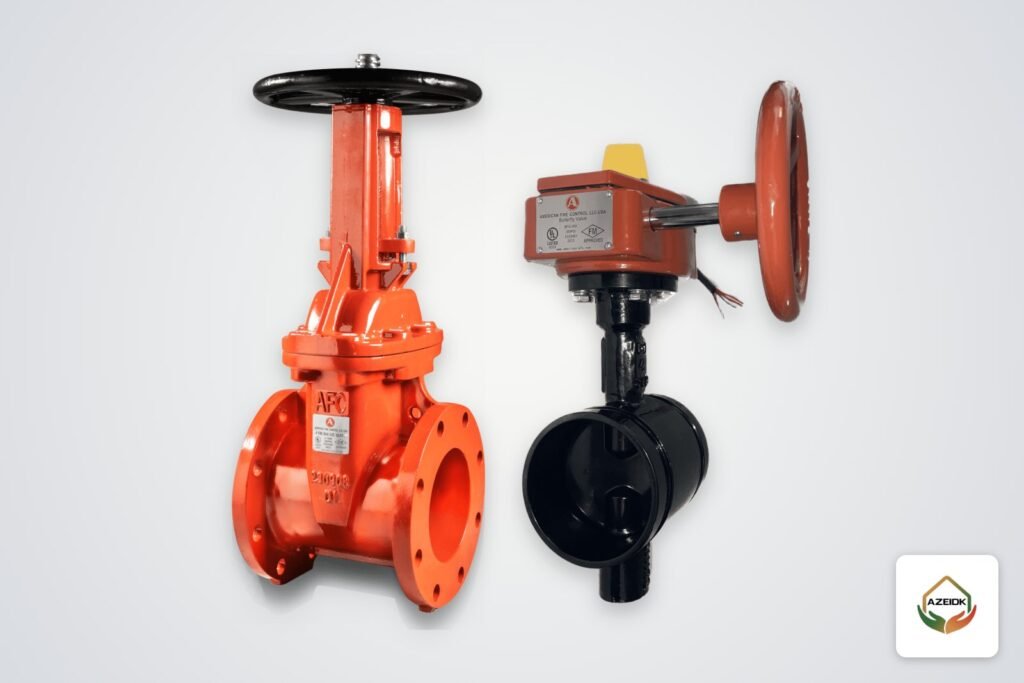
Inspecting an OS&Y, butterfly or post indicator valve (PIV) takes minutes, but it needs a fixed checklist so it does not become a signature in a log. NFPA 25 lists these items:
- The valve is in its normal position, open or closed as designed. On an OS&Y valve the stem shows above the handwheel when open; on a butterfly valve read the gearbox indicator.
- The valve is sealed, locked or supervised, and the seal or lock is intact.
- The valve is accessible, not blocked by storage or fit-out work.
- No external leaks from the packing, flanges or joints.
- An identification sign shows the part of the system the valve controls.
- Post indicator valves have the correct operating wrench.
On a vertical indicator post, the position of the buried valve is read in the window at the top of the post, which shows OPEN or SHUT. The inspection confirms that the reading matches the actual position and that the padlock on the operating arm is in place.
Annual Exercise of OS&Y and Butterfly Valves: How Is It Done?
NFPA 25 requires every control valve to be operated annually through its full range and returned to normal. This valve exercise exposes seized stems, deposits and worn packing before anyone needs to close the valve in an emergency. In practice:
- Notify the owner and the monitoring station, and record the area that will be out of service during the test.
- Close the valve gradually to the end, counting turns and noting any abnormal resistance.
- Confirm the supervisory signal reaches the fire alarm panel during closing.
- Reopen fully, then confirm the panel returns to normal.
- Carry out the valve status test at the riser after reopening, in practice a main drain that proves water actually reaches the downstream side.
- Reapply the seal or lock and record the result.
On a post indicator valve, QRFS’s summary of NFPA 25 notes that the valve is opened until resistance is felt in the rod, which confirms the rod is still engaged with the buried valve stem. The annual OS&Y maintenance, such as stem lubrication and packing adjustment, follows the manufacturer’s instructions in the datasheet or operating manual.
For details of the valves themselves, see our article on AFC OS&Y gate valves and the product pages for the American AFC A-3000 and AG-3000 OS&Y gate valves and the BFG-300 and BFG-301 grooved butterfly valves.
Testing the Tamper Switch Every Six Months
The supervisory switch makes a closed valve visible in the control room. NFPA 25 requires valve supervisory switches to be tested semiannually, and no signal after two revolutions of the handwheel from the normal position is a deficiency to be corrected.
On a Potter OSYSU switch mounted on the yoke of an OS&Y valve, the switch arm sits in a groove on the valve stem when the valve is fully open. During the test the switch must operate within the first two turns toward closing, stay in the off-normal state throughout closing, and restore only after the valve is fully open. These switches are explained in our article on Potter waterflow and tamper switches.
AFC butterfly valves BFG-300, BFG-301 and BFW-300 come with two switches inside the gearbox: a supervisory switch for the panel’s monitoring circuit and an auxiliary switch for a local bell or horn. The panel input is programmed as a supervisory signal, not a fire alarm, so that closing the valve for maintenance does not trigger an evacuation alarm.
Alarm Valve and Trim: What Is Inspected?
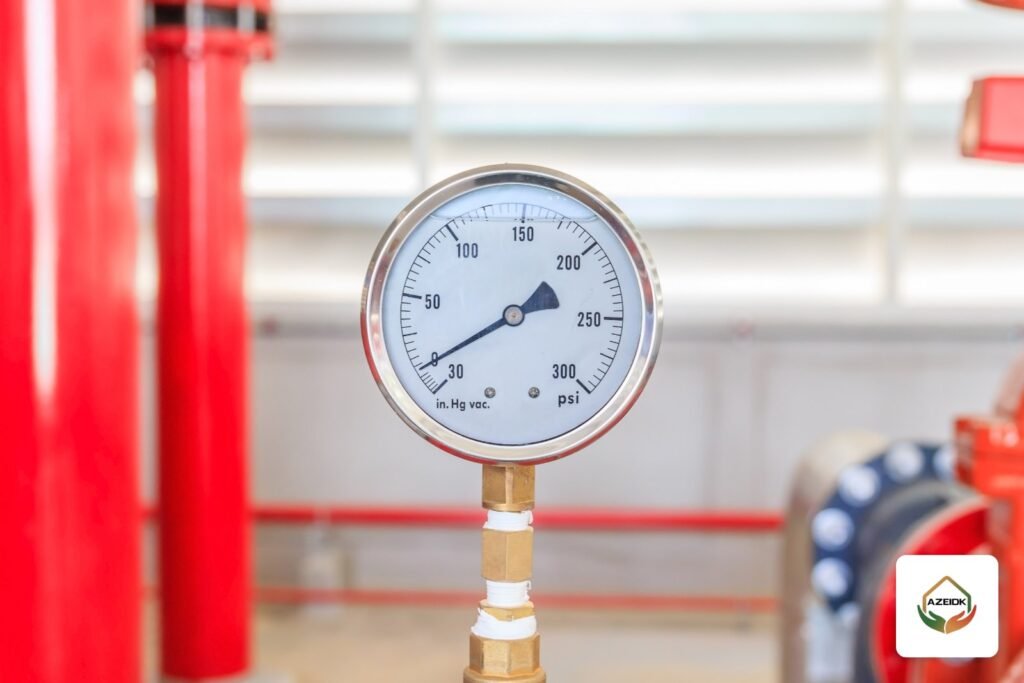
A wet alarm valve at the base of the riser is inspected externally every quarter. Under NFPA 25 the external inspection confirms that the gauges show normal supply pressure, the valve and trim are free of physical damage, the trim valves are in their correct position, and the retarding chamber and alarm drains are not leaking.
On the American AFC ACV-300 alarm valve, the trim includes a retard chamber adjustable from 5 to 60 seconds, a water motor gong, a pressure switch, a bypass line with a check valve, a Y-strainer and pressure gauges. The manufacturer’s manual calls for inspecting the water motor gong every three months and for cleaning the clapper facing, seat ring openings, strainer and retard chamber as part of maintenance.
The internal inspection of the alarm valve, its strainers and restriction orifices is every 5 years, or sooner if tests indicate a problem. The standard also requires gauges to be replaced or calibrated every 5 years. For more on the valve, see our ACV-300 wet alarm check valve article and the ACV-300 product page.
Check Valves: When Are They Opened Internally?
A check valve is not operated by hand, so it is not part of the annual exercise. NFPA 25 requires an internal inspection every 5 years: open the cover, confirm the clapper moves freely, check the facing and seat, make sure the valve is free of debris, then repair or replace parts per the manufacturer’s instructions.
AFC swing check valves come as the flanged A-3150 and the grooved A-3500. Check cover access and spare parts in the project’s approved datasheet and submittal before the visit.
What Should the Valve Maintenance Report Record?
The visit report is what gets presented at a Civil Defense inspection or a Salamah licence renewal, so it must be traceable valve by valve. A useful minimum:
- The number, location, type and size of each valve, matching the asset register.
- The securing method (seal, lock, supervision) and the valve position on arrival and on departure.
- The date of the annual exercise, the number of turns, and any resistance or leakage.
- The supervisory switch result: at which turn the signal appeared, and whether the panel returned to normal.
- Gauge readings at the alarm valve, and the main drain result compared with previous years.
- Dates of the last internal inspection of alarm and check valves, and of the last gauge replacement.
- Findings and required corrective action, and any period when part of the system was out of service.
For reading and comparing main drain results, see our article on the annual main drain test.
Common Mistakes in Fire Valve Maintenance
- Signing off the weekly inspection without looking at the stem or indicator.
- Reopening a valve after maintenance without a valve status test at the riser.
- Programming the tamper switch as a fire alarm, or disabling its point because it gives repeated signals.
- Leaving sealed valves without a seal after the exercise, or locks whose key nobody can find.
- Replacing alarm valve trim, or removing the retard chamber, with parts not approved for that model.
- Postponing internal inspections of alarm and check valves because the system “works”.
- Valves without identification signs, so nobody knows which area a valve isolates.
Fire Valve Maintenance Within AZEIDK Maintenance Contracts
Valves fall within AZEIDK’s fire system maintenance contract, which covers fire, safety and alarm systems only; low current and CCTV maintenance is a separate contract. The visit schedule is agreed per system and scope, and each visit ends with a report of results, findings and corrective actions, plus an updated maintenance log for inspections.
When a valve or component needs replacing, AZEIDK supplies the American Fire Control valves available in Saudi Arabia: OS&Y gate valves, grooved and wafer butterfly valves, swing check valves, the ACV-300 alarm valve and the AFC 5100 vertical indicator post for buried valves. Listing and approval status is checked for each model and size in the datasheet before approval.
Frequently Asked Questions
How often should fire protection valves be inspected?
Under NFPA 25 (2026): weekly for sealed valves, monthly for locked valves and quarterly for electrically supervised valves, plus a full-range operation once a year.
What is the annual fire valve exercise?
Closing the control valve fully, reopening it fully and returning it to normal, to confirm it moves freely and its supervisory switch works, followed by a valve status test at the riser.
How often is a tamper switch tested?
NFPA 25 requires valve supervisory switches to be tested every six months. The signal should appear at the panel before the handwheel completes two revolutions.
When is an alarm valve inspected internally?
Every 5 years together with its strainers and restriction orifices, or sooner if tests indicate a problem. The external inspection is quarterly.
Is a seal enough instead of a tamper switch?
A seal is an accepted securing method, but it raises the inspection frequency to weekly. The method accepted for each facility is set by the design documents and the authority having jurisdiction.
Does a fire maintenance contract cover CCTV?
No. AZEIDK’s fire system maintenance contract covers fire, safety and alarm systems; CCTV and low current maintenance has its own separate contract.
Conclusion
Fire valve maintenance is a short list with a large effect: inspection matched to how each valve is secured, an annual exercise, semiannual switch tests and 5-year internal inspections of alarm and check valves, all recorded valve by valve in the report.
When were your facility’s valves last fully operated? Send us the number of valves, their types and how they are supervised, and we will propose a visit schedule and report format that fits your facility. Contact the AZEIDK team
Related guides
- CCTV Cameras for Restaurants and Cafes: Cashier, Dining, Kitchen, Store and the Law
- Building Compliance Certificate on Balady: Civil Defense and Fire System Tests Before Occupancy
- Fire System Maintenance Companies in Dammam and Al Khobar: Contracts for Industrial Facilities and Warehouses
- Metal Detectors for Facilities: Walk-Through Gates and Handheld Detectors, and Where Each Fits