Civil defense conditions for facilities in Saudi Arabia are not a single list to print and pin up. They follow three stages: before licensing, when systems are designed and drawings approved; at licensing, when systems are installed and inspected; and after licensing, when they are maintained and certificates renewed. Knowing your stage tells you what is needed now and what comes next.
This article covers civil defense conditions along the licensing timeline only, before, at and after licensing, and points to the guides for each activity. AZEIDK supports facilities at every stage through Civil Defense approval support.
Key points
- The binding technical reference is the Saudi Fire Code SBC 801 and SBC 201, plus requirements for the activity.
- Before licensing: occupancy classification, system design and drawing approval.
- At licensing: installation as approved, testing and commissioning, documents through Salamah.
- After licensing: documented maintenance, clear exits, working equipment and on-time renewal.
Where civil defense conditions come from
The technical conditions come from SBC 801, SBC 201 and the requirements of each activity; the systems required by occupancy, area and height are covered in our guide to Civil Defense requirements for buildings and facilities, so they are not repeated here.
See SBC 801 vs SBC 201 vs Civil Defense requirements and occupancy classification in the Saudi Building Code.
Stage one: civil defense conditions before licensing
- Confirm the occupancy classification, since a later change of use can change the required systems.
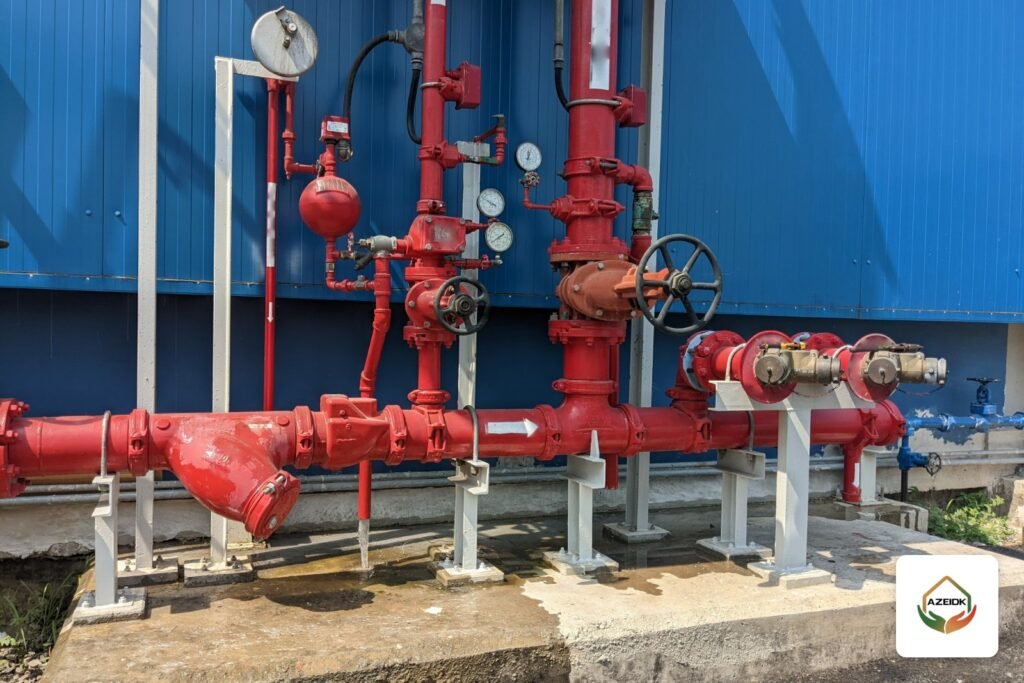
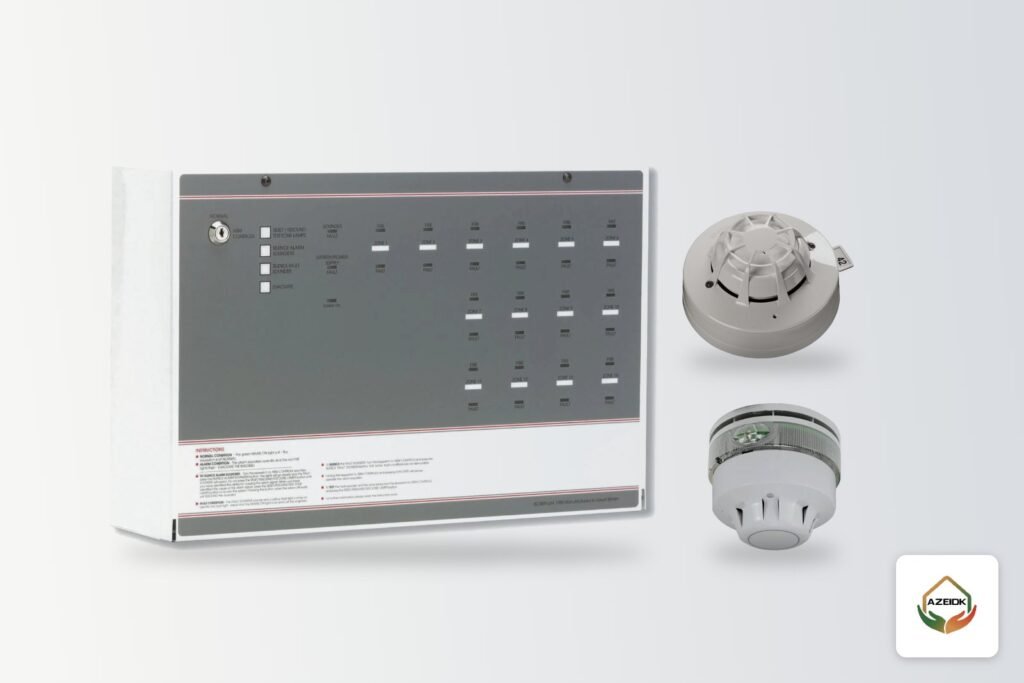
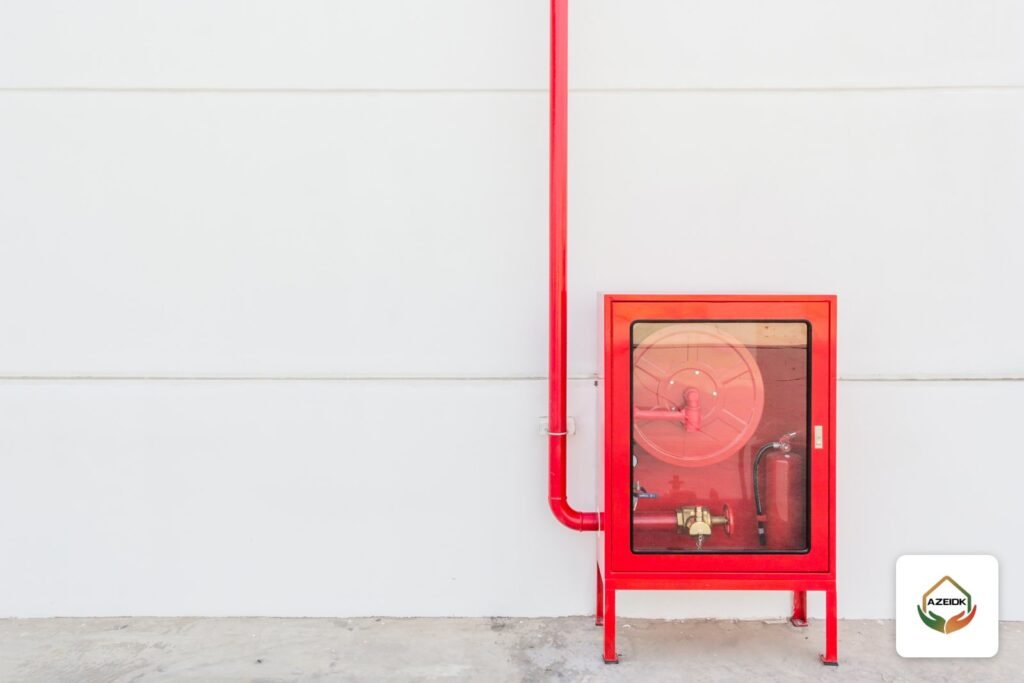
- Design the life safety systems: fire alarm, fire fighting, emergency lighting and exit signs, and special suppression where needed.
- Provide adequate egress and fire-rated doors where required.
- Get the drawings approved before installation, with calculations and specifications. See civil defense technical affairs and plan review.
Stage two: at licensing
- Install as approved, with equipment matching the submitted specifications.
- Test and commission each system and record the results.
- Place extinguishers by hazard and fix exit and guidance signs.
- Prepare the documents on the Salamah platform, including the safety equipment installation certificate from the installer, which AZEIDK issues itself for the systems it installs, and the technical report where required. AZEIDK handles the technical report through an approved engineering consultancy office.
Licence types and renewal are covered in Civil Defense licence and Salamah renewal, and the certificates in Saudi Civil Defense certificates.
Stage three: after licensing
Many violations appear after licensing: an extinguisher past its inspection date, an exit blocked with stock, a panel showing a fault for months. Conditions after licensing include:
- Documented periodic maintenance of alarm, fire fighting systems and extinguishers, with a visit log ready for inspection.
- Clear exits and corridors, with self-closing fire doors kept closed.
- Prompt repair of faults, never leaving systems impaired without interim measures.
- Review of systems after an extension, change of activity or new storage area.
- On-time licence renewal.
To prepare for inspection read the Civil Defense inspection visit, and for maintenance see preventive maintenance contracts.
Conditions by activity
| Activity | Guide |
|---|---|
| Offices | Civil Defense requirements for offices |
| Auto workshops | Civil Defense requirements for workshops |
| Pharmacies | Pharmacy requirements |
| Fuel stations | Fuel station safety requirements |
| Gyms | Gym safety requirements |
| Cloud kitchens | Cloud kitchen requirements |
Is there a civil defense requirements PDF?
Many people look for one PDF with every condition. In practice the references are spread across the Saudi Building Code, the activity requirements issued by the competent authorities, and the Salamah platform requirements. Use the current official edition of each, not old copied files.
Frequently asked questions
What are the basic civil defense conditions for any facility?
Life safety systems suited to the occupancy, adequate exits, extinguishers and signs, documented maintenance and a valid licence.
Do conditions differ between a small shop and a large building?
Yes. Area, storeys and activity decide which systems are mandatory; the detail by occupancy is in our guide to Civil Defense requirements for buildings and facilities.
Is periodic maintenance a condition?
Yes. Systems must stay in working order after licensing, and maintenance records are requested at inspection and renewal.
When should I review my safety systems again?
After an extension, change of activity, new partitions or new storage, because the requirements may change.
How does AZEIDK help?
By reviewing drawings, supplying, installing and testing systems, issuing the safety equipment installation certificate, handling the technical report through an approved engineering consultancy office and providing periodic maintenance.
Not sure what your facility is missing? Tell us the activity, area and stage you are at, and AZEIDK will set out what you need to meet civil defense conditions. Contact AZEIDK
Related guides
- Smoke Detector Tester Tools: Aerosol Smoke, Test Poles and Heat Testers in Routine Fire Alarm Inspections
- FM-200 Generator vs Aerosol: Differences, When to Choose Each, and Equivalent Sizes
- Fire Alarm System for Fuel Stations in Saudi Arabia: Store, Electrical Room, Offices and Service Bays
- Hotel Fire Maintenance Contract: Servicing Without Disturbing Guests, Room Schedules, Kitchens and the Safety Log