A hotel fire maintenance contract differs from an office building contract in one key way: the building is occupied around the clock and is never empty. Listing the systems and inspection intervals is not enough. The contract must also say how alarm devices are tested on occupied floors, who informs the front desk, when the kitchen systems are serviced, and how the safety log that Civil Defense asks for at inspection and renewal is kept.
For what any contract should cover before you sign, see our fire system maintenance contract guide for Saudi Arabia.
This article covers what the contract should include, a schedule for each system in hotels and serviced apartments, and how visits can run without disturbing guests. AZEIDK provides preventive and periodic maintenance and corrective maintenance and technical support for fire systems in hotels and hospitality facilities.
Key points
- One contract covers fire, safety and alarm systems. CCTV and low current systems sit in a separate contract.
- Extinguishers get a monthly visual inspection and annual maintenance. The hotel kitchen suppression system is serviced at least every six months.
- Room detector and sounder tests are coordinated with the front desk and housekeeping, starting with vacant rooms.
- Any system isolated during work is logged out and back in, and never left isolated after the shift ends.
- The signed log of every visit is what Civil Defense inspection and licence renewal rely on.
What does a hotel fire maintenance contract cover?
The scope depends on what is installed, but a typical mid-size hotel has:
- Fire alarm system: main panel, repeater panels at reception and the security room, room and corridor detectors, manual call points, sounders and strobes.
- Voice evacuation system, where installed, and its recorded messages.
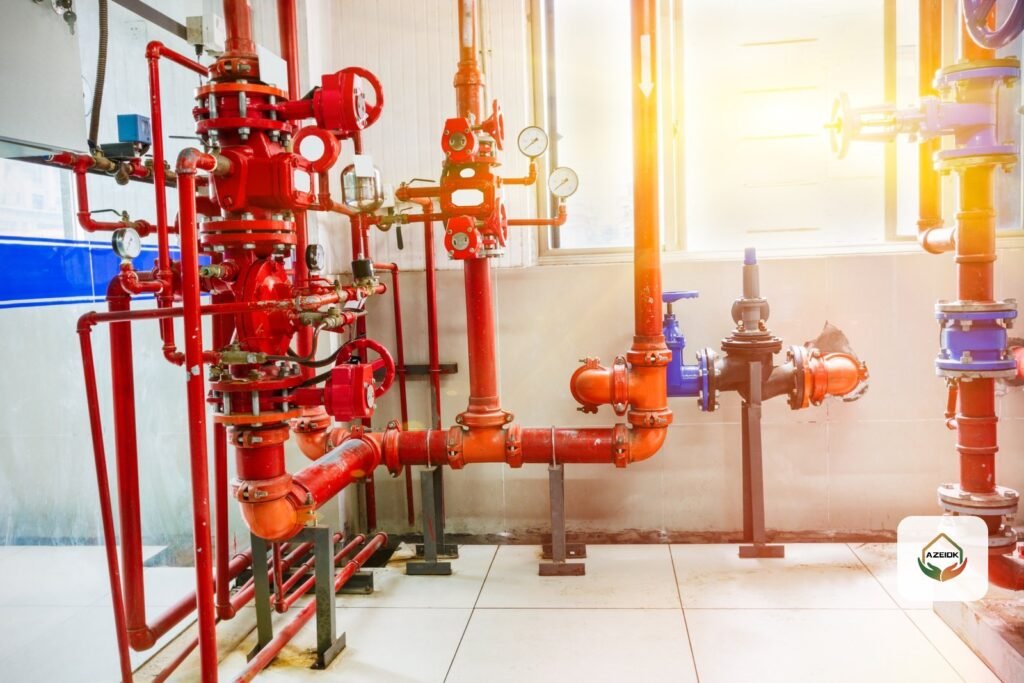
- Sprinkler network, control valves, flow switches and the alarm valve station.
- Fire pumps and their controllers.
- Fire hose cabinets and hose reels.
- Fire extinguishers in corridors, kitchens and electrical rooms.
- Kitchen hood suppression in the main kitchen and outlet restaurants.
- Emergency lighting, exit signs, fire doors and door closers.
- Gas suppression in server or electrical rooms, where installed.
Under AZEIDK’s contract structure, fire, safety and alarm systems are in one contract, while CCTV, low current and access control are in a separate one, even when the owner is the same.
Maintenance schedule for each hotel system
| System | Interval | Hotel-specific note |
|---|---|---|
| Fire extinguishers | Monthly visual inspection, annual maintenance | Corridor units are moved and tampered with more often, so locations are checked on every visit |
| Kitchen hood suppression | At least every 6 months | Booked after the last service or before breakfast with the executive chef |
| Fire alarm system | Per NFPA 72 tables and manufacturer instructions | Rooms are split across visits so every device is tested within the year |
| Sprinklers and valves | Per NFPA 25 tables | The front desk is told before the waterflow bell test |
| Fire pumps | Periodic run per NFPA 25 | Coordinated with the general maintenance team |
| Emergency lighting | Periodic checks | Corridors, stairs, restaurant and ballroom exits |
The extinguisher and hood intervals come from fire authority guidance based on NFPA 10 and NFPA 96. Other intervals are set in the contract from the project’s adopted tables and Civil Defense requirements. The Saudi Fire Protection Code SBC 801 and Civil Defense requirements remain the binding reference.
How can maintenance run without disturbing guests?
Hotel management worries most about guests hearing the alarm during a test, or a technician entering an occupied room. The contract should fix the working method before the first visit:
- Weekly room plan: the maintenance team sends the floors due, housekeeping replies with vacant rooms, and detectors there are tested first.
- Front desk notice before any test: so staff do not treat the signal as a real fire, with a second notice when testing ends.
- Limited sounder tests: notification devices are tested zone by zone during the day, not at night.
- Public areas in quiet hours: lobby, restaurants and ballrooms are checked when no events or meals are running.
- Hotel escort: a staff member accompanies the technician into any room, per hotel policy.
False alarms from bathroom steam are a frequent complaint, usually caused by detector type or location, as explained in our article on hotel fire alarm. The team should log every false alarm and its location so repeat rooms stand out and get fixed.
Isolating systems during maintenance
Some work needs a fire alarm zone isolated or a sprinkler valve closed for a while, such as replacing a detector or fixing a leak. In a hotel the contract should state:
- Who approves the isolation on the hotel side (security manager or chief engineer).
- One log for isolation time, area, reason and restoration time.
- No zone left isolated after the team’s shift ends.
- An interim measure during isolation, such as patrols on the affected floor.
This point separates a contract on paper from one that actually protects the hotel. The worst case is an isolated zone forgotten for days.
Safety log and licence renewal
The hotel needs a clear record of each visit: systems checked, faults found, repairs done and items waiting for parts. This is what is shown at inspection; its content is covered in our article on the fire safety log book. Licence renewal through the Salamah platform is tied to a valid maintenance contract, see Salamah renewal and the maintenance contract. The systems hotels and serviced apartments need before inspection are in our hotel Salamah certificate article.
Response time and spare parts
A fault on the alarm panel or fire pump cannot wait for the next routine visit. The contract sets the emergency response time, repair time and whether spare parts are included or priced when needed. These terms are detailed in our fire maintenance SLA article. A small stock of fast-moving items, such as detectors, call point covers and spare sprinklers of the installed model, avoids leaving a room without a detector for days.
AZEIDK maintains fire extinguishers with its own maintenance team as part of its preventive and periodic maintenance contracts, together with the other fire and alarm systems in the same contract.
FAQ
How often are hotel fire extinguishers checked?
A monthly visual check of location, pressure and seal, and full annual maintenance, as summarized by fire authority guidance based on NFPA 10.
Can smoke detectors be tested in occupied rooms?
Start with vacant rooms from the housekeeping list, then cover the rest in later visits so every device is tested within the year.
Does the contract include the hotel kitchen suppression system?
Yes, where installed. It is serviced at least every six months, with fusible links replaced per the manufacturer’s instructions.
Can CCTV and fire systems share one maintenance contract?
At AZEIDK, the fire, safety and alarm contract is separate from the CCTV and low current contract, even for the same client.
Does hotel licence renewal need a maintenance contract?
Renewal through Salamah is tied to a valid maintenance contract for safety systems and a signed visit log.
What if one room keeps giving false alarms?
Log each event and location, then review detector type and position relative to the bathroom and air conditioning, and change it if needed with the consultant’s approval.
Summary
A hotel fire maintenance contract works when it defines how work runs inside an occupied building, not just the systems: a room plan, front desk notices, controlled isolation and a signed log for every visit. Systems stay ready and inspections and renewals pass without surprises.
Running a hotel or serviced apartment building? Send us the number of floors and rooms and the installed systems, and we will prepare a contract scope and visit schedule that fits your operation. Talk to the AZEIDK team
Related guides
- Patch Panel Guide: Choosing Cat6 or Cat6A, Port Count and Rack Layout with Legrand LCS³
- Panoramic and Multi-Lens CCTV Cameras: When One Camera Can Replace Several in Car Parks, Yards and Warehouses (Dahua and EZVIZ)
- Certificate of Conformity for Network and Telecom Devices (Switches, Routers, Wi-Fi and IP Phones) on SABER: The Technical Regulation and What It Requires from the Supplier
- Fire Pump Installation Step by Step: Foundation, Alignment, Suction and Discharge Piping and Commissioning