A fire system maintenance contract for banks is different from a contract for a single building, because a bank runs a network of branches, ATM sites and head offices across several cities. A good contract rests on three things: an accurate asset list for each branch, one visit schedule where tests are carried out the same way at every site, and a written response time for urgent faults that respects the fact that the branch is open to customers.
For what any contract should cover before you sign, see our fire system maintenance contract guide for Saudi Arabia.
This guide sets out what the contract should cover, how visits are organised without disrupting the branch, and which reports the bank’s facilities team needs. AZEIDK provides this under its preventive and routine maintenance service and serves the sector through its banks and financial institutions page.
Key points
- Start with an asset survey of every branch: panels, detectors, extinguishers, gas suppression systems and sprinkler components where present.
- Use one inspection and test procedure and one report template across all branches so their condition can be compared.
- Write the emergency response time clearly, and separate faults that disable protection from minor ones.
- Fire, safety and alarm systems go in one contract; low current systems and CCTV go in a separate contract.
- Keep a record per branch that is ready for Salamah licence renewal or inspection.
In this article
- Why does a bank need a different maintenance contract?
- What does a fire system maintenance contract for banks cover?
- The asset survey: the step most often skipped
- Organising visits without disrupting the branch
- Response time and service levels
- Comprehensive or non-comprehensive?
- Keep fire and low current in separate contracts
- Reports and records the bank needs
- Common mistakes in branch maintenance contracts
- FAQ
- Summary
Why does a bank need a different maintenance contract?
In a single building the contractor knows every panel and room. In a branch network the challenge is administrative before it is technical: branches of different ages, systems from different suppliers, restricted access to some rooms, and opening hours that rule out noisy tests while customers are served. The contract therefore answers specific questions: which systems are in each branch, who opens restricted rooms during a visit, when sounder tests take place, and who receives the report.
What does a fire system maintenance contract for banks cover?
| System | Typical visit scope | Technical reference |
|---|---|---|
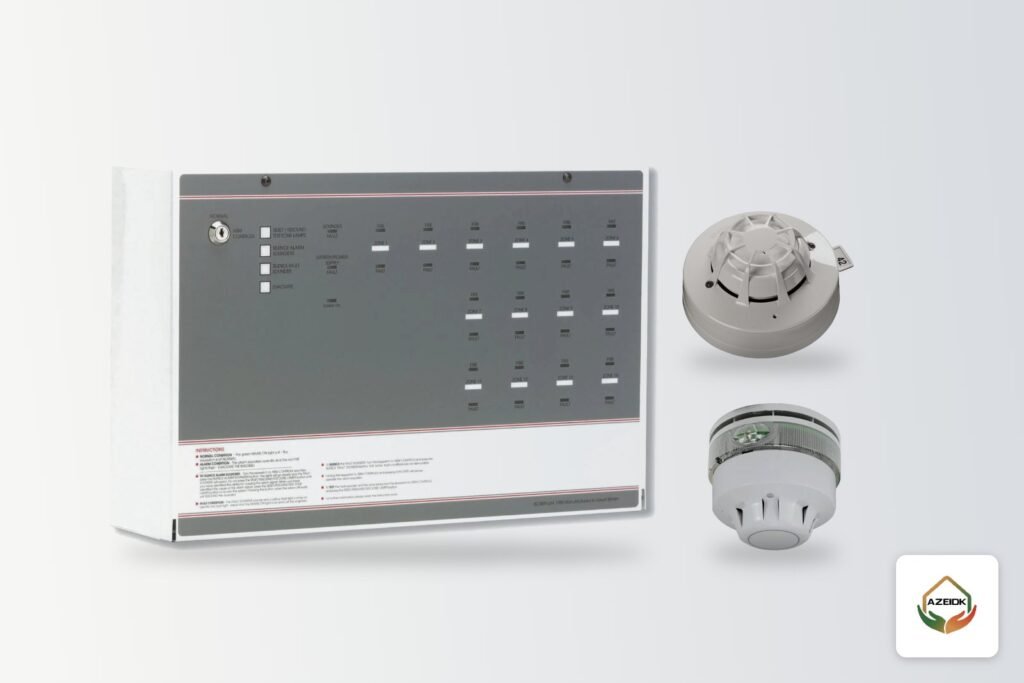
| Fire alarm | Panel and event log, detector, call point and sounder tests, batteries, and interface signals to doors, HVAC and the monitoring point | NFPA 72 and manufacturer instructions |
| Gas suppression in server and archive rooms | Cylinders and pressure or weight, control panel, release and hold-off buttons, room condition and openings | NFPA 2001 and manufacturer instructions |
| Fire extinguishers | Routine inspection, refilling and replacement based on condition and service date | NFPA 10 and manufacturer instructions |
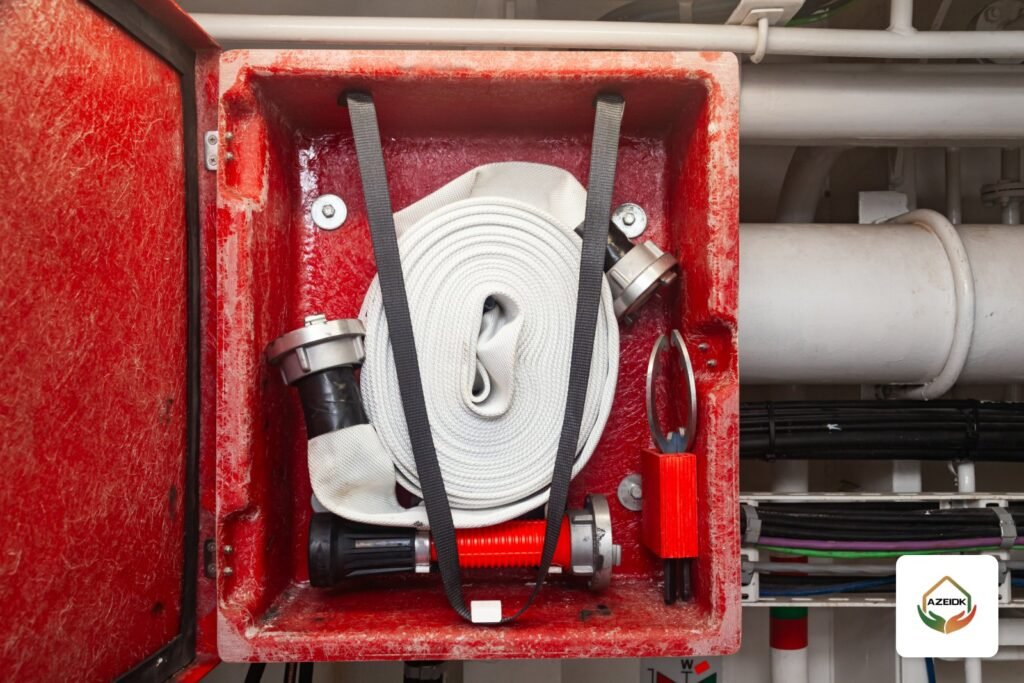
| Sprinklers and hose cabinets (head offices and larger buildings) | Valves and supervisory switches, pressure, drain tests and fire pumps where present | NFPA 25 |
| Fire doors and emergency exits | Self-closing, clear routes, and release of electrically locked doors on alarm | Saudi Fire Code SBC 801 |
The standards’ tables and the manufacturer’s manual set the frequency of each test. Write those frequencies into a contract schedule for each system instead of a general phrase such as “periodic maintenance”.
The asset survey: the step most often skipped
Before signing, or at the first visit, build an asset register for each branch: panel type and model, number and type of detectors, number, type and size of extinguishers, any gas suppression system and its size, and the condition of each system at takeover. This register is the basis of the price and prevents later disputes over what the contract covers. Branches without drawings or panel configuration files are noted, because their absence slows any repair.
Where some branches have old systems of unclear condition, start with an existing systems assessment and scope definition before pricing maintenance.
Organising visits without disrupting the branch
- Timing: sounder and evacuation tests are scheduled before opening, after closing or on holidays, following bank policy.
- Restricted rooms: agree in advance on a bank escort who opens cash and server rooms during the visit. Technicians are never handed keys or access codes.
- Monitoring point: notify the monitoring centre before any test so the signal is not treated as a real fire, and again afterwards to restore normal status.
- Gas systems: isolate release circuits before any work on detection in a gas-protected room, restore them afterwards and record it.
Response time and service levels
A good contract separates three classes: a fault that disables protection (panel out of service, gas system impaired), a partial fault (one detector or circuit) and a non-urgent observation. Each class gets a written response and repair time. Drafting these clauses is covered in our guide to the SLA in a fire system maintenance contract. For a network spread over several cities, set the response time per city according to its distance from the contractor’s team.
Comprehensive or non-comprehensive?
A comprehensive contract includes spare parts up to an agreed limit; a non-comprehensive one prices parts as needed. A bank that wants a fixed budget per branch usually leans towards comprehensive with a clear exclusions list. See comprehensive vs non-comprehensive maintenance contracts and the fire maintenance contract cost factors.
Keep fire and low current in separate contracts
AZEIDK uses a clear split: one contract for fire, safety and alarm systems, and a separate contract for low current systems, CCTV, access control, intercom and networks. Each group has its own teams, standards and spare parts. A bank that needs both signs two contracts and coordinates the interface points, such as door release on fire alarm.
Reports and records the bank needs
- A report per visit per branch on one template: what was inspected, what was tested, results and remarks.
- An open-faults list with the date found and current status.
- A periodic network summary that flags branches needing repair or replacement.
- An extinguisher log per branch with inspection and refill dates.
These records also help when a branch renews its Salamah licence. Under its Civil Defense approval support service, AZEIDK issues the safety equipment installation certificate and handles the technical report through an approved engineering consultancy office.
Common mistakes in branch maintenance contracts
- No asset schedule: the parties later disagree over whether the server room gas system or the ATM site extinguishers are in scope.
- A different report format per technician: the facilities team cannot compare branches or track repeat faults.
- New branches forgotten: banks open and close branches, so the contract states how a branch is added or removed and how the price changes.
- No rule for closing a fault: agree that a fault is closed only after a test proves the system works again, signed by the branch representative.
- Refurbishment ignored: a branch refit or moved walls changes detector and sprinkler coverage. Notify the maintenance contractor before any refurbishment to review the impact.
FAQ
Can one maintenance contract cover all of a bank’s branches?
Yes, and it is easier to manage, provided it includes an asset register per branch, a visit schedule and a response time per city.
Does the fire maintenance contract include branch CCTV?
No. Fire, safety and alarm systems are in one contract; CCTV and low current systems are in a separate one.
When are alarm tests carried out in a branch?
Before opening, after closing or on holidays according to bank policy, with the monitoring point notified before and after.
Are branch fire extinguishers included?
Yes. AZEIDK maintains fire extinguishers with its own team as part of its preventive maintenance contracts.
What if branches have systems from different suppliers?
This is recorded in the asset survey, and spare parts and panel software availability are checked for each type before pricing.
Do maintenance records help with the Salamah licence?
An organised record per branch makes renewal and inspection easier and shows that the systems are working and maintained.
Can stand-alone ATM sites be included?
Yes, where they hold systems or extinguishers belonging to the bank. They are listed as separate sites in the asset register with their own visits and reports.
How long is a bank fire maintenance contract usually?
Contracts are often annual and renewable. Review the scope and asset register at each renewal to add new branches and remove closed ones.
Summary
The value of a bank maintenance contract lies in organisation: an asset register per branch, standard tests at times that do not disturb customers, a written response time and comparable reports. Start with the asset survey, then set the frequency for each system, then agree the service levels. A contract built this way gives bank management a clear picture of every branch and turns maintenance from scattered visits into a programme that can be measured and followed up.
Reviewing a maintenance contract for a branch network? Send us the list of branches, cities and the systems in each, and we will prepare a scope of work and a proposed visit schedule. Contact the AZEIDK team
Related guides
- Fire Protection for Textile and Garment Factories: Lint, Fibres, Fabric Stores and Sewing Halls
- Fire Alarm Supplier in KSA: Distributor vs Supplier vs Contractor and How to Verify Authorization
- FM200 Nozzles: 180° vs 360°, Sizes, Mounting Height and Discharge Time
- Mall Fire Extinguishers: Corridors, Shops, Food Courts, Plant Rooms and Car Parks