Saudi Civil Defense requirements for buildings and facilities are the fire prevention and protection requirements a building must meet through design, construction, operation and maintenance. Civil Defense draws its authority from the Civil Defense Law and the Saudi Building Code Application Law, most technical content comes from the Saudi Fire Protection Code (SBC 801) and the Saudi General Building Code (SBC 201), and an operating facility then obtains its Civil Defense license on the Salamah portal.
Key takeaways
- The Civil Defense Law (Royal Decree M/10 of 1406 AH) empowers the Civil Defense Council to issue safety regulations and to classify the facilities subject to its measures.
- Under Article 10 of the Implementing Regulation of the Saudi Building Code Application Law, Civil Defense monitors fire protection requirements at all stages of construction, maintenance, operation and storage.
- Occupancy classification under SBC 201 is the starting point for required systems and means of egress.
- Civil Defense publishes preventive requirements for some building types, such as educational buildings, and may require additional equipment at licensing in place of some precautions.
- Code requirements apply to existing buildings as far as feasible, and the exemption for classified historic buildings excludes fire protection requirements.
In this article
- What is the legal basis for Civil Defense requirements?
- Where the technical requirements sit in the Saudi Building Code
- What is checked in a building?
- How requirements change by occupancy
- Existing and historic buildings and change of use
- From requirements to the Civil Defense license
- Practical steps for owners
- Common mistakes and what drives compliance cost
- How AZEIDK helps
- FAQ
What is the legal basis for Civil Defense requirements?
The Civil Defense Law defines civil defense as the measures and actions needed to protect the population and public and private property, and its scope includes setting rules and means of safety and industrial security. Article 9 empowers the Civil Defense Council to issue regulations defining the safety conditions and rules that must be met, in agreement with the relevant authorities, and to identify and classify the places and facilities subject to civil defense measures, wholly or partly.
The Saudi Building Code Application Law, issued by Royal Decree No. M/43 dated 26/4/1438 AH, applies the code to public and private construction, including design, execution, operation and maintenance, and to existing buildings that are restored, repurposed, expanded or altered. Article 10 of its Implementing Regulation gives Civil Defense the task of monitoring the code and recording violations of fire prevention and protection requirements.
| Instrument | What it sets | What it means for owners |
|---|---|---|
| Civil Defense Law | Safety regulations; classification of facilities subject to Civil Defense measures | Civil Defense regulations bind alongside the code |
| Building Code Application Law and Implementing Regulation | Construction must follow the code; Civil Defense monitors fire protection at every stage | Oversight continues into operation and maintenance |
| SBC 801 and SBC 201 | Technical requirements; the 2024 edition mandatory since 30 June 2025 | Basis for design and inspection |
| Civil Defense rules for building types | Detailed rules, such as for educational buildings | Read with the code; settle differences with Civil Defense |
| Salamah portal | Obtaining and renewing the Civil Defense license | Final step for an operating facility |
Where the technical requirements sit in the Saudi Building Code
The main technical reference is the Saudi Fire Protection Code; our SBC 801 guide explains its scope. The 2024 Code Requirements of SBC 201 start with occupancy classification (Sections 301 to 312), then special detailed requirements based on occupancy and use (401 to 428), and include a fire protection systems chapter (901 to 918).
In the 2024 SBC 801 table of contents, the Fire Protection and Life Safety Systems chapter (901 to 917) holds the core systems, including fire protection based on special detailed requirements of use and occupancy (914). The code also covers fire safety and evacuation plans (404), evacuation drills (405), employee training (406), inspections (108) and maintenance (109).
What is checked in a building?
Section numbers below come from the 2024 Code Requirements and point to the topic; read each requirement in the edition that applies to the project.
| Item | SBC 801 sections | What to check in practice |
|---|---|---|
| Fire apparatus access and premises identification | 503 to 505 | Clear access roads and building numbering |
| Fire protection water supplies | 507 | Supply per the approved design; hydrants where required |
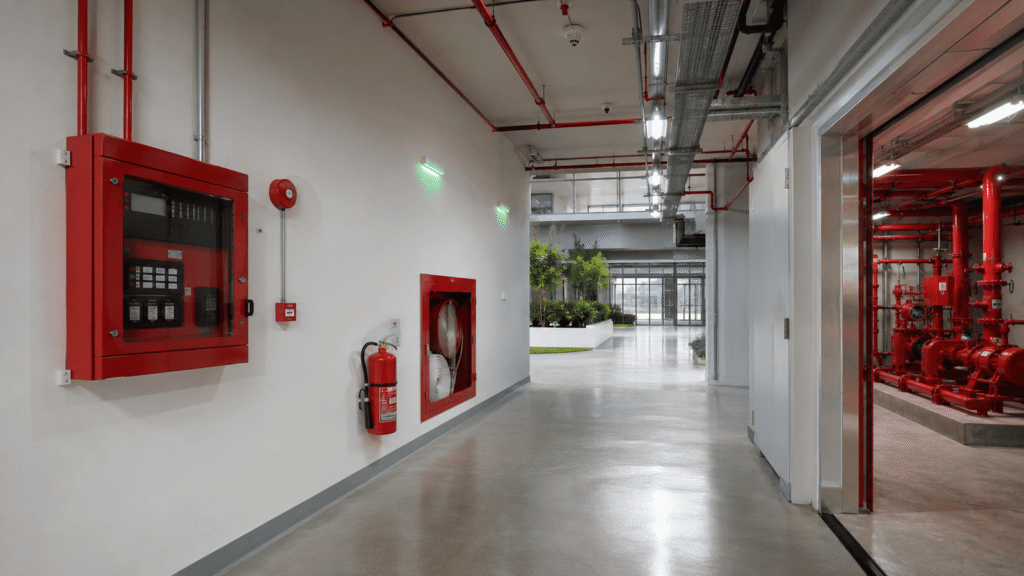
| Sprinklers and alternative extinguishing systems | 903 and 904 | Coverage as drawn; control valves open and supervised |
| Standpipes and portable extinguishers | 905 and 906 | Fire hose cabinets intact and accessible |
| Fire alarm, detection and emergency alarm | 907 and 908 | Panel free of faults; manual call points in place |
| Smoke control and smoke and heat removal | 909 and 910 | Integrated operation with the alarm |
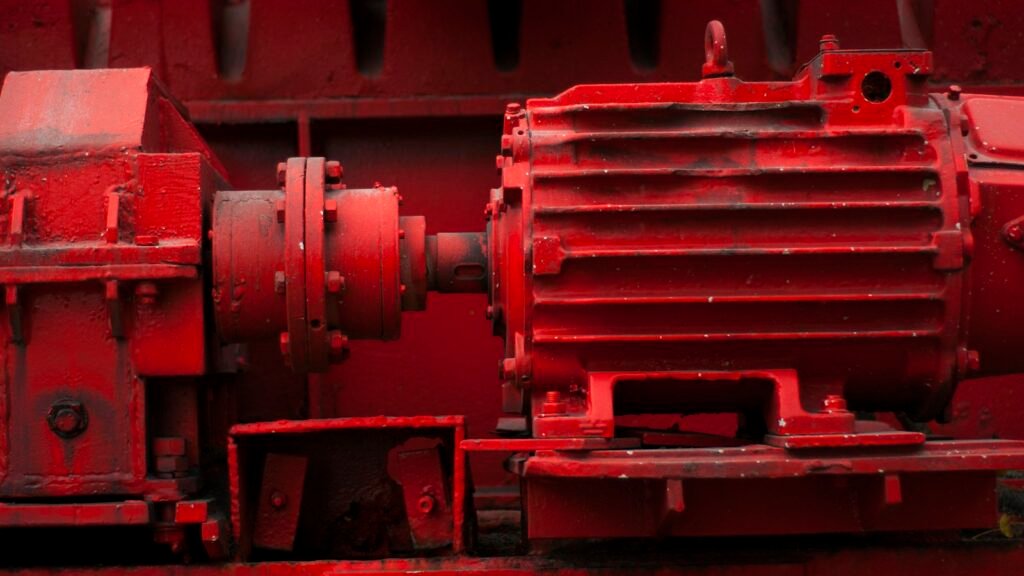
| Fire department connections and fire pumps | 912 and 913 | Connections visible; pumps tested |
| Means of egress | 1001 to 1032 | Number of exits, lighting, exit signs |
| Emergency plans and training | 404 to 406 | Current plan and documented drills |
| Inspections and maintenance | 108 and 109 | Up-to-date records for every system |
How requirements change by occupancy
Sections 301 to 312 of SBC 201 sort buildings into ten occupancy groups that follow the International Code Council (ICC) model on which the Saudi code is built; confirm each building’s classification with the consultant. The examples are illustrative:
| Group | Typical examples | What it mainly affects |
|---|---|---|
| Assembly (A) | Halls, mosques, restaurants | Occupant load and exit width |
| Business (B) | Offices | Alarm and egress by height and area |
| Educational (E) | Schools | General alarm and evacuation |
| Factory (F) and High-hazard (H) | Factories, hazardous materials facilities | Material type and quantity, special suppression |
| Institutional (I) | Hospitals and care facilities | Smoke compartments, horizontal evacuation |
| Mercantile (M) | Shops and malls | Sprinklers and smoke control |
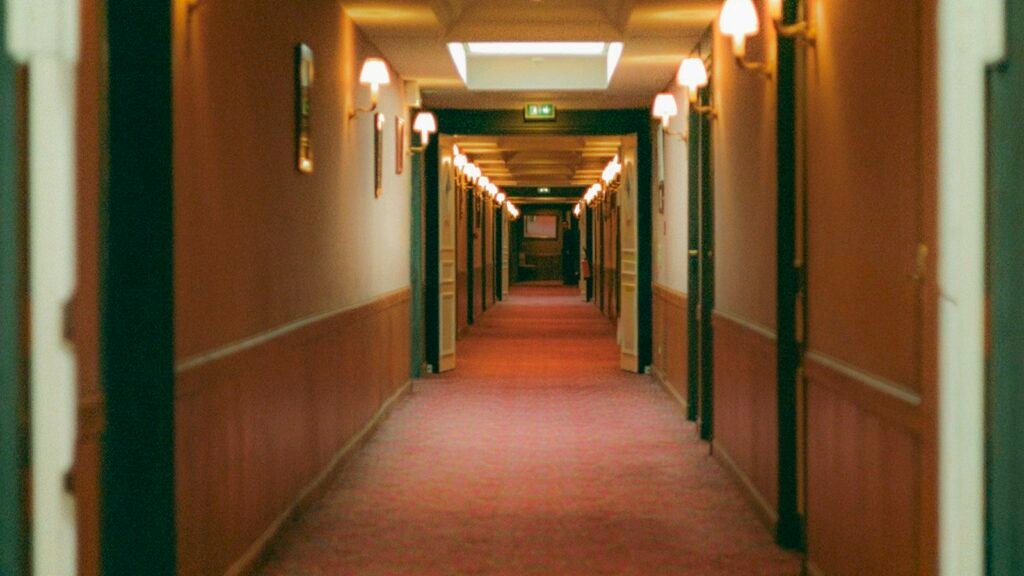
| Residential (R) | Hotels and apartments | Alarm in sleeping rooms, unit separation |
| Storage (S) and Utility (U) | Warehouses and car parks | Storage height and commodity |
Civil Defense also publishes preventive requirements for some building types. Its requirements for educational buildings (in Arabic; no issue date shown) run from fire hazard classification, structure and fire spread control to escape routes and firefighting and alarm equipment. Its tables tie equipment to the number of floors, height, area and construction type, and Civil Defense may, at licensing, require additional equipment in place of some precautions.
For details, see our guides to schools, hospitals, hotels and malls.
Existing and historic buildings and change of use
Article 7 of the Implementing Regulation of the Saudi Building Code Application Law applies code requirements to existing buildings as far as feasible, based on a technical report from an approved engineering office setting out feasible solutions. Article 8 exempts classified historic buildings from the code unless they endanger lives or property, except for fire protection requirements, which still apply.
SBC 801 includes requirements for existing buildings (Sections 1101 to 1106), and the Saudi Existing Building Code (SBC 901) covers alteration and change of occupancy. Assess the systems before any change of activity or extension, not after an inspection finding.
From requirements to the Civil Defense license
For an operating facility, the process ends with the Civil Defense license it obtains and renews on Salamah. According to the portal fact sheet published by Elm, low- and medium-risk activities are licensed directly once a safety tools invoice or technical report is issued, while high-risk activities need a contract with a safety company and maintenance contracts, then an inspection before the license.
In August 2026, the Insurance Authority announced that third-party cooperative insurance will become a key license requirement for activities subject to mandatory insurance, as our Salamah portal update explains. Our Civil Defense approval guide covers the steps from building permit to renewal.
Practical steps for owners
- Confirm the occupancy group and actual activity with your consultant.
- Check your licensing path through the Salamah investor journey service before fitting out.
- Ask for a design basis stating the code edition, required systems and referenced standard editions.
- Review Civil Defense requirements for your building type and settle differences from the code early.
- For existing buildings, get a technical report from an approved engineering office before alterations.
- Keep the evacuation plan and inspection and maintenance records ready.
- Check whether your activity requires third-party insurance.
Common mistakes and what drives compliance cost
- Treating requirements as one list for every building instead of starting from occupancy and activity.
- Using values from international model codes or an earlier project without checking the Saudi edition.
- Changing the use of a shop or warehouse without reviewing its systems.
- Overlooking evacuation planning, training and records, which are code chapters.
Compliance cost depends on the occupancy group, building area and height, the activity and its risk, the water supply, any special systems and, in existing buildings, system condition and the gap from the current edition.
How AZEIDK helps
AZEIDK helps owners turn requirements into working systems and a documented file, backed by 16+ years in the Saudi market and 17+ branches and service regions, through assessment of existing systems and scope of work definition, engineering design and calculations and annual maintenance contracts.
Our Civil Defense approval support covers reviewing the requirements and documents the project needs, coordinating available drawings and technical reports, and identifying compliance observations, without guaranteeing an approval outcome, which rests with the competent authorities.
FAQ
Who sets Civil Defense requirements in Saudi Arabia?
The Civil Defense Law empowers the Civil Defense Council to issue regulations setting safety conditions and rules, in agreement with the relevant authorities. Technical requirements for buildings come mainly from the Saudi Building Code, including SBC 801 and SBC 201, and Civil Defense monitors its fire protection requirements under Article 10 of the Implementing Regulation.
Are Civil Defense requirements the same as the Saudi Building Code?
Not exactly. SBC 801 and SBC 201 are the binding technical reference for construction, and Civil Defense monitors their fire protection requirements. Civil Defense also publishes preventive requirements for some building types and licenses facilities, so read both references together and settle any difference with Civil Defense.
How do I find the requirements for my building?
Start with the occupancy group in SBC 201, then area, height and construction type, which set the systems and egress. Add the requirements of the activity and its risk level, plus any Civil Defense requirements for your building type. Ideally, the consultant records this in one design basis.
Do the requirements apply to existing buildings?
Yes, depending on the case. The Application Law covers existing buildings that are restored, repurposed, expanded or altered, and the Implementing Regulation applies code requirements to them as far as feasible, based on a technical report from an approved engineering office. Review the systems before any alteration or license renewal.
Are historic buildings exempt from fire requirements?
No. Article 8 of the Implementing Regulation exempts classified historic buildings from code requirements unless they endanger lives or property, but fire protection requirements are excluded from that exemption. A historic building needs protection that respects its character and remains acceptable to Civil Defense.
What happens if a building violates the code?
The Saudi Building Code Application Law provides for fines of up to SAR 1 million per violation in a single building, suspension of a practice license for one month to one year, or both. Violations can also delay the Civil Defense license or its renewal.
Want to know which requirements apply to your facility? Send our engineers a description of the activity and the drawings you have, and we will identify the required systems and gaps before licensing. Contact the AZEIDK team