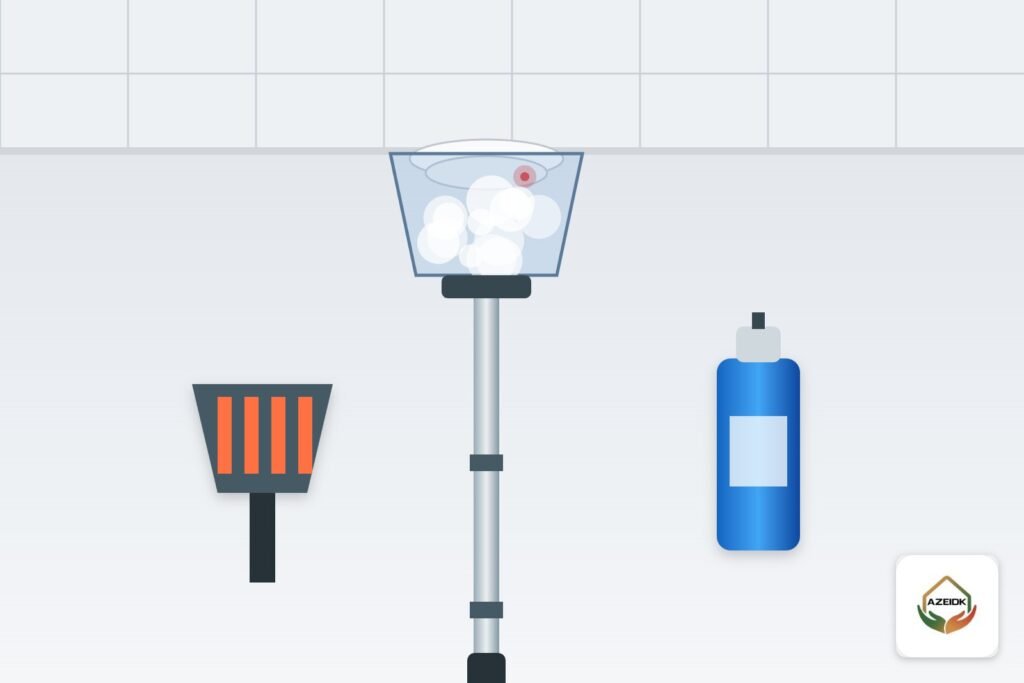
A smoke detector tester is the kit a maintenance technician uses to put test smoke into the sensing chamber of a ceiling-mounted detector and confirm that the alarm reaches the fire alarm control panel. A typical kit includes a detector test aerosol, a dispenser cup on a telescopic pole, a heat tester, a detector removal tool and cleaning items. Pressing the detector’s test button is not a substitute. This article explains each tool and when it is used in routine testing under our preventive and periodic maintenance contracts.
Key takeaways
- A functional test of a smoke detector means getting smoke or an approved test product into the sensing chamber and confirming the alarm response.
- Test aerosol is used inside a dispenser cup on a test pole, not sprayed directly at the detector.
- Restorable heat detectors are tested with a heat source to the manufacturer’s instructions; non-restorable ones are not heat tested.
- Sensitivity testing is a separate test with its own schedule and measuring methods.
- The visit report records each detector address, the test method, the result and any remarks.
In this article
- Why the test button is not enough
- What is a smoke detector tester, and what is in the kit?
- Smoke aerosol and dispenser: using them correctly
- Test poles and detector removal tools
- Heat detector testers, and when not to use them
- Multi-stimulus testers and sensitivity testers
- Duct and special detectors
- How a routine maintenance visit is organised
- Frequently asked questions
- Conclusion
Why the test button is not enough
The test button, or the test magnet on some models, drives the detector electronics into alarm. That is useful, but it does not prove that smoke can get through the vents into the sensing chamber. Vents can be blocked by dust, by the dust cover left on after fit-out, or by paint, and the button will still work.
That is why the inspection and testing table in NFPA 72 (Table 14.4.3.2 in the 2019 edition) requires smoke detectors to be tested in place to ensure smoke entry into the sensing chamber and an alarm response, using smoke or a listed and labeled product acceptable to the manufacturer, or in line with the manufacturer’s published instructions. The table sets this as an annual test. In Saudi Arabia the binding framework is the Saudi Fire Protection Code SBC 801 and Civil Defense requirements, with NFPA 72 used as the technical reference that specifications and maintenance contracts adopt. For the simple monthly button check and battery change at home, see how to test smoke detectors.
What is a smoke detector tester, and what is in the kit?
In commercial systems a smoke detector tester is not a single item but a kit of parts that work together:
| Tool | Function | Usage notes |
|---|---|---|
| Smoke detector test spray | Pressurised can releasing particles that simulate smoke | Use a type the detector manufacturer accepts, in a short burst |
| Dispenser cup | Encloses the detector and releases the aerosol inside it | Avoids direct spraying and keeps the smoke around the detector |
| Test pole | Telescopic or extension pole to reach the ceiling | Non-conductive material is preferred |
| Heat tester | Produces hot air inside a cup around a heat detector | Restorable detectors only |
| Detector removal tool | Grips and twists the detector head off its base | For replacement or cleaning without a ladder |
| Multi-stimulus tester | Generates smoke, heat and CO from one head | Useful for multi-sensor detectors |
| Sensitivity tester | Measures the level at which the detector alarms | For sensitivity testing, not routine functional checks |
Smoke aerosol and dispenser: using them correctly
Fire alarm smoke spray is the most common functional test method. The can sits inside a dispenser cup on the pole head; the cup is raised over the detector, which presses the actuator and releases a short burst. Keep the cup in place until the detector LED lights and the panel shows the signal.
As an example from a specialist manufacturer, Detectortesters lists the Solo 330/332 dispenser and states that it suits ionisation and optical smoke detectors with Solo A10, A10s and A5 aerosols. We name these products as references from the manufacturer’s page because technicians search for them; they are not products offered by AZEIDK.
Common site mistakes:
- Spraying directly, too close or too long, leaving residue in the chamber that later causes false alarms.
- Using a can not intended for detector testing, or one the detector manufacturer does not accept.
- Removing the cup too early and logging the detector as faulty.
- Forgetting to restore the panel or remove disablements after testing.
Test poles and detector removal tools
The smoke detector tester pole decides how high you can work without scaffolding. Detectortesters describes its telescopic and extension poles as lightweight non-conductive glass fibre and states that its standard range reaches detectors up to 9 metres, with another range up to 5 metres. In atriums and warehouses above that height, plan a lift or scaffold, or review the detection type with the designer.
A smoke detector removal pole head fits the same pole and twists the detector head off its base. On addressable systems this helps when replacing a dirty or damaged head, because on some models the address belongs to the base, not the head. An example is the Context Plus 55000-885IMC multisensor detector, whose page states that the XPERT card in the base sets the address, so it does not change when the head is replaced.
Heat detector testers, and when not to use them
A heat tester blows hot air inside a cup around the detector. As an example from the manufacturer’s page, the Solo 460 is battery powered and, according to Detectortesters, suits heat detectors up to 90°C. The key point is to tell two heat detector types apart:
- Restorable detectors, such as rate-of-rise and most electronic heat detectors: tested with a heat source in line with the manufacturer’s published instructions.
- Non-restorable detectors, whose thermal element melts when it operates: not heat tested, because the test destroys them.
Technical presentations on NFPA 72 also point out that ordinary heat guns are not listed and labeled heat sources. For fixed temperature and rate-of-rise types, see heat detector types and installation.
Multi-stimulus testers and sensitivity testers
Multi-sensor detectors (smoke and heat, or smoke, heat and CO) need each sensor tested. Detectortesters presents Testifire as one tool for smoke, heat and CO, using non-pressurised capsules and generating the stimulus automatically once the detector enters the cup. For optical, ionisation and multi-sensor differences, see smoke detector types.
A smoke detector sensitivity tester does a different job: it confirms the detector is within its listed sensitivity range. Electrical Contractor magazine’s explanation of NFPA 72 section 14.4.4.3 says the first sensitivity test is due within one year of installation, then every two years, and the interval can be extended to five years if results stay in range and unwanted alarms are tracked. The standard does not allow sensitivity to be measured with a device that administers an unmeasured concentration, so an ordinary aerosol test is not a sensitivity test. Trutest is one dedicated tool: its manufacturer states that it raises the smoke level until the detector alarms and reports the result in % per foot.
On addressable systems many panels read each detector’s value and report contamination. For example, the Context Plus XFP panel datasheet lists individual sensitivity settings per device, adjustable contamination levels and a one man walk test mode.
Duct and special detectors
Some detectors are not tested with the standard cup. A duct smoke detector is tested the way its manufacturer specifies, confirming that the sample is drawn from the duct and that linked shutdowns operate; see our article on the duct smoke detector. Beam detectors are usually tested with a filter or test card specified by the manufacturer. The general rule: the detector’s installation and operating manual defines the accepted test method.
How a routine maintenance visit is organised
Before starting, the facility contact and any monitoring centre are informed, and outputs that must not operate during testing, such as HVAC shutdown, lift recall or gas suppression release, are isolated as agreed with the owner. The technician then works through the detectors in order, tests each with the right tool, and checks that the correct address and description appear on the panel.
The report handed over after the visit usually includes:
- Each detector’s address, location and type.
- The test method: smoke, heat, multi-stimulus or panel reading.
- The result: passed, no response, or wrong address or description.
- Detectors that are dirty or need cleaning or replacement.
- Outputs isolated, when they were restored, and the panel status on leaving.
Fire alarm and fire fighting maintenance sit in one fire and life safety contract, separate from the low current and CCTV contract. For the wider fire alarm checklist, see fire alarm periodic inspection and maintenance.
Frequently asked questions
What is a smoke detector tester?
Usually a kit of test aerosol and a dispenser cup on a telescopic pole, used to put smoke into the detector’s sensing chamber in place and confirm the alarm response.
Is the test button enough to prove a detector works?
No. The button tests the electronics but does not prove smoke can enter through the vents. A functional test uses smoke or a test product the manufacturer accepts.
Can smoke detector spray damage the detector?
Used correctly, in a short burst inside a dispenser cup with a can the manufacturer accepts, it normally does not. Repeated direct spraying can leave residue that raises false alarms.
How do you test a heat detector?
A restorable detector is tested with a heat source in line with the manufacturer’s published instructions. A non-restorable detector is not heat tested, because its element is destroyed once it operates.
What is the difference between functional and sensitivity testing?
The functional test confirms the detector alarms when smoke arrives; the sensitivity test measures whether it is within its listed range, on its own schedule and with its own methods.
How often are smoke detectors tested in commercial buildings?
The NFPA 72 table sets the functional test of smoke detectors as annual. The contract, the manufacturer’s instructions and Civil Defense requirements set the actual visit schedule.
Does AZEIDK sell detector testers?
The testers named here are examples from their manufacturers’ pages and are not listed for sale on the AZEIDK site. Routine detector testing itself is part of the scope of our preventive and periodic maintenance contracts.
Conclusion
A smoke detector tester is how maintenance proves a detector will respond to real smoke. An accepted aerosol inside a cup on a pole suited to the ceiling height, a heat tester for restorable detectors only, a removal tool for replacements, and a report that records every address and result. Sensitivity testing has its own tools and schedule, supported by readings from addressable panels.
Need routine testing of smoke and heat detectors in your facility? Send the system type, detector count and ceiling heights, and our team will propose the visit schedule and test scope. Talk to the AZEIDK team
See the fire alarm panels and systems AZEIDK supplies.
Related guides
- Outdoor CCTV Camera Guide: IP67 Weatherproofing, Heat, Night Vision and Vandal Resistance in Saudi Conditions
- Yeastar PBX (P-Series): Models by Extension Count, Cloud Edition and Fit for Saudi Companies
- AFC OS&Y Gate Valves: Types and Valve Position Supervision in Saudi Projects
- Wheeled Fire Extinguisher (50 kg Unit): When You Need One Instead of a Portable, 25 to 150 kg Sizes, Hose Length and Placement