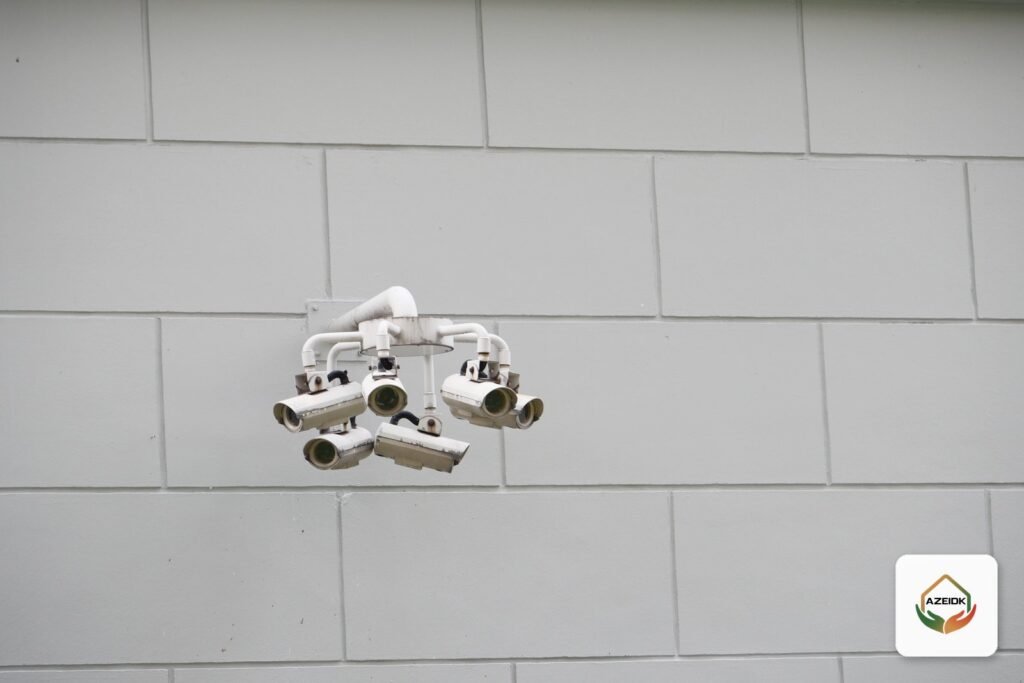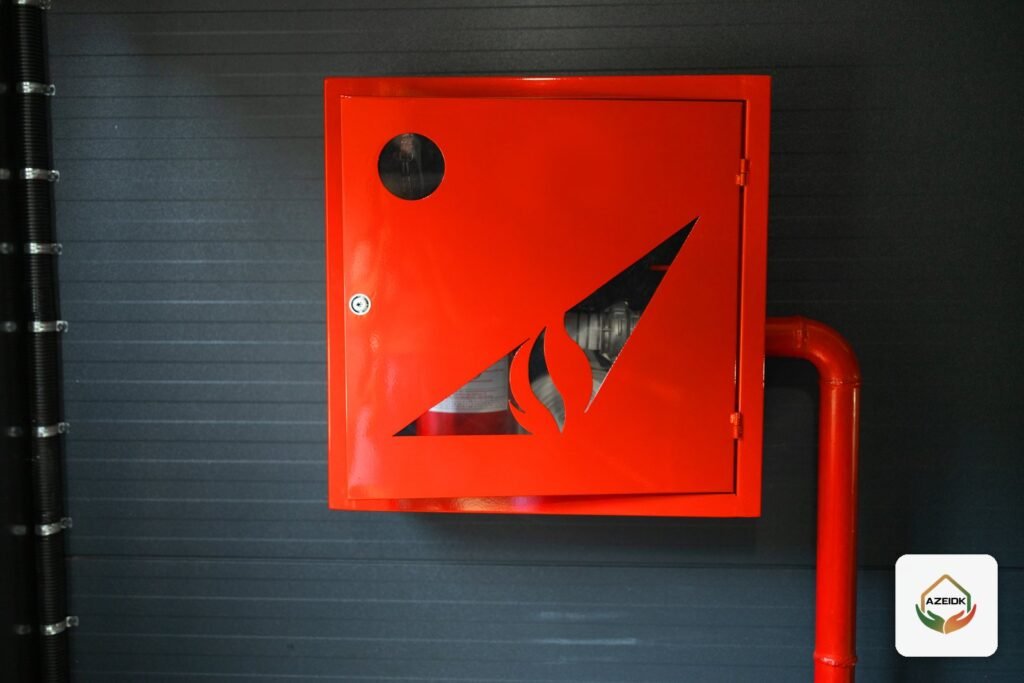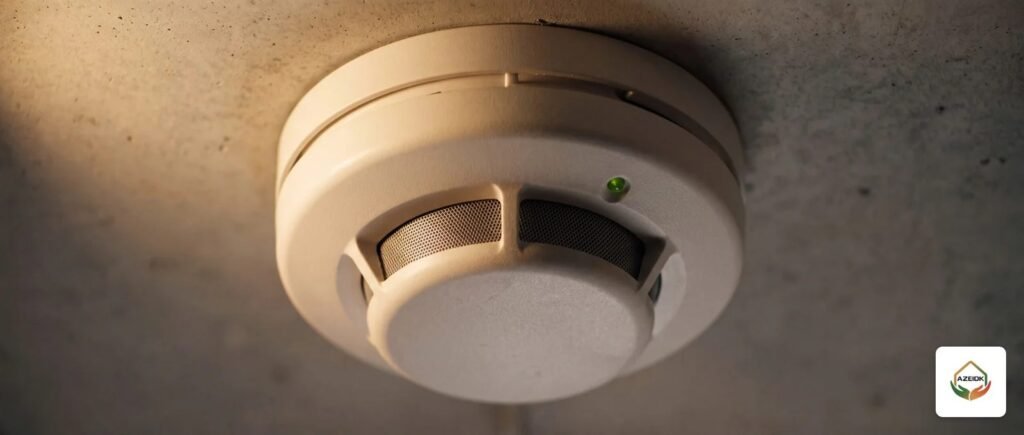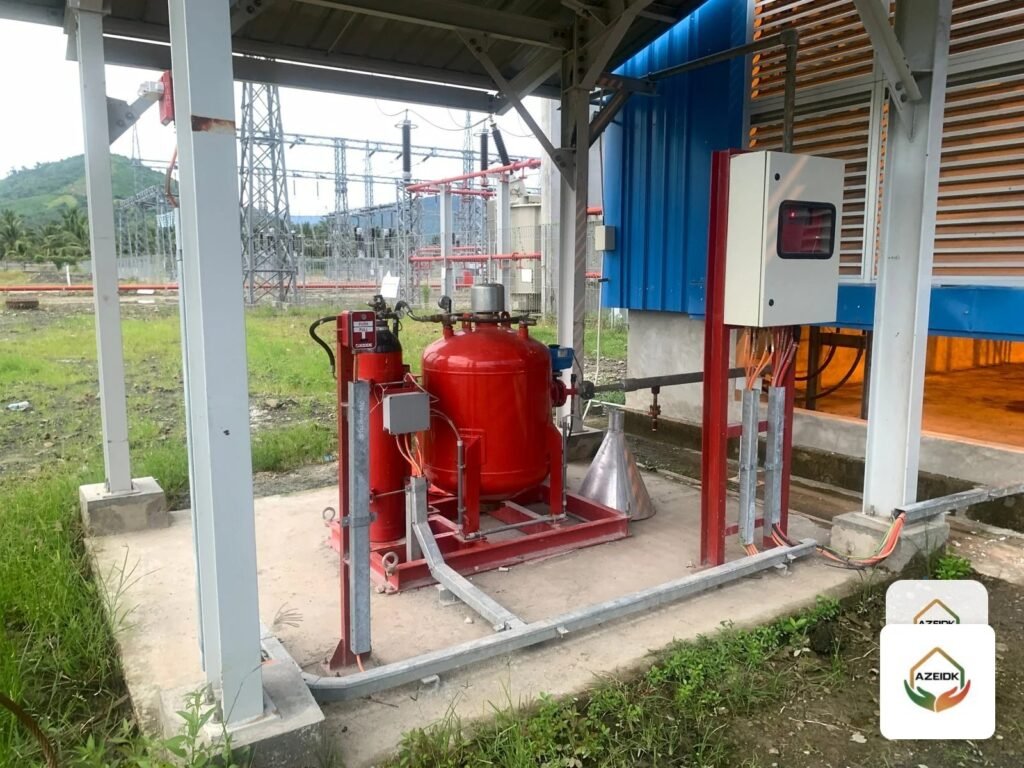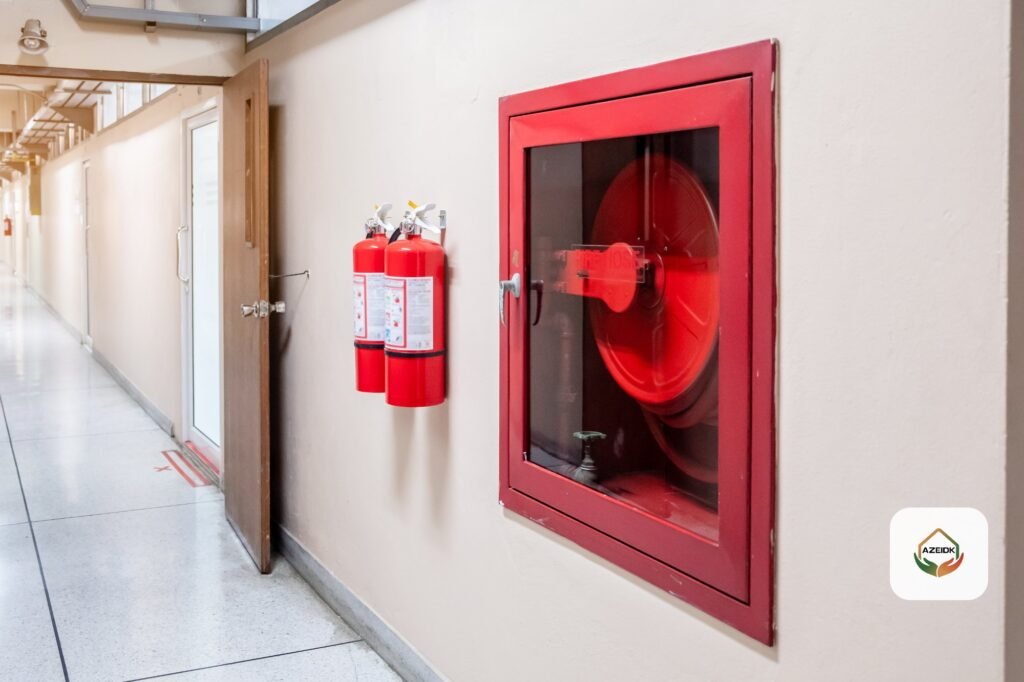
The fire safety equipment most facilities in Saudi Arabia need falls into four core categories: fire extinguishers, fire hose cabinets and hose reels, a fire alarm system, and fire-rated doors. The quantities, types and locations are set by the building’s occupancy under the Saudi Fire Code SBC 801 and the drawings approved by Civil Defense, not by one fixed list.
This guide brings the four categories into one practical checklist: what each one does, what is typical for each type of facility, what to check before you buy, and how to keep it ready for inspection and licence renewal.
Key takeaways
- There is no single “mandatory list” for every facility. Requirements depend on occupancy, area and hazard, and are set by the approved designer under SBC 801 and Civil Defense requirements.
- The 2024 edition of the Saudi Building Code has been mandatory since 30 June 2025. Chapter 9 of SBC 801 covers fire protection and life safety systems, including extinguishers, fire alarm and standpipes.
- The SASO Technical Regulation for Fire Control Materials and Equipment requires a Certificate of Conformity for fire extinguishing equipment before it is placed on the market, and excludes fire alarm and firefighting systems from its scope.
- Equipment must be inspected after installation: extinguishers monthly with annual maintenance under NFPA 10, and fire door assemblies at least annually under NFPA 80.
In this article
- What fire safety equipment does a facility need?
- Who decides the Civil Defense equipment your facility needs?
- 1. Fire extinguishers: match the type to the hazard
- 2. Fire hose cabinets and hose reels
- 3. Fire alarm system: from control panel to sounder
- 4. Fire-rated doors: the door is a complete assembly
- Typical safety equipment by facility type
- How to check safety equipment before you buy
- Inspection and maintenance: ready until licence renewal
- Fire safety equipment from AZEIDK
- Frequently asked questions
- Conclusion
What fire safety equipment does a facility need?
When an owner asks about “safety equipment” or “Civil Defense equipment”, they usually mean the items a Civil Defense inspector will look for on site. These fall into four categories, each with a different role:
| Category | Role | Typical components |
|---|---|---|
| Fire extinguishers | Manual first-response firefighting | Dry powder, CO2, foam, wet chemical, clean agent, wheeled units |
| Fire hose cabinets and hose reels | A hose connected to the fire water network for first response | Single- or double-door cabinets, hose reel, 1.5-inch hose, extinguisher cabinet |
| Fire alarm system | Early detection and occupant warning | Control panel, smoke and heat detectors, manual call points, sounders, fire alarm cable |
| Fire-rated doors | Containing fire and smoke and protecting escape routes | Fire-rated door with frame, hinges, lock, escape handle and self-closer |
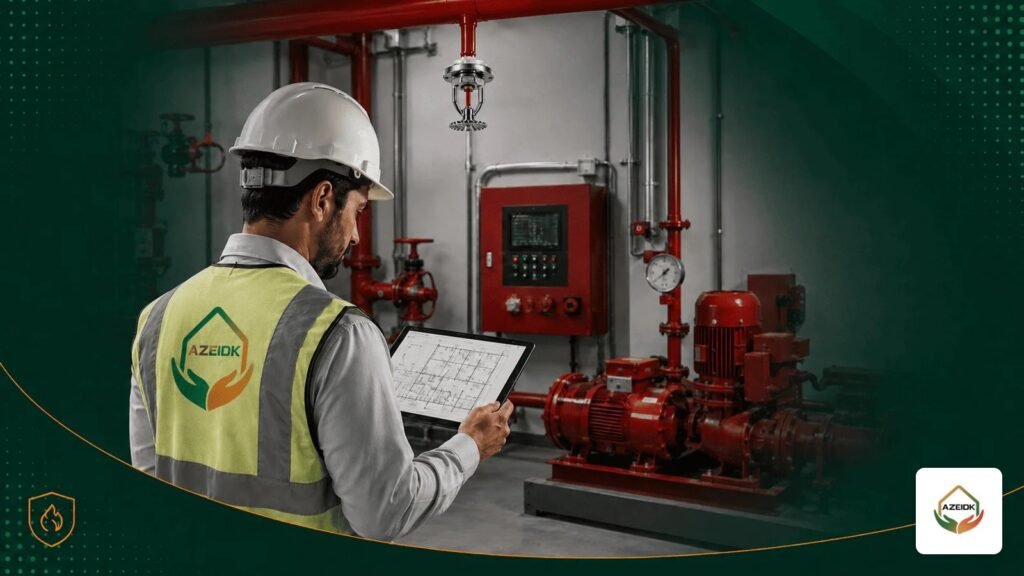
Sprinkler networks, fire pumps and special suppression systems are engineered systems rather than equipment bought off the shelf. They are decided by the building’s engineering design.
Who decides the Civil Defense equipment your facility needs?
The binding reference is the Saudi Building Code, and its fire part is the Saudi Fire Code SBC 801. The 2024 edition replaced the 2018 edition and has been mandatory since 30 June 2025. Chapter 9 covers fire protection and life safety systems, including extinguishers, fire alarm and detection, and standpipes. Chapter 7 covers fire and smoke protection features, including door openings.
So “Civil Defense equipment” is not one list that fits every building. A small shop, a warehouse, a hotel and a factory have different requirements. The approved designer sets the equipment, quantities and locations on the drawings based on occupancy classification, area, height and hazard. Civil Defense licensing for facilities then goes through the Salamah platform. The practical rule: do not buy before you know what your drawings or designer require, and confirm final requirements with Civil Defense.
1. Fire extinguishers: match the type to the hazard
Extinguishers are the most common item, and the most common mistake is using one type everywhere. Each type suits a class of fire:
- Dry powder: the most widely used type in shops, offices, warehouses and vehicles, available as portable units and larger wheeled units.
- Carbon dioxide (CO2): common near electrical panels and equipment because it leaves no residue.
- Foam: for flammable liquids as well as ordinary combustibles.
- Wet chemical: for cooking oil and fat fires in commercial kitchens.
- Clean agent (FM-200 / HFC-227ea): for server rooms and sensitive electronics.
- Automatic ceiling-mounted units: self-actuating in small enclosed rooms; they do not replace portable extinguishers.
Extinguisher distribution, quantities and travel distances are calculated in the design under SBC 801 and NFPA 10, which the designer adopts as the technical reference. The types and capacities AZEIDK supplies, including Falcon Gold, FG and SFFECO, are on the fire extinguishers page.
2. Fire hose cabinets and hose reels
A fire hose cabinet protects the hose reel or extinguisher and keeps it visible and accessible. In buildings with a fire water network, the cabinet is the first point of response for occupants or trained staff. NFPA 14 distinguishes Class II 1.5-inch hose connections, intended for trained occupants or an in-house fire brigade to tackle a fire in its early stage, from Class I 2.5-inch connections intended for the fire service (Civil Defense).
What to specify in a fire hose cabinet
- Material: painted mild steel for normal indoor use, or stainless steel for wet areas and exposed locations.
- Layout: single door for a hose reel, double door for a hose reel plus extinguisher, or a double vertical cabinet.
- Mounting: surface or recessed, with room for the door to open fully.
- Contents: manual or automatic hose reel, hose to the design, and the supply valve.
AZEIDK supplies fire hose cabinets and hose reels from Falcon Gold in single- and double-door, stainless and mild steel versions, an integrated foam and water cabinet and recessed extinguisher cabinets, plus the SFFECO automatic hose reel and SF 300 cabinet.
3. Fire alarm system: from control panel to sounder
The fire alarm warns people before smoke reaches them. Chapter 9 of SBC 801 sets when a fire alarm and detection system is required by occupancy, and the designer chooses the system type and components:
- Conventional: divides the building into zones; suits small and medium facilities.
- Addressable: identifies each device by its address; suits large and multi-storey buildings.
- Field devices: smoke and heat detectors, manual call points, sounders and beacons, and fire alarm cable.
- Emergency communication: some buildings require fire telephones or voice evacuation by design.
Through its fire alarm systems solutions, AZEIDK supplies Context Plus addressable and conventional panels and accessories, FG and SFP conventional panels, Falcon Gold and Fire World fire alarm cable, SigTEL fire telephones and AVAC voice alarm amplifiers, with installation, programming and testing.
4. Fire-rated doors: the door is a complete assembly
A fire door is not just a heavy steel door. It is an assembly of frame, hinges, lock, escape handle and self-closer, and its rating in minutes is set by the manufacturer and the assembly certificate. Fire doors are used on protected stairs, electrical and generator rooms, kitchens and along escape routes, as the drawings require.
Field changes, such as fitting the wrong lock, cutting the door or removing the closer, can void the rating, so any replacement follows the manufacturer and the assembly certificate. AZEIDK supplies fire-rated doors and emergency exit solutions from Falcon Gold with their hardware; the rating and sizes are confirmed from the official catalogue for each order.
Typical safety equipment by facility type
The table shows what is commonly specified for each facility type, as a starting point for the discussion with your designer. It does not replace approved drawings or Civil Defense requirements:
| Facility | Typical extinguishers | Hose cabinets | Fire alarm | Fire doors |
|---|---|---|---|---|
| Small shop | Portable powder; CO2 near the electrical panel | Depends on a fire water network in the building | Depends on occupancy and area | Usually not, unless the drawings require them |
| Restaurant or café | Wet chemical near cooking; powder or CO2 | Depends on the building | Common | Depends on kitchen separation on the drawings |
| Offices | Powder and CO2; clean agent for server rooms | Common with a water network | Common | Stairs and service rooms |
| Warehouse | Portable powder and wheeled units | Common | Common | Between areas per design |
| Factory or workshop | Powder, foam and CO2 per materials | Common | Common | Hazard rooms and stairs |
| Hotel or multi-storey residential | Powder and CO2 in corridors and service areas | Common on each floor | Usually addressable | Protected stairs and service rooms |
How to check safety equipment before you buy
Buying cheaper equipment and then having it rejected at handover or inspection is the costliest outcome. Before buying, check:
- Saudi conformity: the SASO Technical Regulation for Fire Control Materials and Equipment requires a Certificate of Conformity for fire extinguishing equipment, fire pumps, extinguishing agents and their parts before they are placed on the market, with certificates recorded electronically through the SABER platform. Its annexes list hose reels, hoses and cabinets. Fire alarm and firefighting systems are excluded from the regulation and fall under the fire protection code.
- Datasheet: match the model, capacity, agent and fire class to the drawings.
- Approvals: if the consultant requires UL, LPCB or EN 54 for alarm devices, verify the exact model in the issuing body’s official directory, not from a catalogue logo.
- Compatibility: detectors and sounders must be compatible with the chosen panel, and fire door hardware must be covered by the assembly certificate.
- Labelling and instructions: the regulation requires clear, permanent warning labels and instructions for use.
Inspection and maintenance: ready until licence renewal
Installation is the start, not the end. NFPA 10 sets monthly inspection of extinguishers and annual maintenance by a qualified technician, with periodic hydrostatic testing that varies by extinguisher type. NFPA 80 requires fire door assemblies to be inspected and tested at least annually, with a signed written record; checks include the self-closer, latching, the label and door clearances. Fire alarm systems have their own periodic inspection and testing programme.
These frequencies are technical references applied with the manufacturer’s instructions and the authority’s requirements. AZEIDK’s preventive and periodic maintenance contracts cover extinguishers with AZEIDK’s own maintenance team, alongside alarm and firefighting systems.
Fire safety equipment from AZEIDK
In Saudi Arabia, AZEIDK supplies all four categories in this guide from dedicated product pages: fire extinguishers, fire hose cabinets and hose reels, fire alarm panels, detectors and devices, and steel fire-rated doors. AZEIDK works across design, supply, installation and maintenance, and holds ISO 9001, ISO 14001 and ISO 45001 certificates with a scope that includes fire fighting and fire alarm systems. Send us your drawings or bill of quantities and we will review the equipment required and recommend suitable models with a datasheet for each.
Frequently asked questions
What safety equipment does Civil Defense require for shops?
There is no single list for every shop. The activity, area and building set the requirements, which usually include extinguishers suited to the hazard and may include fire alarm and other equipment. Confirm requirements through Salamah or with an approved designer.
Is “safety equipment” the same as “Civil Defense equipment”?
In the Saudi market the two terms usually mean the same thing: the firefighting and life safety equipment Civil Defense checks, such as extinguishers, hose cabinets, fire alarm and fire doors.
Do fire extinguishers need a certificate of conformity in Saudi Arabia?
Yes. The SASO Technical Regulation for Fire Control Materials and Equipment requires a Certificate of Conformity for extinguishing equipment before it is placed on the market, recorded electronically through SABER.
How often is fire safety equipment inspected?
Under NFPA 10, extinguishers are inspected monthly and maintained annually; under NFPA 80, fire doors are inspected at least annually, together with the manufacturer’s instructions and the authority’s requirements.
What is the best fire extinguisher for shops and offices?
No single type fits every space. Powder is common for general use, CO2 near electrical equipment and wet chemical in kitchens. Choose by the hazard present.
Conclusion
The fire safety equipment list for any facility in Saudi Arabia starts from the drawings and the occupancy classification, not from a ready-made shopping basket. Extinguishers, hose cabinets, fire alarm and fire doors work together: the alarm detects, the extinguisher and hose tackle the fire early, and the door protects the way out. Matching each item to the drawings and Saudi requirements before buying, then inspecting it regularly, keeps it ready on the day it is needed and on inspection day.
Fitting out a new facility or preparing for a Civil Defense inspection? Send us the activity, area and any drawings, and we will review the safety equipment required and recommend suitable models with datasheets. Contact the AZEIDK team