Access gates for people and vehicles are automated barriers that let only authorised users through. The main types are tripod turnstiles, flap and speed gates, full-height turnstiles and vehicle barrier arms. The right choice depends on peak throughput, the security level required, and how the gate releases on fire alarm and power loss.
This guide covers the gate types, integration with access control and time attendance, what the codes say about egress, and how to choose by site.
Key takeaways
- The gate is the mechanical part; the decision to open comes from the access control system (reader, controller and software).
- Tripod turnstiles suit factories and staff entrances, flap and swing gates suit lobbies, and full-height turnstiles suit perimeters and sensitive sites.
- Vehicle barriers are selected by lane width and boom length and type.
- Gates must not trap occupants: the IBC requires security access turnstiles to open automatically on power loss and on fire alarm or sprinkler activation.
- The approved drawings and Civil Defense requirements decide gate numbers and adjacent exits.
In this article
- What are access gates and how do they work?
- What types of pedestrian access gates are there?
- How do the gate types compare?
- When do you need a vehicle barrier?
- How do access gates integrate with access control and time attendance?
- Must access gates open on fire alarm?
- How do you choose gates by site?
- What maintenance do access gates need?
- Common access gate mistakes
- AZEIDK access gates
- Frequently asked questions
- Summary
What are access gates and how do they work?
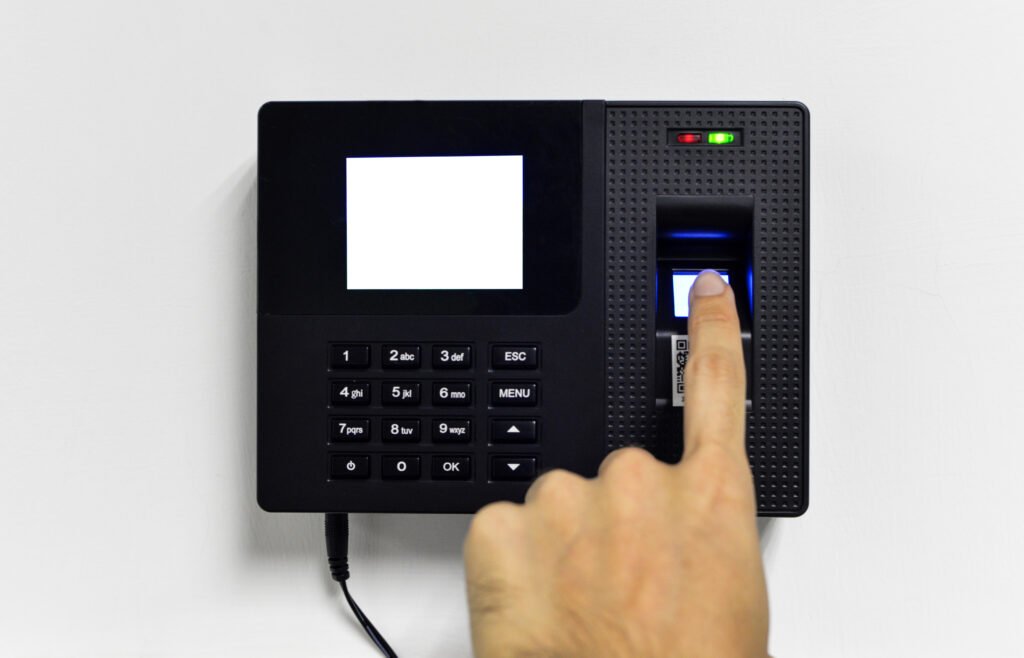
An access gate system has three parts: the gate (cabinet, arms or wings, and drive), an identity reader (RFID card, fingerprint, face recognition or QR code), and a controller with software that decides who passes and when. The reader reads the credential, the controller checks the permission, opens the gate and logs the event. That is why gates are specified together with the access control technology.
What types of pedestrian access gates are there?
Tripod turnstiles
Three rotating arms let one person through per cycle. They are common at factories, staff entrances and sports facilities because they are simple and economical, but their low height controls flow rather than preventing climbing. AZEIDK lists ZKTeco tripod models such as the mTS1000 series, the dual-lane TS1200 series and the TS5000A, and the Dahua ASGG5XXT.
Flap and speed gates, and swing barriers
Fast-opening wings with sensors that follow the user and detect tailgating. They suit office tower, hotel and bank lobbies where appearance and speed matter. Swing barriers use swinging panels and, depending on model, a wider lane for luggage and wheelchairs; AZEIDK lists the Dahua ASGB2XXZ-X and ASGB9XXS-X.
Full-height turnstiles
Person-height rotors that stop climbing and sneaking through, used on factory, warehouse and construction-site perimeters, often unattended. AZEIDK lists the ZKTeco FHT2400D and the Dahua ASGQ220C and ASGQ520C.
How do the gate types compare?
| Type | Anti-intrusion | Throughput | Typical location | Note |
|---|---|---|---|---|
| Tripod turnstile | Medium | Medium | Factories, staff entrances, gyms | Economical; low arms |
| Flap / speed gate | Medium to high with sensors | High | Office, hotel and bank lobbies | Needs planned floor ducts |
| Swing barrier | Medium | High | Lobbies, luggage and wheelchair lanes | Wider lane by model |
| Full height | High | Low | Perimeters, sites, sensitive facilities | Over 39 in, special IBC rules apply |
| Vehicle barrier | Low for pedestrians | By boom speed | Car parks, vehicle entrances | Boom length and type by lane width |
When do you need a vehicle barrier?
A barrier arm rises for an authorised vehicle after a card, plate read or guard command. Selection depends on lane width, headroom in basement car parks and traffic volume. AZEIDK lists Hikvision barriers DS-TMG320-B, DS-TMG423-B (fence boom) and DS-TMG520 (straight boom). For full car park management see parking management and barrier systems.
How do access gates integrate with access control and time attendance?
- Direction: an entry reader and an exit reader, otherwise attendance software cannot tell clock-in from clock-out.
- Interface: Wiegand or TCP/IP between reader, controller and software, checked on the datasheet.
- Software: one platform for permissions and attendance avoids duplicate databases. AZEIDK lists time attendance devices from ZKTeco and Hikvision and access controllers from ZKTeco, Hikvision and Dahua.
- CCTV: linking gate events to the entrance camera speeds up incident review.
Brand detail: ZKTeco in Saudi Arabia and Dahua in Saudi Arabia. For wiring the reader, lock and exit button to the controller and releasing locks on fire alarm, see our access controller wiring guide.
Must access gates open on fire alarm?
A security gate must never trap people. The International Building Code (IBC), one of the references the Saudi Building Code was developed from, sets conditions for traditional and security turnstiles. The figures below are as summarised by Door Security + Safety for IBC editions from 2018 and are an approximate guide; the binding reference is the adopted edition of the Saudi General Building Code (SBC 201) and the Civil Defense approved drawings:
- Traditional turnstiles: credited with up to 50 persons of egress capacity each if they meet the criteria, including turning freely in the egress direction on loss of primary power or manual release by an employee, carrying no more than 50% of required egress capacity, and a height not over 39 inches.
- Side door: where the occupant load served exceeds 300, a compliant side-hinged swinging door within 50 feet of each turnstile, except for compliant security access turnstiles.
- Security access turnstiles (since the 2018 edition): a building fully protected by a supervised automatic sprinkler system, at least 22 inches clear width, barriers that open automatically on power loss, on fire alarm, detection or sprinkler activation (remaining open until manually reset), and that open for at least 30 seconds when a clearly identified manual release is operated, with an employee assigned to the area while the building is occupied.
NFPA 101 has similar provisions and restricts turnstiles in assembly occupancies. In practice, an output from the fire alarm system drives the gate controller to open or free the gates, and this is tested with power removed at commissioning. See also access control and security gates without blocking egress.
How do you choose gates by site?
- Count peak users and size lanes from the datasheet throughput.
- Set the security level: a staffed lobby differs from an unattended perimeter.
- Check the environment: heat, dust and ingress protection for outdoor gates.
- Provide at least one wide lane for wheelchairs and luggage.
- Choose the credential: card, fingerprint, face or visitor QR.
- Coordinate egress: alarm and power-loss behaviour, side doors and exits.
- Lay floor ducts, power and network before finishes.
| Site | Usual choice |
|---|---|
| Factory or warehouse staff entrance | Tripod; full height on the perimeter |
| Office tower or bank | Flap / speed gate or swing barrier |
| Construction site or labour camp | Full height with time attendance |
| Gym or leisure venue | Tripod or swing with visitor QR |
| Car park | Vehicle barrier with card or plate reader |
What maintenance do access gates need?
Follow the model’s operating manual: check arms or wings, drive and return mechanism, clean sensors and readers, review software error logs, and retest release on fire alarm and power loss after any programming change. Gates can be included in preventive maintenance contracts with other low current systems. Common boom, sensor, loop and motor faults, and what a contract should cover, are explained in our guide to parking barrier and turnstile maintenance.
Common access gate mistakes
- Choosing the gate before counting peak users, so queues build up.
- Installing gates on an escape route without coordinating with the evacuation plan and the fire alarm panel.
- An entry reader with no exit reader, then expecting correct attendance reports.
- No wide lane for wheelchairs and luggage.
- Not testing gate release on fire alarm and on power loss before handover.
- Forgetting floor ducts until the marble work is finished.
AZEIDK access gates
Within its security and surveillance and low current solutions, AZEIDK supplies ZKTeco, Dahua and Hikvision pedestrian gates and parking barriers, shown on its turnstiles and parking barriers page, together with access control, attendance, CCTV and coordination with the fire alarm system.
Frequently asked questions
Turnstile or speed gate?
Tripods are economical with medium throughput; speed gates are faster and suit busy lobbies.
Can gates record time attendance?
Yes, with entry and exit readers and a controller linked to compatible attendance software.
What happens on fire alarm?
Gates must not block egress. They are programmed to open or free on an alarm signal and on power loss, per the approved design.
Best gate for a factory perimeter?
Usually a full-height turnstile, which stops climbing and works unattended.
Can gates serve as the emergency exit?
Not always. Codes limit the egress capacity credited to gates, and a side door or separate exit may be required.
Summary
Choosing access gates starts with peak users, security level and environment, then the reader type and attendance integration, and ends with the egress scenario: gates that open on fire alarm and power loss, and alternative exits. Settling these points at design stage costs less than changing them after finishes.
Planning access gates? Send us user numbers, entrance locations and the credential you want, and we will recommend gate types and models with datasheets. Contact the AZEIDK team