A warehouse fire systems maintenance contract has to deal with something an office contract never does: the hazard changes week to week. Storage gets higher, racks are moved, forklifts hit pipes and sprinkler heads, and new goods arrive that burn harder than the commodity the system was designed for. Checking the panel and the extinguishers is not enough. The technician has to compare the warehouse as it is today with the design the system was approved on.
AZEIDK provides preventive and scheduled maintenance for fire alarm, sprinkler, fire pump and extinguisher systems, plus corrective maintenance and technical support when faults occur. This guide covers what a warehouse or distribution centre contract should include, what gets checked on each visit, and how the contract supports the Salamah licence.
Key points
- The contract lists the warehouse’s actual systems with quantities: sprinklers and control valves, fire pumps, detectors, hose cabinets, extinguishers and fire doors.
- What sets warehouse maintenance apart: watching storage height and the clearance between the top of the goods and the sprinkler deflector, and repairing forklift damage.
- Any change in commodity, storage height or rack layout is reported to the owner as a finding, because the system was designed for a specific storage arrangement.
- The fire pump is the heart of a warehouse network; routine churn runs and the annual flow test are core contract items.
- The fire contract covers fire, life safety and alarm systems only. CCTV, low current and access control sit under a separate contract.
In this article
- Why does a warehouse need a different maintenance contract?
- What does a warehouse fire maintenance contract cover?
- Why storage height and commodity belong in the contract
- Scheduling visits in a warehouse that runs shifts
- The contract and the warehouse Salamah licence
- Common mistakes in warehouse maintenance contracts
- Frequently asked questions
Why does a warehouse need a different maintenance contract?
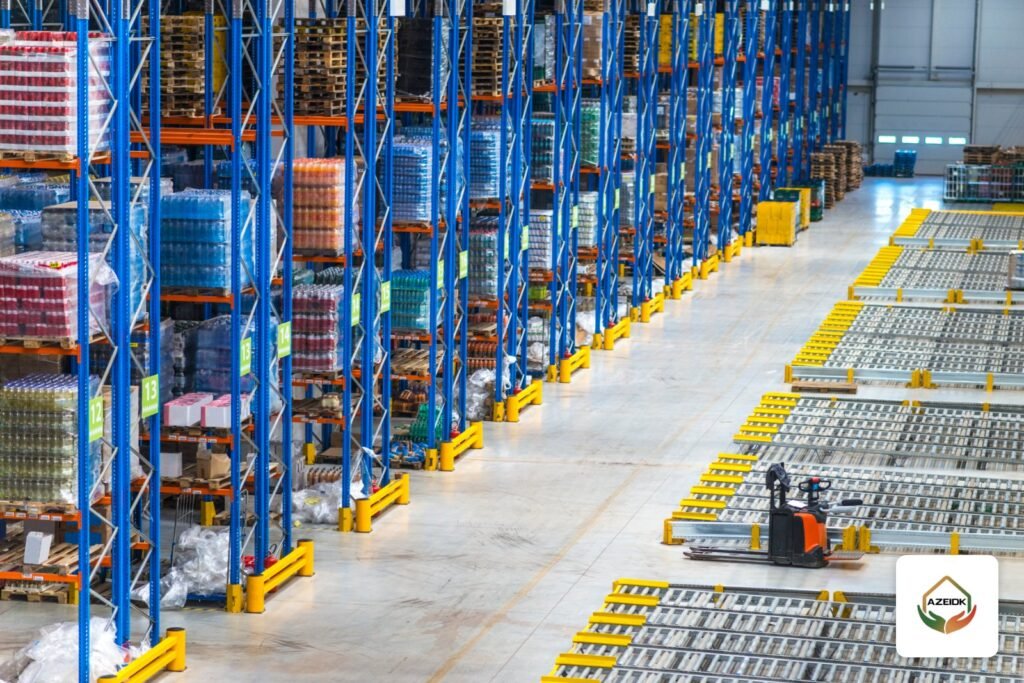
Warehouse sprinkler protection is designed around the commodity, the storage method and the storage height. When those change after handover, the system may still look healthy while no longer matching the hazard. The situations we see most often:
- Storage height: goods are stacked higher than the design allows, closing the gap to the sprinklers and blocking the spray.
- Commodity change: a building designed for ordinary goods starts storing plastics, tyres or batteries, all higher hazards. Batteries are covered in our article on lithium battery storage.
- New racks or a mezzanine: a new deck shields the floor below from the ceiling sprinklers, as explained in warehouse mezzanine fire protection.
- Operational damage: a forklift can break a head, bend a branch line or hit a riser, and dust builds up on detectors.
What does a warehouse fire maintenance contract cover?
The table summarises the usual inspection items in warehouses. General frequencies come from NFPA 25 for water-based systems and Chapter 14 of NFPA 72 for fire alarm, and are set out in full in our fire alarm, sprinkler, pump and extinguisher maintenance checklist. Always confirm the edition adopted for your project.
| System | What is checked | Warehouse-specific note |
|---|---|---|
| Sprinklers | Visual condition of heads, pipe and hangers, and clearance from the top of storage to the deflector | ESFR heads need at least 0.9 m between deflector and top of storage; standard sprinklers 18 in (about 457 mm) |
| Control valves | Position (open and secured), and annual operation through full travel | Valves near doors and forklift routes need impact protection |
| Fire pump | Routine no-flow run, and an annual performance test with flow | Diesel weekly; electric weekly or monthly depending on edition and conditions |
| Fire alarm | Panel and fault log, and testing of detectors, call points and sounders to schedule | Beam detectors on high roofs need cleaning and alignment checks |
| Hose cabinets and hydrants | Hose, reel, valve and glass, plus outdoor hydrants | No goods may be stored in front of a cabinet or hydrant |
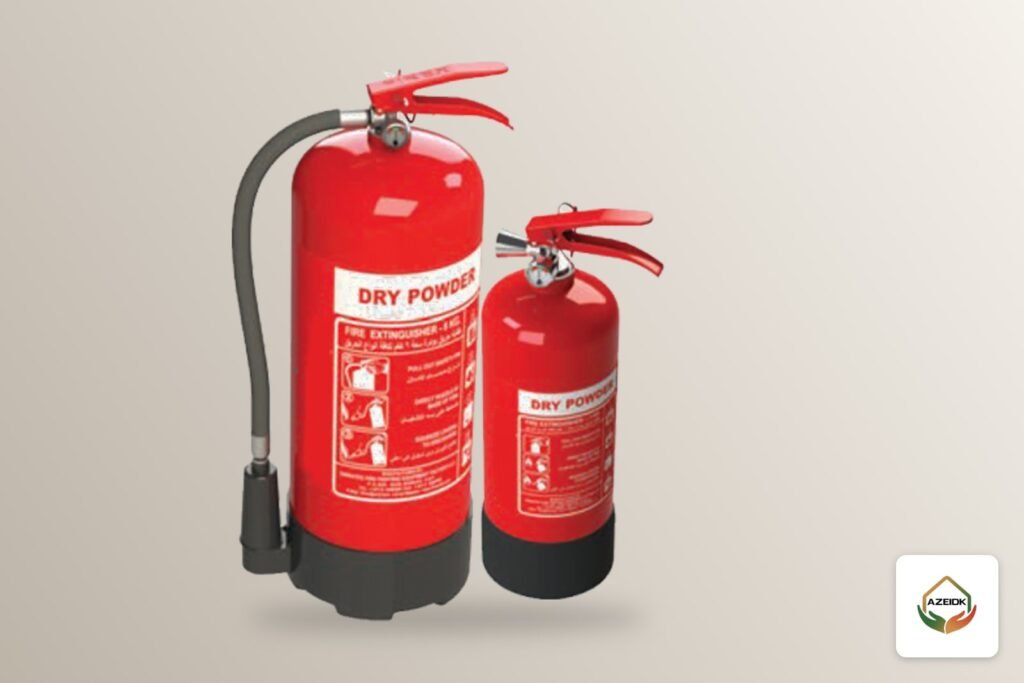
| Extinguishers | Gauge, seal and tag, plus annual maintenance | Placement between racks, at loading areas and in charging rooms |
| Fire doors | Self-closing, latching and frame | Doors between the warehouse and offices are often wedged open, a recurring inspection finding |
For more detail see ESFR sprinklers for warehouses, warehouse smoke detectors and warehouse fire extinguishers.
Why storage height and commodity belong in the contract
Most maintenance contracts list devices and say nothing about storage, even though storage is what decides whether the system is adequate. Ask for every visit report to include a written note on:
- The highest storage seen in each area, compared with the design height where it is available.
- Any goods or stacking that obstruct sprinklers, detectors or hose cabinets.
- Any change in commodity the technician noticed, such as plastics or flammable packaging.
- New racks, mezzanines or partitions that were not there on the previous visit.
The maintenance technician does not redesign the system, but reports the change to the owner. If the system no longer fits, the work starts with an assessment of the existing systems before any modification.
Scheduling visits in a warehouse that runs shifts
Many warehouses and distribution centres run long shifts, and a test that sounds the alarm or shuts a valve disrupts operations. What helps:
- A test schedule agreed in advance with the warehouse manager, naming the affected zones and times.
- Notifying the relevant parties before any part of the system is taken out of service, tagging closed valves, and restoring everything before the visit ends.
- If an impairment runs long, NFPA 25 sets out alternatives such as a fire watch, explained in our article on fire system impairments and fire watch.
- Fixing forklift damage quickly: a broken head or bent branch line should not wait for the next scheduled visit.
The contract and the warehouse Salamah licence
When a warehouse licence is issued or renewed, the facility needs evidence that its systems work and are maintained: a valid maintenance contract, an up-to-date log with dates, results, faults and repairs, and closed-out findings before the inspection. Warehouse requirements are covered in Salamah licence for warehouses, and the municipal rules in MOMAH warehouse requirements.
AZEIDK handles the technical report through an approved engineering consultancy office and issues the safety equipment installation certificate for the work it carries out. Details are on the Civil Defense approval support page.
Common mistakes in warehouse maintenance contracts
- No asset list: “fire system maintenance” without the number of sprinklers, pumps and detectors makes every later dispute hard to settle. Start with a fire systems asset register.
- Ignoring the pump room: a pump that has not run for months may fail on the day, and diesel starting batteries suffer in the heat.
- Checking devices without looking at storage: a perfect sprinkler above goods stacked to the roof cannot do its job.
- Merging the two contracts: adding CCTV and networks to the fire contract blurs responsibility. Each group has its own contract.
To compare contract types see comprehensive vs non-comprehensive contracts, and for what drives the cost see fire maintenance contract cost factors.
Frequently asked questions
How often is a warehouse visited under a fire maintenance contract?
The contract sets monthly, quarterly or semi-annual visits depending on the systems and scope, with annual tests of the fire pump and control valves and a written report after each visit.
What clearance is needed between stored goods and sprinklers?
At least 18 in (about 457 mm) between the deflector and the top of storage for standard sprinklers, and at least 0.9 m for ESFR sprinklers, unless the approved design states otherwise.
Does the contract include the warehouse CCTV?
No. The fire contract covers fire, life safety and alarm systems. CCTV and low current systems have a separate maintenance contract.
What if storage is higher than the design allows?
Bring storage back to the permitted height first, then ask for an assessment of the existing system before any expansion. The technician records the finding but does not change the design.
Is a maintenance contract needed for the warehouse Salamah licence?
The facility must show that its systems work and are maintained, and a valid contract with an up-to-date maintenance log is the usual evidence at issue and renewal.
Running a warehouse or distribution centre? AZEIDK surveys the fire systems on site and proposes a maintenance schedule that fits your shifts. Contact AZEIDK
Related guides
- Fire-Rated Doors: Periodic Inspection and Maintenance of Closers, Panic Hardware and Frames to NFPA 80
- Fire Extinguisher Bracket (Stand / Holder): Wall, Floor and Vehicle Types and How to Choose by Extinguisher Size
- Fire Pumps in Riyadh: Choosing Pumps for Towers, Warehouses and Factories, Supplied by AZEIDK
- AFC OS&Y Gate Valves: Types and Valve Position Supervision in Saudi Projects