Fire system maintenance for schools means an annual programme covering the fire alarm, sprinklers and hose cabinets, fire pumps, extinguishers and special suppression, scheduled around the academic calendar: checks that do not disrupt lessons during term, full tests and major work in the summer break, and a complete readiness check before students return. A good contract puts all of this in writing.
This article is for private and international school administrations and for facilities teams at universities and educational complexes. It applies our general article on fire system maintenance contracts in Saudi Arabia to the education sector. AZEIDK provides annual maintenance contracts for fire systems; sector solutions are on the schools and universities page.
Key takeaways
- A fire system maintenance contract covers alarm, suppression, pumps and extinguishers; CCTV and low current systems have a separate contract.
- The summer break is the best time for full tests and major work, with a complete check before the academic year starts.
- Testing sounders during school hours disrupts students, so it is scheduled after hours or with advance notice to the administration.
- Complexes and universities need an asset register per building and a separate report for each.
- Signed records for every visit are what prove maintenance was actually done.
In this article
- What a school fire maintenance contract covers
- Fire system maintenance for schools: a calendar built on the school year
- Testing the alarm without disrupting students
- Summer renovations and their effect on fire systems
- Preventive and corrective maintenance in schools
- School groups and universities: one contract for several buildings
- What the school should ask for in the contract
- Records: proof the maintenance was done
- Frequently asked questions
- Conclusion
What a school fire maintenance contract covers
Systems vary from school to school with building size and age, but the contract must list every system actually installed, its device count and location. The usual systems:
| System | Typical maintenance scope |
|---|---|
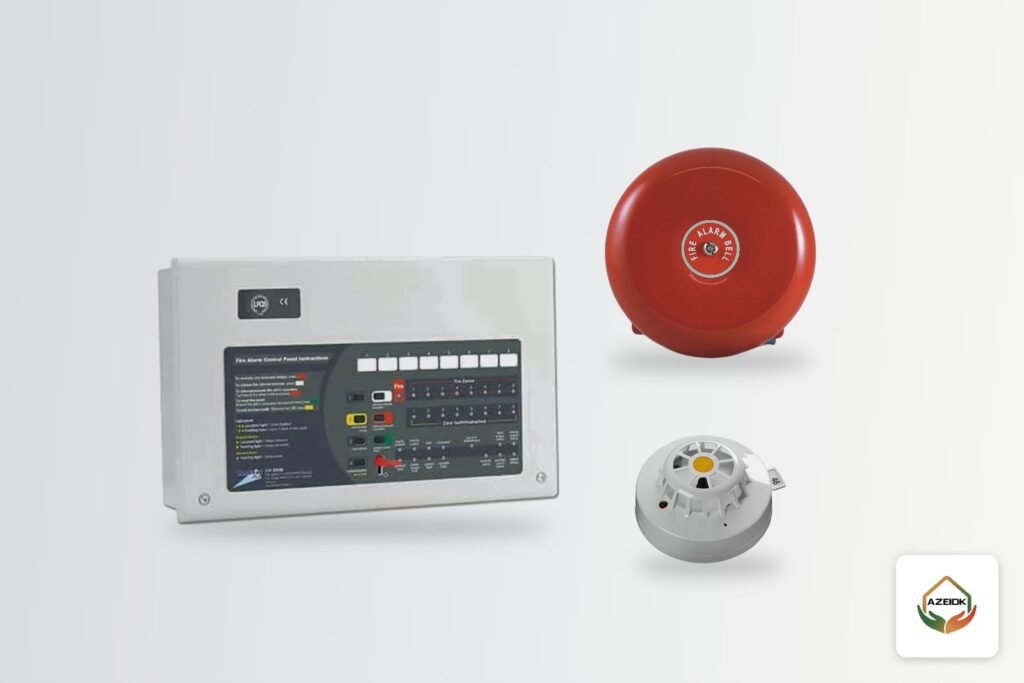
| Fire alarm | Panel and batteries, detectors and call points, sounders and beacons, interfaces with other systems |
| Sprinklers and hose cabinets | Valves and supervisory switches, alarm valve stations, hoses and reels, drain tests |
| Fire pumps | Periodic runs, annual flow test, controllers, jockey pump, diesel engine where fitted |
| Extinguishers | Inspection, recharging, annual maintenance and periodic tests |
| Canteen suppression | Hood suppression where the kitchen is commercial |
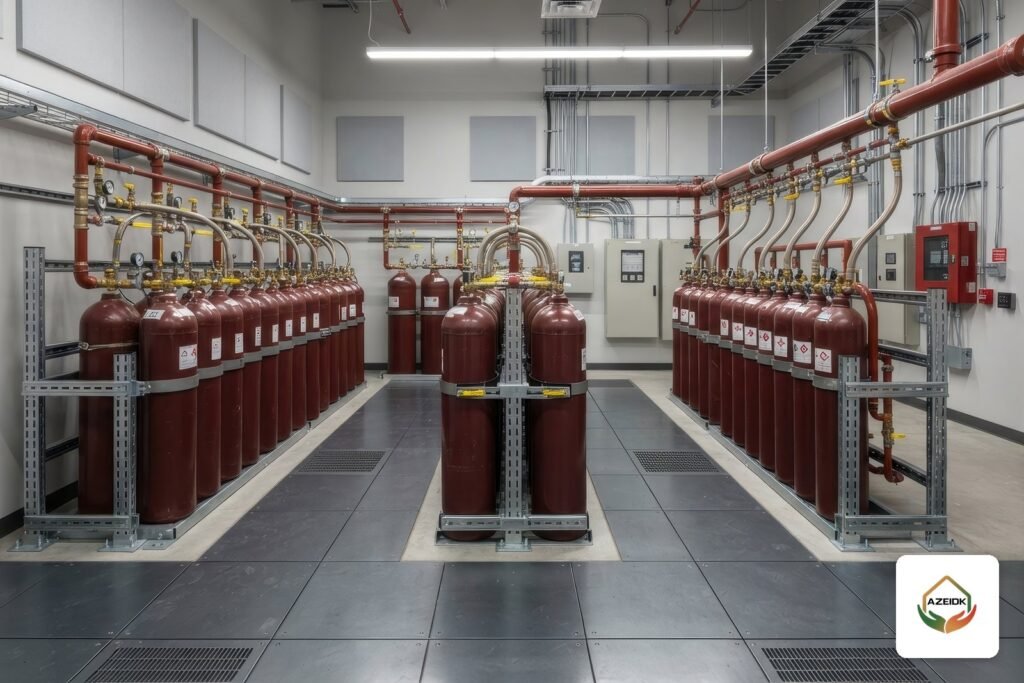
| Special suppression | Server room or archive system where installed |
CCTV, gates and networks are maintained under a separate low current contract; the two groups are not mixed in one agreement. See low current maintenance contracts.
Fire system maintenance for schools: a calendar built on the school year
Unlike a hospital or a factory, a school has known shutdown periods. Smart maintenance uses them instead of competing with lessons:
| Period | Suitable work |
|---|---|
| Summer break | Full fire alarm tests, pump flow tests, network work that needs draining, replacing faulty devices, upgrades |
| Before students return | Full readiness check of all systems, extinguishers in place, removal of any temporary detector covers after painting and finishing |
| During term | Periodic visual checks, pump runs, tests that do not sound alarms during lessons |
| Mid-year and Eid holidays | Deferred medium work and audible tests for parts of the building |
Required frequencies remain those set by NFPA standards and Civil Defense requirements; the school calendar sets the timing within those frequencies, not instead of them. Frequencies are listed in our fire protection maintenance checklist.
Testing the alarm without disrupting students
Sounding alarms mid-lesson without notice can cause a disorderly evacuation, and if it happens often students learn to ignore the sound. The contract should set a clear procedure:
- Written notice to the administration before any test that sounds the alarm, with time and area.
- Audible tests after hours or during holidays wherever possible.
- Any part of the system isolated for maintenance is logged and the guard informed, and everything is restored before the technician leaves.
- The monitoring party is informed if alarm signals are transmitted to one, so tests are not treated as real fires.
Summer renovations and their effect on fire systems
Many schools use the summer for painting, new false ceilings and rearranging classrooms. This work affects fire systems directly unless it is coordinated with the maintenance team. Detectors are covered during painting and dusty work and the covers are forgotten; sprinklers may be painted with the ceiling, and a painted sprinkler is replaced, not cleaned, as explained in when to replace fire sprinklers. Splitting a large classroom into two may leave one without a detector or an audible sounder.
The contract should therefore include a visit after renovation and before students return, to review what changed, return every device to service and record any change that needs design input or extra devices.
Preventive and corrective maintenance in schools
Preventive maintenance is scheduled visits that find faults before they happen. Corrective maintenance deals with a fault that has occurred: a detector giving false alarms, a panel showing a circuit fault, a sprinkler leak. In a school the impact is magnified, because a false alarm stops lessons and sends hundreds of students outside.
The contract must therefore set the response time for urgent faults and state whether spare parts are included or priced separately. See comprehensive vs non-comprehensive contracts and SLAs in fire maintenance contracts. AZEIDK provides corrective maintenance and technical support for fire systems.
School groups and universities: one contract for several buildings
For a university or a school group with several branches, one contract with a schedule per building or branch works best. The schedule is built on an asset register listing for each building the fire alarm panel type and device count, fire pumps, number and types of extinguishers, and special systems. A separate report is issued for each building after every visit, so facilities management knows the state of each one.
When a contract starts on existing buildings, it is best to begin with an inspection and assessment that sets out system condition and required repairs before commitment, through AZEIDK’s existing systems assessment and scope definition. If the previous contractor left no records, this survey creates a new baseline.
What the school should ask for in the contract
- A list of systems and devices covered in each building.
- Number and timing of planned visits on the school calendar.
- The audible test procedure and advance notice.
- Response time for urgent faults on school days.
- Spare parts included and excluded.
- A signed report for each visit stating what was checked, found and repaired.
- Clear responsibilities where the school building is leased.
For what drives the price, see fire maintenance contract cost factors.
Records: proof the maintenance was done
A visit with no record might as well not have happened. The school keeps a file with the contract, signed visit reports, pump test results, the alarm log with causes, and extinguisher tags. This file is what is usually shown at inspections or licence renewals, and what management relies on to decide when to replace an old system instead of repairing it again and again.
It helps for management to review this file with the maintenance contractor at least once a year, before budgeting for the next academic year. Repeated faults on an old panel, rising false alarms in one building, or many replaced extinguishers are all signals for a phased upgrade during the holidays instead of emergency repairs during term.
Frequently asked questions
What does fire system maintenance in schools include?
Fire alarm, sprinklers and hose cabinets, fire pumps, extinguishers, and kitchen and special suppression where installed. CCTV and low current systems have a separate contract.
When is the best time to maintain school fire systems?
The summer break for full tests and major work, a readiness check before students return, and light periodic checks during term.
Can the fire alarm be tested during school hours?
It is best avoided; if necessary, give the administration advance notice of the area and time so students do not evacuate in disorder or learn to ignore the alarm.
Can one contract cover all school branches?
Yes, with a schedule per branch listing its systems and devices, and a separate report for each branch after every visit.
Is CCTV maintained under the fire contract?
No. Fire and alarm systems are under one contract; low current systems and CCTV are under a separate one.
What should a maintenance visit report contain?
Date and building, devices checked, observations and faults, what was repaired and what needs parts, and signatures of the technician and the school representative.
Conclusion
Fire system maintenance in schools works when it is built on the academic calendar: major work in summer, a readiness check before the return, tests that do not disrupt lessons, and signed records for every visit. A clear contract turns these principles into a commitment that can be tracked.
Reviewing a maintenance contract for a school or campus? Send us the list of buildings and installed systems, and the AZEIDK team will prepare the maintenance scope and a visit schedule on the school calendar. Contact the AZEIDK team
Related guides
- Access Control for Government Buildings: Separating Visitors from Staff, Entry Gates and Door Release on Fire Alarm
- Fire Extinguisher Covers for Outdoor Use: Plastic Covers, Cages and Cabinets Against Sun and Dust
- Multi-Branch CCTV Central Monitoring: VMS, Network, Bandwidth and Permissions
- Central AC Contractor for Commercial Buildings in Saudi Arabia: HVAC Within an Integrated MEP Package