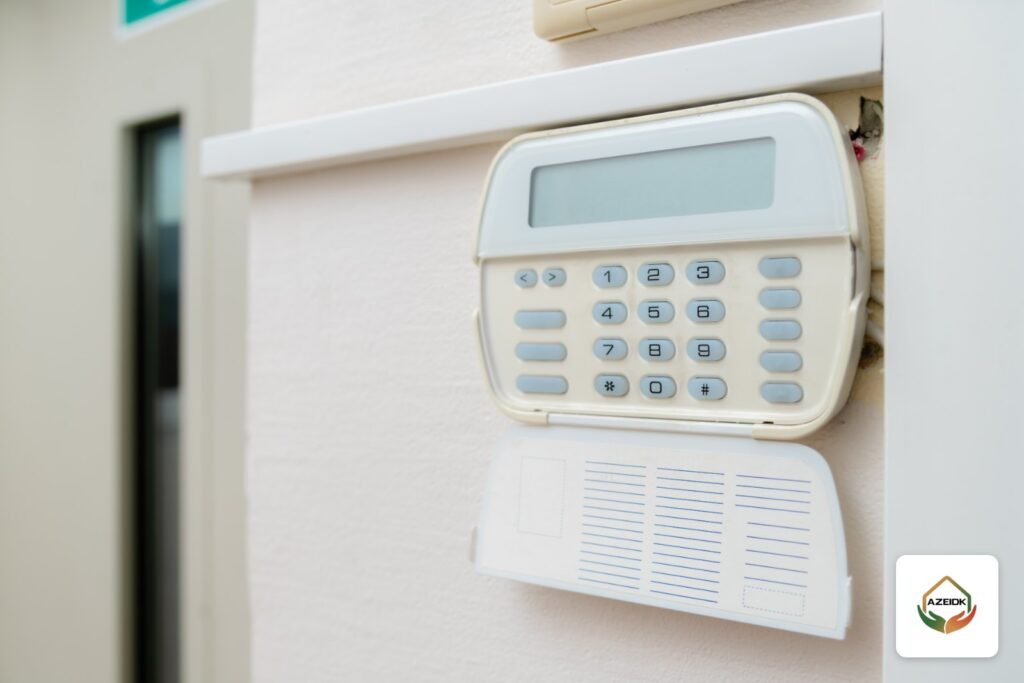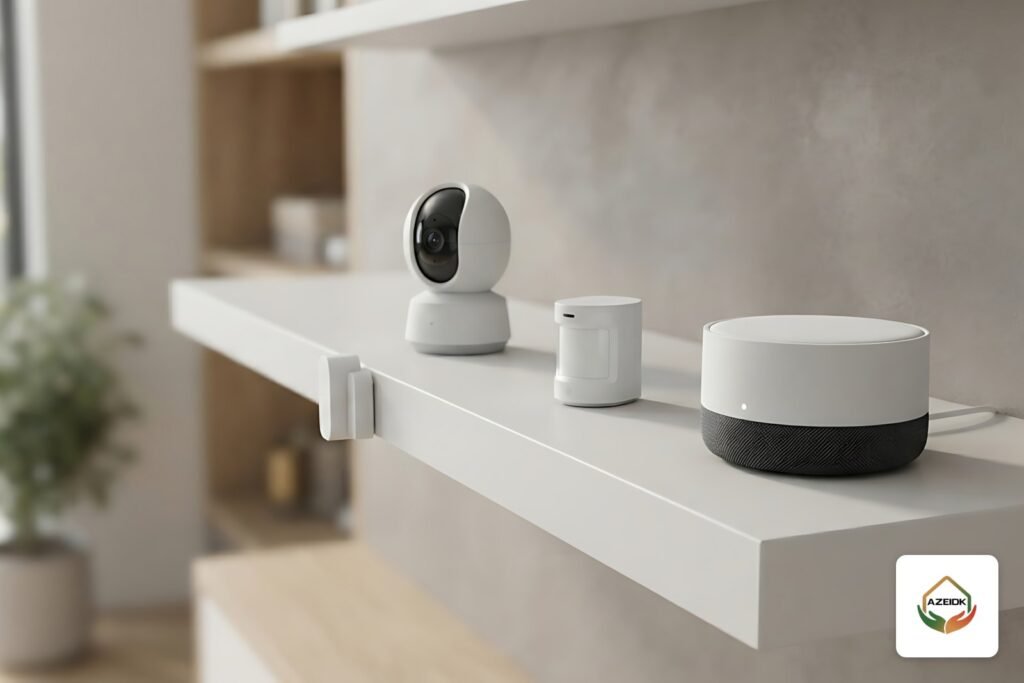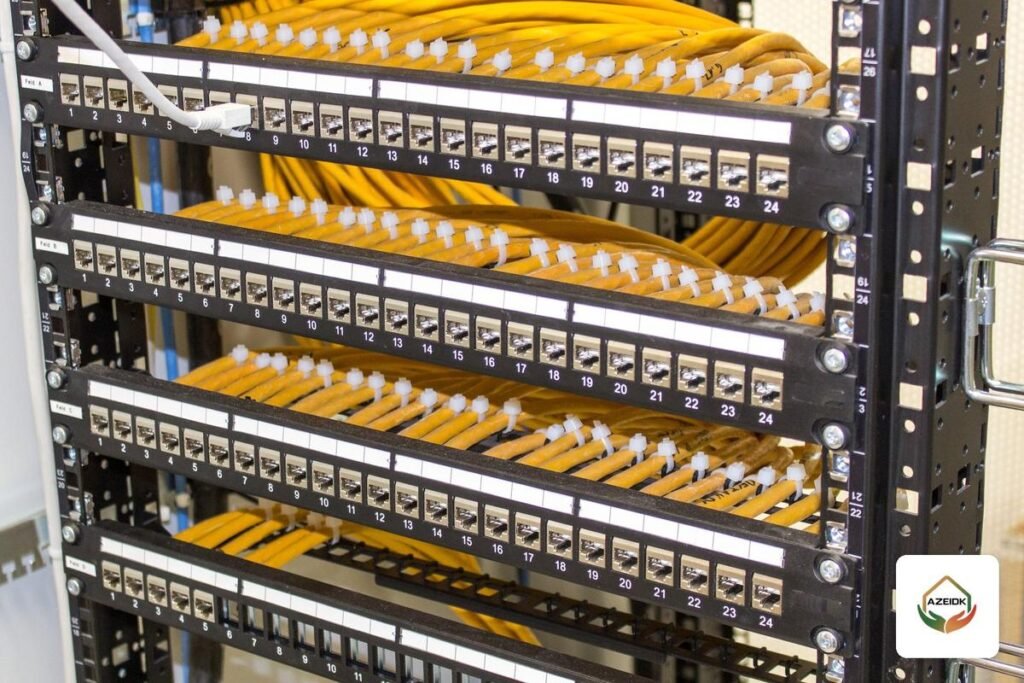
A low current maintenance contract (often called an ELV maintenance contract) puts CCTV, the data network, the PBX, access control and the public address (PA) system under one agreement. It should give you a written preventive visit schedule, a checklist for each system, agreed response times, a clear spare parts policy and a report after every visit. Its real value is that one party owns every system and every interface between them.
This article explains how to build a combined contract clause by clause, what to check on each system and what to negotiate before signing. For low current systems, AZEIDK’s preventive and periodic maintenance service covers CCTV cameras and recorders and the inspection of intrusion alarm, access control, intercom and barrier systems, including systems installed by others after an inspection to establish their condition. The network, PBX and PA clauses in this article are general guidance on what any contract that includes them should state.
Key takeaways
- A combined contract closes the most common gap: a fault that sits between two systems and that no contractor accepts.
- Start with a full asset register listing models, locations and switch ports. Without it, the contract scope cannot be measured.
- Each system gets its own checklist on preventive visits, and visit frequency follows the manufacturer’s instructions and how critical the system is to the facility.
- Response times, spare parts and admin passwords must be written into the contract.
- The report after each visit is the only proof that maintenance actually took place.
In this article
- Why one contract instead of five?
- What should a low current maintenance contract cover?
- The asset register comes first
- Preventive visit checklist for each system
- Who owns a fault between two systems?
- Response times: items to negotiate
- Spare parts: what is in the price and what is not
- Reports and records: what you receive after each visit
- What to check before you sign
- Common mistakes in low current maintenance contracts
- Frequently asked questions
- Summary
Why one contract instead of five?
In many buildings each system has its own contractor, yet the systems share the same infrastructure. Cameras, IP phones and Wi-Fi access points all draw power from the same switches over PoE (Power over Ethernet). The PBX runs on the data network. Door locks take a release signal from the fire alarm panel.
When a phone and a camera on the same floor fail together, each contractor blames the network, and nobody owns it. A single contract puts these boundaries under one party and unifies the visit schedule, reports and fault log.
Fire alarm and fire fighting maintenance is normally a separate contract of its own and is not part of the low current contract. The low current contract only coordinates with the fire maintenance contractor at the interfaces, such as door lock release on a fire alarm signal and PA used for voice evacuation.
CCTV also has a regulatory side. The Law on the Use of Security Surveillance Cameras was issued by Royal Decree No. M/34 dated 7/3/1444H. According to Okaz’s report when it was approved in October 2022, the law requires entities subject to it to install, maintain and operate their cameras around the clock and to retain recordings. Which entities are covered, and the retention periods, are set by the law and its implementing regulations. For periodic CCTV checks and faults, see our article on CCTV maintenance.
What should a low current maintenance contract cover?
Scope starts with a list of systems, broken down into specific assets. Adjust this template to what is actually installed.
| System | Assets included | State explicitly |
|---|---|---|
| CCTV | Cameras, recorders (NVR/DVR), hard drives, monitors and management software | Required retention period, and how a replaced drive holding recordings is handled |
| Network | Switches, racks, patch panels, Wi-Fi access points, horizontal cabling | Whether the router and firewall are in scope or stay with the IT department |
| PBX | PBX unit, IP and analog phones, trunk gateways | Who deals with the line provider, and who keeps configuration backups |
| Access control and intercom | Controllers, readers, maglocks, exit buttons, intercom stations, gates | Door release testing on a fire alarm signal, coordinated with the fire maintenance contractor, per the approved design |
| Public address (PA) | Amplifiers, speakers, microphones, background music source | Whether the system is used for voice evacuation as part of the fire alarm, or only for general paging |
| Power and infrastructure | UPS units, batteries, network room ventilation, earthing | Battery life and who pays for replacement |
Brands affect inspection details and parts availability. A contract covering Hikvision and Dahua cameras, ZKTeco terminals, Yeastar and Grandstream PBXs, Cisco switches and AZ Link racks needs technicians who know each vendor’s management software.
The asset register comes first
A contract cannot be priced or measured without an asset register. A good register lists, for every device: model, serial number, location, the switch port it connects to, IP address, firmware version and installation date.
On the network side, the ANSI/TIA-606 standard gives a consistent way to identify cables, ports and panels and link each label to a record. If the building has never been labeled, make the first visit under the contract a survey and labeling visit, with the register handed to the owner afterwards. Before contracting for maintenance of security systems in unknown condition, the work can start with a survey of existing systems under AZEIDK’s existing systems assessment and scope definition service.
Preventive visit checklist for each system
Visit frequency is set in a contract annex, based on the manufacturer’s instructions and how critical each system is. Each visit follows a checklist signed by the technician and the owner’s representative.
CCTV
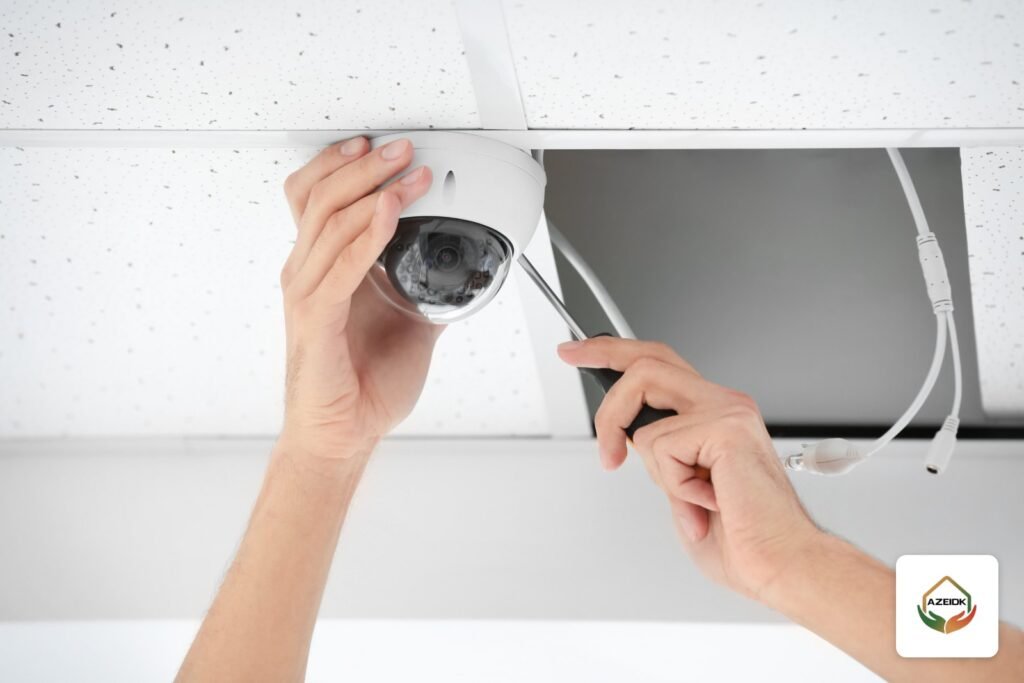
- Confirm every channel is actually recording, and review a sample of night footage.
- Check drive health from the recorder’s maintenance menu. Hikvision recorders offer S.M.A.R.T. and HDD health checks.
- Sync time, clean lenses, check angle and focus.
- Measure the actual retention period and compare it with the requirement.
Network and switches
- Review port errors and event logs, and PoE load against switch capacity.
- Check rack temperature and fans, cable management and label condition.
- Save a copy of each switch configuration after any change.
- Check for unknown devices connected to the network.
PBX and phones
- Take a configuration backup and store it off the unit. Yeastar P-Series PBXs support backups that include configuration and call detail records (CDR), and backups can be scheduled automatically.
- Test external lines and phone registration, and review the log of rejected login attempts.
- Review the firmware version before any update, and back up before updating.
PBX fault diagnosis is covered in our article on PBX maintenance and common faults.
Access control and intercom
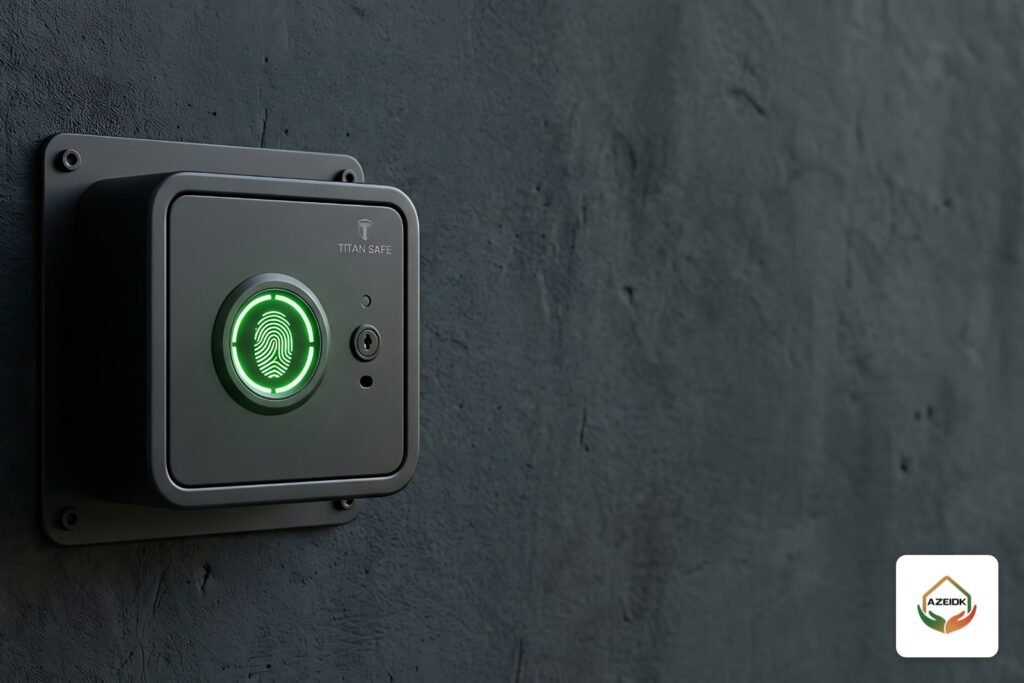
- Test the reader, lock, exit button and door contact for each door in the agreed sample.
- Test door release on a fire alarm signal, coordinated with the safety officer and the fire maintenance contractor.
- Delete cards and fingerprints of staff who have left, and review user permissions.
- Check audio and video clarity on intercom stations.
Public address (PA)
- Test every zone and confirm announcements are intelligible.
- Check amplifiers, ventilation and volume levels in each zone.
- If the PA is part of the fire alarm voice evacuation system, its testing follows the fire alarm maintenance program and the approved design, not the general paging program.
Who owns a fault between two systems?
The contract should state that the maintenance contractor diagnoses the fault until the responsible system is identified, then fixes it if it is in scope, or reports it to the owner if it is not. Common examples:
- Several cameras and phones drop at once: usually a switch port or the PoE power budget.
- Choppy call audio: quality of service (QoS) settings on the network, not just the PBX.
- A door fails to open after a fire alarm test: the access controller or its interface with the fire alarm panel, diagnosed together with the fire maintenance contractor.
If IT keeps the network, attach a responsibility matrix: switch passwords, VLAN changes and firmware approvals.
Response times: items to negotiate
There is no standard response time for low current systems. It is a commercial term agreed per facility. What matters is that the contract defines fault levels precisely and separates response time from repair time.
| Fault level | Examples | What to write in the contract |
|---|---|---|
| Critical | All recording stopped, PBX down for the whole facility, doors failing to open or close | Remote response time, on-site attendance time, and time to repair or apply a workaround |
| Medium | One camera, door or group of phones out of service | Attendance time and a maximum time to close |
| Low | Image quality, a permission change request, a missing label | Handled at the next preventive visit or by appointment |
Also agree coverage hours, the reporting channel and how report and closure times are logged. The contract should also state how emergency faults between visits are handled: whether call-out visits are included in the price or charged separately.
Spare parts: what is in the price and what is not
The comparison of comprehensive and non-comprehensive contracts is in our article on comprehensive vs non-comprehensive maintenance contracts. For low current systems, check these points:
- A named list of included parts: hard drives, power supplies, UPS batteries, locks, exit buttons.
- Whether core equipment (recorder, PBX, core switch) is excluded or covered up to a financial cap.
- Discontinued equipment: who proposes a compatible replacement, and whether it needs a new licence.
- Replaced drives: they stay with the owner or are destroyed with a signed record, because they hold recordings.
- On-site spare stock for large facilities, and who owns it.
Reports and records: what you receive after each visit
For each system, the report states what was checked, the result, observations and the recommended action. Attach:
- A log of faults opened and closed since the previous visit.
- Firmware updates carried out, with dates.
- The actual recording retention period and drive status.
- Changes to the asset register.
Admin passwords belong to the facility. Hand them over in a sealed envelope or a password manager the facility owns, not on a technician’s phone.
What to check before you sign
- An asset register attached to the contract, or a clause requiring it at the first visit.
- A visit schedule with frequencies per system, and an attached checklist.
- Defined fault levels with agreed response and repair times.
- A list of included and excluded spare parts.
- A responsibility matrix with the IT department, and how interfaces are coordinated with the fire maintenance contractor.
- A policy for firmware, passwords and user accounts.
- The report template and who signs it.
- Handover terms at contract end: register, configurations and passwords.
AZEIDK holds ISO 9001, ISO 14001 and ISO 45001 certificates. Their scope includes design, supply, installation and maintenance of CCTV, access control and low current systems.
Common mistakes in low current maintenance contracts
- A contract that says “maintenance of all systems” with no quantities or models.
- Leaving the network out of the contract even though every system runs on it.
- Updating firmware without a backup or without the owner’s approval.
- Finding out after an incident that recordings do not cover the required period, because nobody measured actual retention.
- Not retesting door release with the fire alarm after any change to the controllers.
- Default passwords left on cameras and the PBX.
Frequently asked questions
Can CCTV, the PBX and the network be covered by one maintenance contract?
Yes, provided the contract separates the scope, assets and checklist for each system. The main benefit is that one party is responsible for diagnosing faults that sit between systems.
How often should low current systems be serviced?
There is no single frequency for all systems. The visit schedule follows the manufacturer’s instructions and how critical each system is, and is written into a contract annex for each system.
What is the difference between response time and repair time?
Response time is how long until a technician starts working on the fault, remotely or on site. Repair time is how long until the system is back in service or a workaround is in place. Each should be stated separately.
Is CCTV maintenance mandatory in Saudi Arabia?
According to Okaz’s report on the Law on the Use of Security Surveillance Cameras (Royal Decree M/34 of 1444H), entities subject to the law must install, maintain and operate their cameras around the clock and retain recordings. Which entities are covered, and the retention periods, are set by the law and its implementing regulations.
Does a maintenance contract include spare parts?
It depends on the contract type. A comprehensive contract covers named parts; a non-comprehensive one quotes parts when needed, so ask for a written list of what is included and excluded.
Does AZEIDK maintain systems installed by another company?
Yes, for the systems its preventive maintenance service covers, such as CCTV, access control and intercom. AZEIDK’s preventive maintenance page states that it maintains systems installed by others after inspecting them and establishing their condition and the appropriate maintenance scope.
Summary
A good low current maintenance contract starts with an asset register, sets a checklist and frequency for each system, spells out response times and spare parts, and places faults between systems under a single responsible party. For the full picture of what these systems include, see our low current systems guide and the low current solutions page.
Need a maintenance contract for CCTV, access control and intercom? Send us your list of systems and device counts, and we will review the maintenance scope and a visit schedule that fits your facility. Talk to the AZEIDK team