There is no fixed FM200 system price that fits every room. The cost comes from an engineering calculation for one specific enclosure, from net volume and design concentration through cylinders, piping and controls to integrity testing and approval. Below is each factor and what a quotation must include.
AZEIDK delivers these systems as part of its special fire suppression systems, from design and supply to installation, commissioning and maintenance. For how the system works and its safety limits, see our FM-200 system guide.
Short answer: The FM200 system price is driven mainly by the agent quantity, which is directly proportional to the room’s net volume and the design concentration. Cylinders, piping, nozzles, the control panel and detectors, the room integrity test, documentation and maintenance are added on top. Two quotations can only be compared when they are built on the same volume, concentration and scope.
Key takeaways
- Agent quantity is the largest item, set by net volume, design concentration, temperature and altitude, including any ceiling or floor voids.
- Cylinder count, a connected reserve bank (Main / Reserve) and pipe length all change the price.
- The room integrity test and the sealing of openings may sit inside or outside the quotation. Ask directly.
- A sound quotation names the system, its UL file or FM approval, the flow calculation, and the testing, handover and maintenance scope.
In this article
- What determines the FM200 system price?
- Net room volume: how the agent quantity is calculated
- Design concentration and hazard type
- Cylinders, piping and nozzles
- Control panel, detection and notification
- Room integrity test and pressure relief
- Approvals, documentation and Civil Defense
- Costs after installation: maintenance and recharge
- What should an FM200 system price quotation include?
- Common mistakes when comparing FM200 quotations
- Frequently asked questions
- Conclusion
What determines the FM200 system price?
An FM200 (HFC-227ea clean agent) system is a total flooding system. It fills the room with a set concentration of agent within seconds and holds it long enough to extinguish the fire. Consulting-Specifying Engineer notes that the cost of clean agent systems is directly proportional to the volume of the protected space.
The main factors behind the gap between two quotations:
- The net room volume and any voids included in the protection.
- The design concentration for the hazard and fire class.
- The number and size of cylinders, plus a reserve bank if specified.
- The piping, nozzles and flow calculation.
- The control panel, detectors, notification devices and interfaces with other systems.
- The room integrity test, sealing works and pressure relief venting.
- Approvals, documentation and maintenance after handover.
Net room volume: how the agent quantity is calculated
The designer calculates agent weight with the total flooding formula found in listed HFC-227ea design manuals, such as Fike’s: weight equals hazard volume divided by the agent’s specific vapour volume, multiplied by the concentration divided by (100 minus the concentration). Specific volume changes with room temperature, so the chosen design temperature affects the quantity.
Ceiling and floor voids
Server rooms often have a raised floor carrying cables and a suspended ceiling with services above it. If the designer protects these voids, their volume is added and they get their own nozzles.
Altitude
Design manuals include an altitude correction factor, because the agent expands more at lower atmospheric pressure. Fike’s manual lists, for example, 0.89 at 1,000 m and 0.78 at 2,000 m. In the higher cities of southern and western Saudi Arabia, the same room may need less agent.
Ask every supplier to state the volume in cubic metres, the temperature and the altitude used. AZEIDK’s engineering design and calculations team can review these inputs.
Design concentration and hazard type
Design concentration is the percentage of agent in the room air: the tested extinguishing concentration plus a safety factor. According to Consulting-Specifying Engineer, that factor is 20% for Class A (solid fuel) fires, 30% for Class B (flammable liquids) and 35% for Class C (energised electrical equipment), applied to the extinguishing concentration measured in testing.
In practice, an electrical room or a room with flammable liquids may need a higher concentration than an archive of the same size, which means more agent and more cylinders. The final value comes from the listed design manual of the system itself, within the exposure limits for normally occupied spaces.
Cylinders, piping and nozzles
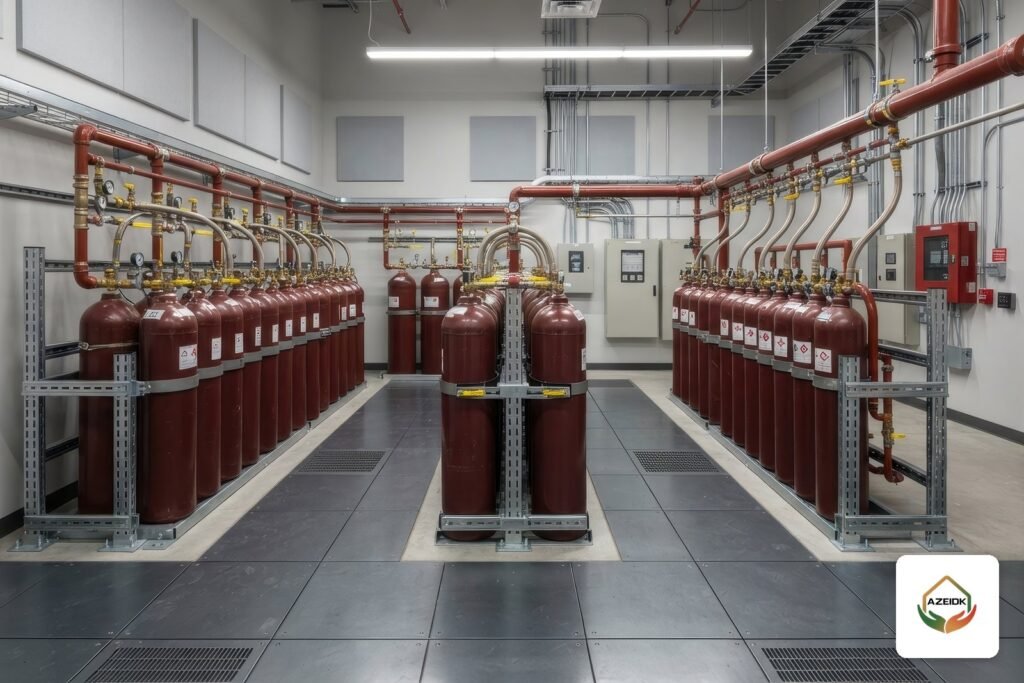
Cylinder count and size
Cylinders come in stepped sizes, and the designer picks the combination that best fits the agent quantity. Context Plus cylinders, for example, range from 35 to 1200 lb nominal, and American Fire Control AFC-227 cylinders range from about 26.8 to 175 litres water capacity. One large cylinder does not always cost the same as two smaller ones, because the second needs another actuator, a manifold and check valves.
Reserve cylinders (Main / Reserve)
Some specifications call for a connected reserve bank released through a transfer switch after the main bank discharges. This roughly doubles the agent and cylinder line, so it should appear as a separate item. Component details are in our article on FM200 system components.
Piping, nozzles and calculations
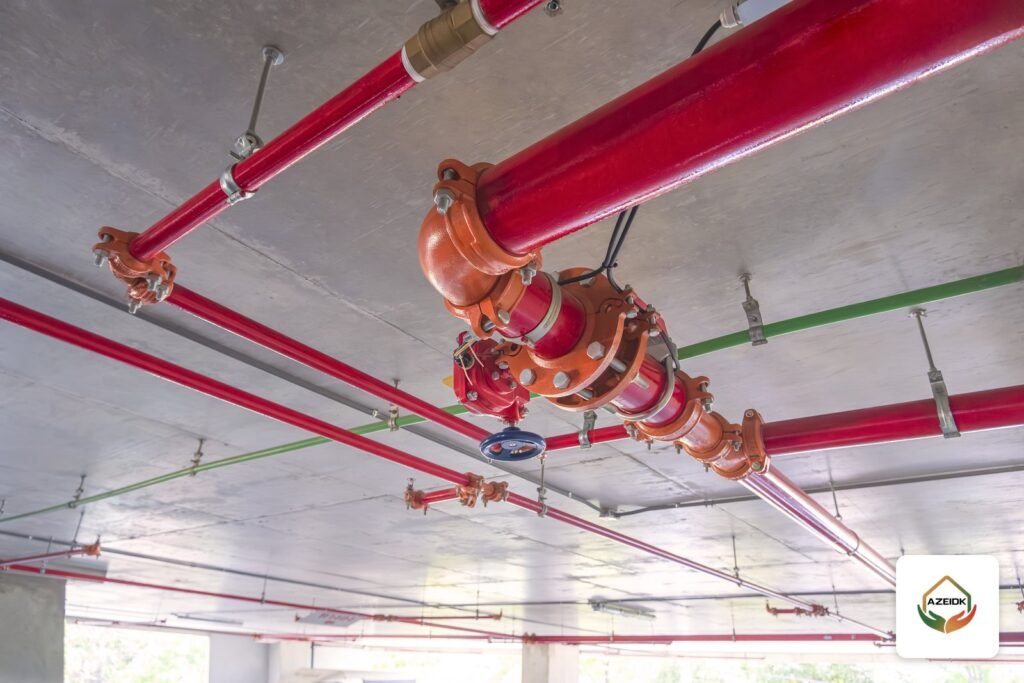
The agent must discharge quickly. Manufacturer literature specifies 10 seconds or less within the installation manual limits, so pipe sizes and nozzle orifices are set with the manufacturer’s listed flow calculation software. The farther the cylinders are from the room, or the more branches, the more pipe and fittings. For long or complex networks some manufacturers offer a nitrogen-driven version, such as AFC-P227, which adds a nitrogen cylinder to each agent cylinder and should appear as a clear line item.
Control panel, detection and notification
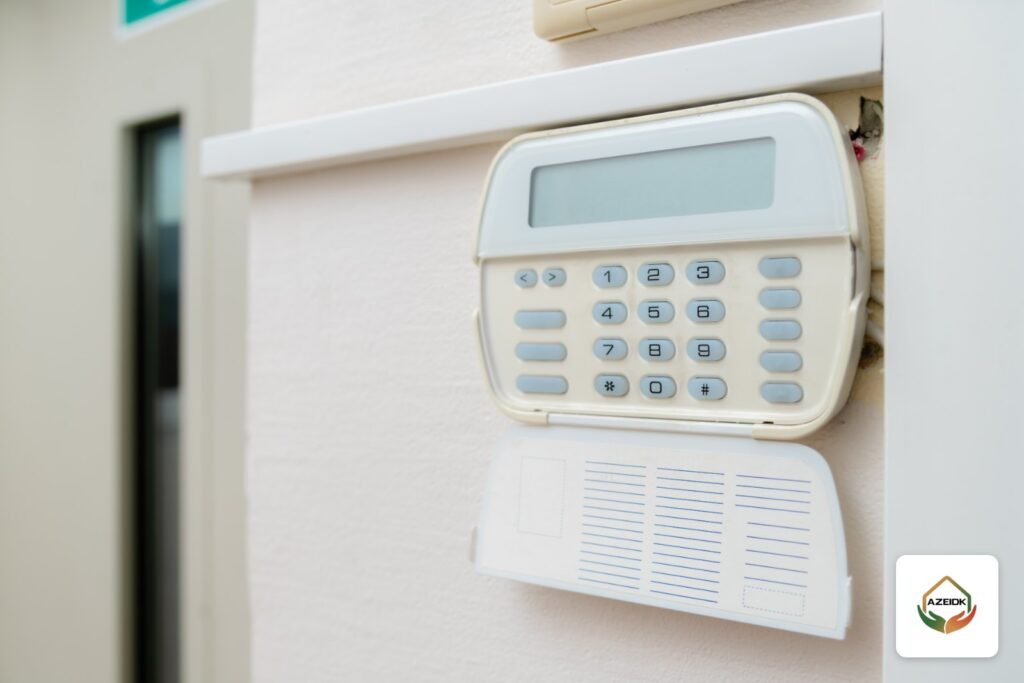
The system also needs a suppression control panel such as the Context Plus EP203, smoke or heat detectors usually arranged on two circuits so a single detector cannot release the agent, a manual release station, a hold or abort switch, pre-discharge sounders and beacons, and warning signs at the doors. Interfaces with the main fire alarm panel and HVAC shutdown on discharge are added.
Ask whether detectors, cables, the alarm interface and HVAC shutdown are in scope. These items often disappear from low quotations.
Room integrity test and pressure relief
According to the Society of Fire Protection Engineers (SFPE), NFPA 2001 requires a hold time of 10 minutes, or long enough for trained personnel to respond, with the concentration at the top of the protected equipment at the end of that time not less than 85% of the design concentration. This is verified with a door fan test, which measures the leakage area and predicts the hold time. We explain the procedure in our room integrity test article.
In cost terms there are three separate items:
- The test itself: before acceptance, and possibly repeated if the room fails.
- Sealing openings: cable and pipe penetrations, door undercuts and the suspended ceiling. Often civil work or another contractor’s scope.
- Pressure relief vent: a very tight room can be over-pressurised during discharge, so the designer sizes a relief vent to suit the wall strength.
If the quotation does not state who seals the openings and pays for a retest, treat it as a likely extra.
Approvals, documentation and Civil Defense
The system is approved as one assembly: agent, cylinders, valves, nozzles and control under one listing and one design manual. Examples documented on AZEIDK’s pages: Context Plus 227 is UL listed under file GARZ2.EX16152 and FM approved, and the AFC-227 system is UL listed under file EX29550 and FM approved. Mixing components from different systems voids that listing.
Documentation covers the submittal, flow calculation and shop drawings. For the Civil Defense file, see AZEIDK’s Civil Defense approval support, and make the quotation state whether this work is included.
Costs after installation: maintenance and recharge
The purchase price is only part of the cost. Fike’s HFC-227ea manual, for example, calls for verifying agent weight every 6 months and recharging when the shortage exceeds 5% of the required weight, checking for leaks when pressure loss exceeds 10% of nominal, checking the enclosure volume annually, and retesting containers once ten years have passed since the last test. Actual intervals follow the installed system’s manual and the NFPA 2001 edition adopted for the project. Details are in our FM-200 maintenance article.
After any discharge comes the cost of recharge. Saudi Arabia ratified the Kigali Amendment on 10 September 2025 as an Article 5 Group 2 country, with an HFC production freeze from 2028. Existing systems stay in service, but ask your supplier about future agent availability for refills.
What should an FM200 system price quotation include?
| Item | What to ask for | Why it changes the price |
|---|---|---|
| Calculation basis | Net volume in m³, voids included, temperature and altitude | Agent quantity follows volume directly |
| Design concentration | The percentage used, hazard type and fire class | Higher concentration means more agent and cylinders |
| Agent and cylinders | Agent weight in kg, number and size of cylinders, reserve if any | The largest cost item |
| Brand and listing | System name, model, UL file or FM approval number | Decides whether the assembly is acceptable |
| Piping and nozzles | Flow calculation output, pipe length and nozzle count | Long networks add material and labour |
| Control and detection | Panel model, detectors, stations, sounders, cables and interface points | Often dropped from low quotations |
| Room integrity | Door fan test, who seals openings, retest, relief vent | A likely extra if not stated |
| Documentation and approval | Submittal, drawings and Civil Defense file support | Engineering effort sometimes priced separately |
| Testing and handover | Functional tests without discharge, training, handover documents | Sets readiness for acceptance |
| Maintenance and warranty | Semi-annual visits, cylinder weighing, recharge terms, warranty period | Running cost over the system’s life |
Common mistakes when comparing FM200 quotations
- Comparing totals without checking that both quotations use the same volume and concentration.
- Ignoring the raised floor or ceiling void, then adding it after award.
- Assuming the integrity test and sealing are included without a written line.
- Combining cylinders from one system with a panel or nozzles from another.
- Accepting “complies with NFPA 2001” without a listing number or design manual.
Frequently asked questions
What determines the price of an FM200 system?
Mainly the agent quantity, calculated from net volume and design concentration, followed by cylinders, piping, controls, the integrity test and documentation.
Is the room integrity test included in the cost?
It varies. Ask for the test as a separate line, and for who pays for sealing and a retest if the room fails.
Is FM200 more expensive than Novec?
There is no fixed rule. Compare for the same room: the quantity of each agent, the cylinder count and agent availability for refills. For Novec after 3M’s exit, see our Novec system article.
What should the quotation include?
Volume, concentration, agent weight, cylinder count, the listed system, the flow calculation, controls, the integrity test, documentation, handover and maintenance.
How often are FM200 cylinders checked and weighed?
Agent weight is usually checked every 6 months. Fike’s manual, for example, requires recharge when the shortage exceeds 5% of the required weight and a leak check when pressure loss exceeds 10%. The installed system’s manual is the final reference.
How do I know which gas suppression system suits my site?
It depends on the hazard, whether the room is occupied, the space available for cylinders and how tight the room is. Our clean agent comparison sets out the options.
Conclusion
An FM200 system price is the result of a calculation, not a figure on a list. Fix the net volume and design concentration first, then compare agent weight, cylinder count and the listed system, and make sure the integrity test, documentation and maintenance are written into the quotation. For the wider picture, see fire systems cost in Saudi Arabia.
Have a server or electrical room that needs an FM200 system? Send us the room dimensions, layout and whether there is a raised floor or suspended ceiling, and we will prepare the agent calculation and an itemised quotation. Contact the AZEIDK team
Related guides
- Fire Extinguishers in Dammam and Al Khobar: Supply and Maintenance for Workshops, Warehouses and Industrial Sites
- Saudi Fire Protection Code (SBC 801): A Practical Guide
- Fire Alarm False Alarms: Causes and How to Reduce Them
- Safety Companies in Madinah: Fire Company Directory and How to Check Civil Defense Approval