Fire alarm systems for government buildings differ from those in an ordinary office in three ways: large numbers of visitors who do not know the building, archives and equipment rooms where fire must be detected early, and an owner that expects complete documentation at handover and after every maintenance visit. This guide covers how alarm coverage is designed for ministries, municipalities and customer service centres, and what the entity checks before acceptance.
For how conventional and addressable systems compare, see our guide to choosing a fire alarm system for Saudi projects.
AZEIDK designs, supplies, installs and tests fire alarm systems as part of its work for the government entities sector.
Key takeaways
- The Saudi Fire Protection Code SBC 801 (2024 edition, mandatory since 30 June 2025) is the reference, and the occupancy classification in SBC 201 decides when an alarm is required and what type.
- A government building mixes occupancies: offices, visitor halls, archives, server and electrical rooms, each needing a different detector.
- Addressable systems are the usual choice for medium and large government buildings because they pinpoint the alarm location.
- Interfaces with lifts, HVAC, smoke control and access control are part of the design and must be tested before handover.
- The entity needs a complete handover file: as-built drawings, panel program, test reports and datasheets.
In this article
- What makes fire alarm systems for government buildings different?
- The regulatory reference: SBC 801 and Civil Defense
- Where do the detectors go?
- Addressable or conventional?
- Interfaces with other building systems
- What the government entity checks in the fire alarm file
- Common mistakes
- After handover: testing and records
- Frequently asked questions
- Conclusion
What makes fire alarm systems for government buildings different?
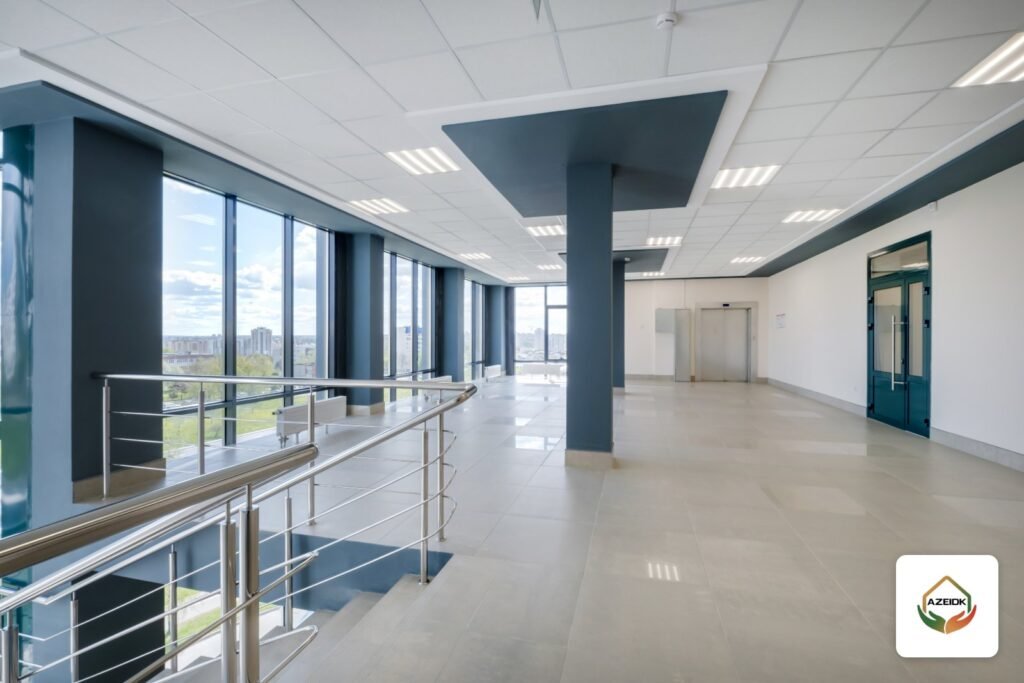
During working hours, waiting areas and service halls fill with people visiting for the first time, including elderly visitors and people with disabilities. The alarm must reach everyone clearly, by sound and light, and lead them to known exits.
At the same time, archives, server rooms, electrical rooms and stores may stay unoccupied for hours. In those spaces early detection is the first line of defence.
Government entities also work through written contracts and tenders, and a dedicated team checks every clause of the specification at acceptance. Missing documents delay handover.
The regulatory reference: SBC 801 and Civil Defense
SBC 801 sets when a manual or automatic alarm is required based on the occupancy classification in SBC 201, the occupant load and the number of storeys. Administrative offices are usually classed as Business, large meeting halls may be Assembly, and large stores or archives may fall under Storage. The designer classifies each part, then applies the matching alarm requirements.
The General Directorate of Civil Defense oversees compliance, and safety licences are handled on the Salamah platform. For the difference between the codes and Civil Defense, see SBC 801, SBC 201 and Civil Defense requirements. Design details often follow NFPA 72 as a technical reference adopted by the designer or the specification.
Where do the detectors go?
| Area | Typical device | Design note |
|---|---|---|
| Offices and corridors | Point smoke detector | Spacing by coverage area and ceiling height per datasheet and adopted standard |
| Visitor halls and waiting areas | Smoke detector, sounder with beacon | Visible alarm for hearing-impaired visitors; sound level set against hall noise |
| High-ceiling halls | Beam detector | Covers long distances with less ceiling access for maintenance |
| Paper archives | Smoke detector, often linked to suppression | Sprinklers or clean agent depending on record value |
| Server and telecom rooms | Smoke detectors linked to a gas release panel | Double-knock logic before discharge |
| Pantries and kitchens | Heat detector | Smoke detectors here cause repeated false alarms |
| Floor exits and stairs | Manual call point | At exits and along escape routes |
For archives, see archive room fire protection.
Addressable or conventional?
A conventional system groups detectors into zones; the panel knows the zone but not the device. That suits a small single-storey branch office. An addressable system gives each device its own address, so the panel shows a message such as “smoke detector, second floor, archive”. In a multi-storey ministry or municipality building this saves response time and makes maintenance easier, since the panel reports dirty or disconnected devices.
AZEIDK supplies Context Plus addressable and conventional panels and detectors, and the Sigtel fire telephone and disabled refuge communication system, listed in our product catalogue. For programming and zone naming, see addressable fire alarm panel programming.
Interfaces with other building systems
- Lifts: return to the designated recall floor and open doors.
- HVAC: shut down air handling units by zone to stop smoke spread.
- Smoke control: start smoke extract fans and stair pressurisation where provided.
- Access control: release locks on escape route doors, a sensitive point in government buildings with many electronic doors.
- Public address: play a recorded evacuation message where a voice evacuation system exists.
Each function is tested and recorded before handover through our testing and commissioning service.
What the government entity checks in the fire alarm file
Government works are usually tendered on Etimad, with requirements set in the specification booklet; see fire systems tender specifications and BOQ on Etimad. At acceptance the entity typically asks for:
- Datasheets for every device and the consultant-approved material submittal.
- As-built drawings showing each device and its address.
- A copy of the panel program, address list and zone names.
- Test reports for every detector and call point, and for interfaces.
- Operation and maintenance manuals and operator training.
Our document library holds datasheets and material submittals for the products we supply, plus the company profile. AZEIDK holds the Saudi Local Content certificate and ISO 9001, ISO 14001 and ISO 45001 certificates, which many entities request at prequalification.
Common mistakes
- No visible alarms in visitor halls and accessible toilets.
- Smoke detectors in pantries, later disabled after false alarms.
- Office layouts changed after handover without moving detectors or updating zone names.
- Electronic doors that stay locked on alarm because the access control interface was never tested.
- Accepting the system without a copy of the panel program.
After handover: testing and records
NFPA 72 sets an inspection and testing schedule. Examples, as summarised by Inspect Point from the 2019 and 2022 editions: an annual functional test of each smoke detector, a sensitivity test within the first year and then every alternate year, and annual tests of the control panel and notification appliances. Periodic records are kept until the next test of the same kind plus one year, and original system documents for the life of the system. The adopted edition, the manufacturer and the authority may require more frequent tests. That is why the entity needs an annual maintenance contract with a written report after each visit.
Frequently asked questions
Does every government building need a fire alarm system?
SBC 801 decides based on occupancy, occupant load and storeys. Most medium and large administrative buildings fall within the cases that require one; the designer confirms it for each building.
Which system suits a ministry or municipality building?
Usually addressable, because it shows each device location and simplifies maintenance in multi-storey buildings. Conventional suits small branch offices.
Are visible alarms needed in visitor halls?
Beacons matter in public areas because some visitors are hearing-impaired. The specification and adopted standard set their locations and intensity.
Which detector suits an archive room?
A smoke detector, usually linked to suppression. Record value and room size decide between sprinklers and clean agent.
What documents are handed over after installation?
Datasheets and material submittal, as-built drawings, panel program and address list, test reports, and O&M manuals.
How often is the system tested after commissioning?
Under NFPA 72, detectors, panel and notification appliances are tested annually, with smoke detector sensitivity on a longer cycle. The maintenance contract sets the visit schedule.
Conclusion
A good government building alarm starts with correct classification, the right detector for each area, and interfaces that are actually tested. It ends with a handover file that lets the entity run and maintain the system without depending on one supplier.
New or existing government building needing a fire alarm? Send the drawings or specification, and we will review coverage and propose a system with datasheets. Talk to the AZEIDK team
Related guides
- Jack Pump Fire Pump Types: End-Suction, Split Case and Vertical Turbine
- TYCO TY-B Sprinklers: K2.8, K5.6 and K8.0 Upright and Pendent Models and How to Choose
- Dry Pipe Valve Trip Test: Partial and Full Flow Tests and Water Delivery Time in Dry Sprinkler Maintenance
- Addressable Fire Alarm Loop Design: Capacity, Isolators and Device Distribution