The fire systems tender specifications booklet (in Arabic, كراسة الشروط والمواصفات) is the tender document that sets the scope and technical specifications for fire alarm and fire fighting work, together with the bill of quantities (BOQ) that bidders price on the Etimad platform. The Government Tenders and Procurement Law requires the specifications to be detailed, precise and clear, based on approved Saudi standards, and free of any specific brand unless an exception is approved and the words “or equivalent” are added. This article explains how a government entity should write the booklet for fire systems, and what a contractor should check before pricing it.
Key takeaways
- The Implementing Regulation of the Tenders Law requires tender documents to include conditions, specifications, bills of quantities, evaluation criteria and any local content terms.
- Article 22 of the Law bans naming a specific type, class or trademark; the exception needs prior approval and the words “or equivalent”.
- The entity puts indicative estimated prices into the bills of quantities before tendering, and the tender is cancelled if it does not.
- Good fire specifications describe performance, approvals and the reference code, not a model number.
- Contractors match the BOQ against the drawings and specifications before pricing, and raise a query for any scope gap.
In this article
- What does a fire systems tender specifications booklet contain?
- Rules for writing technical specifications under the Tenders Law
- How do you specify a fire alarm system without naming a brand?
- Fire alarm and fire fighting BOQ: how should it be built?
- What should a contractor check before pricing a fire systems supply and installation tender?
- Local content in fire systems tenders
- Common mistakes in fire systems tender booklets
- Frequently asked questions
- Conclusion
What does a fire systems tender specifications booklet contain?
Article 21 of the Government Tenders and Procurement Law, issued under Royal Decree No. (M/128) dated 13/11/1440H, states that tender documents must include the information and data on the works and purchases offered, as set by the Implementing Regulation. Article 21 of the Regulation lists the contents, including instructions and conditions, specifications and requirements, bills of quantities, evaluation criteria and their weights, local content terms where applicable, and the contract conditions. The Ministry of Finance publishes standard booklet templates for different tender types, including the operation and maintenance template for administrative buildings published in the Umm Al-Qura Gazette, and each entity builds its booklet on them.
On a fire systems project, the technical part of the booklet is what decides the quality of the installation. It usually covers:
- Scope of work: which systems are required (fire alarm, sprinklers, fire pumps, hose cabinets, special suppression), and whether the work is supply only or supply, installation, testing and handover.
- Technical specifications: reference codes, required equipment approvals, performance requirements and test methods.
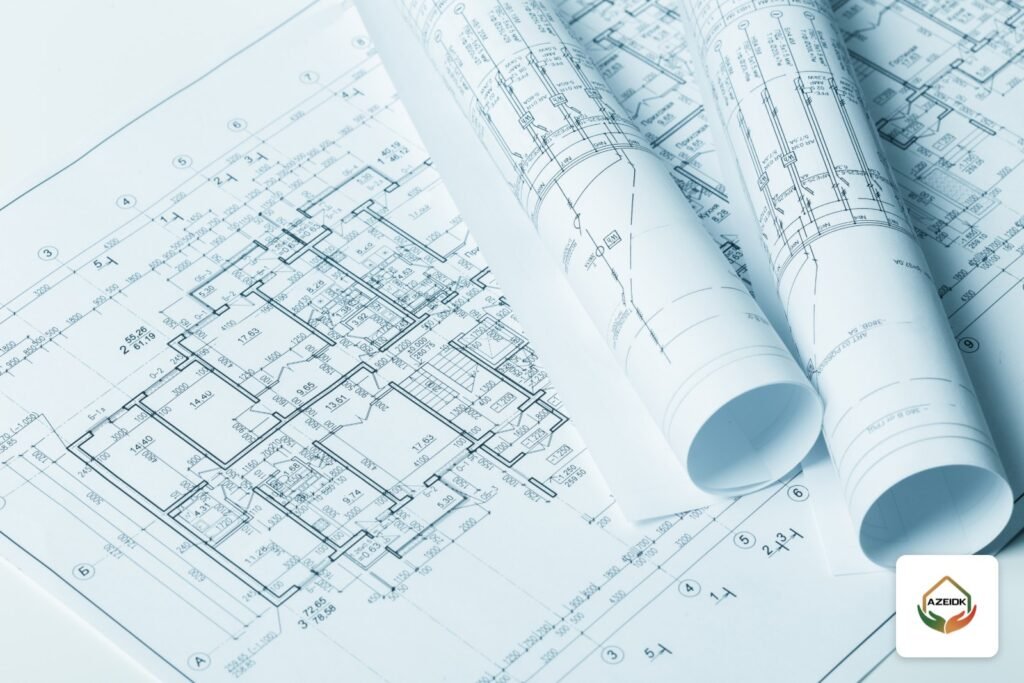
- Drawings: the design drawings the pricing is based on.
- Bill of quantities (BOQ): items, units and quantities, which is what the bidder prices.
Rules for writing technical specifications under the Tenders Law
Article 22 of the Law is the main reference for anyone writing fire system specifications. It comes down to three rules:
- Clarity and standards: technical conditions and specifications must be detailed, precise and clear, based on approved Saudi standards, or international standards where no national standard exists.
- No brand names: the specifications must not refer to a specific type or class, or name a particular trademark or trade name. An exception is allowed only where precise specifications cannot be written, with prior approval from the competent body, and the tender documents must then add the words “or equivalent”.
- No overspecification: the entity must not exaggerate the technical specifications or go beyond the project’s needs and allocated budget.
Article 24 of the Regulation adds that entities should avoid specifications that only one product can meet, and Article 26 requires specifications and drawings to be updated and reviewed before tendering. That last point matters for fire systems in particular, because a booklet copied from an earlier project may cite a code edition that is no longer in force.
How do you specify a fire alarm system without naming a brand?
The answer is to describe what the system must achieve and how that is proven, instead of naming the manufacturer. The table below compares wording that invites objections or weak equipment with more precise wording:
| Item | Weak wording | Better wording |
|---|---|---|
| Fire alarm panel | Panel from brand X, model Y | Addressable panel with a stated number of loops and device capacity, approved to UL 864 or EN 54-2 as set by the designer, with spare capacity for expansion |
| Detectors | Good quality smoke detectors | Detector type per area, the same approval standard as the panel, and listed compatibility between detector and panel |
| Fire pump | European or American pump | Pump type, rated flow and pressure, UL or FM approval for the model, installation per NFPA 20 |
| Sprinklers | Quick response sprinklers | K-factor, temperature rating, response type, approval, and design per NFPA 13 and SBC 801 |
| Cables | Fire resistant alarm cable | Cable type, cross section, required fire resistance duration and test standard |
Note that the better wording does not choose between UL and EN 54 on the designer’s behalf. It asks the designer to pick one reference and stay with it. Mixing the two inside one system causes compatibility problems, explained in our UL or EN 54 article. For pumps, see how to check a fire pump UL and FM approval.
It also helps if the booklet states national conformity requirements where they apply. The SASO Technical Regulation for Fire Control Materials and Equipment requires a certificate of conformity for fire extinguishing equipment and fire pumps, handled through the SABER platform, while it excludes fire alarm and firefighting systems from its scope. That difference should show up in the documents requested with each bid.
Fire alarm and fire fighting BOQ: how should it be built?
The bill of quantities decides what gets priced and what gets built. Article 23 of the Law requires the entity to study market prices before setting the cost estimate, and Article 27 of the Regulation requires indicative estimated prices in the bills of quantities, kept in an encrypted electronic file before the tender is announced. The tender is cancelled if these prices are not set. So the entity needs a BOQ detailed enough for a realistic estimate.
For fire systems, we recommend that the BOQ separates the following groups into their own items, so important work does not disappear inside a lump sum:
| Item group | Examples | What the item description states |
|---|---|---|
| Alarm equipment | Panel, detectors, manual call points, notification devices, modules | Reference standard, approval and location |
| Wiring | Cables, conduits, supports | Type and cross section, measured per linear meter |
| Fire fighting network | Pipes, fittings, valves, sprinklers, hose cabinets | Material, wall thickness, joining method and approval |
| Pump room | Electric pump, diesel pump, jockey pump, controllers | Flow, pressure, approval and interface scope |
| Engineering | Shop drawings, calculations, as-built drawings | Who prepares them and who approves them |
| Testing and handover | Hydrostatic test, pump test, alarm commissioning, Civil Defense approval | Test reference standard, and who bears any fees |
At this stage the entity benefits from a drawings and specifications review before tendering, to catch conflicts between drawings and BOQ early. A practical checklist is in our fire drawings and specifications review checklist.
What should a contractor check before pricing a fire systems supply and installation tender?
A contractor who prices from the BOQ alone risks a loss or a dispute during execution. These are the points worth checking before pricing:
- Quantities against drawings: numbers of detectors and sprinklers and pipe lengths in the BOQ compared with the drawings.
- Scope gaps: work mentioned in the text with no matching BOQ item, such as interfaces with HVAC, lifts and doors, or Civil Defense approval.
- Required approvals: whether the booklet asks for UL, FM or EN 54, and whether approved equipment is available within the programme.
- Reference code: whether the edition cited is the one currently adopted in the Saudi Building Code.
- Local content terms: whether the booklet includes them and what they require from bidders.
- Queries: any ambiguity raised through the tender’s query channel before the deadline, instead of assuming the answer.
If an item names a brand without “or equivalent”, it deserves a formal query. To understand the difference between manufacturer, distributor, supplier and contractor, and what each is asked to provide, see our manufacturer, distributor, supplier and contractor article. If the entity will compare several bids, the technical comparison criteria are in how to compare fire system quotations.
Local content in fire systems tenders
The Law gives priority to local small and medium enterprises and to local content, and the Regulation sets the mechanism. Tender documents include local content terms where applicable, and evaluation criteria follow the local content preference rules. AZEIDK holds the Saudi Local Content certificate, and any contractor or supplier should confirm their own position before bidding on a tender with these terms.
Common mistakes in fire systems tender booklets
- Copying specifications from a previous project without updating the code edition or building type.
- A general item such as “complete fire alarm system” priced as a lump sum with no breakdown.
- Naming a brand or model without justification or the words “or equivalent”.
- Mixing UL and EN 54 within the same system.
- Leaving out testing, commissioning, as-built drawings and Civil Defense approval items.
- Specifications beyond the building’s needs that raise cost with no technical benefit.
Frequently asked questions
What is a tender specifications booklet on Etimad?
It is the tender document the government entity publishes, containing instructions and conditions, technical specifications, bills of quantities, evaluation criteria and contract conditions. Bidders submit their offers against it on the Etimad platform.
Can a booklet name a specific fire system brand?
Article 22 of the Law prohibits it as a rule. An exception is allowed only where precise specifications cannot be written, with prior approval from the competent body, and with the words “or equivalent”.
What is the difference between specifications and the BOQ?
Specifications set equipment quality and installation and testing methods. The BOQ sets the items and quantities the bid is priced on. A contractor needs both, together with the drawings, to price accurately.
How do I write a BOQ for fire fighting systems?
Split it into groups: alarm equipment, wiring, fire fighting network, pump room, engineering, and testing and handover. For each item state the reference standard, approval and correct unit, instead of general lump sum items.
What should a contractor review before pricing a fire systems tender?
Match quantities to drawings, look for work described in the text with no BOQ item, confirm the required approvals and code edition, and raise queries through the tender channel before the deadline.
Should Civil Defense approval appear in the BOQ?
There is no general text that requires it, but it is better for the BOQ or scope to state who prepares the approval requirements and related tests, so it does not become a dispute at handover.
Conclusion
A good fire systems tender specifications booklet describes performance, approvals and the reference code, and ties them to a detailed BOQ that matches the drawings. An entity that writes it this way gets comparable bids, and a contractor who reviews it the same way prices with confidence and avoids disputes on site.
Writing a booklet or pricing a fire systems tender? The AZEIDK team can help with technical selection of systems and equipment and review of specifications and BOQ before tendering or pricing. Talk to the AZEIDK team
Related guides
- Safety Equipment and Fire Extinguisher Shops in Saudi Arabia: AZEIDK Showrooms in Jeddah, Riyadh, Dammam, Makkah, Taif, Buraydah, Khamis Mushait and Jazan
- Fire Extinguishers in Dammam and Al Khobar: Supply and Maintenance for Workshops, Warehouses and Industrial Sites
- Salamah Certificate for Malls and Shopping Centres: Building Licence, Tenant Shops and Who Is Responsible
- Access Gates and Barriers Cost: What Drives the Price (Type, Control and Installation)