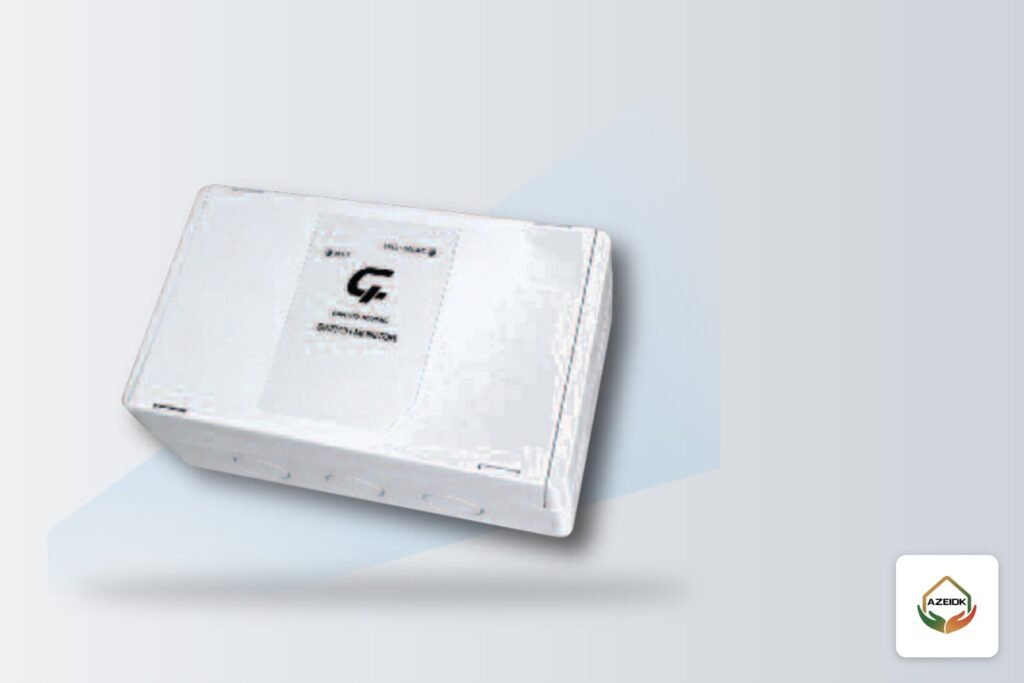
A zone monitor module sits on the loop of an addressable fire alarm system and powers and supervises a full circuit of conventional detectors as if it were one addressable device. The Context Plus 55000-845IMC handles a zone of up to 20 Series 65 conventional detectors, includes a bidirectional short-circuit isolator, and reports fire and fault for that zone to the panel.
For how conventional and addressable systems compare, see our guide to choosing a fire alarm system for Saudi projects.
When is it needed? Usually when upgrading an old system or extending an existing building, where you want a new addressable panel without replacing every detector in one go. This guide covers how it works, its electrical data from the 55000-845IMC zone monitor with isolator product page, its limits, and what the designer checks before approval.
Key takeaways
- A zone monitor connects a conventional detector circuit to an addressable loop and gives it a single address on the panel.
- The 55000-845IMC powers up to 20 Series 65 conventional detectors from the loop itself.
- Analogue value 16 means normal and 64 means alarm from a detector in the zone; the unit latches in alarm until reset.
- Quiescent current is 4 mA plus detector load, a figure that goes into the loop loading calculation.
- The panel knows the zone, not the detector, so the module is a transition or small-area solution, not a replacement for addressable detectors everywhere.
In this article
- What is a zone monitor module in an addressable system?
- How the Context Plus 55000-845IMC works
- 55000-845IMC zone monitor technical data
- When do you need a zone monitor?
- What the designer checks before approving a zone monitor
- How to test a zone monitor at handover
- Zone monitor versus other input modules
- Frequently asked questions
- Summary
What is a zone monitor module in an addressable system?
In an addressable system every detector and call point has its own address, and the panel polls each device over a protocol on the loop. A conventional detector does not understand that protocol; it simply raises the circuit current when it goes into alarm. The zone monitor is the interface: it draws power from the loop, provides a conventional circuit at a stable voltage for the detectors, watches that circuit, and reports to the panel through its own address.
The panel then shows the zone name you programmed, for example “Rear store, conventional detectors”, and the cause and effect matrix treats that zone like any other addressable device. For loop design itself, see addressable fire alarm loop design.
How the Context Plus 55000-845IMC works
According to the product page, the unit powers and controls a zone of up to 20 Series 65 conventional detectors from a loop of Context Plus addressable devices. It returns an analogue value of 16 in the normal condition; when any detector in the zone goes into alarm it returns 64 and latches internally until reset from the panel.
It monitors the zone circuit for open and short circuit using a 5.1 kΩ end-of-line resistor, with an active end-of-line monitor as an alternative. A red LED shows a fire condition and a yellow LED shows an isolator fault.
Bidirectional isolator
The built-in bidirectional short-circuit isolator keeps the unit unaffected by a short on either the loop input or the loop output. A short on one section of the loop is isolated between two isolators while the rest of the devices keep working from the other end of the loop. The number of devices between isolators follows the adopted code and the manufacturer’s instructions.
55000-845IMC zone monitor technical data
| Item | Published value |
|---|---|
| Loop operating voltage | 17 to 28 V DC |
| Protocol pulses | 5 to 9 V |
| Zone voltage (loop at 22 V or more) | 19 V ±1 |
| Quiescent current | 4 mA plus detector load |
| Alarm current | 11 mA |
| Short-circuit current | 11 mA |
| Power-up stabilisation | 4 seconds |
| Maximum detectors | 20 Series 65 conventional detectors |
| End of line | 5.1 kΩ resistor or active end-of-line monitor |
| Operating temperature | -20 to +70 °C |
| Humidity | 0 to 95% RH, non-condensing |
| Protection | IP54, indoor use only |
| Size and weight (surface) | 150 × 90 × 48 mm, 230 g |
When do you need a zone monitor?
Phased upgrade of a conventional system
In an existing building with a conventional system, the owner may install a new addressable panel and start with the highest-risk or busiest floors, keeping compatible conventional detectors elsewhere for a while. A zone monitor connects each old zone to the new loop until its turn for replacement comes. The full upgrade decision is covered in upgrading an old fire alarm system.
Small extension or detached annex
A guard room, an annex store or a yard office may need only a few detectors. Instead of running the addressable loop to every detector, you can take the loop to one module at the annex entrance and run a short conventional circuit inside, provided the consultant accepts zone-level location for that annex.
When it is not the right answer
- Hotels, hospitals and towers where the room or device must be identified precisely.
- Where existing detectors are an incompatible brand or past their service life; replacing them with addressable detectors is cleaner.
- Outdoor or wet locations, because the unit is rated IP54 for indoor use only.
What the designer checks before approving a zone monitor
- Detector compatibility: the page names Series 65 conventional detectors. AZEIDK lists the UL-listed 65A and EN 54 65E ranges; confirm compatibility for the exact model in the catalogue, and do not mix UL and EN 54 approvals in one system without the consultant’s agreement.
- Loop loading: 4 mA for the module plus the detectors’ standby current, added to the other loop devices and checked against panel limits.
- Actual detector count: 20 is the maximum; a margin for growth is common.
- End of line: fit the 5.1 kΩ resistor at the last detector on the circuit, not at the module, so the whole circuit is supervised.
- Programming: the zone text must make the location obvious and be included in the cause and effect matrix, as in addressable panel programming.
How to test a zone monitor at handover
One alarm is not enough. During commissioning every detector in the zone is tested with the proper tool, and the team confirms that the panel shows the correct zone text and that the module stays in alarm until reset. The end-of-line resistor is then disconnected to confirm an open-circuit fault, and a temporary short is applied to the zone circuit to confirm a short-circuit fault. Results are recorded in the handover file with the address and zone name. General procedures are in fire alarm testing and commissioning before handover.
Zone monitor versus other input modules
| Module | What it monitors | Powers devices? |
|---|---|---|
| Zone monitor | A full conventional detector circuit | Yes, from loop power |
| Switch monitor | Volt-free contact such as a flow switch or valve tamper switch | No |
| Input/output module | An input signal plus a relay output to other equipment | No, provides a control contact |
More on the other two in switch monitor modules and input/output modules.
Frequently asked questions
How many conventional detectors can the 55000-845IMC zone monitor handle?
Up to 20 Series 65 conventional detectors in one zone, according to the product page.
Does a zone monitor need a separate power supply?
No. It runs from the loop and powers the detectors from it, but its consumption must be included in the loop loading calculation.
Does the panel show which detector in the zone is in alarm?
No. It shows the zone only, as in a conventional system, so remote indicators outside closed rooms are recommended.
What end-of-line value is required?
A 5.1 kΩ resistor, or an active end-of-line monitor, fitted at the last device on the circuit.
Can the module be installed outdoors?
No. It is rated IP54 and for indoor use only, according to the product page.
Can it connect detectors from other brands?
The page names Series 65 detectors only. Any other detector needs written compatibility confirmation from the manufacturer before approval.
Summary
A zone monitor gives an addressable system an orderly way to take in a conventional detector circuit, which is useful in phased upgrades and small annexes. It does not replace device-level location where the building needs it. Check compatibility, loop loading, end of line and programming before approval, and see fire alarm systems for complete solutions.
Planning to upgrade an existing system or add an annex? Send us the drawings and the type of detectors in place, and our existing systems assessment team will show where a zone monitor fits and where replacement is needed. Contact the AZEIDK team
Related guides
- Fire Pump Controllers: Types and Selection Criteria
- Civil Defense Maintenance in Saudi Arabia: What Is Checked in Life Safety Systems and How It Is Documented
- Fire Pump Calculation: Flow, Pressure, the 150%/65% Curve and Jockey Pump Sizing per NFPA 20
- Panoramic and Multi-Lens CCTV Cameras: When One Camera Can Replace Several in Car Parks, Yards and Warehouses (Dahua and EZVIZ)