Warehouse fire alarm systems are different from office or shop alarms: ceilings can reach ten metres or more, high racking blocks smoke, and dust, forklift traffic and open loading doors upset ordinary detectors. Two mistakes are common: spot detectors on a high ceiling that smoke does not reach in time, or repeated false alarms that teach staff to ignore the alarm.
This guide explains which detection suits warehouses and distribution centres, when to choose beam, aspirating or linear heat detection, and how the alarm is tied to the sprinkler system. AZEIDK supplies, installs and programmes these devices under its fire alarm systems solution for the warehouses and logistics sector.
Key points
- High ceilings often trap a layer of hot air that stops smoke reaching spot detectors early.
- A beam detector covers a large area with one device, mounted below the roof at a distance set by the design.
- Aspirating detection suits cold stores and high-value stock, with the unit placed where it is easy to service.
- Flow switches and valve supervision tie the sprinkler system to the alarm panel.
Why spot detectors are not always enough
Under a high roof smoke cools and spreads before it reaches a detector, and in summer a layer of hot air under a metal roof can stop it rising. Servicing a spot detector 12 metres up over full racking also needs a lift and part of the operation stopped. Detection choice in a warehouse therefore starts with ceiling height, the goods and the storage method; detector positions relative to roofs and beams are covered in smoke detector placement.
Detection methods compared
| Method | Where it suits | Watch points |
|---|---|---|
| Beam detector | Open storage halls with high ceilings | Needs a rigid wall or structure, and a path clear of cranes and hanging signs |
| Aspirating (ASD) | Cold stores, pharmaceuticals, electronics, high-value stock | Pipe and hole design; filter maintenance in dusty areas |
| Linear heat cable (LHD) | High racking, conveyors, tunnels | Detects heat, not smoke, so suits dusty or open areas |
| Spot smoke detectors | Attached offices, electrical rooms, low ceilings | Impractical to service on high ceilings |
| Heat detectors | Loading docks, dispatch and dusty areas | Slower response, but fewer false alarms |
Beam detectors: the usual choice for large halls
A beam detector sends a beam to a reflector or receiver on the far side; when smoke obscures part of the beam it signals an alarm. One device covers a large area and is mounted below the roof, beneath the hot air layer. Devices AZEIDK supplies include the BeamRay RFX70 beam detector, and the same logic applies in sports hall fire alarms with beam detectors. The key installation point: fix the transmitter and reflector to rigid structure, as steel frames moving with summer heat can deflect the beam and cause faults.
Aspirating detection and linear heat cable
In pharmaceutical and chilled food stores and high-value stock areas, aspirating detection is preferred because it picks up smoke very early, its pipes can run between racks and the unit can sit at the entrance; see the Context Plus aspirating detector. Linear heat cable runs along racks or conveyors and locates the heat rise, such as the FirePlus LHD linear heat detection cable. Cold stores have further points in cold storage fire protection.
Linking to sprinklers and valves
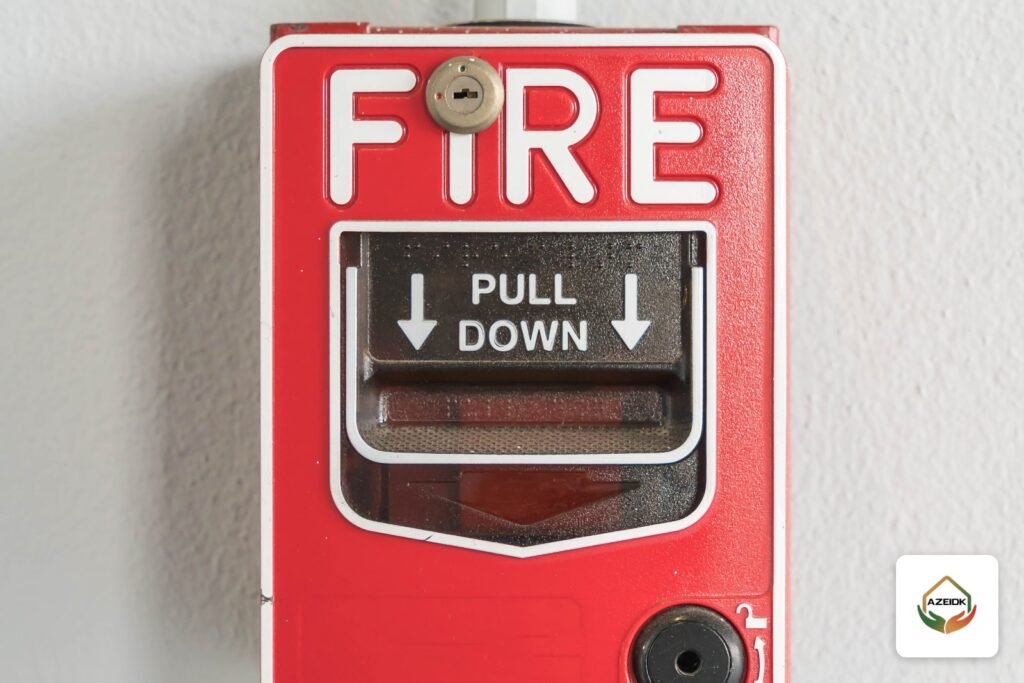
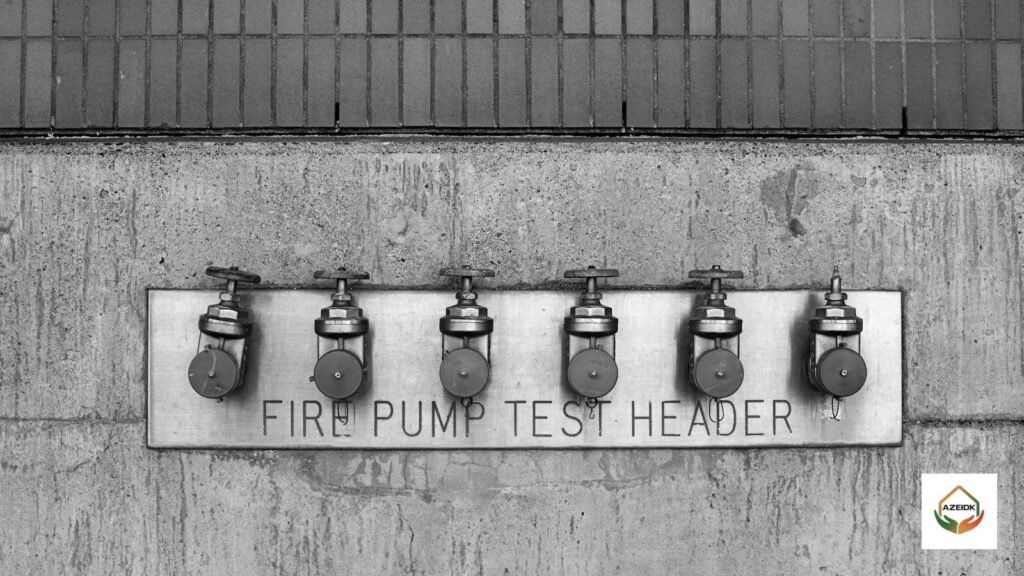
Most large warehouses are sprinklered, and the alarm panel is what reveals faults in that system. A flow switch on each sprinkler zone signals when water flows, and a supervisory switch on each main valve signals if it is closed, such as the Potter VSR waterflow switch and the Potter OSYSU valve supervisory switch. The panel also releases fire doors between zones and shuts down ventilation as designed.
Requirements and licensing
Warehouse requirements depend on the goods and the area, and are checked against municipal and Civil Defense requirements. See MOMAH warehouse requirements and Salamah licence for warehouses. After handover, a warehouse fire systems maintenance contract keeps detectors ready, especially cleaning beam detector lenses and aspirating detector filters.
Frequently asked questions
What is the best detector for a warehouse with a 12 m ceiling?
Usually a beam detector for open halls, or aspirating detection for high-value or chilled stock. The approved design sets the number and positions.
Why does a beam detector give faults in summer?
Usually because the steel structure moves with heat, dust builds up on the lens or something crosses the beam path. Proper fixing and regular cleaning solve most of them.
Do I need an alarm if the warehouse has sprinklers?
Yes in most cases. Sprinklers fight the fire, while the alarm warns occupants and supervises the sprinkler valves and switches themselves.
Fitting out a warehouse or distribution centre? Send the layout, ceiling height and type of goods, and AZEIDK will propose the right detection method with datasheets. Contact AZEIDK