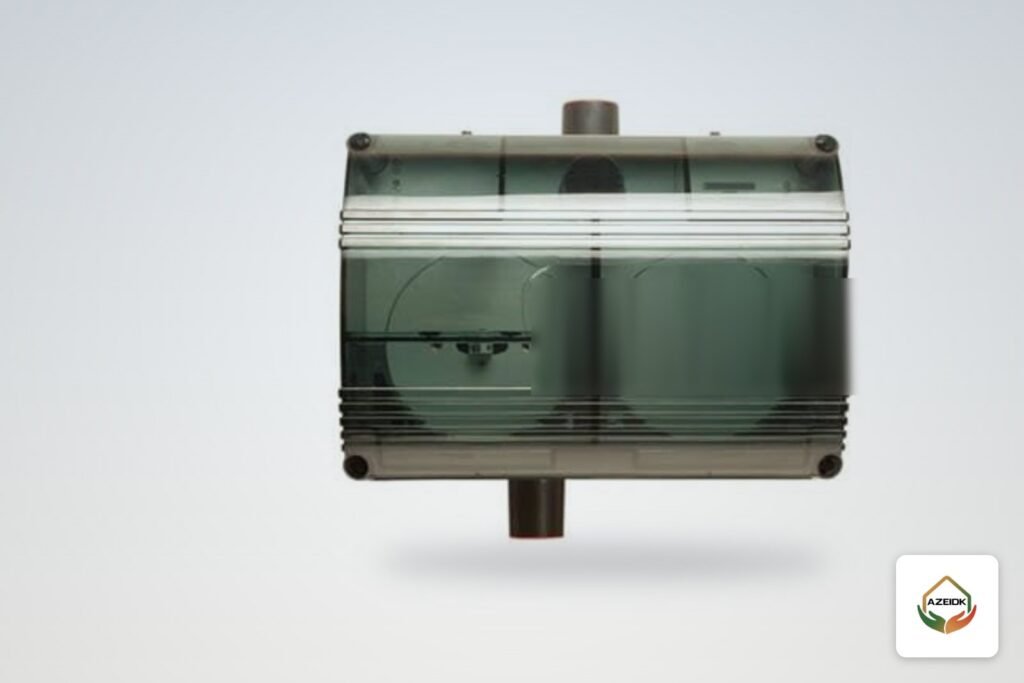
An aspirating smoke detector (ASD) does not wait for smoke to drift up to a ceiling head. A fan pulls air continuously through a network of perforated pipes and analyses it in one unit. In Saudi Arabia, AZEIDK supplies Context Plus aspirating detectors in two versions: the single-detector 29650-081 and the dual 29650-082. This guide explains how the system works, what the catalogue actually states about the unit, and when it is the right choice over point or beam detection.
The detector is part of AZEIDK fire alarm systems. Every technical figure below comes from the product page and the Context Plus specialist detectors catalogue.
Key points
- Model 29650-081 is an air-sampling unit with one Context Plus optical smoke detector inside the sampling box, approved to EN54-20 according to the catalogue.
- Air is drawn through 25 mm perforated pipes by a powerful fan with airflow monitoring and control circuitry.
- The unit can sit up to 50 m from the sampling point, so it stays somewhere easy to reach for maintenance.
- System status and airflow are displayed continuously, and on-board fault relays allow remote fault monitoring.
- Model 29650-082 is the dual version. The catalogue gives no separate specification for it, so request the datasheet at design stage.
In this article
How aspirating smoke detection works
A conventional layout puts a point smoke detector in each space and relies on smoke rising to it. An aspirating system instead runs one or more sampling pipes through the protected area, each with small holes at calculated spacing. A fan inside the detector unit draws air from every hole into a detection chamber. If smoke enters the pipe at any point along its run, the unit signals the fire alarm panel.
The practical advantage is that detection happens in one accessible place, while only the pipework goes into the difficult areas: above high or decorative ceilings, inside racking, or in rooms where visible devices are not acceptable. Many engineers know the technology by one well-known brand name, but the correct generic term is ASD.
What the Context Plus catalogue says about the 29650-081
The catalogue describes the 29650-081 as a professional air-sampling unit that combines a standard, field-serviceable smoke detector with a standalone sampling solution:
| Item | Manufacturer statement |
|---|---|
| Detection | One Context Plus optical smoke detector inside a sampling box |
| Approval | EN54-20 |
| Sampling pipe | 25 mm perforated pipes |
| Air movement | Powerful fan with airflow monitoring and control circuitry to minimise transport delay and keep flow within working limits |
| Display | Continuous display of system status and flow control |
| Fault monitoring | On-board fault relays for remote fault monitoring |
| Distance from sampling point | Up to 50 m |
| Dual version | 29650-082 Dual Aspirating Smoke Detector, no separate specification published |
Because the sensing element is a standard detector from the same Context Plus family, spares and technician familiarity are simpler. The catalogue does not list hole counts, maximum pipe length or sensitivity class, so those values must come from the datasheet and installation manual during design rather than being assumed.
When to choose aspirating detection over point detectors
The catalogue names three situations: environmentally demanding areas, difficult-to-access locations and architecturally restricted spaces. On Saudi projects that usually means:
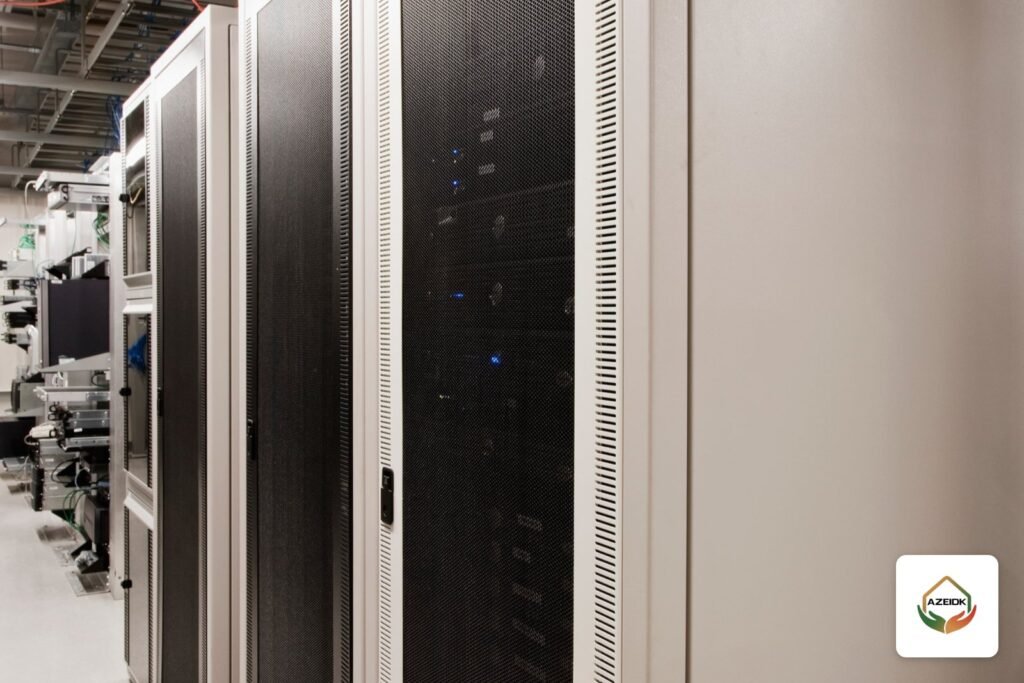
- Server rooms and data centres, where the aim is to catch smoke at a very early stage and cooling airflow makes it harder for ceiling heads to see light smoke. See our data centre fire protection guide.
- Areas that are hard to reach for maintenance, such as high voids or service corridors. The detector unit stays in an accessible room and only the pipe enters the difficult space.
- Architecturally sensitive interiors, such as heritage halls, decorated ceilings or showrooms, where visible detectors are not accepted and only small sampling holes show.
- Harsh environments with dust, heat or humidity, provided the design and any air filtering are checked against the datasheet first.
A standard office or residential corridor does not need an ASD; point detectors are simpler and cheaper there. For a wider comparison see fire detector types and selection.
Aspirating or beam detection for high spaces?
A beam detector projects a beam across the space and measures how much smoke obscures it, so one device covers a large area, but it needs a clear line of sight and rigid walls for alignment. An aspirating system samples air at defined points along the pipe, and the pipe can be routed into racking or close to the hazard. The consultant decides based on height, storage layout, air movement and maintenance access. See warehouse smoke detectors: beam or point and Context Plus reflective beam detectors.
Connecting the ASD to the fire alarm panel
The unit provides fire and fault signals and connects to the panel like any other detection device. On an addressable system it is usually wired through an input module on the loop so the location shows on the panel; on a conventional system it takes its own zone. The built-in fault relays mentioned in the catalogue are what pass conditions such as a blocked pipe or low airflow to the panel or security room.
Exact wiring, outputs and supply voltage are taken from the datasheet of the supplied model and recorded in the wiring diagram and cause and effect matrix. For background on loops see addressable loop design.
Installation, testing and maintenance
- Design first: hole spacing and pipe length are calculated in advance, because every extra hole or metre changes sample transport time.
- Pipe installation: pipes are fixed firmly and end-capped as designed; a broken joint changes airflow and raises a fault.
- Handover test: test smoke is introduced at the furthest hole and the time to alarm at the panel is recorded, together with a check that a blocked pipe raises a fault.
- Routine maintenance: review flow readings, clean holes and filters as the manufacturer instructs, and test fire and fault signals under an annual maintenance contract.
AZEIDK handles supply, installation, testing and commissioning through its installation service, and follows up on Civil Defense requirements.
Frequently asked questions
What does ASD mean in fire alarm systems?
Aspirating Smoke Detector: a detector that draws air samples through perforated pipes with a fan and analyses them in one unit.
What approval does the Context Plus 29650-081 carry?
The Context Plus catalogue states it is approved to EN54-20, the part of EN 54 that covers aspirating smoke detectors.
How far can the unit be from the protected area?
According to the catalogue, up to 50 m from the sampling point.
What is the difference between the 29650-081 and 29650-082?
The first is a single-detector unit and the second is the dual version. No separate specification is published for the dual unit, so ask for its datasheet before design.
Does an ASD replace point detectors throughout a building?
No. It is used where very early detection is needed or point detectors are hard to install or maintain. The rest of the building is normally covered by point detectors per the approved design.
Can it work with an addressable panel?
Yes. Fire and fault signals are passed to the panel as the datasheet describes, usually through an input module on the loop.
Protecting a server room or a space where detectors are hard to fit? Send the drawing and room type, and the AZEIDK team will propose the right detection method and supply the Context Plus unit with installation and testing. Contact AZEIDK
Related guides
- Safety Companies in Madinah: Fire Company Directory and How to Check Civil Defense Approval
- TYCO Sprinkler Installation: W-Type Wrenches, Tightening Torque, and Royal Flush II and DS-1 Installation Steps
- CCTV Camera Brackets and Housings: Wall, Ceiling and Extension Mounts, Junction Boxes and Protective Housings
- Fire Alarm Spare Parts: Matching Detectors, Sounders and Batteries to Your Existing Panel