Is FM-200 safe for humans? At the concentrations systems are designed to in normally occupied rooms, FM-200 (HFC-227ea) is accepted for use where people are present: it does not put out fire by removing oxygen, and the usual design concentration sits below the level at which no adverse effect has been observed. The real risks are staying in the room during a fire, the products formed when the agent breaks down in flame, and going back in before the room is ventilated. That is why systems are built with a pre-discharge alarm and a time delay that lets people leave before discharge.
Key takeaways
- FM-200 is the trade name of HFC-227ea. It extinguishes mainly by absorbing heat, not by lowering oxygen, as system manufacturers state.
- The no observed adverse effect level (NOAEL) is 9.0% and the lowest observed adverse effect level (LOAEL) is 10.5% by volume, according to a US Federal Aviation Administration (FAA) report.
- The typical design concentration is about 7%, below the NOAEL, according to a US EPA listing.
- When the agent meets flame it decomposes into toxic products, mainly hydrogen fluoride (HF), and the amount grows with fire size.
- Practical rule: leave at the first alarm, and do not go back in until the fire is out, the room has been ventilated and the person in charge allows entry.
In this article
- What is FM-200 and how does it put out a fire?
- Is FM-200 safe for humans, or does it suffocate? Reading the safety numbers
- What happens when FM-200 discharges in a server room?
- How many seconds do I have to get out?
- Why is there an alarm and a delay before discharge?
- Can I go back into the room right after discharge?
- How to make an FM-200 room safer for staff
- Frequently asked questions
- Conclusion
What is FM-200 and how does it put out a fire?
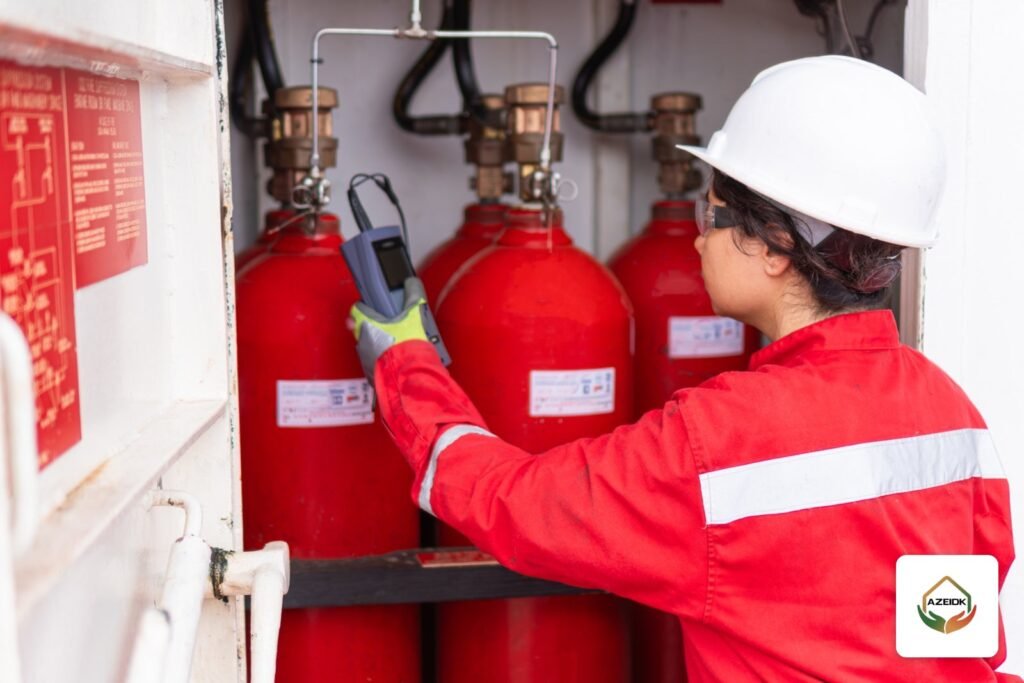
FM-200 is a brand of the clean agent HFC-227ea (heptafluoropropane). It is stored as a liquid under pressure in cylinders and leaves the nozzles as a gas that fills the whole room (total flooding). It is used in server rooms, control rooms, archives and electrical panels because it leaves no water or powder on equipment.
Fike’s agent datasheet states that HFC-227ea does not rely on oxygen depletion to extinguish a fire. That is the key difference from carbon dioxide (CO2), which works by displacing oxygen and is directly dangerous to people at extinguishing concentrations.
AZEIDK supplies these systems under special fire suppression systems, including the American Fire Control FM-200 suppression system and Context Plus 227 (HFC-227ea) clean agent.
Is FM-200 safe for humans, or does it suffocate? Reading the safety numbers
The most common question is whether the gas will suffocate anyone left in the room. Three numbers answer it:
| Indicator | Value for HFC-227ea | What it means in practice | Source |
|---|---|---|---|
| Typical design concentration | About 7% | The concentration most rooms are calculated to | EPA, Halon Substitutes Under SNAP (2006) |
| NOAEL | 9.0% | Highest concentration with no adverse effect observed in studies | FAA, DOT/FAA/AR-08/3 |
| LOAEL | 10.5% | Lowest concentration at which an effect was observed, here on heart rhythm | FAA, DOT/FAA/AR-08/3 |
The effect behind the LOAEL is cardiac sensitization, a possible disturbance of heart rhythm. The FM-200 safety data sheet issued by Chemours, which owns the FM-200 brand, states that the substance may cause cardiac arrhythmia and that deliberate inhalation can be fatal. That is why design concentrations in occupied spaces must stay within the limits set by NFPA 2001.
According to an article in Consulting-Specifying Engineer, NFPA 2001 allows halocarbon systems in normally occupied spaces to be designed up to the NOAEL with a 5-minute exposure limit, and allows HFC-227ea up to 10.5% based on PBPK model data, which estimates agent levels in the blood over time. For more on the standard, see our NFPA 2001 clean agent standard guide.
One point many people miss: the safety data sheet also notes that the vapour is heavier than air and can displace oxygen in confined spaces. That matters for a large leak in a small cylinder room or a pit, not for a calculated discharge into a designed enclosure.
What happens when FM-200 discharges in a server room?
The usual sequence in a correctly designed system:
- First alarm: a detector in the room operates and the control panel sounds an audible and visual alarm. In many designs, discharge needs confirmation from detectors in two zones (cross zoning) to reduce false releases.
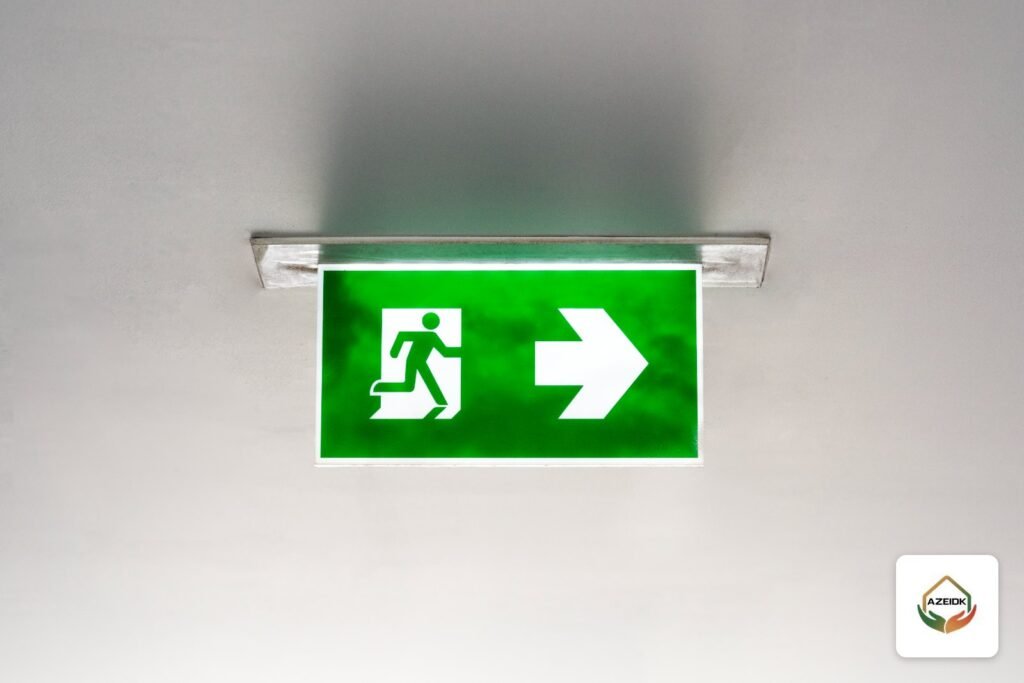
- Pre-discharge alarm and countdown: once the fire is confirmed, the alarm tone changes and a programmed time delay starts so occupants can leave before discharge.
- Discharge: the cylinder valves open and agent leaves the nozzles. NFPA 2001 sets a maximum discharge time of 10 seconds for halocarbon agents, as noted by Consulting-Specifying Engineer and a 3M technical paper.
- Holding the concentration: the agent must stay in the room long enough to put out the fire and prevent re-ignition, which depends on how tight the room is. See room integrity testing for clean agent systems.
How many seconds do I have to get out?
There is no single number for every room. The pre-discharge delay is set by the designer and programmed into the automatic extinguishing control panel, taking into account room size, occupancy and distance to the door. As specialists note, the pre-discharge alarm and time delay exist to clear the room before discharge so that nobody is exposed to the agent.
Practical rules for anyone working in a server or control room:
- Leave at the first alarm. Do not wait for the countdown.
- Do not try to fight the fire yourself inside a room protected by a gas system.
- Close the door behind you. An open door lets the agent concentration drop.
- If someone is still inside, use the abort or hold button at the door and inform the person in charge at once.
In many systems the hold button pauses the countdown while it is pressed and does not cancel the alarm. How it works is set in the panel programming, and everyone who works in the room should know it. See extinguishant abort and hold-off buttons.
Why is there an alarm and a delay before discharge?
For two reasons. First, the agent is designed for a closed room with nobody inside, even though its concentration is safe within set limits. Second, the agent breaks down when it meets flame and forms toxic products. Consulting-Specifying Engineer notes that halocarbon decomposition products are toxic, mainly hydrogen fluoride (HF), and that the amount depends on fire size at the moment of discharge.
This is why design combines early detection with a short discharge time. A 3M technical paper explains that the NFPA 2001 committee settled on a maximum 10-second discharge time, and that early detection with fast discharge limits thermal decomposition products. The smaller the fire at discharge, the less of these products are formed.
Can I go back into the room right after discharge?
No. After discharge the room contains agent, and possibly smoke and decomposition products if there was a real fire. The right procedure:
- Wait for Civil Defense crews or the site safety officer to confirm the fire is out.
- Ventilate the room well before anyone enters. The Chemours safety data sheet directs ventilation of the area after any release.
- Anyone who must enter to check before ventilation is complete needs respiratory protection, as the Consulting-Specifying Engineer article recommends on re-entry where decomposition has occurred.
- Anyone with symptoms after inhalation should be moved to fresh air and seen by a doctor, per the first-aid section of the safety data sheet.
- Do not touch nozzles, pipes or any leaking liquid right after discharge. The safety data sheet warns of frostbite on contact with the liquid.
Ventilation time depends on room volume and the means of ventilation available, so each room’s operating procedure should include a written step for post-discharge ventilation and who authorises re-entry.
How to make an FM-200 room safer for staff
- Clear signs at every door explaining what each alarm means and what to do.
- An abort or hold button and a manual release at the exit, with staff briefed on the difference.
- A design concentration calculated to NFPA 2001 for occupied spaces, rechecked when room volume or temperature changes.
- A room integrity test at handover and after any change to walls, ceiling or openings.
- Regular maintenance of the panel, detectors and cylinders under preventive maintenance contracts.
- Meeting Civil Defense requirements on site, supported by our Civil Defense approval support service.
If the room is continuously occupied and you want to compare FM-200 with alternatives, see our clean agent suppression comparison.
Frequently asked questions
Is FM-200 safe for humans?
At the typical design concentration (about 7%) it is accepted in occupied spaces because it is below the 9.0% NOAEL. The risk comes from staying during a fire and from decomposition products, so leave before discharge.
Does FM-200 suffocate you?
It does not work by removing oxygen like CO2. In a large leak in a confined space, though, the vapour can displace oxygen because it is heavier than air, according to the safety data sheet.
How many seconds do I have to leave the room?
The pre-discharge delay is programmed by the designer for each room. Do not rely on a number. Leave at the first alarm.
How long does an FM-200 discharge take?
NFPA 2001 sets a maximum discharge time of 10 seconds for halocarbon agents, including HFC-227ea.
Can I enter the room straight after discharge?
No. Wait for confirmation that the fire is out, ventilate the room and get permission from the person in charge. Anyone entering before ventilation is complete needs respiratory protection.
Why is there an alarm and delay before discharge?
To clear the room before the agent arrives, and because the agent decomposes in flame into toxic products, mainly hydrogen fluoride.
Does FM-200 damage servers and equipment?
It is a clean agent that leaves no water or powder, which is why it is chosen for server and control rooms. The combustion products of the fire itself are what need cleaning afterwards.
Conclusion
FM-200 is designed for rooms where people work, at a concentration below the level with no observed adverse effect. Real safety comes from design and operation: a pre-discharge alarm and time delay, a hold button at the door, a tight room, and staff who know that they leave at the first alarm and return only after ventilation.
Have a server or control room protected by FM-200, or planning one? Send the room dimensions, its use and the number of people working in it, and our team will review the design and the alarm and evacuation sequence. Talk to the AZEIDK team
Related guides
- CCTV Recorder Error Messages on Hikvision and Dahua: HDD, Network, Login and Video Exceptions
- General Contracting and MEP Works in Fire Projects: Scope and Coordination
- Home CCTV Cameras on Your Phone: Secure Hik-Connect and DMSS Setup, User Permissions and Connection Troubleshooting
- Fire System Maintenance Companies in Dammam and Al Khobar: Contracts for Industrial Facilities and Warehouses