

Fire protection for textile and garment factories starts with a hazard specific to them: airborne lint and fibres that build up on machines, ceilings and detectors, then fabric rolls and cartons that carry fire quickly, and sewing halls with large numbers of workers. Fire alarm, sprinklers, hose cabinets and extinguishers are therefore designed area by area, backed by routine cleaning that stops lint building up. This article covers the hazards in each department, the systems designers consider and what owners should check before Civil Defense licensing.
Key takeaways
- NFPA 13 annex examples list “textile manufacturing” as Ordinary Hazard Group 2, and picking, opening, blending and carding of cotton, synthetic and wool fibres as Extra Hazard Group 1.
- Lint contaminates point smoke detectors and drives false alarms, so the designer chooses the detector type for each area.
- Busy sewing halls need clear audible and visual alarms and unobstructed exits.
- Dryers and heat-setting machines in dyeing and finishing are among the most common ignition points, especially with lint and oil build-up.
- The fire and life safety maintenance contract is separate from the CCTV, attendance and access control contract.
In this article
- Why is fire protection different in textile factories?
- What sprinkler hazard class applies to textile factories?
- Hazards and systems by department
- How do you choose fire detectors where there is lint?
- Sewing halls: evacuating a large workforce
- Routine cleaning is part of the protection system
- Security in garment factories
- Licensing and Civil Defense
- What should the owner prepare before requesting design or quotations?
- Frequently asked questions
- Conclusion
Why is fire protection different in textile factories?
Most factory fires start at a defined source such as an electrical panel or an oil line. A textile plant adds a factor spread everywhere: lint, the short airborne fibres. It settles on hot motors, above light fittings and inside air ducts, and once alight it carries flame quickly across surfaces. IEC 60079-10-2, the standard for classifying combustible dust areas, notes that its principles can also apply where combustible fibres and flyings are a hazard.
On top of that there is a large fire load of raw material, fabric and finished goods packed in cartons and plastic. These plants need a design that starts from the nature of the industrial facility and its departments, not from a generic equipment list.
What sprinkler hazard class applies to textile factories?
Designers in Saudi Arabia usually adopt NFPA 13 as the reference for sprinkler and fire fighting systems within the requirements of the Saudi Fire Protection Code SBC 801. NFPA 13 annex examples (2007 edition, as presented in Massachusetts Firefighting Academy training material) include:
| Activity | Annex example | Class |
|---|---|---|
| General textile manufacturing | Textile manufacturing | Ordinary Hazard Group 2 |
| Fibre opening, blending and carding | Textile picking, opening, blending, garnetting, or carding, combining of cotton, synthetics, wool shoddy, or burlap | Extra Hazard Group 1 |
| Upholstering with plastic foam | Upholstering with plastic foams | Extra Hazard Group 1 |
These are guidance examples; the final class is set by the designer for the adopted edition and the actual process. Fabric roll stores and cartoned goods on high racks are designed as storage, under different rules.
Hazards and systems by department
| Department | Main hazard | What the designer usually considers |
|---|---|---|
| Raw material store (cotton and fibre bales) | High fire load, slow smouldering inside bales | Storage-design sprinklers, beam detectors for high roofs, hose cabinets |
| Opening, carding and spinning | Heavy lint, rotating machines | Heat detection or contamination-tolerant detection, sprinklers, constant cleaning |
| Weaving and knitting | Lint on machines and lights | Sprinklers, extinguishers near the lines |
| Dyeing and finishing | Dryers, heat-setting machines, oils and chemicals | Heat detection near machines, sprinklers, extinguishers suited to the materials |
| Cutting and sewing | Fabric dust, many workers | Audible and visual alarm, clear exits, sprinklers, extinguishers |
| Finished goods store | Cartons, plastic bags, racking | Storage-design sprinklers, CCTV, access control |
| Electrical, compressor and boiler rooms | Electrical faults and heat | Suitable detectors, CO2 extinguishers, special suppression where needed |
How do you choose fire detectors where there is lint?
An optical smoke detector reads lint in its chamber as smoke, so false alarms multiply and staff start ignoring the alarm, which is more dangerous than the fire itself. So:
- In lint-heavy departments the designer considers heat detectors instead of point smoke detectors, accepting slightly later detection.
- In stores and halls with high roofs, beam detectors cover long distances, with a cleaning schedule for the reflector and unit.
- Smoke detectors remain suitable in offices and control rooms.
- All detectors report to an addressable fire alarm panel that pinpoints the alarm location in a large plant.
For causes and fixes of false alarms see our article on fire alarm false alarms.
Sewing halls: evacuating a large workforce
A sewing hall can hold hundreds of workers between tables, machines and fabric rolls. Points the owner should check:
- Sounders audible above machine noise, with visual beacons in high-noise areas.
- Aisles between lines kept free of fabric rolls and cartons, and exits unlocked during working hours.
- Manual call points at the exits.
- Emergency lighting and clear exit signs.
- A written evacuation plan and an assembly point known to line supervisors.
Routine cleaning is part of the protection system
The best sprinkler system will not stop a fire that starts in lint on a hot motor. Set a written cleaning schedule for machines, motors, ceilings, ducts and light fittings, and clean around sprinkler heads without painting or covering them. Make sure NFPA 25 sprinkler inspections note lint on heads, because a heavily coated head may operate late.
Security in garment factories
Finished goods are easy to carry and valuable, and the workforce is large. Owners usually ask for:
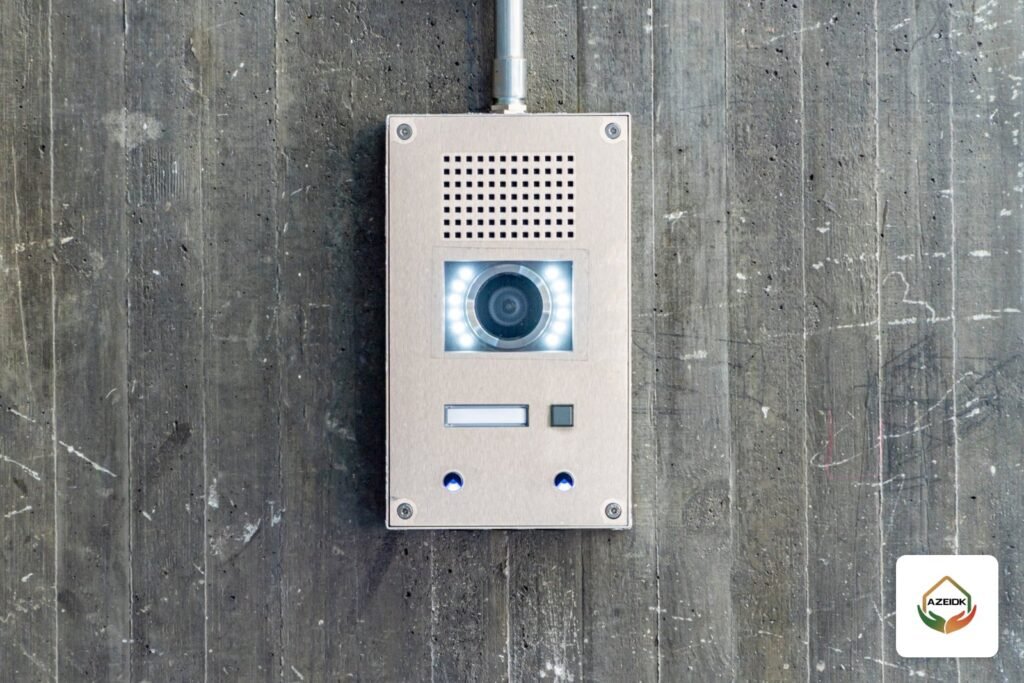
- CCTV at store entrances, loading docks and factory gates.
- Fingerprint or face time attendance devices for large shift workforces.
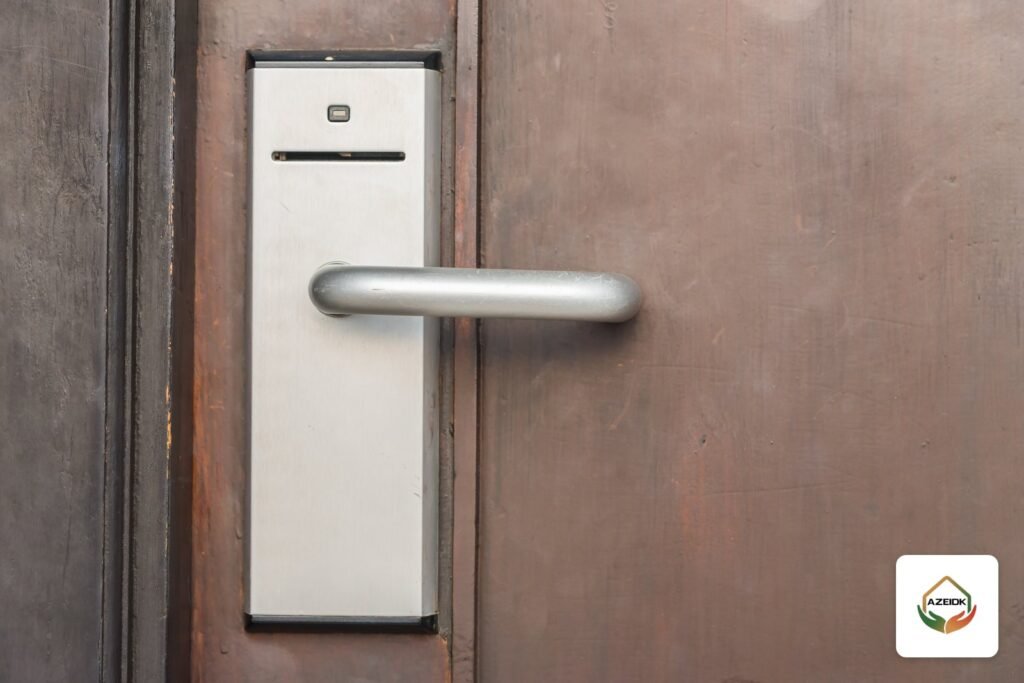
- Access control for the finished goods store and sample rooms.
These systems are maintained under the low current and CCTV contract, separate from the fire, safety and alarm contract.
Licensing and Civil Defense
The factory needs a Civil Defense licence through the Salamah platform before operation. The usual sequence is design by an engineering office, supply and installation, testing and commissioning, then the safety equipment installation certificate from the installing contractor. The Salamah technical report is issued by engineering consultancy offices. AZEIDK provides Civil Defense approval support and issues the safety equipment installation certificate for systems it installs. See our Salamah certificate guide.
What should the owner prepare before requesting design or quotations?
- Factory layout with department boundaries and ceiling height in each area.
- Storage method in stores: floor or racks, and maximum storage height.
- A list of heat-producing machines such as dryers, boilers and heat-setting machines.
- Number of workers per shift and per hall.
- The available fire water source, and whether there is a tank and pump.
- Any requirements from the industrial city administration or the insurer.
This data shortens the survey and makes designs and quotations comparable.
Frequently asked questions
Is a fire alarm without sprinklers enough for a garment factory?
Whether sprinklers are required is set by SBC 801 based on area, use and number of storeys, and decided by the designer. An alarm detects a fire; it does not put it out.
Why do false alarms keep happening in a textile plant?
Usually lint inside smoke detectors. The fix is reviewing the detector type per area and routine cleaning, not disabling detectors.
Which extinguisher suits a sewing hall?
Fabric and paper fires are Class A, suited to multipurpose powder, water or foam extinguishers per the design, with CO2 extinguishers near electrical panels.
Is a fabric roll store designed like a production hall?
No. Rack or high-pile storage has its own sprinkler design rules, different from production areas.
How often should lint be cleaned around machines?
It depends on production intensity and fibre type. Set a written schedule based on observed build-up, followed up by the factory safety officer.
Does fire maintenance cover CCTV and attendance devices?
No. The fire, safety and alarm contract is separate from the low current, CCTV, attendance and access control contract.
Does the boiler room in a textile plant need special protection?
Boiler and compressor rooms are designed as separate service rooms with suitable detection and extinguishers, and the designer may require fire-rated separation per the code. This is reviewed with the engineering office at design stage.
Conclusion
A textile or garment factory needs protection designed per department: detection that tolerates lint, sprinklers with the correct hazard class, separate storage design for stores, clear alarms for sewing halls, and a written cleaning routine that is followed. Start with the layout and department split, then select systems, then prepare the licensing file.
Building or expanding a textile or garment factory? Send the factory layout and department split to the AZEIDK team for fire alarm, sprinkler, hose cabinet and extinguisher design, then supply, installation and the safety equipment installation certificate. Talk to the AZEIDK team
Related guides
- Printing Press Fire Protection: Inks, Solvents and Roll Paper Storage
- CCTV Storage and Bandwidth Calculation for NVR Systems
- American Fire Control (AFC) in Saudi Arabia: Valves & Suppression
- Fire Extinguisher Bracket (Stand / Holder): Wall, Floor and Vehicle Types and How to Choose by Extinguisher Size