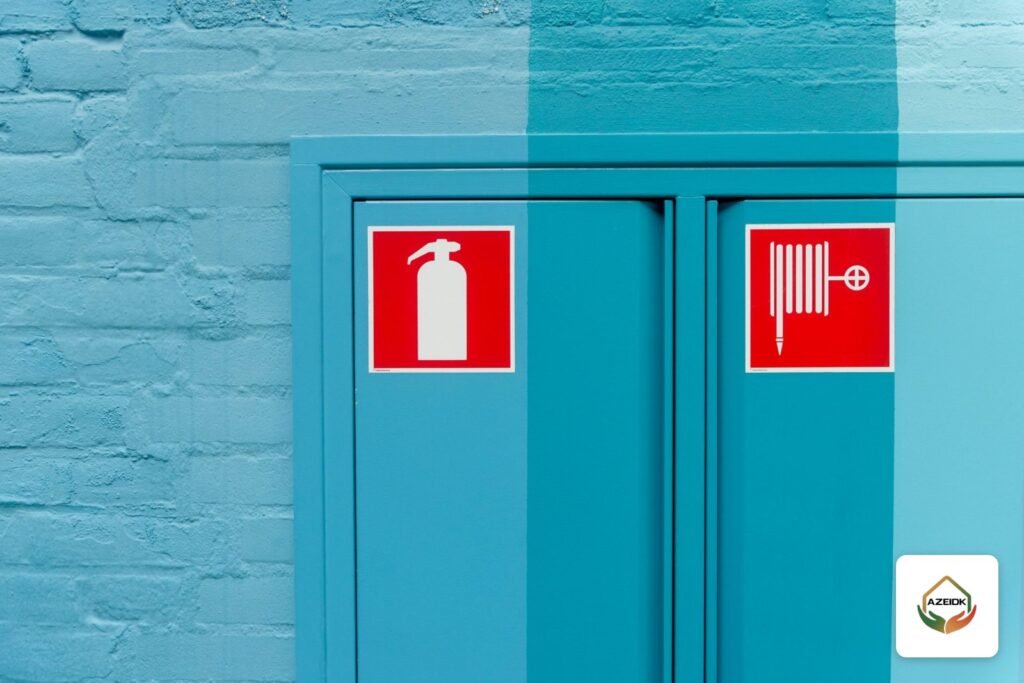
The Saudi Building Code Violations Classification Regulation is the reference municipal bodies and review committees use to classify any breach of the code, including its fire protection requirements. It has a separate table for operational fire prevention and protection violations, from emergency exits and alarm and suppression systems to the link between the fire alarm panel and the central monitoring room. This article explains what the text published by the Ministry of Municipalities and Housing says and what it means for building owners and operators.
To check the fire requirements of your project before an inspection, see AZEIDK’s Civil Defense approval support service.
Key points
- The regulation was issued by ministerial decision dated 4/11/1445H, replaces the regulation issued by Decision No. 00080 dated 6/3/1443H, and applies 60 days after publication in the Official Gazette.
- Article 2: any breach of the code, its law or its regulations is a violation that requires removal or correction.
- It separates non-dangerous violations (notice and a correction period) from dangerous violations (the work, part or occupancy is stopped and the case goes to the review committee).
- Table 3 covers operational fire prevention and protection violations, with penalties set by occupancy category.
- Review committee decisions can be appealed before the administrative courts of the Board of Grievances within 60 days of notification.
In this article
What is the SBC violations classification regulation?
The Saudi Building Code enforcement law and its executive regulation define who applies the code and who is responsible, as covered in our article on the SBC enforcement law and executive regulation. The violations classification regulation answers the next question: what happens when a violation is found? Article 1 refers to the executive regulation for the definitions of its terms.
Article 3 states that violations are recorded and documented by qualified code specialists named by decisions of their official bodies. Article 6 requires the person recording a violation to be accurate and to complete the work without delay.
The four tables of the regulation
| Table | Scope |
|---|---|
| Table 1 | Code violations in residential buildings (villas and semi-detached villas up to three floors) |
| Table 2 | Code violations in all other building occupancies |
| Table 3 | Operational fire prevention and protection violations |
| Table 4 | Operational violations of Ministry of Municipalities requirements |
An annex lists the building occupancy groups used by the code (A, B, E, F, H, I, M, R, S and U), the same classification that drives fire requirements, as explained in SBC occupancy classification and fire requirements.
Dangerous vs non-dangerous violations: what changes in the procedure?
- Non-dangerous (Article 7): the violator is notified and must correct the violation within a maximum of 30 days from the notice, which can be extended. If it is not corrected, it is referred to the review committee and the work stops until it is resolved.
- Dangerous (Article 8): immediate notice, the affected work, part or occupancy is stopped, and the case is referred to the review committee within five working days of recording.
- Removal at the violator’s expense (Article 9): the municipal authority may remove a violation at the violator’s expense if it threatens safety or public health.
- Structural safety (Article 13): if removal would endanger structural safety, correction follows an engineering solution backed by a report from an accredited engineering office.
Fire protection violations in Table 3
Table 3 is titled “Classification of operational violations of fire prevention and protection requirements in the Saudi Building Code”. Its columns are the violation, the responsible party, and five categories, each with a minimum and maximum penalty and each covering specific occupancy groups. Its items include:
- Emergency exits and escape routes that do not comply with the code, or obstacles in them.
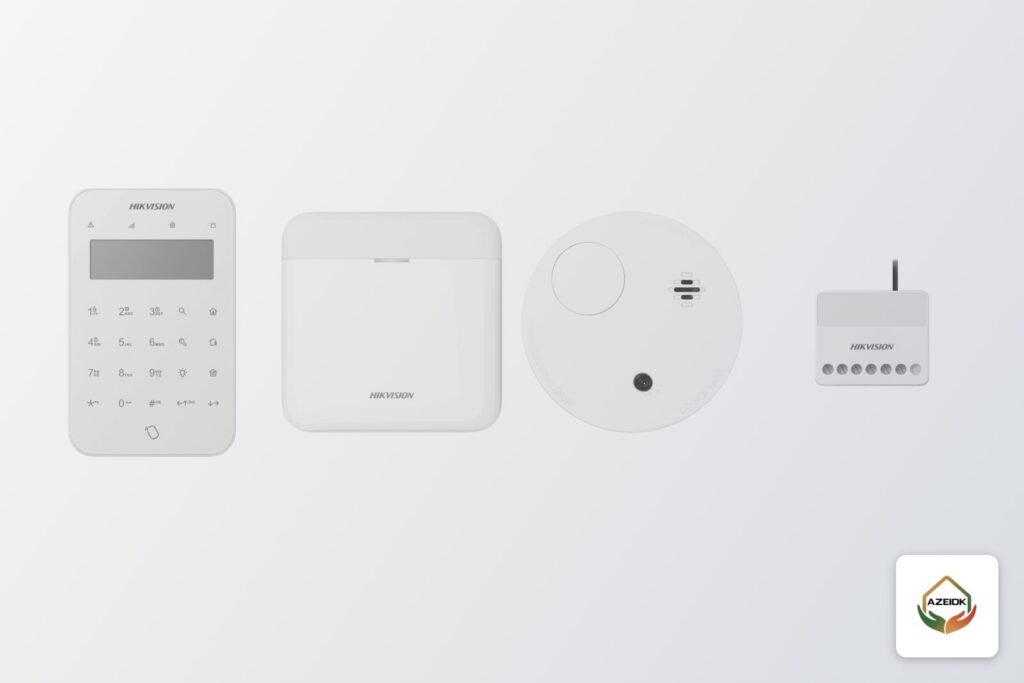
- No fire alarm system or a non-compliant one, and no suppression system or a non-compliant one.
- Non-compliant fire extinguishers.
- Non-compliant fire truck access, hydrants or external outlets, and risers and hoses.
- Fire-spread resistance of building elements.
- Kitchen fire systems.
- Missing or non-compliant signage.
- Building modifications that affect fire systems without approval.
- A site that is not clear of combustible material, and portable gas heaters used outside safe limits.
- Fire alarm panel not linked to the sprinkler supply valves, fire systems not linked to the panel, and the panel not linked to the central monitoring room.
- Fire systems in existing buildings not installed to the approved drawings within the deadline.
- Any other unlisted operational violation, assessed by the review committee.
We do not quote fine amounts here, because the figures in the published file are not clear enough to read reliably. The reference for any amount is the official text and the review committee’s decision itself.
How does the review committee set the penalty?
Article 11 states that the review committee applies the appropriate penalty to each violation, without prejudice to any heavier penalty under another law. Its criteria include the danger level, building size and occupancy, proportionality, aggravating and mitigating circumstances, voluntary correction, repetition or multiple violations, obstruction of inspection, and intent. In practice, correcting a violation before referral counts in the owner’s favour, while repetition makes the penalty heavier. Article 17 deals with penalties applied to consulting or engineering offices and contractors for code violations.
What it means for building owners and operators
- Link the fire systems: the interface items in Table 3 (panel to sprinkler valves, systems to panel, panel to monitoring room) are proven during testing, commissioning and handover and in the cause and effect matrix.
- Do not modify without approval: splitting units, adding false ceilings or changing use can affect sprinklers, detectors and escape routes.
- Keep exits clear: obstacles in escape routes are a separate item; see emergency exit requirements.
- Document maintenance: a regular maintenance record under annual maintenance contracts shows the systems work.
- Existing buildings: start with an assessment against the approved drawings, as in assessing fire systems in an existing building.
Violations of the Civil Defense law itself follow a different framework, covered in Civil Defense violations and fines.
FAQ
What is the difference between a dangerous and a non-dangerous building code violation?
A non-dangerous violation is notified with a period to correct it. A dangerous one leads to an immediate stop of the affected work, part or occupancy and referral to the review committee within five working days.
Does the regulation cover fire systems in existing buildings?
Yes. One Table 3 item is fire systems in existing buildings not installed to the approved drawings within the set deadline.
How do I appeal a building code violation decision?
Article 16 allows an appeal against review committee decisions before the administrative courts of the Board of Grievances within 60 days of notification.
Where can I find the official text?
It is published by the Ministry of Municipalities and Housing: SBC Violations Classification Regulation (PDF, Arabic).
Conclusion
Most fire items in the violations classification regulation can be controlled before an inspection: compliant, interlinked systems, clear exits, approved modifications and documented maintenance. Send AZEIDK your drawings and current system status, and we will review the gaps and propose a correction plan through a quote request.
Related guides
- PTZ Cameras from Dahua and Hikvision: When to Use Them and How to Choose
- Access Control for Banks: Staff Permissions, Cash and Server Rooms, Interlocked Doors and Fire Release of Exits
- Balady Licence Renewal and Municipal Licence Issue for Shops and Facilities: Requirements and the Civil Defense Salamah Certificate
- Civil Defense Violations and Fines in Saudi Arabia: The Most Common Facility Violations (Extinguishers, Alarm, Maintenance) and How to Avoid and Settle Them