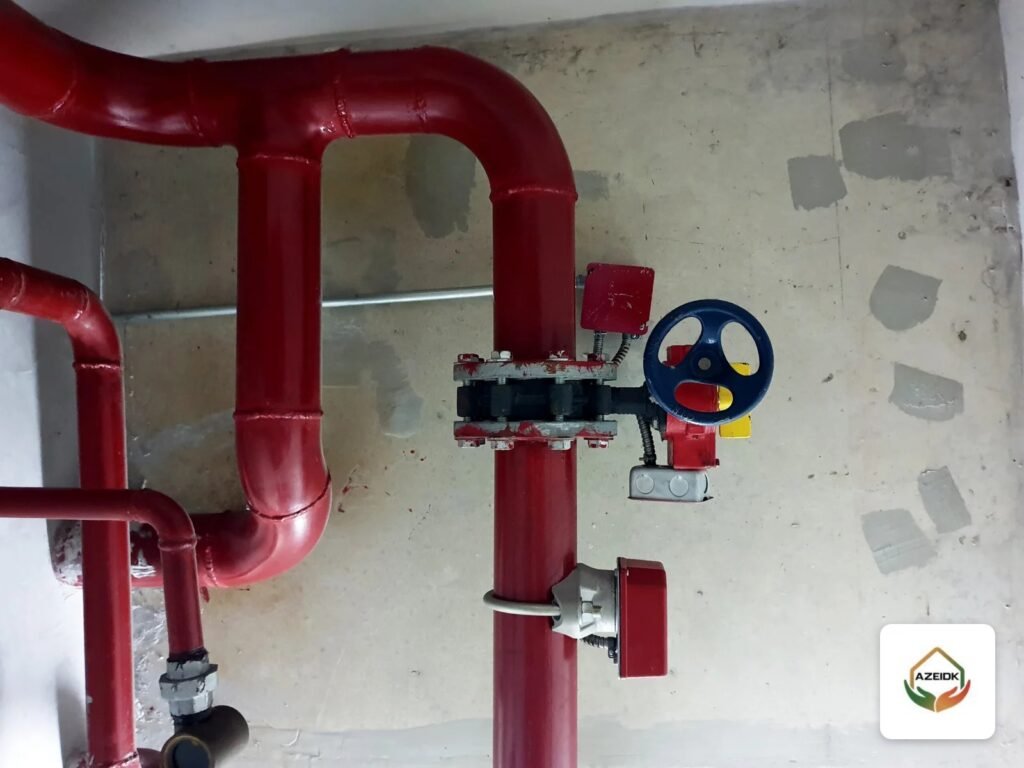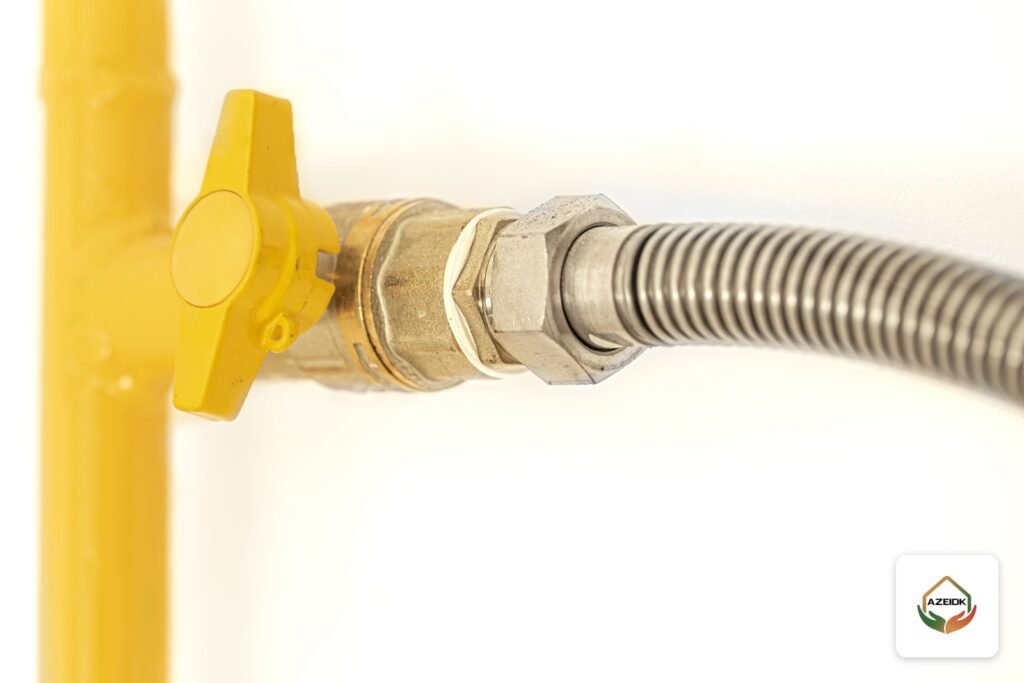
Central gas tank requirements for restaurants and buildings in Saudi Arabia come from three places: the Ministry of Municipalities and Housing, which requires compliance with the Saudi Building Code and maintenance of gas piping; Civil Defense, whose approval is needed before the licence is issued; and the Saudi Fire Code SBC 801, which has a separate chapter on liquefied petroleum gas (LPG). In practice a restaurant needs a tank and piping installed by a licensed gas contractor, an LPG leak detector in the kitchen, and a gas shut-off valve that closes automatically when the kitchen suppression system discharges.
Key takeaways
- The Ministry of Municipalities and Housing restaurant requirements (1446 AH / 2025 edition) refer fire protection to SBC 801 and require Civil Defense approval before a licence is issued.
- The 2018 Saudi Fire Code SBC 801 refers LP-gas work to Chapter 61. The usual technical reference is NFPA 58, latest edition 2024.
- Propane is about 1.5 times heavier than air, so an LPG leak detector is mounted low, close to the floor.
- Discharge of the kitchen suppression system must cut the gas to the cooking appliances automatically, and the reset must be manual.
- Tank location, separation distances and capacity are design work for a licensed gas contractor and an approved engineering office, not a site decision.
In this article
- What are the central gas tank requirements and who sets them?
- Who does what on a central gas project?
- Gas leak detector: where to mount it and why low?
- How does the gas shut-off valve tie into the kitchen suppression system?
- What does the NFPA diamond for LPG mean?
- The Civil Defense file for a restaurant: what gets checked?
- Frequently asked questions
- Conclusion
What are the central gas tank requirements and who sets them?
Restaurant owners often ask for “the gas tank requirements” as if a single authority issued one document. In reality the requirements sit in several references, and each one covers part of the picture.
The first is the Restaurant Requirements guide issued by the Ministry of Municipalities and Housing under Ministerial Decision No. 4600653138/1 dated 15/10/1446 AH. It requires compliance with the Saudi Building Code, refers fire protection to SBC 801, requires design and supervision by engineering offices approved by the Ministry, and requires Civil Defense approval before the licence is issued. Its maintenance clause also covers service lines, including gas and water piping.
The second is the Saudi Fire Code SBC 801. The study companion published by the International Code Council (ICC) for the 2018 edition refers LP-gas work to Chapter 61. That chapter is where the designer looks for container location and equipment installation.
The third is NFPA 58, the Liquefied Petroleum Gas Code, latest edition 2024. Designers and gas contractors use it for the details of containers, piping and valves. We do not present it as legally binding on its own; it applies to the extent the code refers to it or the authority asks for it.
Finally there is Civil Defense, through the Salamah platform and the licensing process. For the practical steps, see our Salamah certificate guide.
Who does what on a central gas project?
Mixing up responsibilities is a common reason for licensing delays. The central gas tank itself, with its piping, regulators and meters, is the work of a licensed gas contractor. The protection systems around it inside the kitchen and the building belong to the fire and life safety contractor. The usual split looks like this:
| Item | Usually done by | Reference |
|---|---|---|
| Central gas tank, its location, separation distances and capacity | Licensed gas contractor and approved engineering office | SBC 801 Chapter 61, NFPA 58 |
| Gas piping, regulators and meters | Licensed gas contractor | SBC and the authority’s instructions |
| Gas leak detector in the kitchen and gas room | Fire and life safety contractor | Manufacturer’s installation manual |
| Gas shut-off valve interlocked with the kitchen suppression system | Kitchen suppression contractor, coordinated with the gas contractor | SBC 801, IFC Section 904.12, datasheet |
| Kitchen hood suppression system | Suppression contractor | NFPA 17A and the manufacturer’s design manual |
| Periodic maintenance of gas piping | Licensed gas contractor | Restaurant Requirements (maintenance clause) |
This article does not quote tank separation distances or capacities. The values depend on tank size and installation type (aboveground or underground) and come from the NFPA 58 tables and the authority’s approval. A number written without those tables is likely to be rejected at approval stage.
Gas leak detector: where to mount it and why low?
The LPG used in restaurants is mainly propane and butane. NOAA’s CAMEO Chemicals database gives propane a vapour density of about 1.5 relative to air and describes it as “heavier than air; will sink”. Leaking gas therefore collects near the floor and in pits and low areas before anyone can smell it.
That is why an LPG detector is mounted low. The gas detector manual from S&S Northern places the LPG detector at about 300 mm above the floor and notes that the height may change with airflow and temperature. This differs from natural gas or carbon monoxide detectors, so do not carry the mounting height of one type over to another.
Practical points when choosing a gas leak detector for a restaurant:
- Confirm in the datasheet that the detector is rated for LPG, not natural gas only.
- Place it near likely leak points: joints, valves and the gas line entering the kitchen, away from direct air streams.
- Ask for a relay output that can drive the shut-off valve or report to the fire alarm panel, so it does more than sound a local buzzer.
- Take the test and calibration schedule from the manufacturer’s manual and record it in the maintenance file.
Civil Defense, in its public guidance, recommends installing gas leak detectors, checking pipes and connections, and keeping cylinders in a safe place. See AZEIDK gas detection systems and ask us to recommend a detector for your restaurant or building.
How does the gas shut-off valve tie into the kitchen suppression system?
The most dangerous moment in a commercial kitchen fire is when gas keeps feeding the burners after the fire starts. Fire codes therefore require the kitchen suppression system to cut the fuel. The 2015 International Fire Code (IFC), whose section numbering the Saudi Fire Code follows in many places, states in Section 904.12.2 that actuation of the suppression system shall automatically shut down the fuel or electrical supply to the cooking equipment, and that the reset shall be manual. Section 904.12.1 requires a manual actuation device at or near a means of egress from the cooking area, 10 to 20 ft (about 3 to 6 m) from the kitchen exhaust system and 42 to 48 in (1,067 to 1,200 mm) above the floor. The designer checks the matching clause in SBC 801 when preparing the drawings.
Two shut-off valve types are common:
- Mechanical shut-off valve: closed by a mechanical cable from the suppression system’s release head, with no power needed.
- Electrical (solenoid) shut-off valve: closed by an electrical signal from the suppression system, the gas detector or the fire alarm panel.
For example, the AZEIDK page for the ANSUL R-102 restaurant fire suppression system states that the system supports mechanical or electrical gas line shut-off according to project requirements, with an optional fire alarm panel interface. The choice between the two depends on the design, the appliance layout and the consultant’s requirements.
Where a restaurant has a gas detector, a suppression system and a fire alarm panel, document how they interact in a cause and effect matrix: what happens on a gas alarm, what happens on suppression discharge, and who reopens the gas and when.
What does the NFPA diamond for LPG mean?
Many people search for “LPG NFPA diamond”. This is the NFPA 704 hazard diamond placed on tanks and stores so firefighters can read the hazard at a glance. CAMEO Chemicals rates propane as Health 2, Flammability 4, Instability 0.
- Blue (health) 2: can cause temporary incapacitation or residual injury.
- Red (flammability) 4: the highest level; vaporizes rapidly at atmospheric pressure and normal temperature and burns readily.
- Yellow (instability) 0: normally stable, even under fire conditions.
The flammability rating of 4 explains why codes are strict about tank location, ignition sources around it and automatic gas shut-off.
The Civil Defense file for a restaurant: what gets checked?
When the licensing file is prepared, the engineering office or the authority reviews several linked items. Common comments that delay the file include:
- No interlock between the kitchen suppression system and the gas shut-off valve, or a valve that does not match the system.
- A gas detector mounted at the wrong height for the gas type, or not connected to any action.
- Missing system documents: datasheets, drawings, testing and commissioning certificate.
- Gas piping installed by an unqualified party, or with no maintenance record.
The AZEIDK team provides Civil Defense approval support for fire fighting, fire alarm and kitchen suppression systems. You can also run through the Salamah inspection checklist before the visit.
Frequently asked questions
Does a restaurant need a gas detector if it already has kitchen suppression?
In most cases, yes. The suppression system deals with a fire once it starts; the gas detector warns of a leak before ignition. Civil Defense recommends gas leak detectors in facilities.
At what height is an LPG gas detector installed?
Low, because LPG is heavier than air. The S&S Northern manual, for example, places it at about 300 mm above the floor. The final reference is the installation manual of the model used.
What is the difference between a mechanical and an electrical shut-off valve?
A mechanical valve closes through a cable from the kitchen suppression system with no power. An electrical (solenoid) valve closes on a signal from the suppression system, gas detector or alarm panel. The design decides which one fits.
Is NFPA 58 mandatory in Saudi Arabia?
The binding reference is the Saudi Building Code, and the Saudi Fire Code SBC 801 has a chapter on LP-gas. NFPA 58 is the technical reference designers and gas contractors use for details, as far as the code refers to it and the authority asks for it.
What is the NFPA 704 rating for LPG?
For propane: Health 2, Flammability 4, Instability 0, according to CAMEO Chemicals.
Does AZEIDK install central gas tanks?
No. The tank and piping are the work of a licensed gas contractor. AZEIDK supplies and installs the related protection: gas detectors for restaurants and buildings, kitchen suppression systems with the shut-off valve interlock, and Civil Defense approval support.
Conclusion
Central gas tank requirements are not a single document. The Ministry of Municipalities and Housing refers to the building code and requires Civil Defense approval and gas piping maintenance, SBC 801 has a chapter on LP-gas, and NFPA 58 is the technical reference for the details. Inside the kitchen, the two items that matter most are an LPG leak detector mounted in the right place and a shut-off valve interlocked with the kitchen suppression system so the gas closes automatically.
Fitting out a restaurant or building on central gas? AZEIDK recommends the right gas detector, designs and installs the kitchen fire suppression system with the shut-off valve interlock, and prepares the approval documents. Talk to the AZEIDK team
Related guides
- CCTV Camera Price in Saudi Arabia (KSA): What Drives CCTV System Cost for Facilities and How to Compare Installation Quotes
- Smart Buildings: How Low Current Systems Integrate in One Building
- CCTV Camera Cable: Coax RG59 or Cat6, Maximum Distances, PoE and When You Need Fiber
- IP PBX and IP Phone Brands in Saudi Arabia: Yeastar, Grandstream, Fanvil, Avaya and Alcatel-Lucent