Civil Defense violations against facilities in Saudi Arabia usually start with small things: a missing or out-of-service fire extinguisher, an alarm panel showing faults, no valid maintenance contract, a blocked emergency exit, or an expired Salamah licence. Article 30 of the Civil Defense Law sets the general penalty, committees formed by the Minister of Interior decide individual cases, and prevention costs far less than fixing things after an inspection.
This article sets out what the official text says about penalties, the violations most often recorded against facilities, a practical checklist to avoid each one, and what to do if you receive a violation notice.
Key points
- Article 30 of the Civil Defense Law provides for imprisonment, a fine, or both, for breaching the Law, its regulations or decisions issued under it. We do not quote the fine ceiling or prison term here, because we could not match the text currently in force against an official source.
- The Minister of Interior, as Chairman of the Civil Defense Council, forms committees that hear violations and impose fines; cases that warrant imprisonment are referred to the Public Prosecution.
- We found no verifiable official schedule giving a fixed amount per violation (for example, a fire extinguisher violation), so this article quotes no per-item amounts.
- The most frequent violations are maintenance-related: extinguishers, fire alarm, maintenance contract, exits and Salamah licence validity.
- After a violation: fix the cause, document the fix, and use the payment or objection channels stated on the notice itself.
In this article
- What are Civil Defense violations and who issues them?
- Civil Defense fines: what does the official text say about amounts?
- Most common Civil Defense violations and how to avoid them
- Monthly checklist to avoid Civil Defense violations
- What to do after receiving a Civil Defense violation
- How AZEIDK helps you avoid violations
- Frequently asked questions
- Summary
What are Civil Defense violations and who issues them?
A violation is any case where a facility does not comply with the Civil Defense Law, its regulations or decisions issued under it. The Law links licensing to compliance: Article 20 makes the licences it covers conditional on the licensee following the safety rules issued by the Civil Defense Council. In practice a violation surfaces in one of two ways: a routine or unannounced inspection, or a licence application or renewal on the Salamah platform that exposes a gap in systems or documents.
On procedure, Article 32 states that violations are recorded and investigated under rules and procedures set by the Minister of Interior. Article 30 provides for committees to hear violations and impose fines. The detailed procedures sit in the Regulation for Considering Violations of the Civil Defense Law and its Regulations, issued under that mandate.
Civil Defense fines: what does the official text say about amounts?
Many owners look for a “Civil Defense violations table” with a fixed fine per item. What the Law sets is a general framework: Article 30 provides for imprisonment, a fine, or both, for anyone who breaches the Law, its regulations or decisions issued under it, and competent committees hear the violations. This article does not quote the fine ceiling or prison term, because we could not match the text currently in force on the Bureau of Experts at the Council of Ministers website.
A draft amendment to the Civil Defense Law, covering the penalty articles, has been published for consultation on the government Istitlaa platform. We found nothing confirming it has entered into force. Do not rely on figures circulating about the draft; check the current text on the Bureau of Experts at the Council of Ministers website and the violation notice itself.
The amount actually imposed for a specific violation, such as a missing extinguisher, is set by the competent authority in its decision and shown on the violation notice. We do not repeat figures from blogs or unofficial accounts, which are often outdated or wrong.
Most common Civil Defense violations and how to avoid them
| Violation | How it shows up at inspection | How to avoid it |
|---|---|---|
| No extinguisher or too few | An area or hazard without a suitable extinguisher, or one missing from its position | Place extinguishers by hazard type and area; monthly location check |
| Extinguisher out of service or discharged | Gauge outside the green band, old service tag, visible damage | Monthly visual inspection and documented annual maintenance |
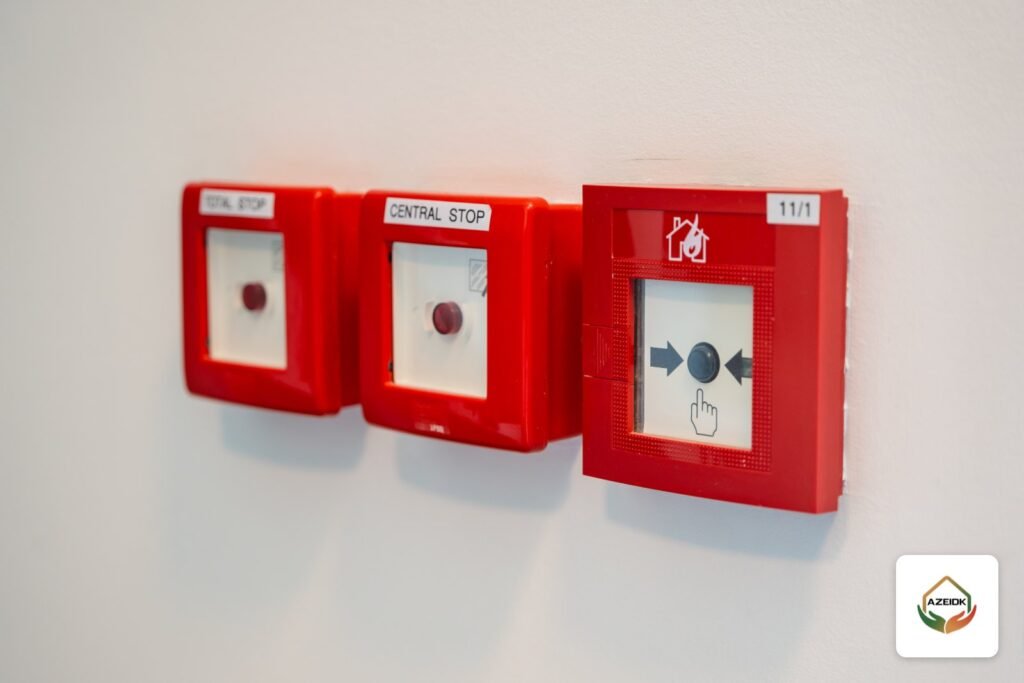
| Faulty fire alarm | Panel showing Fault, detectors disconnected or covered, sounders not working | Daily check of panel messages and periodic testing under a maintenance contract |
| No valid maintenance contract | No contract with a licensed provider, an expired contract, or no visit reports | A periodic maintenance contract with clear dates and a report after each visit |
| Blocked or locked exits | Goods stacked at the exit, an ordinary padlock on the door, emergency lighting or exit signs not working | Keep routes clear, use suitable emergency-door hardware, test emergency lighting |
| Expired Salamah licence | Operating on an expired licence | Internal reminder before expiry and early preparation for renewal |
Fire extinguisher violations
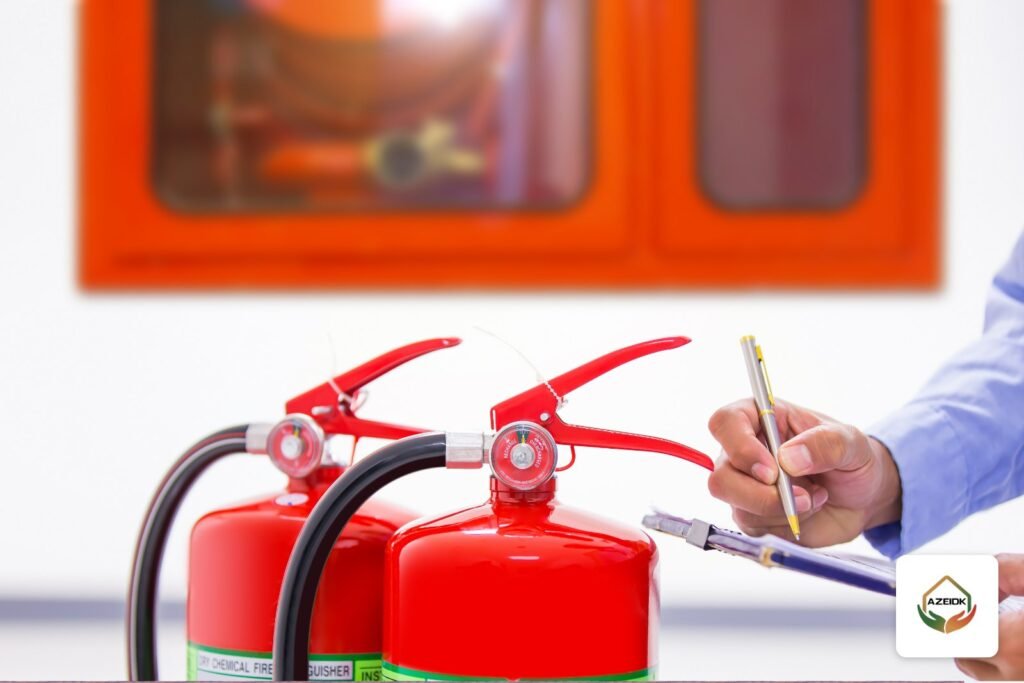
Inspectors rarely find no extinguisher at all. More often the unit is there but unusable: low pressure, cracked hose, expired service tag, or the wrong type for the hazard, such as a water extinguisher next to an electrical panel. The fix is a monthly round that records each extinguisher’s location, gauge reading and seal, plus annual maintenance by a qualified technician. Technical detail is in our article on fire extinguisher maintenance and recharging.
Faulty fire alarm
A panel showing a fault for weeks, or a smoke detector bagged during fit-out and then forgotten, is enough for a finding. Silencing the panel instead of fixing the cause is another common habit. Have the person in charge log every fault message and report it to the maintenance provider the same day.
No maintenance contract
A contract with a licensed provider shows that systems are checked regularly and ties into the licence renewal file. A contract that exists only on paper, with no visits or reports, does not protect the facility. See what the contract should cover in fire system maintenance contracts in Saudi Arabia.
Blocked exits and emergency lighting
In warehouses and shops, escape routes slowly turn into storage. A chained emergency door is a serious finding on its own. Make exit checks part of the daily closing round and test emergency lighting and exit signs periodically.
Expired Salamah licence
Renewal is done on the Salamah platform and needs working systems and current documents. Leaving it to the last week turns any minor finding into a lapse. Platform steps are in our Salamah platform guide, and the role of the maintenance contract in renewal is covered in Salamah licence renewal.
Monthly checklist to avoid Civil Defense violations
- Extinguishers: each in place, visible and unobstructed, gauge in the green, seal intact, service tag valid.
- Alarm panel: no Fault or Disable messages; standby batteries in good condition per the last service report.
- Detectors and call points: not covered or painted, not hidden by decor or shelving.
- Fire hose cabinets: door opens, hose rolled and intact, valve not closed by mistake.
- Exits and corridors: fully clear, doors open in the direction of travel without a key, emergency lighting working.
- Documents: valid maintenance contract, last visit report on file, safety log up to date, licence expiry date known.
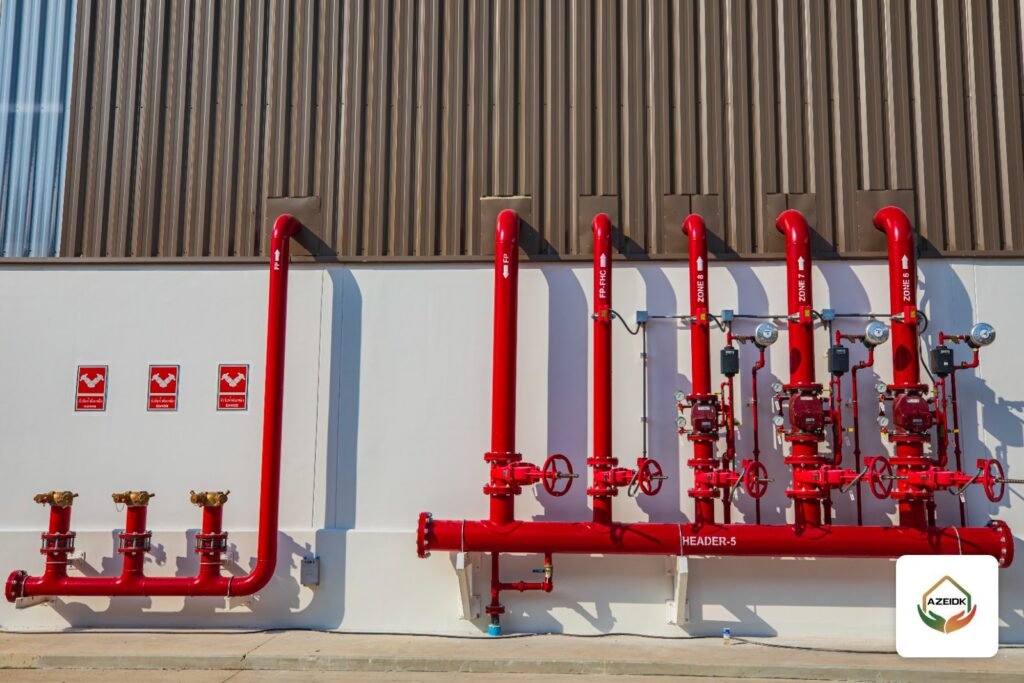
Keep the signed checklist with the safety log each month; the log itself is evidence of follow-up. For deeper technical findings on sprinklers, pumps and networks, see common Civil Defense inspection notes and how to fix them.
What to do after receiving a Civil Defense violation
- Read the notice carefully: the item breached, the location, any deadline, and the payment or objection channels stated.
- Fix the cause at once: replace or service the extinguisher, repair the alarm fault, clear the exit or renew the contract. Paying alone does not stop the same finding next time.
- Document the fix: before and after photos, a maintenance report, a dated supply or service invoice.
- Pay or object: if the violation is correct, pay through the official channel stated on the notice. If you believe it is wrong, object through the channel and within the period stated on the same notice, with your documents.
- Check your Salamah licence: make sure the violation does not hold up a pending renewal.
Do not use payment links or numbers received through unofficial messages. Use only what appears on the official notice, and contact Civil Defense directly if in doubt.
How AZEIDK helps you avoid violations
Most repeat violations come from irregular maintenance or systems that were not reviewed before inspection. Through preventive and periodic maintenance, AZEIDK maintains fire alarm and firefighting systems and services fire extinguishers with its own maintenance team, so faults are found before the inspector finds them.
Under Civil Defense approval support, AZEIDK reviews system readiness before an application or renewal and issues the safety equipment installation certificate as part of the service. The Civil Defense technical report is issued by engineering consultancy offices, not by AZEIDK. No company replaces the authority in recording a violation, accepting an objection or setting a fine.
Frequently asked questions
How much is a Civil Defense fine in Saudi Arabia?
Article 30 of the Civil Defense Law provides for imprisonment, a fine, or both, for breaching the Law or its regulations, and the competent committees decide each case. We quote no amount because we could not match the text currently in force against an official source; the actual amount for each violation appears on the violation notice.
What is the fine for a missing fire extinguisher?
We found no verifiable official schedule with a fixed amount for extinguisher violations. The amount appears on the violation notice issued by Civil Defense.
Who decides a Civil Defense fine?
Article 30 provides for committees formed by the Minister of Interior as Chairman of the Civil Defense Council. They hear violations and impose fines; cases warranting imprisonment go to the Public Prosecution.
How do I pay a Civil Defense violation?
Through the official channel stated on the violation notice. Never pay through links received from unofficial sources.
Does paying the fine close the matter?
No. Payment does not fix the cause, and the same condition can be recorded at the next inspection or delay a Salamah renewal. Correct and document the fix.
Does a maintenance contract protect a facility from violations?
Only as far as it is carried out. Regular visits and documented reports catch faults before inspection; a contract that is not executed does not prevent findings.
Summary
Most Civil Defense violations are the result of small neglect that builds up: an extinguisher not serviced, a fault message ignored, a contract that lapsed, or a corridor turned into a store. The Law sets a general penalty framework and leaves each case to the competent committees, so regular prevention is the practical route. A monthly checklist, a maintenance contract that is actually carried out, and tracking the licence expiry date cover most of what inspectors record.
Want your facility’s readiness reviewed before an inspection or renewal? Send us the activity type, floor area and existing systems, and we will propose a suitable periodic maintenance scope and flag what needs correcting. Contact the AZEIDK team
Related guides
- Comprehensive vs Non-Comprehensive Fire and Security Maintenance Contracts: Spare Parts, Emergency Call-Outs and How to Choose
- Conventional vs Addressable Fire Alarm Systems: A Selection Guide for Saudi Projects
- Network Installation (Structured Cabling) for Offices in Saudi Arabia: How to Choose the Contractor and What to Ask in the Offer
- How to Confirm an Authorized Fire Equipment Distributor in Saudi Arabia