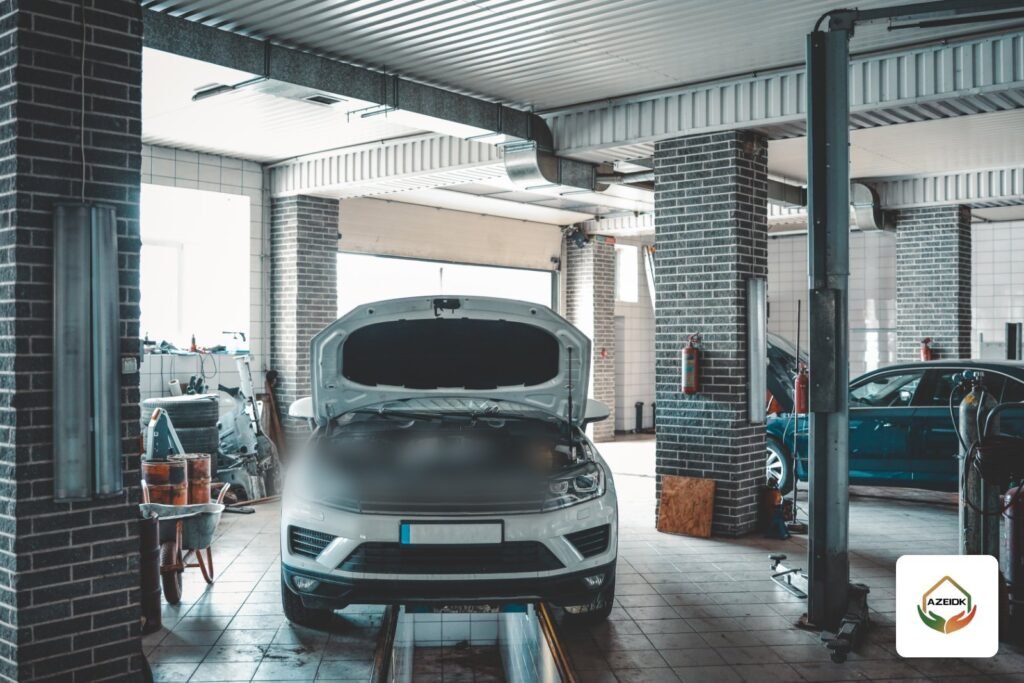
A kitchen fire suppression system for fuel station restaurants is an automatic system installed over cooking appliances and inside the hood and duct. It detects a fire, discharges a wet chemical agent and shuts off gas or power to the appliances. At a station the stakes are higher: a kitchen with open flame and frying oil a few metres from fuel. Saudi Arabia’s Fuel Stations and Service Centers Requirements allow open flame in station restaurants and coffee shops provided they are at least 6 m from the dispensers and tank openings.
This guide covers when a station restaurant needs kitchen suppression, the standards behind the choice, how it links to the station alarm and how it is maintained. For the basics, see our commercial kitchen suppression guide.
Key takeaways
- The requirements (clause 4.11.3) allow open flame in station restaurants and cafes at least 6 m from dispensers and tank openings.
- Service buildings, restaurants included, must be separated from vehicle maintenance buildings.
- Systems tested to UL 300 use a wet chemical agent suited to cooking oil fires.
- On discharge, gas or power to the appliances under the hood is shut off.
- The system needs periodic service, typically every six months, and a Class K extinguisher near the cooking line.
In this article
- Why is a station kitchen a special case?
- When does a station restaurant need kitchen suppression?
- How does a kitchen fire suppression system for fuel station restaurants work?
- Standards to check when choosing
- Which brands does AZEIDK supply?
- Linking to the station alarm and gas shut-off
- A Class K extinguisher alongside the system
- Maintenance and recharge
- Tenant or station owner: who is responsible?
- Common mistakes in station restaurant kitchens
- FAQ
- Conclusion
Why is a station kitchen a special case?
A highway station restaurant runs long hours, sometimes around the clock, with fryers, grills and griddles. The hood collects grease-laden vapour that builds up in the duct, and a kitchen fire can travel through it to the roof. At a station all of this sits on the same plot as fuel tanks, dispensers and waiting cars. That is why the requirements set a minimum distance between flame and fuel and separate service buildings from vehicle maintenance buildings. But distance does not put out a fire that starts in the fryer; an automatic system tackles it in its first seconds inside the hood.
When does a station restaurant need kitchen suppression?
The technical rule in references such as NFPA 96 is that commercial cooking appliances producing grease-laden vapour, and needing a commercial hood, are protected by an automatic extinguishing system. That covers fryers, grills, griddles and ranges. For a cafe serving drinks only, without grease-producing cooking, the approved design sets what is needed. The requirements call for an approved suppression system per Chapter 9 of SBC 801, and the consultancy’s approved design is the final reference for each kitchen.
How does a kitchen fire suppression system for fuel station restaurants work?
- Detection: fusible links in the hood and duct melt at a set temperature, or another detection method per model.
- Discharge: wet chemical agent flows through nozzles aimed at each appliance, the hood and the duct.
- Extinguishment: the agent reacts with hot oil to form a soapy layer that seals and cools the surface, reducing re-ignition.
- Shut-off: gas or power to the appliances under the hood is cut automatically.
- Notification: a signal goes to the station fire alarm panel where the systems are linked.
A manual pull station on the kitchen exit route lets staff release the system if they see the fire first.
Standards to check when choosing
| Item | What to check |
|---|---|
| UL 300 | The system is tested to UL 300 for commercial cooking protection |
| NFPA 17A | Wet chemical systems: design, installation and maintenance |
| NFPA 96 | Ventilation control and fire protection of commercial cooking |
| Manufacturer’s manual | Nozzle count, positions and appliance coverage |
| Datasheet | Cylinder capacity, detection and shut-off method |
Which brands does AZEIDK supply?
Under its kitchen fire suppression systems, AZEIDK supplies ANSUL R-102, American Fire Control, Hood Safer and a Falcon Gold system. The choice depends on appliance count, hood length, design requirements and budget. See ANSUL R-102 vs American Fire Control.
Linking to the station alarm and gas shut-off
The requirements call for a fire alarm system inside the station. Linking the kitchen system to the alarm panel means a discharge shows on the panel and sounds the sounders, so staff in the store and forecourt know at once. The link is usually a switch in the kitchen system and an input module on the alarm panel. See our fire alarm systems page. Where the restaurant uses gas, the gas shut-off valve is part of the system and is coordinated with the gas piping and tank; see central gas tank requirements for restaurants.
A Class K extinguisher alongside the system
The automatic system does not replace the portable extinguisher. A Class K (wet chemical) extinguisher sits near the cooking appliances; As a technical reference alongside the Saudi code applied in the design, the US standard NFPA 10 limits the travel distance to it to 30 ft (about 9 m). It is used after the system discharges or on a small fire, and water extinguishers are never used on burning oil. See Class K kitchen extinguishers.
Maintenance and recharge
The system is inspected and serviced at least every six months, and after any discharge, per NFPA 96 (section 11.2.1) as a technical reference and the manufacturer, with fusible links replaced on schedule. The hood and duct are cleaned regularly because grease build-up makes fires worse. Since the requirements call for monthly checks and periodic tests of all station fire protection systems, the kitchen system belongs in the same fire systems maintenance contract. See kitchen suppression inspection and maintenance.
Tenant or station owner: who is responsible?
Many station restaurants are run by a tenant or a brand separate from the station owner. The lease should state who supplies the kitchen system, who pays for servicing and who keeps its records. Whoever owns it, the system is best linked to the station alarm panel and its service reports sent to the station safety officer, since the requirements call for all station protection systems to be checked and recorded. When the tenant changes or the kitchen is rearranged, the system is reviewed before reopening so the nozzles still cover the new appliances.
Common mistakes in station restaurant kitchens
- Moving a fryer or adding a griddle without adjusting the nozzles.
- Neglecting hood and duct cleaning until grease builds up.
- A manual pull station behind the appliances instead of on the exit route.
- No Class K extinguisher, or a water extinguisher in the kitchen.
- No link to the station alarm, so forecourt staff never hear of the fire.
- Delaying recharge after a discharge and cooking without protection. See recharge after discharge.
FAQ
Is open-flame cooking allowed in a fuel station restaurant?
Yes, at least 6 m from the dispensers and tank openings, per the Fuel Stations and Service Centers Requirements.
Are ordinary sprinklers enough for the restaurant kitchen?
Grease-producing cooking appliances are protected by a dedicated kitchen system such as a UL 300 wet chemical system; the approved design sets the protection.
Does the station cafe need kitchen suppression?
It depends on the appliances. Without grease-producing cooking under a commercial hood, the approved design sets what is needed.
How often is a kitchen system serviced?
At least every six months and after any discharge, per NFPA 96 as a technical reference and the manufacturer.
How much does a kitchen system for a station restaurant cost?
It depends on appliance count, hood length and brand. See kitchen suppression cost factors or ask for a quote.
Can it be linked to the station alarm?
Yes, through an input module on the fire alarm panel, so a discharge shows on the panel and sounds the station sounders.
Conclusion
A kitchen suppression system for fuel station restaurants completes what the 6 m rule starts: it puts out a fryer fire in the hood before it spreads, shuts off the gas and alerts the whole station. Choose a UL 300 tested system, link it to the alarm and include it in the maintenance contract. See the full sector offer on our fuel stations page.
Fitting out a restaurant at a fuel station? Send us the appliance list and hood size, and we will propose the right system with datasheets. Contact AZEIDK
Related guides
- ELV Network VLAN Design: One Network for CCTV, Access Control and IP Phones
- Fire System Maintenance Contracts for Apartment Buildings and Residential Compounds: What Owners and Owners Associations Need (Alarm, Sprinklers, Pumps, Extinguishers, CCTV)
- Fire Pumps in Riyadh: Choosing Pumps for Towers, Warehouses and Factories, Supplied by AZEIDK
- WATEX Fire Pumps: The Complete Guide to WATEX Pumps in Saudi Arabia (Models, Approvals, Capacities)