Kitchen suppression recharge after a discharge is not a single job. It is a sequence: make the kitchen safe and call a technician authorised by the manufacturer, clean the agent off within 24 hours, replace the detection element that operated, refill the cylinder with the system’s own agent, then reset the gas valve by hand and test the system. The restaurant should not cook again until all of this is done and recorded in the fire safety log book. This guide sets out the steps in order, as the manufacturers’ manuals describe them, and separates what the owner does from what the technician does, for kitchen fire suppression systems such as ANSUL, Hood Safer and American Fire Control.
Key takeaways
- The ANSUL R-102 Owner’s Guide says to call the authorised distributor immediately after a discharge to inspect and recharge the system and to find the cause.
- Clean up within 24 hours using warm water and detergent, and throw away any food or grease the agent touched.
- The 2015 International Fire Code (IFC) makes fuel and power reset manual and requires the system to be serviced after every activation.
- In Hood Safer systems, wet chemical refill containers are single use, and discharge piping is flushed with hot water.
- Do not reopen the gas valve yourself before the system has been reset and tested.
In this article
- What happens when a kitchen suppression system discharges?
- Step by step after a kitchen suppression discharge
- Kitchen suppression recharge: what gets replaced and what gets checked?
- Who does what after a discharge?
- When can the restaurant reopen?
- Common mistakes after a kitchen suppression discharge
- Frequently asked questions
- Conclusion
What happens when a kitchen suppression system discharges?
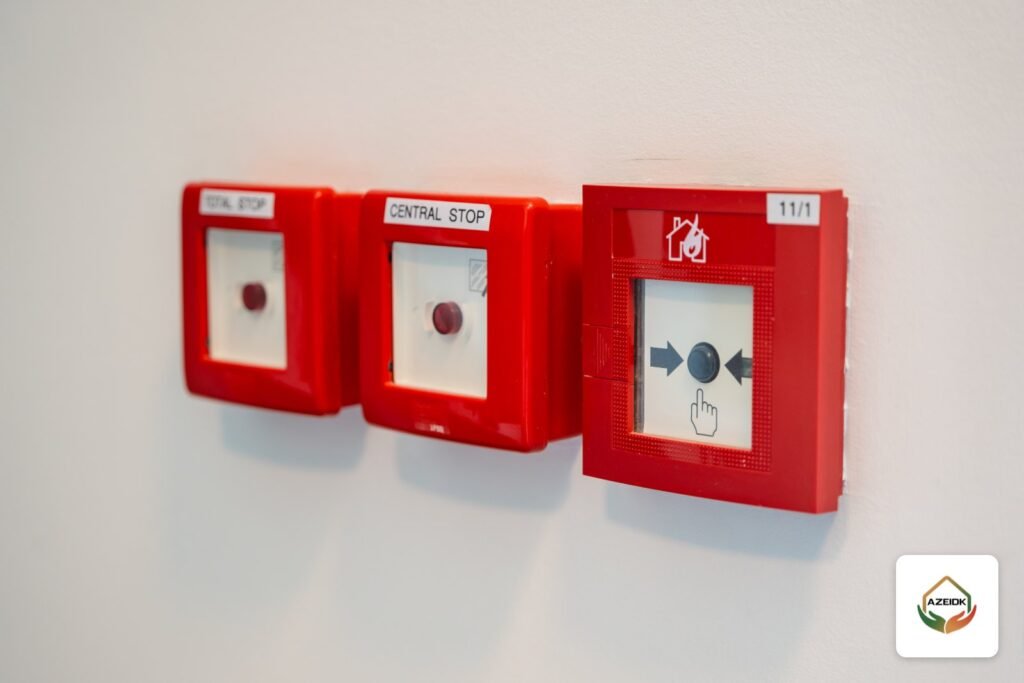
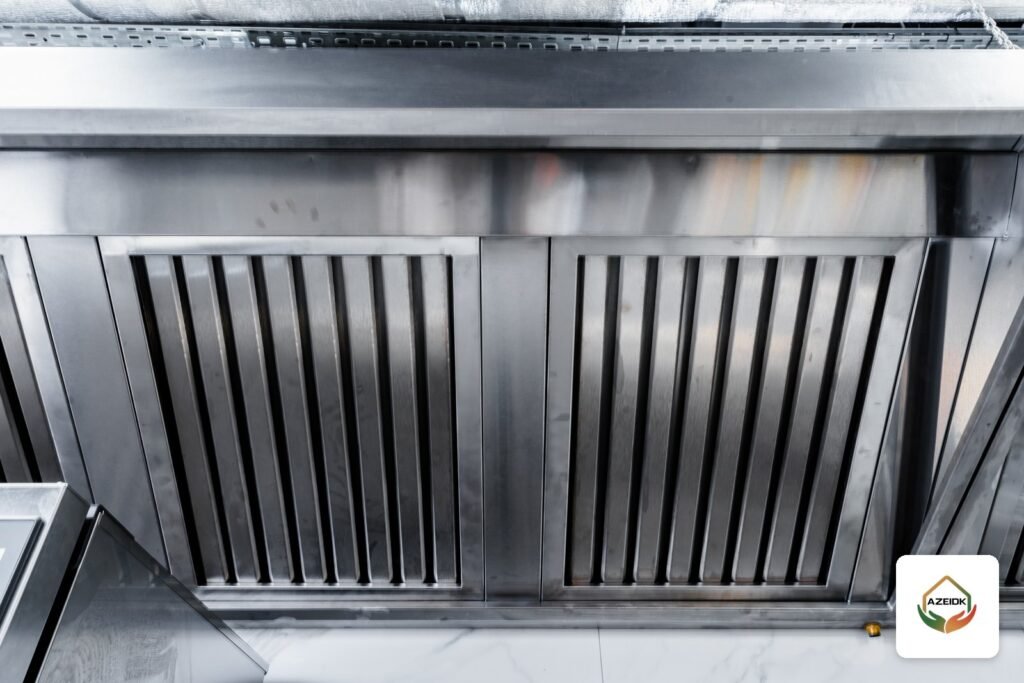
When the system operates, either automatically through the fusible link above the appliances or manually from the pull station, wet chemical agent discharges from the nozzles onto the cooking surfaces and into the hood and duct. The agent is an alkaline solution. In Hood Safer, for example, it is a potassium carbonate solution with a pH above 11, according to the safety data sheet in the submittal. It reacts with hot oil to form a soapy layer that cuts it off from the air and cools it.
At the same moment the heat source is cut. IFC 2015 Section 904.12.2 states that actuation of the extinguishing system shall automatically shut down the fuel or electrical supply to the cooking equipment, and that the reset shall be manual. The IFC is the model on which the 2018 edition of the Saudi fire code, SBC 801, was built, so the same principle appears in specifications and consultant requirements.
The result is a kitchen at a standstill, surfaces covered in an alkaline agent, an empty cylinder, and a fused link or a used pull station. Each of these needs action before the kitchen goes back to work.
Step by step after a kitchen suppression discharge
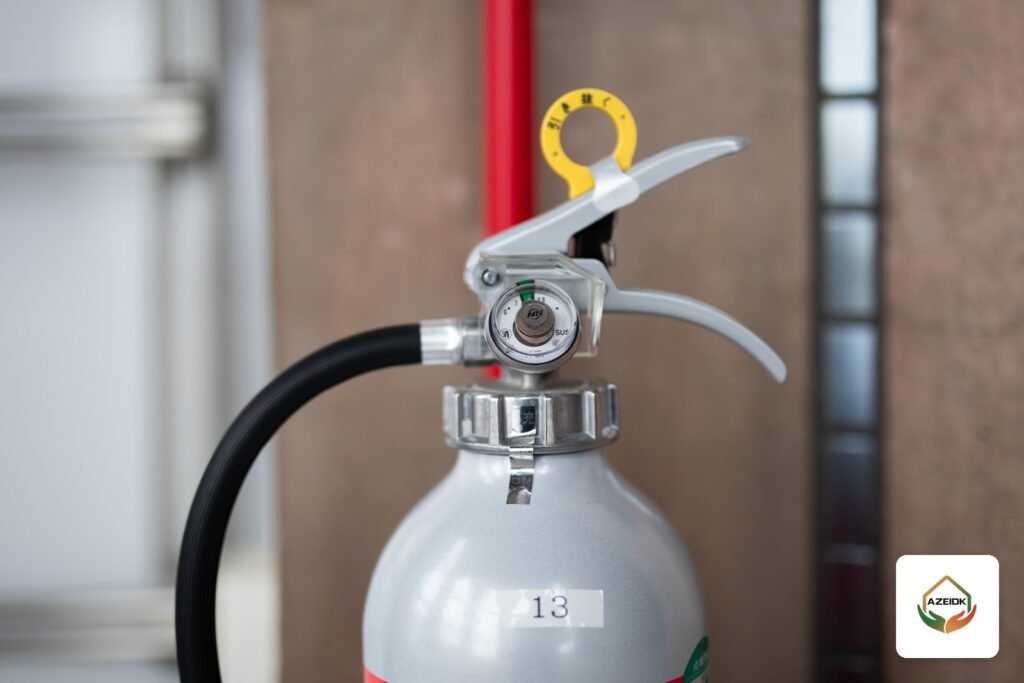
- Make sure the fire is out and get staff out. If any flame remains, use the kitchen (Class K) extinguisher and call Civil Defense. Do not open the duct or hood while it is hot.
- Leave gas and power off. Do not open the gas valve or reset the breaker to finish cooking. The reset comes later and is done by the technician.
- Call the authorised technician at once. The ANSUL guide says to call the authorised distributor immediately after discharge to inspect and recharge the system and to have the distributor determine the cause. It also says no one except an authorised distributor should maintain the system.
- Take photos and notes. Time, the appliance where the fire started, and whether operation was automatic or manual. This helps the technician find the cause and belongs in the fire safety log book.
- Clean up within 24 hours. The ANSUL guide says cleanup should take place within 24 hours of discharge using warm water and detergent, and that food and grease that contacted the agent should be discarded. Wear gloves, as the agent is alkaline.
- Recharge and reset by the technician. This is covered in the next section.
Kitchen suppression recharge: what gets replaced and what gets checked?
This part is for a technician trained on the same brand, because each manufacturer sets its own agent, filling method and pressure. The table brings together what the available manuals say:
| Item | What is done | Source |
|---|---|---|
| Cylinder and agent | Refilled only with the system’s own agent. In Hood Safer, wet chemical containers are used to refill discharged cylinders, and each container is single use | Hood Safer installation manual, 3.11 |
| Cylinder pressure | Hood Safer cylinder pressure is 15 bar and is re-pressurised if lower | Hood Safer installation manual, 4.8 |
| Discharge piping and nozzles | Pipes flushed inside with hot water after activation; nozzles checked for blockage | Hood Safer installation manual, 4.10 |
| Detection element | A fused link does not work again; a new element with the temperature rating set in the system manual is fitted | Each manufacturer’s manual |
| Gas valve | Reopened by hand after the system is reset. In Hood Safer, the tension gear is turned until it stops, which means the valve is open | Hood Safer installation manual, 3.9; IFC 2015, 904.12.2 |
| Service after activation | Service after every activation, on top of routine service at least every six months | IFC 2015, 904.12.6.2; ANSUL guide |
After recharging, the technician tests the manual pull station, the gas and power shutoff, and the connection to the fire alarm panel where there is one. ANSUL R-102 and American Fire Control each have their own manuals, and each product’s manual is followed as written. See the ANSUL R-102 system, the American Fire Control kitchen system and the Hood Safer brand page.
Who does what after a discharge?
| Task | Owner or restaurant manager | Authorised technician |
|---|---|---|
| Evacuate and secure the kitchen | Yes | No |
| Discard food and oil the agent touched | Yes | No |
| Clean surfaces within 24 hours | Yes | Advises if needed |
| Find the cause of operation | Provides information | Yes |
| Refill cylinder and replace detection element | No | Yes |
| Reset gas valve and test system | No | Yes |
| Record the event and service in the log book | Yes | Hands over a service report |
When can the restaurant reopen?
When four things are true together: surfaces and hood are clean of agent, the cylinder is refilled and pressurised to its manual, the new detection element is fitted, and gas and power shutoff and restoration have been tested. Until then the kitchen has no protection, and a second fire would find no system to put it out.
If the discharge was caused by a real fire in the duct or filters, ask the technician to check the hood, filters and duct before restart, because built-up grease was often part of the cause. If it was accidental, such as a pulled station or excess heat from a new appliance, the question is whether the protection design still suits the current appliance layout. IFC 2015 Section 904.12.6.1 requires the system to be brought into compliance when the cooking media, appliance positions or appliances change.
Common mistakes after a kitchen suppression discharge
- Opening the gas valve by hand to resume cooking before the technician arrives.
- Leaving the agent on surfaces for more than a day, which makes removal harder.
- Refilling the cylinder with another brand’s agent or an agent of unknown origin.
- Refitting the old link, or a link with a different temperature rating.
- Not looking for the cause, so the system operates again.
- Not recording the event, leaving no evidence at the next inspection.
Frequently asked questions
How long does a kitchen suppression recharge take?
It depends on whether the original agent and detection parts for your system are available, and on how much cleaning is needed. There is no fixed time, so ask your service provider in advance whether refill containers for your system are in stock.
What should I do right after the kitchen system discharges?
Get staff out, leave gas and power off and call the authorised technician. Then clean surfaces with warm water and detergent within 24 hours and discard any food the agent touched.
Is wet chemical agent harmful to staff?
It is an alkaline solution, so wear gloves, avoid contact with skin and eyes, and rinse anything it touches with water. Check the safety data sheet (MSDS) for the agent in your system.
Can the system be refilled with another manufacturer’s agent?
No. Each system is tested and listed with its own agent, and each manufacturer’s manual defines the agent and the filling method. Using a different agent takes the system outside its approval.
Do fusible links need replacing after every discharge?
The link that fused must be replaced. The technician checks the other elements to the system manual. The ANSUL guide calls for metal fusible links to be replaced every six months, and the Hood Safer manual calls for detectors to be replaced every year.
Does routine maintenance cover service after a discharge?
No. IFC 2015 requires service at least every six months and also after every activation. A routine maintenance contract covers scheduled visits; a discharge needs its own visit.
Conclusion
After a kitchen suppression discharge, safety comes first, then the authorised technician, then cleanup within 24 hours. The recharge uses the original agent, the detection element is replaced, and gas is reset by hand and the system tested before the first order goes out. AZEIDK provides corrective maintenance and technical support and annual maintenance contracts for fire systems, and its kitchen system services include refilling and technical follow-up when needed.
Has your kitchen system discharged? Send the system type and photos of the cylinder and hood, and we will arrange inspection and recharge with you. Talk to the AZEIDK team
Related guides
- CCTV Cameras for Malls and Shopping Centres: Corridors, Car Parks, Control Room and People Counting
- Automatic Fire Extinguisher (Ceiling-Mounted): How It Works, Where It Fits and Where It Falls Short
- Fire Safety in High-Rise Residential Towers
- Central AC Contractor for Commercial Buildings in Saudi Arabia: HVAC Within an Integrated MEP Package