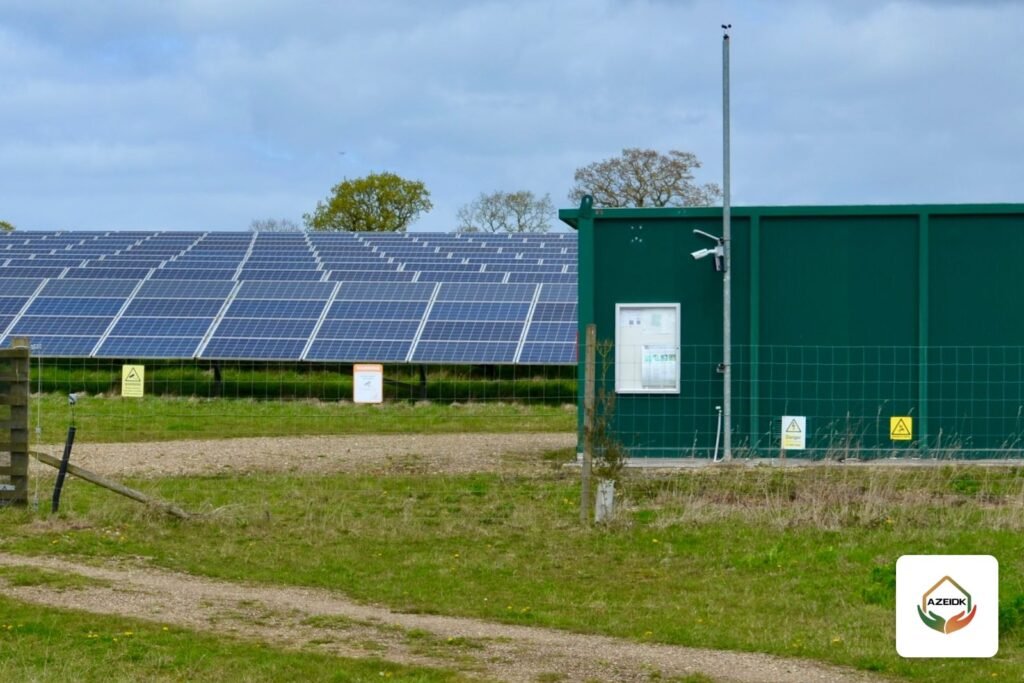
Battery energy storage systems (BESS) are now part of energy projects in Saudi Arabia, from large plants next to solar farms to smaller containers at factories and compounds. On 20 August 2026 the Saudi Power Procurement Company (SPPC) announced contracts for four storage projects totalling 2 GW / 8 GWh, each 500 MW with 4-hour duration, at Haden and Al-Muwayh in Makkah province, Al-Khahfah in Hail and Al-Khushaybi in Qassim, according to Energy-Storage.news. With this growth comes a practical question: how do you protect a container full of lithium batteries against fire and explosion?
This article explains the hazard in BESS containers, what NFPA 855 requires in its 2023 and 2026 editions, the layers of protection from early detection to water, and the role of the fire alarm systems and fire fighting systems that AZEIDK supplies on this type of project.
Key points
- The main hazard is thermal runaway and its spread from cell to cell, with flammable gas vented that can build up inside a closed container.
- NFPA 855 (2023 edition) requires listing to UL 9540, UL 9540A test results, a hazard mitigation analysis, an emergency response plan, explosion control to NFPA 68 or NFPA 69, and fire suppression for all systems unless the authority grants an exception.
- The 2026 edition, according to a published review, makes hazard mitigation analysis the default, requires large-scale fire testing alongside UL 9540A, and accepts early detection by smoke, thermal imaging or radiant energy detection.
- Sprinklers remain to NFPA 13, and alternate suppression is accepted when approved on the basis of fire testing and the hazard analysis.
- In Saudi Arabia the binding requirements come through the Saudi Building Code, Civil Defense and the project owner’s specifications.
What is the hazard in an energy storage container?
A BESS container packs thousands of cells into modules and racks in a closed, air-conditioned space. If a cell suffers an internal defect, overcharge, mechanical damage or high temperature, it can go into thermal runaway: it heats itself, vents gas, and may pass heat to neighbouring cells so the event spreads through the module and then the rack.
The vented gas is flammable. In FM’s UPS battery report, covered in our article on UPS battery room fire protection, hydrogen was about 35.7% and carbon monoxide about 26.25% of the vent gas from the tested cells. Inside a closed container these gases can build up to a flammable concentration, so the explosion (deflagration) hazard matters as much as the fire itself. This is why a BESS container is not treated like an ordinary electrical room.
What does NFPA 855 require?
2023 edition
According to an American Clean Power explainer on the second (2023) edition of NFPA 855, the fire codes require energy storage systems to be listed to UL 9540, and submittals must include fire and explosion test results to UL 9540A or equivalent, a hazard mitigation analysis (HMA) and an emergency response plan. Explosion control has two routes: deflagration management with blast panels to NFPA 68, or explosion prevention with exhaust ventilation to NFPA 69. The edition also mandates fire suppression for all energy storage systems, with exceptions only at the authority’s discretion.
2026 edition
According to a review published by Energy-Storage.news, a secondary source rather than the standard text, hazard mitigation analysis is now the default expectation for most installations. The edition explicitly requires large-scale fire testing (LSFT) alongside UL 9540A, demonstrating that a fire in one unit will not propagate to an adjacent unit. Section 14.3.2.1.2 allows early fire detection by smoke detection, thermal imaging or radiant energy detection, with similar updates for outdoor storage. Sprinklers remain for systems installed to NFPA 13 or equivalent, and alternate suppression is acceptable if approved on the basis of fire testing and the HMA. Section 4.3.3 sets minimum requirements for the emergency response plan, with an annual review and yearly refresher training.
The difference between UL 9540 and UL 9540A is covered in our news item on the UL 9540 certification pathway for storage systems. Exact clauses and values are checked in the edition named in the project specification.
Layers of protection on a BESS project
1. The system itself
The first layer comes from the manufacturer: a system listed to UL 9540, a battery management system (BMS) that monitors voltage and temperature and isolates a faulty module, and a design that limits thermal runaway propagation between modules. The UL 9540A and large-scale fire test results are what the designer builds every other decision on.
2. Early detection and alarm
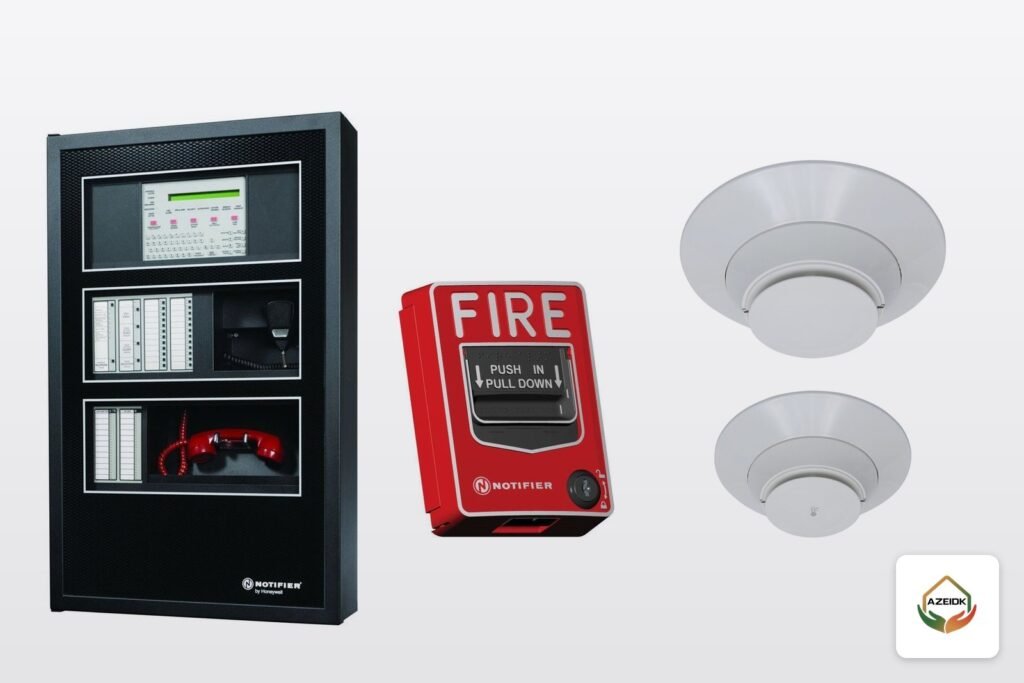
- Smoke detection inside the container: addressable point detectors, or an aspirating system that samples the air and picks up smoke at an early stage, such as the Context Plus aspirating smoke detector.
- Radiant energy detection: flame detectors of the types described in flame detectors for industrial facilities, where the designer finds them suitable.
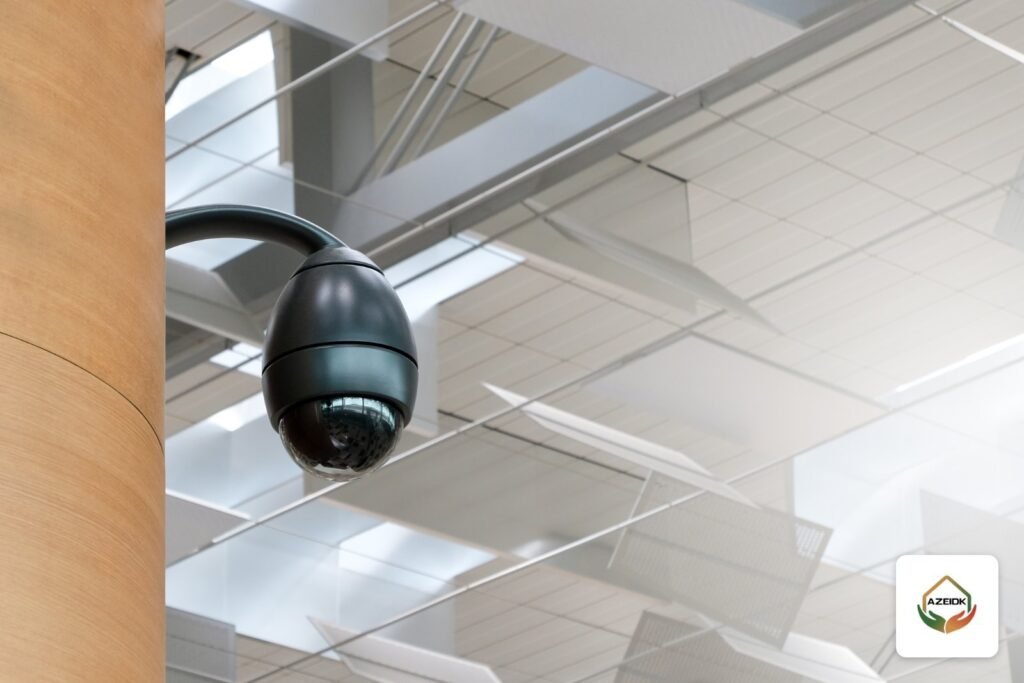
- Thermal imaging of the site: thermal cameras watching the containers from outside as part of site security, as in solar plant security with thermal cameras.
- Gas: gas detection inside the container is set by the manufacturer and the hazard analysis, and may include carbon monoxide as an early sign of venting, as with the addressable carbon monoxide detector.
All these signals are collected on the fire alarm panel and passed to the control room together with the BMS signals.
3. Explosion control
Deflagration vent panels to NFPA 68, or exhaust ventilation started by gas detection to NFPA 69, are usually part of the manufacturer’s container design. The fire team’s job is to wire the signals correctly: which sensor starts the ventilation, when power is isolated, and what happens to the suppression system.
4. Suppression and cooling
The suppression system inside the container is set by the manufacturer, the test results and the hazard analysis. Sprinklers to NFPA 13 are the reference option, and they may be pre-action or deluge systems as the designer decides. Clean agent and aerosol systems put out flame but do not cool the cells, so they are not relied on alone to stop thermal runaway unless testing shows it. Outside the container the site needs a water supply and enough hydrants for Civil Defense crews to cool neighbouring containers, as in our fire hydrant guide.
5. Site layout and response
Spacing between containers and from buildings and lot lines comes from the standard, the large-scale test results and the hazard analysis, together with access roads for Civil Defense vehicles, signage, and a response plan the operations team knows and reviews every year.
Checklist before design
- Battery chemistry, total capacity in kWh and number of containers.
- UL 9540 certification, UL 9540A results and large-scale fire test for the supplied system.
- Hazard mitigation analysis (HMA) and emergency response plan.
- Explosion control method: venting to NFPA 68 or ventilation to NFPA 69.
- Smoke, heat, flame and gas detection, and their links to the alarm panel and the BMS.
- Suppression inside the container, and water supply and hydrants outside it.
- Spacing, access roads, Civil Defense requirements and the owner’s specifications.
Related hazards on the same sites: rooftop solar panels, lithium battery storage in warehouses and transformer water spray protection.
Frequently asked questions
Which standard covers fire protection of battery energy storage systems?
NFPA 855, with system listing to UL 9540 and testing to UL 9540A. In Saudi Arabia these standards enter through the project specification and the Building Code and Civil Defense requirements.
Is FM-200 or aerosol enough for a BESS container?
These systems put out flame but do not cool the cells, so they are not relied on alone to stop thermal runaway unless the test results and hazard analysis for the supplied system support it.
Why is explosion control required?
Because cells in thermal runaway vent flammable gas that can build up inside the container. NFPA 855 allows venting to NFPA 68 or ventilation to NFPA 69.
Which detector suits a battery container?
According to a published review, the 2026 edition of NFPA 855 accepts early detection by smoke, thermal imaging or radiant energy detection. The designer sets the right mix together with the BMS signals.
Does AZEIDK supply BESS containers?
No. AZEIDK supplies fire alarm and detection, fire fighting systems, hydrants and site CCTV, and reviews their interface with the system supplied by the battery manufacturer.
Summary
Protecting a BESS container starts with a tested, listed system, then early detection that catches an event before it spreads, explosion control, suppression and cooling water based on test results, and a clear site layout and response plan. AZEIDK supports these projects in industrial facilities through engineering design and calculations and Civil Defense approval support.
Working on a battery energy storage project? Send the battery type, capacity, number of containers, site plan and available test reports, and the AZEIDK team will review detection, alarm, suppression and hydrants and quote supply and installation. Request a quote
Related guides
- Monthly CCTV Check: In-House Checklist for Recording, HDD, Time and Night Image
- Fire Sprinklers and Automatic Sprinkler Systems in Saudi Arabia: Types, Design and Applications
- LPCB Certification: What It Means for Fire Protection Equipment
- Wet Riser vs Dry Riser (Standpipe Systems): How to Choose, Components, Testing and Common Faults