A fire alarm system price in Saudi Arabia is not set per square metre. It comes from a bill of quantities (BOQ) driven by the design: system type (conventional or addressable), panel capacity in zones or loops, the number of detectors, call points and notification devices, cable and conduit lengths, and then programming, testing, approvals and maintenance. Two quotes for the same building differ when they cover different scope.
This article covers fire alarm only. It explains each item that pushes the cost up or down and how to read a quote line by line before you sign. For the wider picture across all fire systems, see Fire Systems Cost in Saudi Arabia; for what AZEIDK supplies and installs, see our fire alarm systems page.
Key takeaways
- There is no fixed price per square metre: cost follows the number and layout of devices across rooms, corridors and ceilings, not the gross floor area.
- Conventional systems are sized by zones; addressable systems by loops and loop capacity. That changes both panel and cabling cost.
- Cabling, conduit and working inside an occupied building can outweigh the difference between detector brands.
- Programming, lift and HVAC interfaces, testing and Civil Defense documentation are real work and should appear as clear line items.
- Compare quotes on the same drawings and quantities, and ask for the model and datasheet of every device.
In this article
- Why is there no fixed fire alarm system price per square metre?
- Conventional or addressable: how does the system type change the cost?
- What line items should a fire alarm quote (BOQ) contain?
- Cables and conduit: why do they create the biggest gap between quotes?
- Programming, testing and approvals: work that device counts do not show
- Warranty and maintenance: the cost after handover
- How to compare fire alarm system quotes line by line
- Common mistakes when buying a fire alarm system on price
- Frequently asked questions
- Conclusion
Why is there no fixed fire alarm system price per square metre?
Owners often ask for a rate per square metre because that is how building work is priced. A fire alarm system, however, is designed device by device: with full coverage, every enclosed room needs at least one detector, corridors get detectors at spacings set by the design, high ceilings or warehouses may need beam detectors, and manual call points sit near exits and stairs. An open warehouse with a large floor area can need fewer devices than a smaller office building divided into dozens of rooms.
In Saudi Arabia the governing reference is the Saudi Fire Protection Code (SBC 801) together with what the General Directorate of Civil Defense approves on the drawings, while designers use NFPA 72 (2025 edition) or EN 54 as technical references for layout, wiring and testing. Any quote that is not based on approved drawings or a site survey is an early estimate, and its quantities may change at approval.
Conventional or addressable: how does the system type change the cost?
The difference is not only the detector price but how the whole system is built. In a conventional system, devices are grouped into zones, each zone is a separate circuit from the panel, and the panel knows the zone but not the device. In an addressable system each device has an address and dozens of devices share one loop, so the panel pinpoints the alarm. For the technical detail, see Addressable Fire Alarm System vs Conventional.
| Cost element | Conventional | Addressable |
|---|---|---|
| Panel capacity | Set by zone count, e.g. Context Plus CFP (2 to 8 zones) and FP (1 to 14 zones), or FG-Z01 to FG-Z08 | Set by loop count, e.g. FirePlus (1 to 6 loops) and ZFP (1 to 8 loops) |
| Field devices | Simpler devices without addressing electronics | Every device carries addressing electronics; loops may need isolators |
| Cabling | One circuit per zone, so routes multiply as zones increase | One loop serves many devices, so fewer routes in large buildings |
| Programming | Limited: zone names and basic outputs | Addressing and naming every device, plus the cause and effect matrix |
| Future expansion | Usually zone cards or a new panel | Adding devices on a loop with spare capacity, or loop cards depending on the panel |
| Typical fit | Shop, villa or small building with few rooms | Multi-storey buildings and facilities that need exact alarm location |
In practice, conventional is usually cheaper in small buildings, but the gap narrows as the building grows, because addressable saves on cable, labour and fault-finding time. The choice follows the design and the consultant’s requirements, not the panel price alone.
What line items should a fire alarm quote (BOQ) contain?
A good quote splits the system into items, each with a quantity and a model. These are the main ones and what drives each.
Control panel: zones or loops and spare capacity
Fire alarm panel price rises with the number of zones or loops and with the display, built-in printer, relay and network cards. For example, AZEIDK’s page for the Context Plus FirePlus addressable panels states up to 126 devices per loop and up to 64 zones. Ask for reasonable spare capacity on each loop rather than a panel that is full on day one.
Number and type of detectors and call points
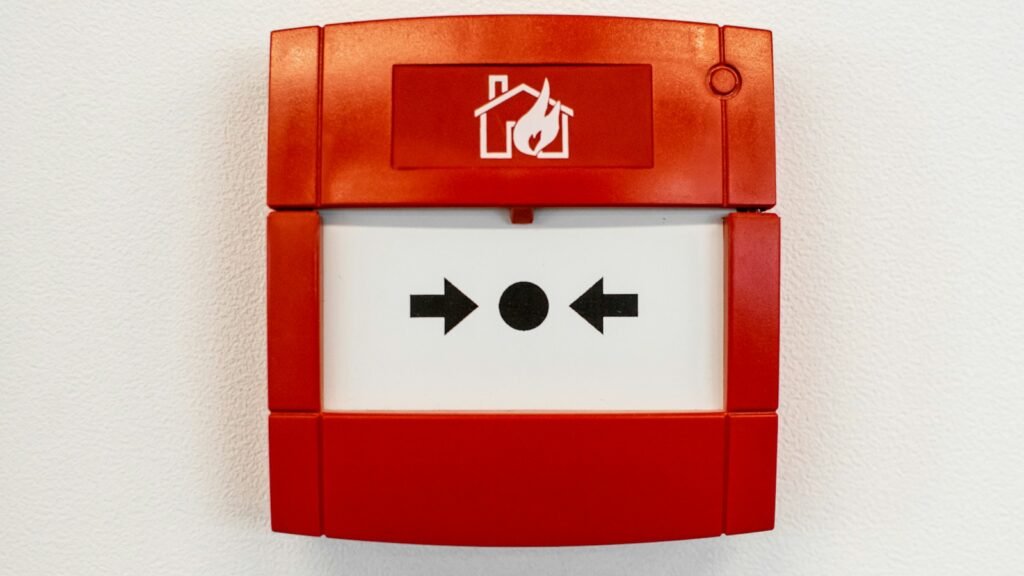
Optical smoke detectors are the most common; heat detectors suit kitchens and dusty or steamy areas; beam detectors cover high ceilings; duct detectors serve air ducts. Each has a different price, and a quietly changed detector type can be the reason one quote is lower. Add manual call points, detector bases and remote indicators for closed rooms.
Notification devices: sounders, strobes and bells
The number of notification devices follows the sound level needed in each space and whether visual alarms are required in certain areas. Weatherproof external sounders, base sounders and voice sounders are all priced differently. A full voice evacuation system is a separate scope with its own price.
Input/output modules and interfaces
Every interface needs a module: lift homing, shutting down air handling units, releasing magnetic locks, monitoring sprinkler flow switches and valve positions, and pump room signals. The module count comes from the cause and effect matrix, and many low quotes leave it out altogether.
Repeater panel and batteries
If the main panel is far from the entrance or security room, the consultant may ask for a repeater, such as Context Plus XFP510 panels, which is a separate item with its own cable. Battery capacity is calculated from standby and alarm current, not guessed; see Fire Alarm Battery Calculation.
Cables and conduit: why do they create the biggest gap between quotes?
Cabling is the hardest item to compare, because a quote may simply say “cables as required” with no type or length. What drives the cost:
- Cable type: shielded FPLR fire alarm cable, such as Fire World in 14AWG, 16AWG and 18AWG, differs from the fire-resistant cable the design calls for on circuits that must keep working during a fire.
- Size: set by circuit length, current and voltage drop, especially on notification circuits.
- Mechanical protection: metal or PVC conduit or trunking, depending on location and specification.
- Building condition: first-fix wiring before false ceilings is far easier than working in an occupied building with finished ceilings.
- Actual lengths: taken from the drawing and the real cable route, not straight-line distances.
Programming, testing and approvals: work that device counts do not show
Part of the fire alarm system cost is engineering and technician time after installation:
- Programming: addressing, naming each device by location, setting delays, programming the cause and effect matrix, and handing over a copy of the program file.
- Testing and commissioning: testing every device and interface output, cable insulation testing, battery testing and recorded results.
- Drawings: shop drawings before installation and as-built drawings at handover.
- Approval file: preparing the documents for Civil Defense approval and a Salamah licence where needed, closing comments and re-inspection.
- Training: showing the facility’s responsible person how to operate the panel and read faults.
A quote that omits these items either hides them in unit rates or will claim them later as variations. Ask before you sign.
Warranty and maintenance: the cost after handover
The installation price is not the whole cost. Ask about the warranty period and what it covers (parts only, or parts and labour), the periodic maintenance contract after warranty, and whether compatible spare parts for that panel will remain available for years. A system without spares forces you to replace large parts of it later. Frequent false alarms from poor detector selection or layout also cost time and repeated callouts.
How to compare fire alarm system quotes line by line
Set a common baseline first: send every supplier the same drawing and BOQ, or ask all of them to survey the site, then compare with this table.
| Item | What the quote should state | Needs clarification |
|---|---|---|
| Panel | Brand, model, zones or loops, and extra cards | “Addressable panel” with no model or loop count |
| Detectors and call points | Quantity, type and model per item, plus bases | One total quantity for all detectors |
| Notification devices | Number of sounders and strobes and mounting type | No visual or external devices |
| Interface modules | Number of I/O modules and the systems connected | “Integration with systems” with no quantity |
| Cables and conduit | Type, size, estimated length and protection | “As per site” or “as required” |
| Batteries | Capacity with a written calculation | Capacity without a calculation |
| Programming and testing | Separate items, with program file and test reports handed over | Not mentioned at all |
| Approval and handover | As-built drawings, Civil Defense file and who follows it up | “Approvals by owner” with no detail |
| Warranty and maintenance | Period, coverage and a separate maintenance contract price | Warranty with no period or scope |
Ask for the datasheet and approval certificates (EN 54 or UL, as the consultant requires) for every model, and do not accept devices mixed from systems whose compatibility with the panel the manufacturer does not confirm.
Common mistakes when buying a fire alarm system on price
- Comparing a conventional quote with an addressable one as if they were the same.
- Accepting a quote based on floor area without drawings or a site survey.
- Dropping lift, HVAC and sprinkler interface modules, then discovering them at Civil Defense inspection.
- Choosing a cheaper cable than specified on circuits that must survive a fire.
- A panel with no spare capacity, so any later expansion needs a new panel.
- Not receiving the program file and passwords at handover, which ties all future maintenance to the original contractor.
Frequently asked questions
What is the fire alarm system price for a shop or villa?
There is no fixed figure. Price depends on rooms, devices, system type and wiring length, so an accurate quote needs a drawing or site survey.
Is addressable always more expensive than conventional?
Its devices and panels usually cost more, but it can save on cable and labour in large buildings, so the overall gap narrows or disappears depending on project size.
Why do two quotes for the same building differ so much?
Usually because the scope differs: device count, cable type, or one quote missing programming, testing, interface modules or the approval file.
Does the installation price include Civil Defense approval?
Not always. Ask the quote to state who prepares the approval file and follows up comments and re-inspection.
What is the most important document to request with a quote?
A BOQ with the model of every device, plus datasheets and approval certificates, the battery calculation, and the programming, testing and warranty scope.
Conclusion
A fire alarm system price is the result of a design, not a figure from a price list. Choose the system type that suits the building size, ask for a BOQ with clear models, separate cabling, programming, testing, approvals and maintenance into their own items, and compare quotes on the same basis. If you are equipping a whole facility, the same approach applies in our articles on CCTV system cost and fire extinguisher prices.
Have a fire alarm quote and not sure it is complete? Send us the drawing or BOQ and we will review it with you and quote clear Context Plus models for each item. Contact the AZEIDK team