


UL 9540 Certification Pathway for Modular DC Energy Storage Systems: What It Means for Fire Protection
- News
- 6 min read
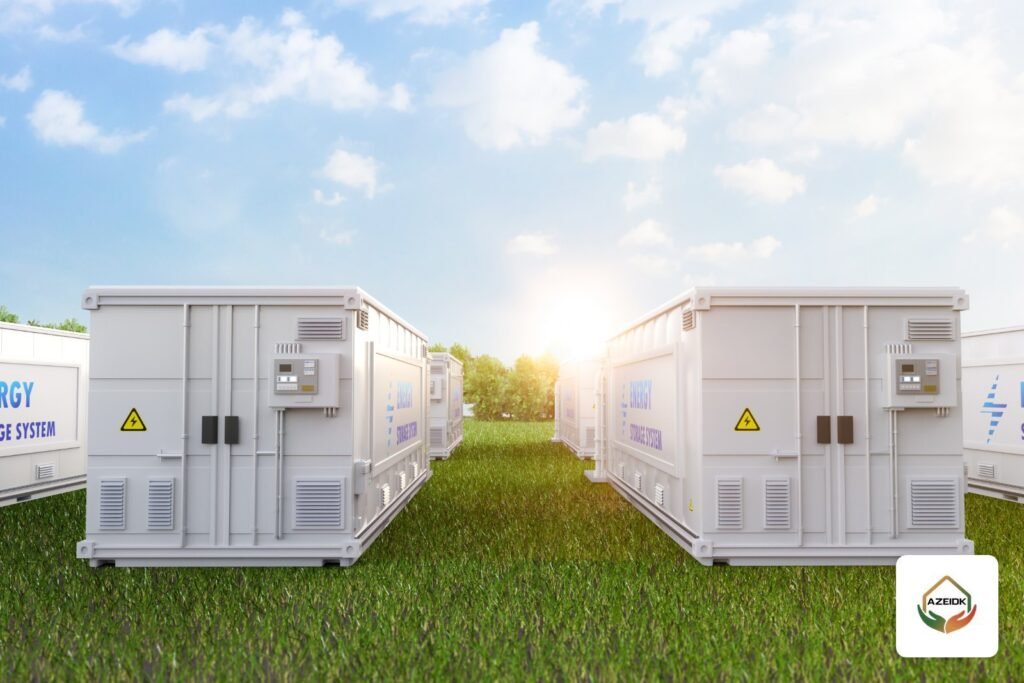
On 20 October 2026, UL Solutions announced a new UL 9540 certification pathway for modular direct current (DC) energy storage systems: systems built by connecting subsystems that have already been evaluated, including power conversion systems (PCS). According to the company’s press release, the pathway is an alternative to pursuing a full matched-assembly system listing from the outset, and compatible combinations are documented in the UL Product iQ database.
The news is aimed first at battery manufacturers and project developers, but it reaches the battery room too. The useful question for fire protection teams is what this certification proves, and what still sits with the fire protection designer.
Key Takeaways
- The new pathway evaluates modular DC energy storage systems to the applicable requirements of UL 9540, the Standard for Energy Storage Systems and Equipment.
- The evaluation covers electrical safety, plus communication and interoperability between the system and its evaluated subsystems such as the PCS.
- Compatible subsystem models are recorded in UL Product iQ under a DC energy storage system certification category, so code authorities can verify evaluated combinations.
- UL 9540 certification does not replace UL 9540A thermal runaway testing, the hazard mitigation analysis, or the design of detection and suppression.
What UL Solutions announced on UL 9540 certification for DC systems
The release, datelined Northbrook, Illinois, targets manufacturers of modular DC energy storage systems that are built by connecting the system to evaluated subsystems such as power conversion systems. According to the release, the program offers an alternative to seeking a full matched-assembly listing of the whole system as one fixed combination at the outset.
Under the new pathway, the system is evaluated together with its previously evaluated subsystems. When a compatible subsystem is identified, the certification documentation describes the evaluated configuration for the manufacturer, the developer and the code authority. The release notes that the UL 9540 framework covers charging and discharging, protection, controls, device-to-device communication and other system-level considerations.
Wesley Kwok, Vice President and General Manager of the Energy and Industrial Automation group at UL Solutions, said in the release that modular designs need a clear way to show how a system works with its critical subsystems, and that the program documents evaluated combinations while allowing more design flexibility.
Electrical certification is not fire protection design
UL 9540 is a product safety standard. How a battery behaves in thermal runaway is tested separately under UL 9540A, which measures fire propagation at cell, module, unit and installation level, along with heat and gas release rates and the potential for deflagration and re-ignition. In the 6th edition of UL 9540A, the installation-level test is called the large-scale fire test, and for indoor systems it also evaluates building-based suppression.
At installation level, the reference is NFPA 855, Standard for the Installation of Stationary Energy Storage Systems. Published reviews of the 2026 edition point to three changes that matter to fire protection designers:
- A hazard mitigation analysis (HMA) is now the default expectation for most installations, where earlier editions required it only in specific cases.
- Large-scale fire testing is explicitly required alongside UL 9540A testing, to show that a fire in one unit does not spread to the adjacent unit.
- For lithium-ion storage, early detection may use smoke detection, thermal imaging or radiant energy detection installed per NFPA 72, while automatic fire control and suppression remains tied to NFPA 13, or to an alternate strategy approved on the basis of the fire testing and the HMA.
What this means for the Saudi market
Energy storage reaches Saudi projects in several forms: backup power for telecom rooms and data centers, storage tied to solar generation, and battery rooms inside commercial and industrial buildings. The binding fire protection reference is the Saudi Building Code, including SBC 801, together with Civil Defense requirements. NFPA 855 and UL 9540A are technical references that the designer adopts or that project documents specify; they should not be assumed to apply automatically.
The practical effect of the new pathway shows up at material submittal stage. A consultant may receive a storage system whose certification rests on a specific combination of battery and power converter. The check is the Product iQ record for the exact models in the submittal, not a UL mark on the brochure.
AZEIDK Expert Take
Before approving a battery room, ask for three separate documents: the UL 9540 certification record naming the battery and PCS models actually supplied, the UL 9540A test report for that model, and the installation manual of the listed system. The hazard mitigation analysis comes next, and it is what sets the detection type, the suppression method, ventilation and explosion control. Do not assume a clean agent system is the required or proven answer for lithium-ion battery fires; suppression selection follows the hazard analysis, the test results and the listed system’s design manual. If the analysis shows a clean agent suits an electrical room or a defined part of the facility, see our clean agent cylinders from 35 to 1,200 lb and their limits in the clean agent suppression comparison. For selection by hazard, read the special hazard suppression guide, and for checking listings in the certifiers’ databases, see how to verify UL, FM and LPCB listings.
Sources
- UL Solutions Introduces Certification Pathway for DC Energy Storage Systems, Simplifying Reviews of Modular Installations, UL Solutions, 20 October 2026
- UL 9540A Test Method, UL Solutions, accessed 11 November 2026
- Installation Codes and Requirements for Energy Storage Systems (ESS): FAQs, UL Solutions, accessed 11 November 2026
- NFPA 855 Expands Safety Guidelines for Battery Energy Storage Systems, Exponent, 27 March 2026
- NFPA 855: 2026 edition updates and what they mean for energy storage projects, Energy-Storage.news, 2026
- National Fire Protection Association releases NFPA 855 ESS safety standard, 2026 edition, Energy-Storage.news, 18 September 2025
Related guides
- Fire-Resistant Cables: Circuit Integrity for Alarm Reliability
- Intersec Saudi Arabia 2026 Postponed to October 2027
- Big 5 Construct Saudi 2026: an MEP-focused August edition and a Saudi Building Code keynote
- ZKTeco Warns of an Unauthorized Website Using Its Name: Why Hardware and Firmware Sources Matter for Access Control Devices

