Kitchen fire suppression questions and answers, collected from what restaurant, hotel and central kitchen owners in Saudi Arabia ask about hood fire suppression: how the system works, what UL 300 means, how ANSUL, American Fire Control, Falcon Gold and Hood Safer compare, what happens after a discharge, how often the system is serviced and what drives the price. Each answer is short and links to the detailed article.
AZEIDK supplies and installs commercial kitchen fire suppression systems that protect hoods and cooking equipment, linked to the fire alarm panel and the gas shut-off valve.
Key takeaways
- The system detects fire above the cooking line, discharges a wet chemical agent and shuts off gas and power to the appliances.
- A UL 300 listing is what consultants usually ask for, proving the system was tested on modern cooking oils.
- Inspection every six months under NFPA 17A and NFPA 96, with fusible links replaced on schedule.
Understanding the system
1. How does a kitchen suppression system work?
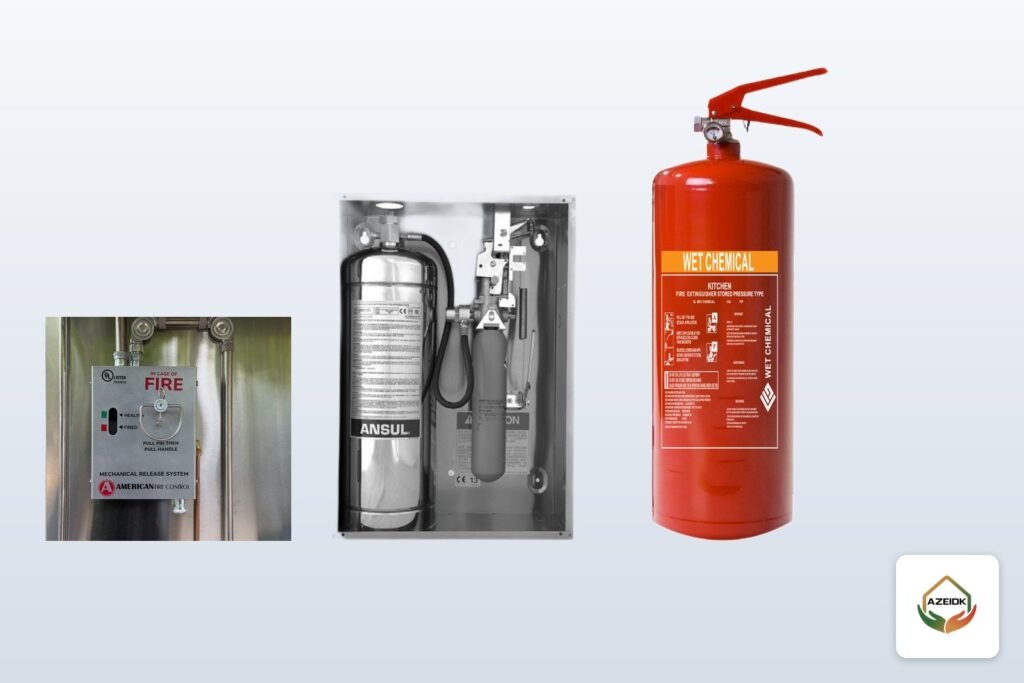
A detection line above the hood and appliances triggers the wet chemical cylinder, which discharges through nozzles over the hood, duct and cooking equipment while the gas is shut off. A manual pull station is also provided. See the commercial kitchen fire suppression guide.
2. What does UL 300 mean and why do consultants ask for it?
It is the test standard for kitchen suppression systems that began in 1994. Consultants ask for proof of the listing, which ties to NFPA 17A and NFPA 96 and sits under SBC 801. See UL 300 and NFPA 17A.
3. What does the fusible link do?
It is the heat-sensing element in the detection line: it melts at a set temperature and releases the system. ANSUL ratings run from 74 to 260°C, and links are replaced at intervals set by NFPA 96. See kitchen suppression fusible links.
4. Is a kitchen fire extinguisher enough instead of a system?
A wet chemical (Class K) extinguisher complements the system; it does not replace it. It also beats dry powder on cooking oil fires. See the wet chemical kitchen extinguisher.
Choosing a system
5. ANSUL R-102 or American Fire Control?
The practical comparison covers the wet chemical agent, the UL 300 listing, detection, gas shut-off and maintenance for restaurants. See ANSUL R-102 vs American Fire Control.
6. Falcon Gold or Hood Safer?
Falcon Gold uses a 15 L or 25 L cylinder; Hood Safer comes as HS-4, HS-8 and HS-16. They differ in activation and gas shut-off, and in where each fits. See Falcon Gold vs Hood Safer.
7. What do central and cloud kitchens need?
A central kitchen needs multi-hood suppression with gas leak detectors and shut-off valves; a cloud kitchen needs suppression for every hood and a licence per activity. See central kitchen fire safety and cloud kitchen requirements.
8. How does the system link to the restaurant fire alarm?
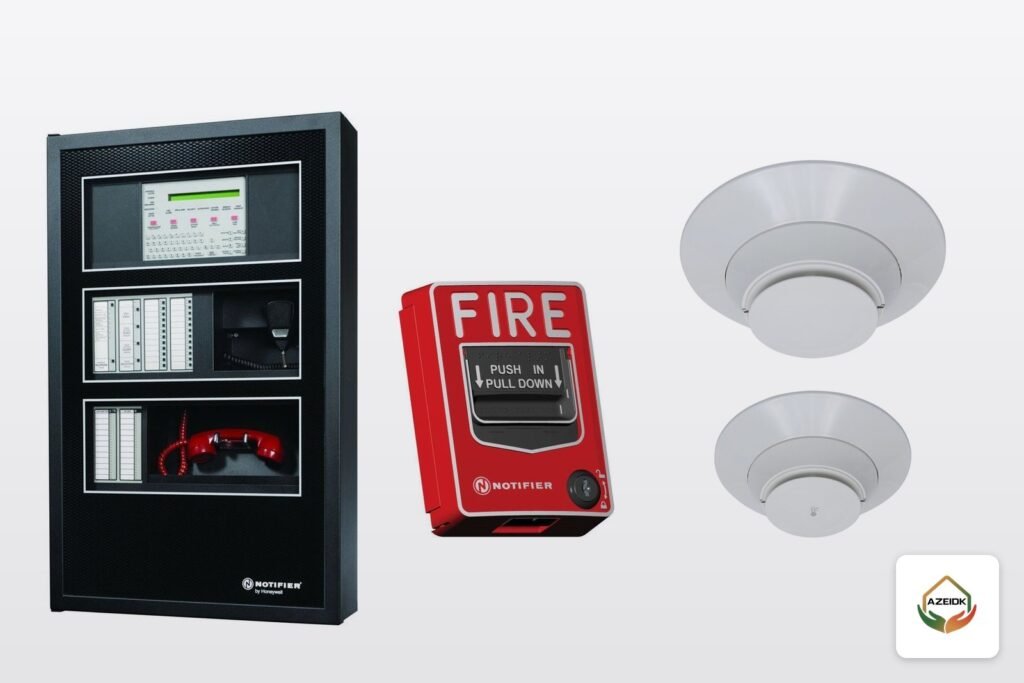
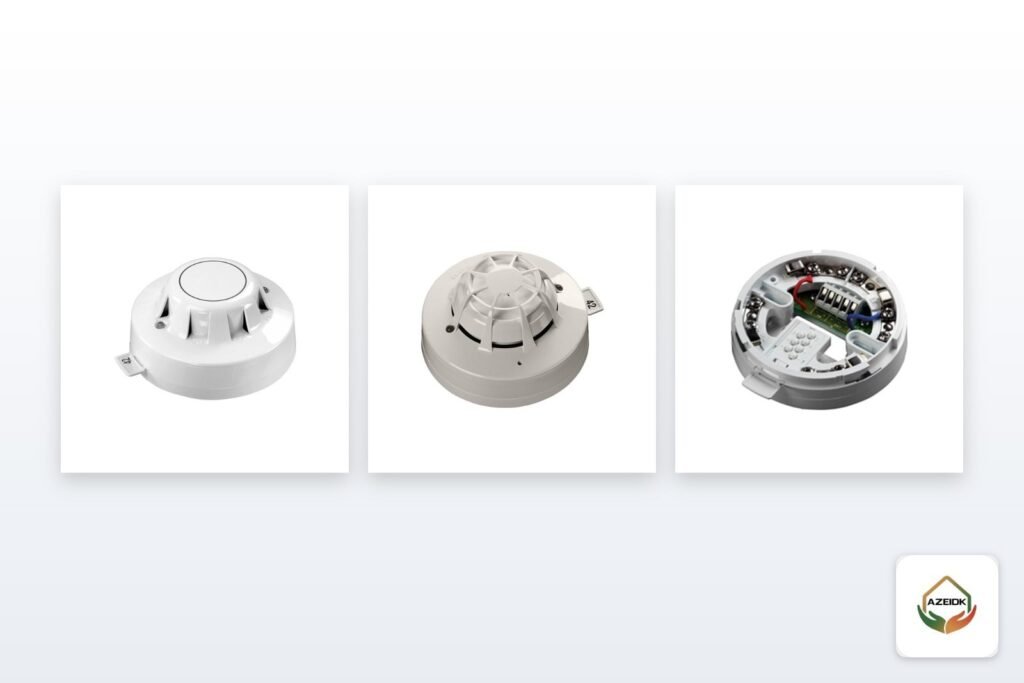
It is wired to the fire alarm panel to signal a discharge, with heat detectors in the kitchen and smoke detectors in the dining area. See restaurant fire alarm systems.
Installation, maintenance and cost
9. What are the installation steps?
Hood survey, nozzle layout, detection line, gas and power shut-off, manual pull station, then testing and handover. See kitchen suppression installation.
10. How often is the system serviced?
Every six months, covering fusible links, nozzle caps, cylinder tests and records under NFPA 17A and NFPA 96. See kitchen suppression maintenance.
11. What happens after a discharge?
Clean up within 24 hours, replace the fused link, recharge with the original agent and reset the gas valve before reopening. See recharge after discharge.
12. What drives the price of a kitchen suppression system?
Hood and duct size, the number of appliances and nozzles, gas shut-off, the UL 300 listing and later upkeep. See kitchen suppression price factors.
Frequently asked questions
Which kitchen suppression brands does AZEIDK supply?
AZEIDK supplies ANSUL R-102, Hood Safer, American Fire Control and Falcon Gold systems, chosen by hood, appliances and the consultant’s requirements.
Can the kitchen system be part of a maintenance contract?
Yes. It can be included in a fire system maintenance contract together with extinguishers and the fire alarm.
Fitting out a restaurant or hotel kitchen? Send the hood dimensions and the list of cooking appliances, and the AZEIDK team will propose the right system and handle supply, installation and testing. Request a quote from AZEIDK
Related guides
- Potter Waterflow and Supervisory Switches (VSR, OSYSU, PS40) for Sprinkler Systems in Saudi Arabia
- Civil Defense Fire Design Drawings: What the Design Package Contains
- Wheeled CO2 Fire Extinguisher (10 kg and 25 kg Trolley Units): Where to Use It in Switchrooms and Generator Rooms, and How to Choose the Capacity
- American Fire Control FM-200 System: AFC-227 vs AFC-P227, Cylinder Sizes and Pressures