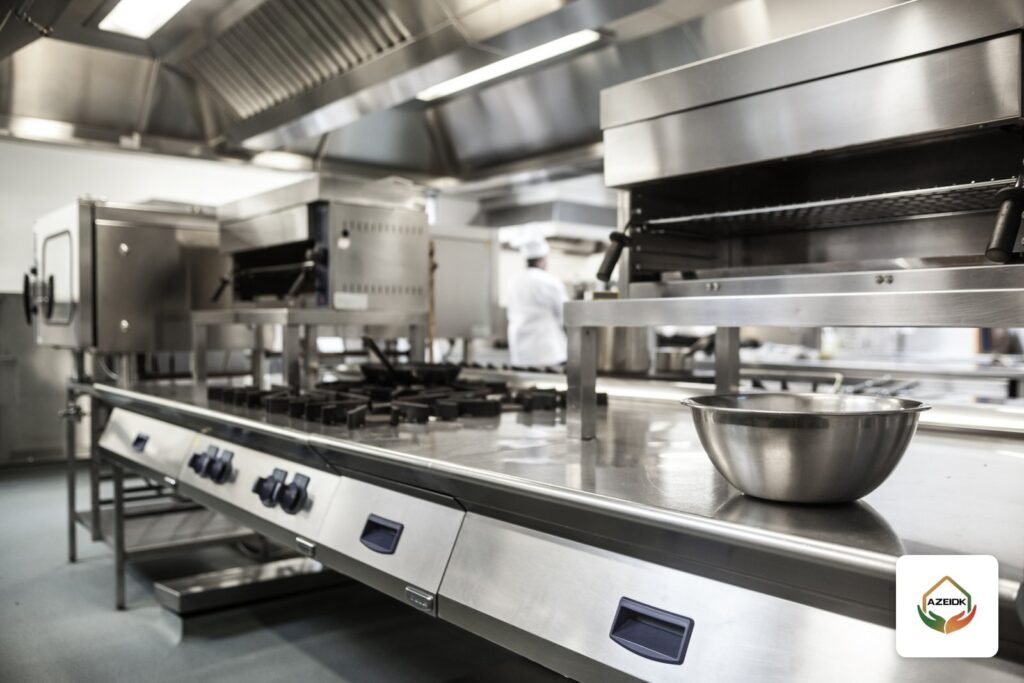
Kitchen suppression installation for a commercial hood starts with a survey of the cooking appliances, hood and exhaust duct. Nozzles are then laid out from the system’s listed design manual, the detection line is run with fusible links, gas and electric shut-off are interlocked, and a manual pull station is fitted. The job ends with a functional test without discharge and the documents needed for the Civil Defense file.
Key takeaways
- Commercial kitchen systems are tested to UL 300 and designed and installed to NFPA 17A and the manufacturer’s own manual.
- Nozzle count, positions and cylinder size are not guessed on site; they come from the listed design manual for each appliance type.
- System actuation must shut off gas or electric power to the cooking appliances automatically, with manual reset.
- The manual pull station sits at or near the exit from the cooking area, at a height set by the code.
- AZEIDK supplies and installs AFC, ANSUL R-102, Hood Safer and Falcon Gold systems, and issues the safety equipment installation certificate as part of its Civil Defense approval support.
In this article
- What governs kitchen suppression installation in Saudi Arabia?
- Step one: survey the kitchen before design
- Nozzle layout and cylinder sizing
- Detection line and fusible links
- Gas and electric shut-off to the cooking line
- Manual pull station
- Coordinating the restaurant, hood contractor and suppression contractor
- Testing, commissioning and handover
- Which system should you install?
- Frequently asked questions
- Conclusion
What governs kitchen suppression installation in Saudi Arabia?
The first technical reference is the manufacturer’s Design, Installation and Maintenance Manual, because the UL 300 listing covers the system exactly as that manual describes it. NFPA 17A for wet chemical systems and NFPA 96 for commercial kitchen ventilation, hoods and ducts sit alongside it.
At code level, the International Fire Code (2015 edition, Section 904.12) requires commercial cooking systems to be tested to UL 300 and listed for the application, a manual actuation device at or near a means of egress from the cooking area mounted 42 to 48 in. (1067 to 1200 mm) above the floor, automatic shut-off of fuel or electric supply to the cooking equipment with manual reset, and a Class K extinguisher. Check the matching clause of the Saudi Fire Code SBC 801 in the adopted edition with the consultant or engineering office.
Step one: survey the kitchen before design
Most kitchen system problems start with an incomplete survey. The AZEIDK installation team collects:
- Hood length, depth and height, and the number of filters.
- The appliance line under the hood: fryers, char-broilers, griddles, ovens, ranges, woks, with size and position of each.
- Number, size and route of exhaust duct outlets.
- Fuel type (central gas, cylinders or electric) and the main gas line where the shut-off valve will go.
- A cylinder and control enclosure location away from heat and easy to reach for service.
- The exit route where the manual pull station will be mounted.
- Whether the building has a fire alarm system to receive the actuation signal.
In an existing kitchen, the hood and duct condition and cleanliness are also checked; a suppression system does not make up for a grease-loaded duct.
Nozzle layout and cylinder sizing
Each system on the market has its own coverage rules in its manual: which nozzle for which appliance, at what height, and how many flow points it uses. Total flow points set the cylinder size and quantity. So a nozzle from one system is never used on another, and components from two brands are never mixed.
| Nozzle type | Location | What to check |
|---|---|---|
| Appliance nozzles | Above each cooking appliance | Type, height and aim per the manual for that appliance |
| Plenum nozzles | Behind the filters inside the hood | Quantity per hood length |
| Duct nozzles | At the entrance of each duct outlet | One per outlet, sized to the duct |
A common mistake is moving an appliance after installation or adding a fryer without changing the nozzles. Any change to the cooking line means a design review.
Detection line and fusible links
Most kitchen systems actuate through a mechanical detection line: a steel cable running inside the hood over pulleys and through conduit, with fusible links above the appliances and at the duct entrance. When a link melts, the cable goes slack, the mechanical release trips and the agent discharges.
Link temperature ratings are chosen for the exposure temperature, as the system manual specifies. During installation, check that the cable runs freely without friction and that pulleys are only where the manual allows.
Gas and electric shut-off to the cooking line
This is the point consultants and Civil Defense inspectors look at first. When the system operates, power to the appliances must be cut, or the oil can re-ignite after discharge ends.
- Gas appliances: a mechanical gas shut-off valve closed by the same cable, or an electric solenoid valve closed by a switch in the control enclosure. Valve type and size follow the system manual.
- Electric appliances: a micro switch in the control enclosure drops the contactor feeding the appliances.
- Reset: manual, after the area is confirmed safe; power never returns on its own.
- Fire alarm: where a fire alarm system exists, the actuation signal goes to the fire alarm panel.
Whether the exhaust fan keeps running or stops on discharge follows the system manual and the design, not site preference.
Manual pull station
It goes on the path out of the cooking area so the cook can operate the system while leaving, not while standing in front of the fire. It connects to the cable through conduit and pulleys as the manual shows, and carries a clear sign.
Coordinating the restaurant, hood contractor and suppression contractor
A kitchen system touches several parties on site, and most delays come from an item nobody owned. Before installation we agree these items in writing:
- Hood penetrations: where nozzle piping and the detection line pass through the hood top, and who cuts and reseals them.
- Gas line: who fits the shut-off valve on the main line and who tests the line afterwards, especially when the gas contractor is a separate party.
- Power: the contactor that drops the electric appliances, and the supply for an electric gas valve if one is used.
- Alarm interface: the connection point to the fire alarm panel and who programs it.
- Timing: installation after the hood and appliances are fixed in their final positions, not before, so nozzle positions do not change.
This coordination stops a restaurant reaching opening day with a suppression system that is installed but not tied to the gas or the alarm.
Testing, commissioning and handover
- Check the installation against the drawing: nozzles and caps, cable route, links, gas valve, enclosure.
- Run a functional test without agent discharge: the cylinder is disconnected or the manual’s test method is used, then the cable is released at the last link.
- Confirm the gas valve closes, electric power drops and the signal reaches the alarm panel.
- Test the manual pull station the same way.
- Reset the system, reconnect the cylinder and fit seals.
- Show kitchen staff the pull station and the Class K extinguisher.
- Hand over the as-built drawing, datasheets, test report and inspection tag.
For the Civil Defense file, the technical report on the Salamah platform is issued by engineering consultancy offices, while AZEIDK issues the safety equipment installation certificate for systems it installed, as part of Civil Defense approval support. After handover, the system goes onto a periodic inspection schedule at the frequency set by the manufacturer’s manual and the adopted edition of NFPA 17A, which in normal practice is every six months.
Which system should you install?
Within its kitchen fire suppression systems range, AZEIDK offers American Fire Control, ANSUL R-102, Hood Safer and Falcon Gold. Installation steps are similar; coverage rules and detection and shut-off parts differ by manual. The choice depends on the cooking line, the consultant’s or operator’s request, and any brand standard the restaurant chain applies.
Frequently asked questions
How long does kitchen suppression installation take?
It depends on hood length, number of appliances, the duct and gas line readiness. The schedule is set after the survey; there is no fixed duration.
Is a gas shut-off valve required with a kitchen system?
Yes for gas appliances. The code requires automatic shut-off of fuel or electric supply to the cooking equipment on actuation, with manual reset.
Where does the manual pull station go?
At or near the exit from the cooking area, 42 to 48 in. above the floor per IFC 2015; check the matching SBC 801 clause.
Can a system be moved to another kitchen?
Components can sometimes be reused, but the design is redone for the new hood and appliances and the system is tested again.
Is the agent discharged during the acceptance test?
Usually not. Mechanical operation, shut-off and signals are tested without discharge, using the method the system manual sets.
Who issues the Salamah technical report?
Engineering consultancy offices. AZEIDK issues the safety equipment installation certificate for the systems it installs.
Conclusion
Kitchen suppression installation works when it is built on an accurate survey and the system’s own manual: the right nozzle for each appliance, a detection line that moves freely, tested gas and power shut-off, and a pull station on the exit path. The handover file and periodic inspection follow.
Fitting out a restaurant or central kitchen? Send the kitchen layout and appliance list, and the AZEIDK team will arrange the survey, design and installation. Talk to the AZEIDK team
Related guides
- FM-200 Fire Extinguisher (Clean Agent): For Server Rooms and Electrical Panels, 1 to 12 kg Sizes, and When You Need a Fixed System
- Car Showroom Security and Fire Protection in Saudi Arabia
- Civil Defense Salamah Certificate: What It Is and How to Get It on the Salamah Platform
- Fire Equipment Supply for Contractors: BOQ, Documents and Lead Times