A restaurant fire alarm system differs from an office or shop alarm in one key way: the kitchen produces heat, steam and cooking smoke all day. Put ordinary smoke detectors in there and false alarms follow until staff learn to ignore them. A restaurant alarm is therefore built on three things: the right detector for each zone, a link from the hood suppression system to the panel, and automatic fuel shut-off on fire.
For how conventional and addressable systems compare, see our guide to choosing a fire alarm system for Saudi projects.
This guide explains how a fire alarm is designed for a restaurant or café in Saudi Arabia, from detectors and sounders to the interface with kitchen suppression and gas leak detection, and what the consultant and Civil Defense check before opening. AZEIDK supplies Context Plus conventional and addressable panels and detectors through its fire alarm systems solution, and the restaurants and commercial kitchens page covers the other systems this sector needs.
Key takeaways
- The Restaurant Requirements issued by the Ministry of Municipalities and Housing (1446H / 2025) require Civil Defense approval before licensing and refer fire protection to the Saudi Fire Code SBC 801.
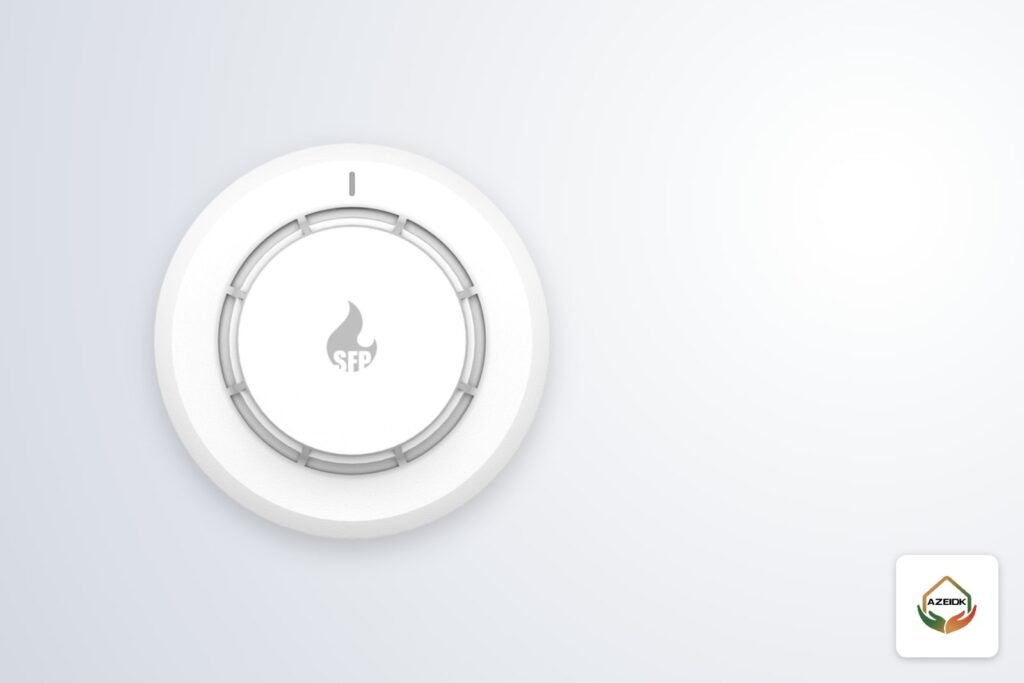
- Heat detectors are the usual choice inside the kitchen; smoke detectors stay in the dining area, corridors, stores and electrical rooms.
- Hood suppression activation should reach the alarm panel through a monitor module and sound the alarm throughout the building.
- Activation shuts off fuel and power to the appliances under the hood, and restart needs a manual reset.
- Gas leak detectors are wired to a shut-off valve and the panel, and do not replace hood suppression.
In this article
- Does a restaurant need a fire alarm system?
- Which detector suits each restaurant zone?
- Conventional or addressable panel?
- How is kitchen suppression linked to the restaurant fire alarm system?
- Gas shut-off and gas leak detection
- Sounders, beacons and manual call points
- Common restaurant fire alarm mistakes
- What do the consultant and Civil Defense check?
- FAQ
- Conclusion
Does a restaurant need a fire alarm system?
The Restaurant Requirements (Ministerial Decision 4600653138/1 dated 15/10/1446H) require Civil Defense approval before a licence is issued (clause 2.1.2) and refer all fire protection matters to SBC 801 (clause 4.9.1). They apply to restaurants, cafés, cloud kitchens and kiosks.
The code decides when a manual or automatic alarm is required, based on occupancy, occupant load, area and storeys, and the consultant applies it to the actual layout. In practice most medium and large restaurants, and those inside malls and towers, end up with an alarm system, either standalone or tied into the building system. The same document allows a mezzanine of up to half the floor area where the floor has an approved automatic suppression system and audible alarm (clause 1.4), a clear sign that the alarm is a design condition, not an extra.
Which detector suits each restaurant zone?
| Zone | Usual detector | Design note |
|---|---|---|
| Hot kitchen (cook line, fryers, grills) | Fixed-temperature heat detector | Rating chosen above normal kitchen temperature per the datasheet |
| Prep and dishwashing | Heat detector (fixed or rate-of-rise) | Steam triggers smoke detectors |
| Dining area and corridors | Smoke detector | Keep clear of AC diffusers and open display ovens |
| Dry store and electrical room | Smoke detector | Quiet area where early smoke detection works well |
| Cold rooms and freezers | As the manufacturer recommends for cold environments | Check the operating temperature limits first |
Fixed versus rate-of-rise detectors are explained in our article on heat detector types. In kitchens designers usually prefer fixed-temperature units, because opening an oven or firing a grill can raise temperature fast without any fire.
Conventional or addressable panel?
A small restaurant with one kitchen and one dining room is often served by a conventional panel with a few zones: kitchen, dining, and store/services. A large multi-floor restaurant, a chain inside a commercial building or a cloud kitchen complex benefits from an addressable system, because the panel names the exact device in alarm, which shortens response and maintenance time.
AZEIDK supplies Context Plus FP conventional panels and Context Plus addressable heat detectors for kitchens on addressable systems. The final choice depends on the layout, the size of the restaurant and the landlord’s requirements where the unit is leased in a mall or tower.
How is kitchen suppression linked to the restaurant fire alarm system?
A hood suppression system is usually mechanical, triggered by fusible links over the appliances, with a microswitch that changes state on release. That switch is the connection point. Fire department guides based on NFPA 17A and the International Fire Code summarise the usual requirements; for example, the Arlington Fire Rescue construction guide (2021 IFC edition) states:
- Where the building has a fire alarm system, hood system activation is connected to it and sounds the alarm throughout the building.
- Without a building system, a local bell or horn strobe is installed in the kitchen and another in the seating area.
- Activation automatically shuts off fuel and electrical power to protected appliances, with manual reset.
- The manual pull station sits in the egress path, 10 to 20 ft (about 3 to 6 m) from the hood, no more than 5 ft above the floor.
These are examples from a US authority applying the same standards Saudi designers use; the binding requirement for your project comes from the Civil Defense-approved drawings and the consultant. The link is made with a monitor module on an addressable system or a dedicated zone on a conventional one, and a relay output where the panel must, for example, cut power. See our article on fire alarm input/output modules.
Gas shut-off and gas leak detection
Gas is shut off on fire either by a mechanical valve closed directly by cable from the hood system, or by a solenoid valve closed by a signal from the system or panel. Either way, the valve stays closed until a qualified technician reopens it after the kitchen is made safe.
Gas leak detectors do a different job: they detect gas before ignition. They are installed near appliances and gas lines and wired to a shut-off valve and to the alarm panel. AZEIDK supplies gas leak detectors for restaurants and buildings; their link to a central LPG tank is covered in central gas tank requirements for restaurants. A gas detector never replaces hood suppression: one prevents an explosion, the other puts out a grease fire.
Sounders, beacons and manual call points
Dining rooms are busy and often noisy, so sounders must be loud enough to cover the background, with visual beacons in the dining area and washrooms for anyone who cannot hear them. Manual call points go at emergency exits and at the kitchen’s exit, where tables or added fridges will not block them. Beacon coverage codes are explained in our EN 54-23 beacon guide.
Common restaurant fire alarm mistakes
- Smoke detectors in the kitchen, disconnected a week later because of false alarms, leaving the kitchen unprotected.
- Hood suppression installed without wiring its switch to the panel, so a discharge goes unnoticed in the dining room.
- The gas shut-off valve wedged open to avoid shutdowns, a serious violation.
- New false ceilings or décor that cover detectors or change spacing.
- A relocated cook line or a new grill added without updating detectors, the hood system and the approved drawings.
What do the consultant and Civil Defense check?
Before opening, the usual file includes approved drawings, datasheets for every device, a test of each detector, call point and sounder, a test of the hood-to-panel interface, and proof that gas and power shut off on activation. Through Civil Defense approval support, AZEIDK handles the technical report through an approved engineering consultancy office and issues the safety equipment installation certificate for systems it installed. After handover the system needs periodic testing to NFPA 72, as described in fire alarm periodic inspection and maintenance.
FAQ
Can a smoke detector be used in a restaurant kitchen?
Not over the cook line. Cooking smoke and steam cause repeated false alarms. Heat detectors are the usual choice, with smoke detectors in the dining area, stores and corridors.
Must the kitchen suppression system be connected to the fire alarm panel?
Where the building has an alarm system, guides based on NFPA 17A connect hood activation to it. The approved Civil Defense drawings set the method for your project.
How many zones does a small restaurant need?
It depends on the layout, but a common split is kitchen, dining and store/services, plus a zone or input for the hood system.
Is a gas leak detector part of the fire alarm?
It is a separate detection system that can be wired to the panel and a shut-off valve. It detects leaks before ignition and does not replace hood suppression or heat detectors.
Who reopens the gas after a kitchen system discharge?
A qualified technician, after cleanup, recharge and reset. Restart never means bypassing the valve or the panel.
Is the mall’s fire alarm enough for a restaurant inside it?
A mall restaurant is normally tied into the building system as mall management requires, with kitchen-suitable detectors and the hood system connected to the main panel.
Conclusion
A restaurant fire alarm system works when each zone has the right detector, the hood system reports to the panel and gas shuts off automatically on fire. Any change to the kitchen or décor must be reflected in the detectors and approved drawings before a Civil Defense visit, or a real fire, exposes it.
Fitting out a new restaurant or changing a kitchen? Send us the layout and the appliance list, and we will propose the alarm system, detectors and the interface with hood suppression and gas shut-off. Talk to the AZEIDK team
Related guides
- Fire Extinguisher in Arabic: A Reverse Glossary of Fire Protection Terms for Procurement in Saudi Arabia
- Fire Pump Control Panel Wiring Diagram: Electric and Diesel Controllers, Pressure Switch and Alarm Signals
- Rack PDU for Network Cabinets: Types, Outlet Counts and How to Size the Load
- Kitchen Fire Suppression Inspection and Maintenance: What Is Checked Every Six Months