Central kitchen fire safety rests on three linked layers: an automatic suppression system over every hood covering the cooking appliances below it, gas leak detectors that close the gas valve before gas can build up, and automatic shut-off of gas and power to the appliances as soon as the suppression system discharges. In a central kitchen running several production lines for long hours, how these systems are split across the hoods, and how cleaning and servicing are scheduled, matter as much as the equipment chosen.
Key takeaways
- The central kitchen requirements issued by the Ministry of Municipalities and Housing (ministerial decision dated 15/10/1446H) require Civil Defense approval before licensing and refer fire protection to the Saudi Building Code.
- Listed kitchen suppression systems are tested to UL 300 and installed to NFPA 96, NFPA 17A and the manufacturer’s instructions.
- Codes based on the International Fire Code require the system to shut off fuel and power to the cooking appliances automatically, with manual reset only.
- A kitchen suppression system is serviced at least every six months and after any discharge.
- Duct grease in high-volume kitchens is inspected quarterly under the NFPA 96 schedule.
In this article
- What makes central kitchens and catering companies different?
- What do Saudi authorities require for central kitchens?
- Kitchen suppression in a central kitchen: how is it split across several hoods?
- Kitchen suppression brands available
- Gas leak detectors and the gas shut-off valve
- Hood cleaning and suppression servicing schedule
- Extinguishers and fire blankets in a central kitchen
- Frequently asked questions
- Conclusion
What makes central kitchens and catering companies different?
The central kitchen requirements define these as food facilities that prepare large quantities of food at one site for distribution to other locations, such as restaurant branches, hospitals, schools, hotels and catering companies. The difference from a normal restaurant kitchen is not just the equipment but the scale:
- Several hoods in a row, each over a different cooking line: fryers, grills, large kettles, tandoor ovens.
- A longer, larger gas network, often from a central tank to dozens of points of use.
- Long operating hours, sometimes two or three shifts, so grease builds up in the ducts faster.
- A large workforce, some temporary or new, which makes automatic operation more important than relying on individual reactions.
Protection here is treated as one linked package. See AZEIDK’s kitchen fire suppression systems and the hospitality sector that many catering companies serve.
What do Saudi authorities require for central kitchens?
The Central Kitchen Requirements were issued by the Ministry of Municipalities and Housing under ministerial decision No. 4600653138/1 dated 15/10/1446H. Safety-related items include:
- Civil Defense approval before the licence is issued.
- All fire prevention and protection to follow the Saudi Fire Protection Code (SBC 801).
- Ventilation to the Saudi Building Code and the Ministry’s commercial flue guide.
- Tandoor ovens to have a conical hood and flue to discharge smoke, with an exhaust fan at the top.
- Stairs, walkways and ramps kept free of equipment that blocks fast evacuation.
- CCTV installed under the Security Surveillance Cameras Law, and a first aid kit on site.
The document does not detail hood suppression or gas detection itself. It refers to the code and Civil Defense, so the technical detail comes from SBC 801 and the standards the designer adopts, then from Civil Defense approval support at licensing.
Kitchen suppression in a central kitchen: how is it split across several hoods?
A kitchen hood suppression system has a wet chemical agent tank, piping and nozzles aimed at the appliance surfaces and into the hood and duct, fusible links that trigger it automatically, and a manual pull station. A central kitchen raises questions a small restaurant does not:
One system per hood, or one system across several hoods?
The system listing and the manufacturer’s manual decide: how many flow points one tank covers, allowed pipe lengths, and how appliances are grouped. Hoods that are far apart or serve different cooking types are usually protected by separate systems. Adjacent hoods on one line may be covered by one multi-tank system where the listing allows.
What happens when one hood system discharges?
Under codes based on the International Fire Code, such as Section 904.12 of the New York State Fire Code, the system must automatically shut down fuel or electrical power to the cooking equipment it protects, and reset must be manual. In a central kitchen this means the design must define which appliances belong to each system, so a fire in one fryer does not stop a whole production line unnecessarily, and no appliance under the same hood keeps running.
Where does the manual pull station go?
The same section places it at or near a means of egress from the cooking area, between 42 and 48 inches (1,067 to 1,200 mm) above the floor. In a long kitchen with several exits, each station is placed so the worker reaches it while moving away from the fire, not towards it.
Interface with the fire alarm
Each hood system is connected to the building fire alarm panel through a monitor module, so the panel shows which hood discharged and runs the actions written in the design. Panel options are on the fire alarm systems page.
Kitchen suppression brands available
AZEIDK supplies kitchen suppression systems from several brands. The system is chosen by hood length, appliance count and consultant requirements:
| Brand | Brand page | What to check when selecting |
|---|---|---|
| Ansul (R-102) | Ansul | UL 300 listing and the design and installation manual for the model |
| American Fire Control (AFC) | American Fire Control | Listing and flow points per tank from the datasheet |
| Hood Safer | Hood Safer | Material submittal and appliance coverage |
| Falcon Gold | Falcon Gold | Available model and its technical documents |
Do not compare quotations by tank count alone. Compare coverage of each appliance, the gas shut-off method, and who provides six-monthly servicing and spare parts after installation.
Gas leak detectors and the gas shut-off valve
Gas in a central kitchen is a hazard even without a fire. A small leak behind the fryer line can collect overnight and ignite at the first start-up in the morning. That is why gas leak detectors for restaurants and commercial kitchens are installed and wired to a shut-off valve that closes the gas line on alarm.
Points the designer checks:
- Gas type sets detector height: LPG is heavier than air and collects near the floor, while natural gas is lighter and collects near the ceiling. The detector goes at the height the manufacturer specifies for the gas in use.
- Detector locations: near points of use, appliance valves and concealed pipe runs, and in the gas regulator room if there is one.
- Shut-off valve: a solenoid valve on the kitchen’s main gas line that closes on a gas detector signal or on hood system discharge, and reopens only manually once the cause is known.
- Coordination between the two: the valve closed by the hood system and the one closed by the gas detectors may be the same valve or two valves. What matters is that the sequence is written down and tested.
AZEIDK supplies gas leak detectors for restaurants and buildings. The model is selected after surveying the gas network and gas type.
Hood cleaning and suppression servicing schedule
No suppression system makes up for a duct full of grease. NFPA 96 sets an inspection schedule for grease buildup by cooking volume (2011 edition, as published by the Commonwealth of Massachusetts):
| Type of operation | Inspection frequency | Where central kitchens usually sit |
|---|---|---|
| Solid fuel cooking (wood or charcoal) | Monthly | Tandoor ovens and charcoal grills |
| High-volume cooking (24-hour, charbroiling, wok) | Quarterly | Most central kitchen lines |
| Moderate-volume cooking | Semiannually | Lines running one shift |
| Low-volume cooking | Annually | Rare in central kitchens |
The suppression system itself is serviced at least every six months and after any discharge, as Section 904.12 of the New York State Fire Code (based on the International Fire Code) states. Servicing covers fusible links and their replacement per the manufacturer, tank pressure, nozzles and caps, and a gas shut-off test. This falls under the fire, safety and alarm maintenance contract in AZEIDK’s preventive and periodic maintenance service, while duct cleaning is normally done by a specialist cleaning contractor.
Extinguishers and fire blankets in a central kitchen
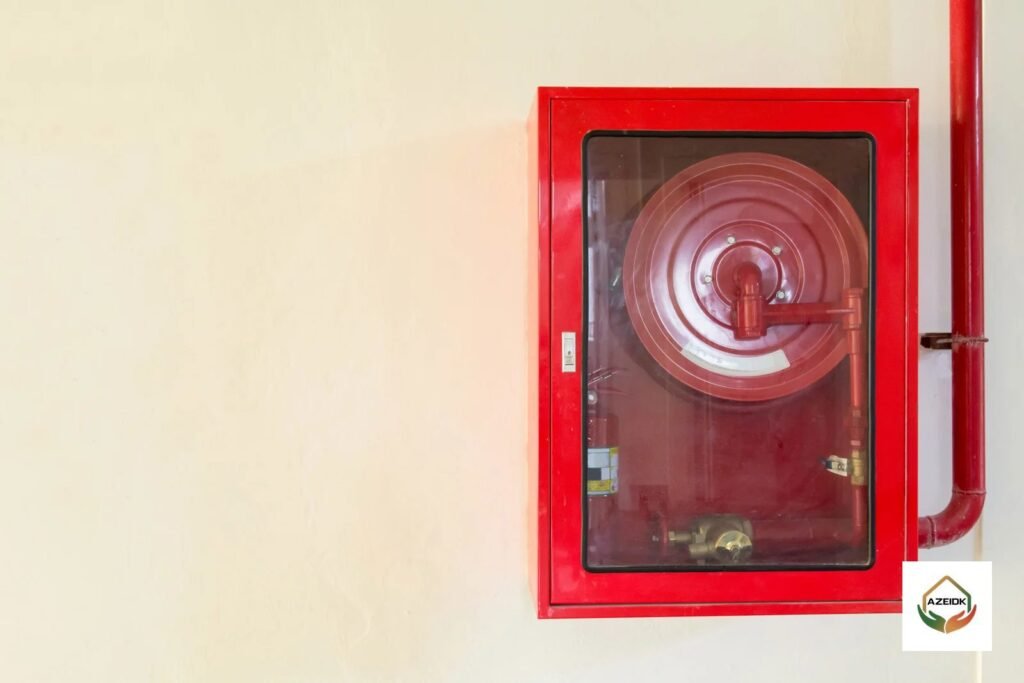
An automatic system does not remove the need for portable extinguishers. Wet chemical (Class K) extinguishers are used for cooking oil fires in the cooking area, while stores, offices and electrical panels get extinguishers matched to their hazard. See the fire extinguishers and safety equipment AZEIDK supplies, including fire blankets and first aid boxes.
Frequently asked questions
What are central kitchen fire safety requirements in Saudi Arabia?
Civil Defense approval before licensing, SBC 801, ventilation to the building code and the commercial flue guide, clear exits, CCTV under the camera law and a first aid kit, as set out in the central kitchen requirements.
Does every hood in a central kitchen need its own suppression system?
Not always. The system listing and manufacturer’s manual set how many appliances and flow points each tank covers, and the designer groups the hoods on that basis.
Must a kitchen suppression system shut off the gas automatically?
Yes, under codes based on the International Fire Code: fuel or power to the protected appliances shuts off automatically, and reset is manual.
Where should a gas leak detector go in a restaurant?
Near points of use and pipe runs, at a height set by the gas type: near the floor for LPG and near the ceiling for natural gas, following the manufacturer’s instructions.
How often is a kitchen suppression system serviced?
At least every six months, and after any discharge.
How often are central kitchen hoods cleaned?
NFPA 96 sets inspection frequency by cooking volume: quarterly for high-volume cooking and monthly for solid fuel. Cleaning is done whenever inspection shows grease buildup.
Conclusion
Central kitchen fire safety is about grouping and interfaces before it is about equipment. Define which appliances each suppression system protects, tie gas shut-off to the system and to the leak detectors, and keep a clear schedule for duct cleaning and six-monthly servicing. That keeps the kitchen running and the protection ready on every shift.
Setting up a central kitchen or upgrading an existing one? Send the kitchen layout, appliance list, hood lengths and gas type, and our engineering team will propose the layout of suppression systems, gas detectors and shut-off valves. Talk to the AZEIDK team
Related guides
- CCTV Cameras in Jeddah: Hikvision, Dahua and Bosch, Supply and Installation, Priced per Project
- Fire Alarm Spare Parts: Matching Detectors, Sounders and Batteries to Your Existing Panel
- Battery Smoke Alarm or Panel Fire Alarm System? When a Standalone Alarm Is Enough (with SD-425 and RadioLINK Rules)
- Kitchen Suppression Recharge After Discharge: Cleanup and Reset Before Reopening