Testing laboratory requirements in Saudi Arabia for general materials labs are set by the Ministry of Municipalities and Housing (MOMAH) in its General Materials Laboratories Requirements (1444 AH / 2023 edition). They cover any site that tests products such as leather, plastics, paper, construction products and electrical or electronic goods, and any site that calibrates measuring instruments. The document requires Civil Defense approval, refers fire protection to SBC 801, and sets detailed items on exits, emergency lighting, extinguishers, hazardous materials and compressed gases. This guide collects those items and the practical equipment AZEIDK supplies and installs.
Key points
- Civil Defense approval, approval of the lab’s supervising authority before operation, and no operation before the municipal licence (section 2.1).
- Approved fire prevention and protection drawings, and an approved evacuation, safety and fire prevention plan.
- Exit signs illuminated and working for 90 minutes on power failure; escape routes lit with backup power.
- Extinguishers mounted no higher than 1.5 m (1.1 m if heavier than 18 kg) and at least 100 mm above the floor, with periodic maintenance.
- Incompatible materials separated by 6 m or a 45 cm fire-resistant barrier; flammable liquids above 38 litres kept in dedicated cabinets.
What are the general materials laboratory requirements?
The document is published on the MOMAH website as the General Materials Laboratories Requirements (Arabic). It defines the activity as any site where general products are tested or where measuring instruments are calibrated to confirm correct readings. Section 2.1 has four licensing items: licence issue, renewal and changes follow the municipal licensing procedures; approval from the authority supervising the lab is needed before operation; no operation is allowed without the municipal licence; and approval from the General Directorate of Civil Defense is required.
A lab combines electrical equipment running for long hours, combustible samples and sometimes solvents and compressed gases. Its safety file is therefore stricter than an ordinary office, and AZEIDK can help prepare it through its Civil Defense approval support service.
Drawings, exits and emergency lighting
- Drawings: approved fire prevention and protection drawings that comply with the building code; the fire code official may request construction documents and firefighting drawings, and fire alarm documents must show their location and the nature of the work.
- Number of exits: at least 2 when a floor holds 1 to 500 occupants, 3 for 501 to 1000, and 4 above 1000. One exit is allowed in a single-storey building or basement with no more than 49 occupants per floor, or a two-storey building with no more than 29.
- Doors: exit doors swing in the direction of travel when 50 or more people use them, open without a key or effort, and fire doors are kept in good condition and inspected yearly. See the fire door rating guide.
- Signs and lighting: emergency exit signs are illuminated, easy to see and work for 90 minutes on power failure, and escape routes are lit with backup power, per sections 1008, 1013 and 604 of the Saudi Fire Code. Details in the emergency lighting and exit signs guide.
- Evacuation plan: an approved evacuation, safety and fire prevention plan, and the occupant capacity sign on display. See the evacuation plan board guide.
Extinguishers, fire alarm and sprinklers
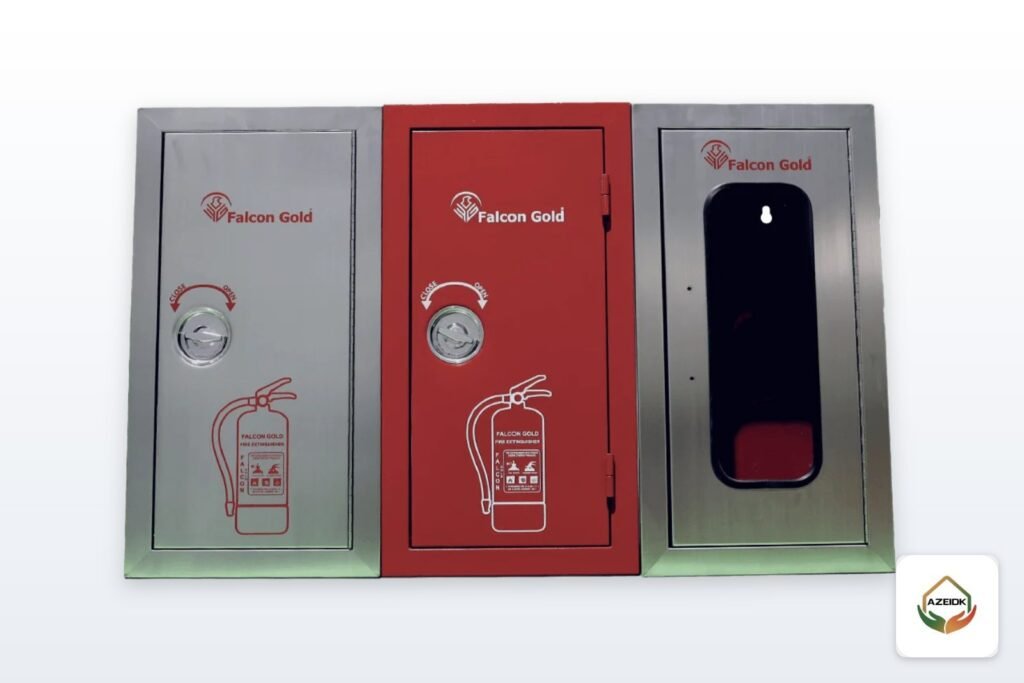
The document does not set the number of extinguishers and refers to SBC 801, but it does set the mounting: no higher than 1.5 m, no higher than 1.1 m when the extinguisher weighs more than 18 kg, and at least 100 mm between its base and the floor, with periodic maintenance. A materials lab usually takes:
- A CO2 fire extinguisher near electrical and electronic test equipment and panels, as it leaves no residue. See the CO2 extinguisher guide.
- A multipurpose dry powder extinguisher in corridors, sample areas and storage.
Under NFPA 10, extinguishers are checked monthly and serviced yearly. For a first estimate of the number, use the fire extinguisher calculator.
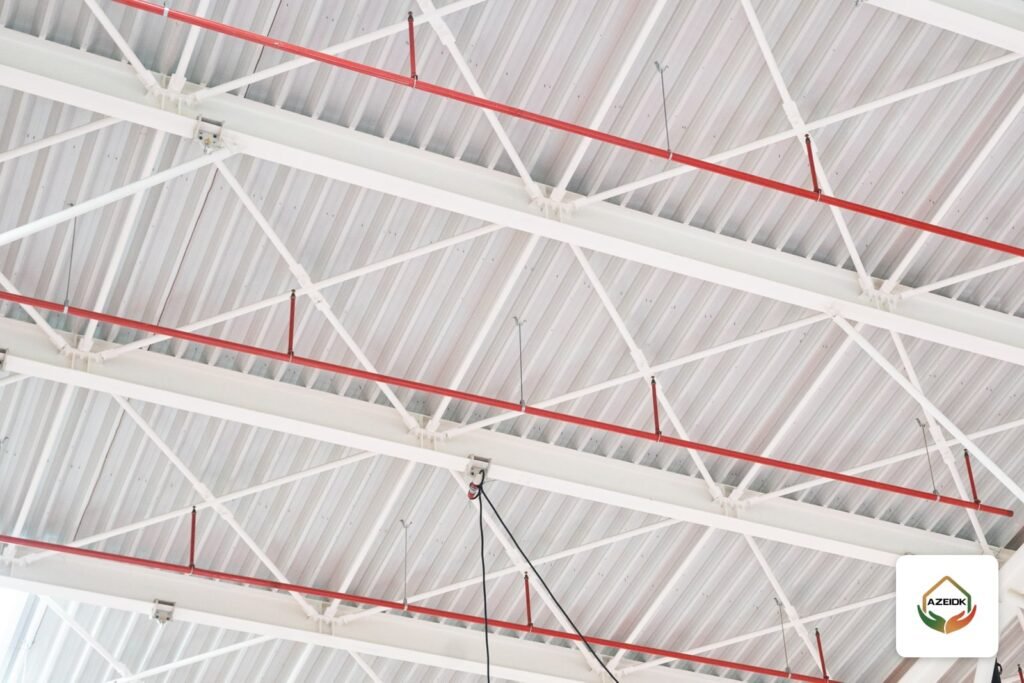
The document also requires suppression and alarm systems to work and be maintained periodically, the fire alarm control panel to be connected to the sprinkler water supply valves, and bans covering or painting a sprinkler unless done by the manufacturer; a painted sprinkler is replaced with a new listed one of the same specification. Delivery through fire alarm systems and firefighting systems; when an alarm is mandatory is explained in when is a fire alarm mandatory under SBC 801.
Hazardous materials and compressed gases
- Incompatible materials: separated when a container holds more than 2 kg or 2 litres, by at least 6 m, by a fire-resistant barrier at least 45 cm high, or by keeping them in dedicated hazardous materials cabinets; compressed gases go in their own dedicated cabinets.
- Flammable liquids: shelving kept orderly, and quantities above 38 litres stored in dedicated cabinets. For background see the NFPA 30 guide.
- LPG: full and empty LPG cylinders are stored outside the building, and LPG is not used in basements or pits because it is heavier than air. Toxic and highly toxic compressed gases may not be stored or used inside the building.
- Labels: warning signs identify hazardous materials.
- Housekeeping: no build-up of combustible materials, stable and orderly storage kept away from heating equipment, and oily rags kept in dedicated bins and disposed of daily.
The document does not mention gas detectors, but a lab that uses flammable gases benefits from them in practice; see the gas detector types guide. For larger stored quantities, see the Civil Defense hazardous materials storage licence.
Electrical safety in the lab
- Main distribution and control panels kept locked; all electrical equipment and installations inspected periodically and faults repaired.
- Extension cords only for portable appliances, plugged directly into an approved outlet, grounded, never used instead of permanent wiring and never run through walls, ceilings or floors.
- Temporary wiring allowed for no more than 90 days; multi-outlet adapters must meet approved specifications.
- Electrical room doors carry a clear sign and a push-bar that opens in the direction of exit.
The document does not explicitly require CCTV; it asks for dedicated guard and security areas. Many labs add cameras to protect samples and equipment, and AZEIDK installs them through its security and surveillance solutions.
How AZEIDK equips a materials lab
- Site survey: test and calibration rooms, sample and chemical store, electrical panels and exits.
- Selection of extinguishers, fire alarm, emergency lighting, exit signs and sprinklers to the approved drawings.
- Supply and installation through technical supply and installation and implementation.
- Civil Defense file support, then an annual maintenance contract for systems and extinguishers.
If the lab sits inside an office building, also see Civil Defense requirements for offices.
Frequently asked questions
Does a materials testing lab need Civil Defense approval?
Yes. Section 2.1 requires approval from the General Directorate of Civil Defense, in addition to the supervising authority’s approval and the municipal licence before operation.
Do the requirements cover calibration labs?
Yes. The activity definition includes any site where measuring instruments are calibrated, as well as product testing labs.
How should flammable liquids be stored in a lab?
On orderly shelving, with anything above 38 litres in dedicated cabinets, and incompatible materials separated by 6 m or a 45 cm fire-resistant barrier.
How long must exit signs work during a power cut?
At least 90 minutes, with escape routes lit from a backup power source.
Are gas cylinders allowed inside the lab?
LPG cylinders are stored outside the building and not used in basements, and toxic or highly toxic compressed gases are not allowed inside the building.
Summary
A general materials or calibration lab needs Civil Defense approval, approved fire drawings and an evacuation plan, exits and illuminated signs with backup power, extinguishers mounted at the right height, clear separation of hazardous materials and gases, and safe electrical wiring. To request a site survey or a quote, send your lab details through the quote request form.
Related guides
- Fire Protection Shop Drawings: Content and Approval
- Battery Smoke Alarm or Panel Fire Alarm System? When a Standalone Alarm Is Enough (with SD-425 and RadioLINK Rules)
- Fire Alarm Input/Output Modules: Interfacing Lifts, HVAC, Door Locks and Fire Pumps with Context Plus and Bosch Models
- Gas Suppression Release Sequence: Context Plus EP203 Panel, Hold and Abort Buttons and Release Call Points