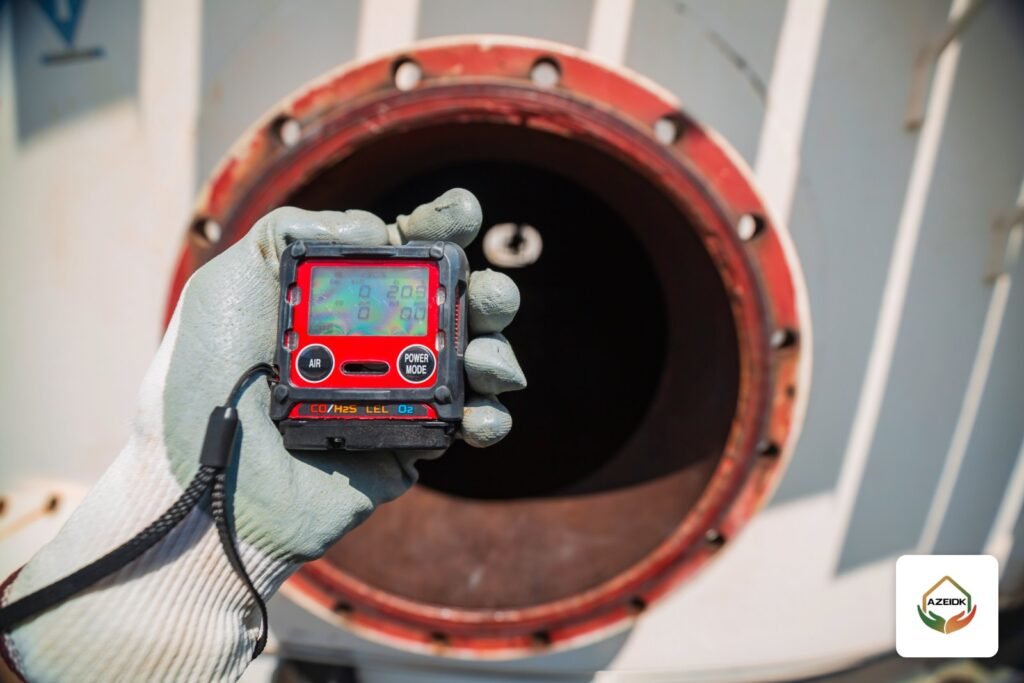
A gas leak detector in a restaurant or commercial building cannot go just anywhere. The gas type decides where it goes, and its connections decide how useful it is: a detector that only beeps is very different from one that closes the gas valve and signals the fire alarm panel.
AZEIDK provides gas leak detectors for restaurants and commercial buildings under fire alarm systems, linked to shut-off valves and the alarm system where needed.
Key points
- LPG (propane and butane) is heavier than air, so its detector goes low.
- Natural gas (methane) is lighter than air, so its detector goes high.
- A useful detector closes the gas valve and signals the alarm panel.
- Exact position and height come from the detector datasheet and the kitchen layout.
Why gas leak detector location depends on the gas
NOAA CAMEO lists propane vapour density at 1.5 relative to air, so it collects near the floor; methane, the main component of natural gas, is 0.55 and rises.
| Gas | vs air | Detector position |
|---|---|---|
| LPG (cylinders and tanks) | Heavier | Near the floor; one manufacturer datasheet example is about 300 mm above floor |
| Natural gas (methane) | Lighter | Near the ceiling above likely leak points |
Where to mount it in a restaurant
- Near gas appliances, but not above flames or in the direct path of steam and grease.
- Near joints and valves where leaks usually start.
- In an enclosed cylinder room or tank area.
- Away from strong extract hoods and vents.
- Where it can be reached for testing.
For the tank itself see central gas tank requirements.
What it should do on a leak
- Local audible and visual alarm.
- Close the electric gas valve on the supply.
- Signal the fire alarm or security panel.
- No automatic reopening; reset manually after the leak is fixed.
In commercial kitchens the gas shut-off is also tied to the hood suppression system. See restaurant fire alarm systems and kitchen fire suppression.
Sensor types and maintenance
Detectors use semiconductor, catalytic or infrared sensing, each with a life, sensitivity and calibration need set by the maker. Choose one made for the gas used on site with an output for the valve and alarm panel. Test with a suitable test gas per the manufacturer, clean off grease, replace sensors at end of life, and test the valve closing, not just the beeper.
Frequently asked questions
Where should a gas leak detector go in a restaurant?
Near appliances and joints, low for LPG and high for natural gas.
Why is an LPG detector mounted low?
Propane and butane vapour is heavier than air and collects near the floor.
Is the detector enough on its own?
Link it to the shut-off valve and alarm panel so the leak is stopped, not just announced.
Does cooking affect it?
Grease and steam can affect the sensor, so keep it out of the steam path and test it regularly.
Does AZEIDK supply restaurant gas detectors?
Yes, for restaurants and commercial buildings, with valve and alarm links.
Running a restaurant on gas? Send us the gas type and kitchen layout, and AZEIDK will set out detector numbers, positions and links. Contact AZEIDK
Related guides
- Fire Safety in Office and Administrative Buildings
- NFPA 30 Flammable and Combustible Liquids Code: Storage, Tank Spacing and Foam Protection in KSA
- Vertical Turbine Fire Pump: When You Need It for Wells and Ground Tanks and How to Size the Column
- Gym Access Control System: Face or Card Terminal, Turnstile and Membership Software Link