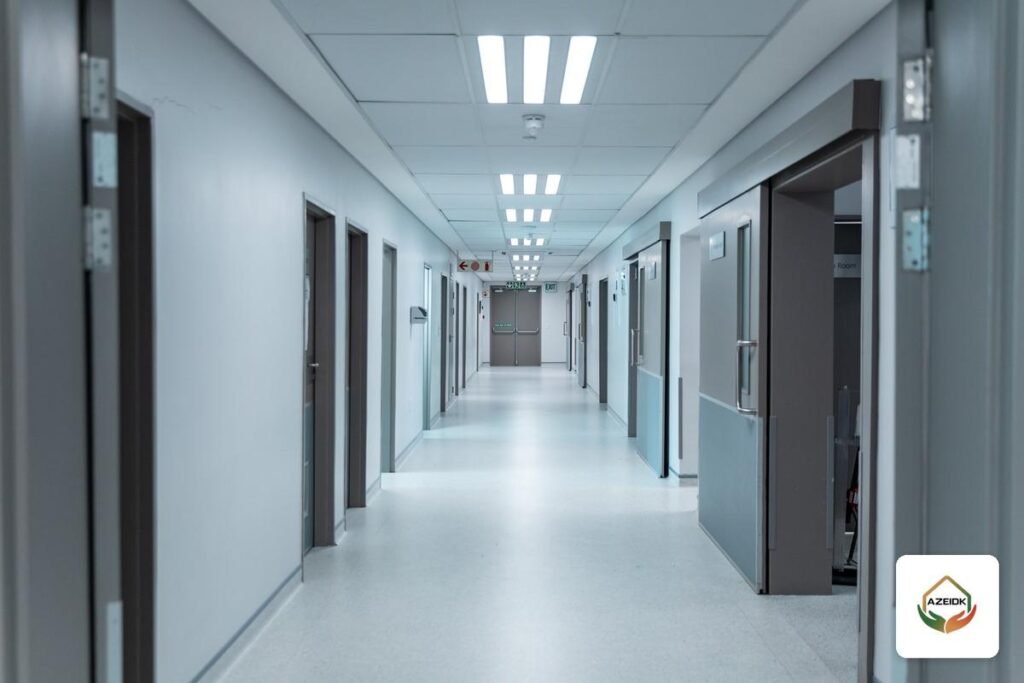
An office building fire alarm system has different problems from a villa or a small shop: repeated floors, tenants who change partitions every few years, staff who need a clear evacuation message, and interfaces with lifts, air conditioning and doors. This guide explains how to choose the panel, detectors and zoning for an office building, and what changes when an office is fitted out inside an existing tower.
AZEIDK supplies and installs these systems under fire alarm systems for commercial buildings. The wider sector picture is in fire safety in office and administrative buildings.
Key points
- A multi-storey office building usually suits an addressable system, because every detector shows by name and location.
- Zone by floor and wing, not only by tenant, so the programming does not change with every lease.
- Lift, HVAC and door interfaces are made through input/output modules and tested before handover.
- Any fit-out or new partition means checking detector positions and updating the program and drawings.
Addressable or conventional for an office building?
A small single-floor office may manage with a conventional system and a few zones. In a multi-storey office building the issue is how quickly the alarm can be located: a conventional system shows the zone, an addressable system shows the device itself, for example “Level 5, north meeting room”. That saves time for the security team and makes maintenance easier, because faults appear by device number.
This is why most consultants specify addressable systems for office towers and company headquarters. For sites with several buildings see networked fire alarm panels.
Choosing the panel by building size
Small or mid-size building
The Context Plus single loop 16 zone addressable panel supports detectors, manual call points, sounders, beacons and control modules, with user and engineer access levels and programmable relay outputs, and it can be networked with other XFP panels. Details: single loop 16 zone fire panel.
Office tower or large headquarters
The Context Plus FirePlus range runs from 1 to 6 loops, supports up to 126 devices per loop and up to 64 zones, with cause-and-effect programming and networking. The product page gives a maximum loop cable length of 1 km, and the 5 and 6 loop panels need a separate battery cabinet. See FirePlus panels, 1 to 6 loops.
Repeater at reception
Where the security room or main entrance is far from the panel room, a repeater lets reception staff see the alarm at once, for example the XFP510 networkable repeater panels.
Zoning and detectors on an office floor
- Open-plan offices and meeting rooms: smoke detectors, taking account of suspended ceilings and the void above if it carries cables and loads.
- Pantry: a heat detector instead of smoke, to cut false alarms from steam and cooking.
- Server and network room: early smoke detection, and possibly gas suppression depending on size and importance.
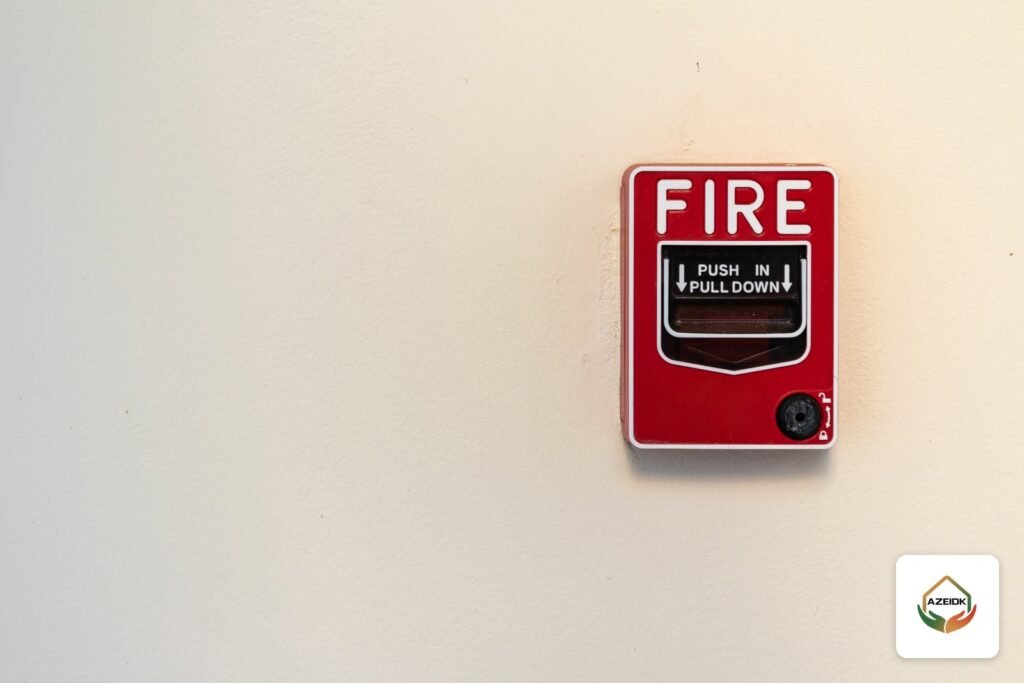
- Corridors and stairs: a manual call point at each exit, and sounders and beacons placed so the message is heard inside closed offices.
- Electrical, generator and archive rooms: a detector suited to the space, with any special suppression system linked to the panel.
A practical tip: name zones by floor and side, not by the tenant company. When the tenant changes, the panel text does not need to be rewritten.
Lifts, air conditioning and doors
On alarm, the usual requirements are to stop air handling units that would spread smoke, home the lifts, and release access-controlled doors on escape routes. This is done with addressable input/output modules programmed in the panel. In larger buildings voice evacuation and other low current systems are designed together.
Fitting out an office in an existing tower
Most problems in office buildings appear after handover, when a floor is re-partitioned or glass rooms are added:
- Ask building management for the current alarm drawing and the address of each device on the floor.
- Review detector positions after the new layout; a new closed room needs its own detector.
- Check that sounders are audible inside closed rooms.
- Update the panel program and device text, then test every new device.
- Hand updated drawings to building management and to the Civil Defense approvals file.
Maintenance and testing after handover
The system needs periodic checks of detectors, call points, batteries and the event log, ideally scheduled outside working hours. Contract scope is covered in fire systems maintenance contracts for office buildings, and licensing in Civil Defense requirements for offices.
Frequently asked questions
Does a small office need a fire alarm system?
It depends on area, occupancy and the building the office sits in. The reference is the Saudi Fire Code SBC 801 and Civil Defense requirements. An office inside a tower with an existing system is normally connected to the building system.
Which is better for offices, addressable or conventional?
For multi-storey buildings addressable is better because it identifies the exact device. Conventional suits small spaces with few zones.
Which detector suits an office pantry?
Usually a heat detector, because a smoke detector near a microwave or kettle causes false alarms.
Who modifies the alarm when the office layout changes?
An approved contractor, coordinating with building management, updating the program and drawings and testing the new devices.
Can the panel be linked to lifts and air conditioning?
Yes, through addressable input/output modules programmed to the approved cause-and-effect matrix.
How many devices can one loop take?
On FirePlus panels up to 126 devices per loop according to the product page; the design sets the actual number.
Fitting out an office building or re-partitioning a floor? Send AZEIDK the drawings and we will propose the panel, detectors, zoning and interfaces, then supply, install and handle testing and commissioning. Request a quote from AZEIDK
Related guides
- Context Plus Addressable Smoke Detectors: Addressing, Bases, Loop Wiring and When to Choose Them
- Dry Pipe Sprinkler System: Dry Pipe Valve, Air Compressor and Water Delivery Time
- Stainless Steel Grooved Coupling: Shurjoint SS-5 for Sch. 5S, 10S and 40S Pipe and When to Choose Stainless
- FM200 Recharge After Discharge: Steps, Cylinder Checks and Return to Service