Fire sprinklers in hotels are one of the systems where the fire engineer and the interior designer work most closely: guest rooms with low ceilings, curtains and furniture, long corridors with gypsum ceilings, restaurants and kitchens, ballrooms and basement car parks. Each area needs a different sprinkler, and a wrong choice shows up either at approval or in the finished ceiling.
This guide covers the right sprinkler types for each part of a hotel or serviced apartment building, hazard classification, coordination with interior design and common operating problems. AZEIDK supplies and installs sprinklers, valves and flow switches under its fire fighting systems solution for the hospitality sector.
Key points
- Hotel rooms and corridors are usually light hazard under NFPA 13, while kitchens, laundries and car parks are ordinary hazard.
- Sidewall sprinklers are a common choice for rooms because they mount on the wall above the door and save ceiling pipework.
- Concealed sprinklers suit corridors and lobbies where the ceiling finish matters.
- The hotel kitchen needs a dedicated hood suppression system in addition to kitchen sprinklers.
Choosing the sprinkler by area
| Area | Typical hazard class | Typical sprinkler |
|---|---|---|
| Guest rooms and suites | Light | Quick response sidewall or residential, as designed |
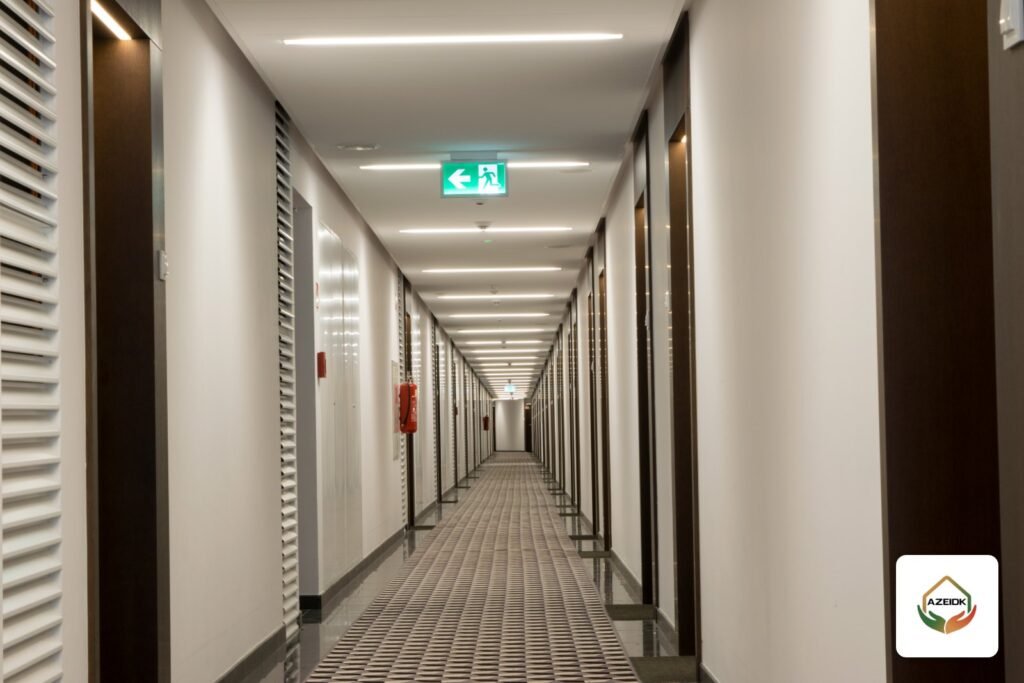
| Corridors | Light | Concealed or pendent; corridor-specific models exist |
| Lobby and reception | Light | Concealed to match the interior |
| Restaurants and ballrooms | Light to ordinary by use | Pendent or concealed |
| Kitchens and laundries | Ordinary | Pendent or upright with a suitable temperature rating |
| Car parks | Ordinary | Upright; dry where needed in some cases |
Classification is explained in sprinkler hazard classification under NFPA 13, and spacing in sprinkler spacing and distances.
Guest rooms: why sidewall?
Hotel rooms often have low ceilings with hidden lighting and AC, and designers want a clean ceiling. A sidewall sprinkler mounts on the wall near the entrance and sprays into the room, fed from the corridor pipe without running pipes in the room ceiling. The allowed distance from the ceiling and from obstructions such as curtains and tall wardrobes must be respected, as anything in front of the sprinkler cuts its coverage. Details in sidewall sprinklers.
Corridors and lobbies: appearance matters
Concealed sprinklers are preferred in corridors and lobbies: a flat cover plate in the ceiling colour drops away with heat and the sprinkler then operates. Options AZEIDK supplies include the Tyco RFII-C concealed corridor sprinkler. One important point: covers and sprinklers must never be painted on site, as paint can stop them working; colours are ordered from the factory.
Coordinating with interior design
- Approve a coordinated ceiling plan with lighting, AC, detectors and sprinklers before gypsum work starts.
- Allow for chandeliers and hanging features that may block the spray.
- Do not move sprinklers during finishing without the designer’s review.
- Leave access panels for valves and flow switches on each floor.
Each hotel floor is usually monitored with a flow switch and a valve supervisory switch, such as the Potter VSR waterflow switch, so the alarm panel shows which floor is flowing.
Kitchen and car park
The hotel kitchen is covered by suitably rated sprinklers, but the hood and cooking surfaces need a separate kitchen suppression system; see kitchen fire suppression systems. Basement car parks are sprinklered to their own design; see car park fire protection.
Common operating problems
- Sprinklers painted over or still bagged since fit-out.
- New curtains or shelves in front of sidewall sprinklers.
- A sprinkler knocked by a luggage or cleaning trolley and not replaced.
- No spare sprinkler cabinet in the pump room.
These items are part of a hotel fire systems maintenance contract.
Frequently asked questions
Does every hotel room need a sprinkler?
In a sprinklered hotel the rooms are normally covered, and the approved design states any exceptions the code allows.
Does the whole hotel get wet if one sprinkler operates?
No. In a wet system only the sprinkler reached by the heat opens, and a few sprinklers usually control a room fire.
Can a sprinkler be painted to match the ceiling?
Not on site. The sprinkler or cover plate is ordered in a factory colour as part of the approval.
Building a hotel or serviced apartments? Send the ceiling plan with the number of floors and rooms, and AZEIDK will propose sprinkler and valve types for each area with datasheets. Contact AZEIDK
Related guides
- FM200 Nozzles: 180° vs 360°, Sizes, Mounting Height and Discharge Time
- Addressable Fire Alarm Loop Design: Capacity, Isolators and Device Distribution
- Fire Sprinklers and Automatic Sprinkler Systems in Saudi Arabia: Types, Design and Applications
- Mall Fire Sprinkler Systems: Corridors, Shops, Hypermarkets, Car Parks and High Ceilings