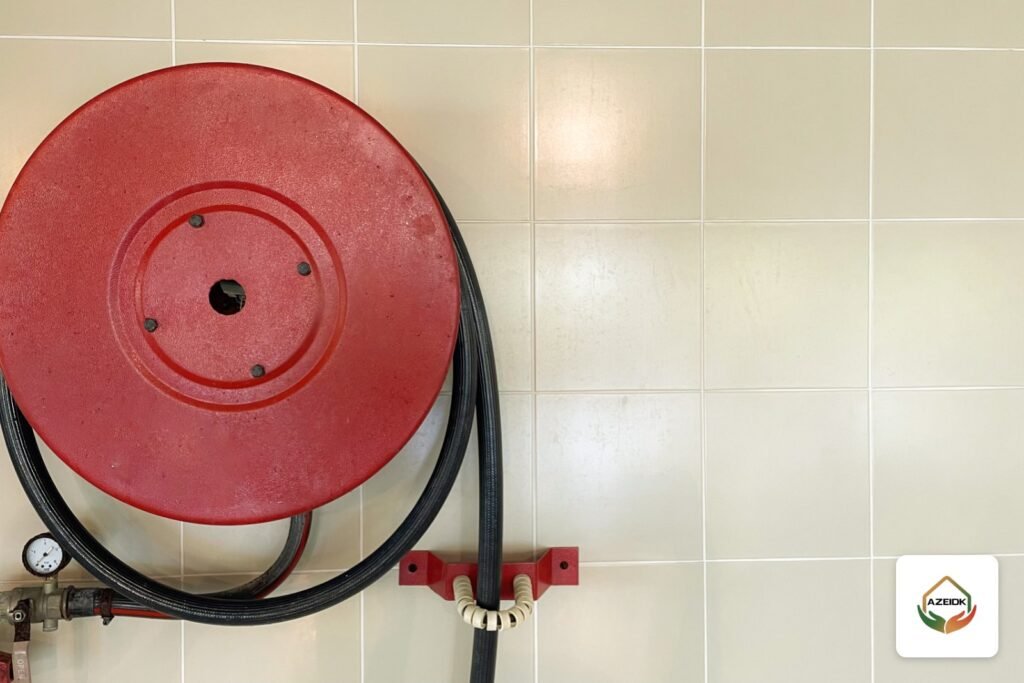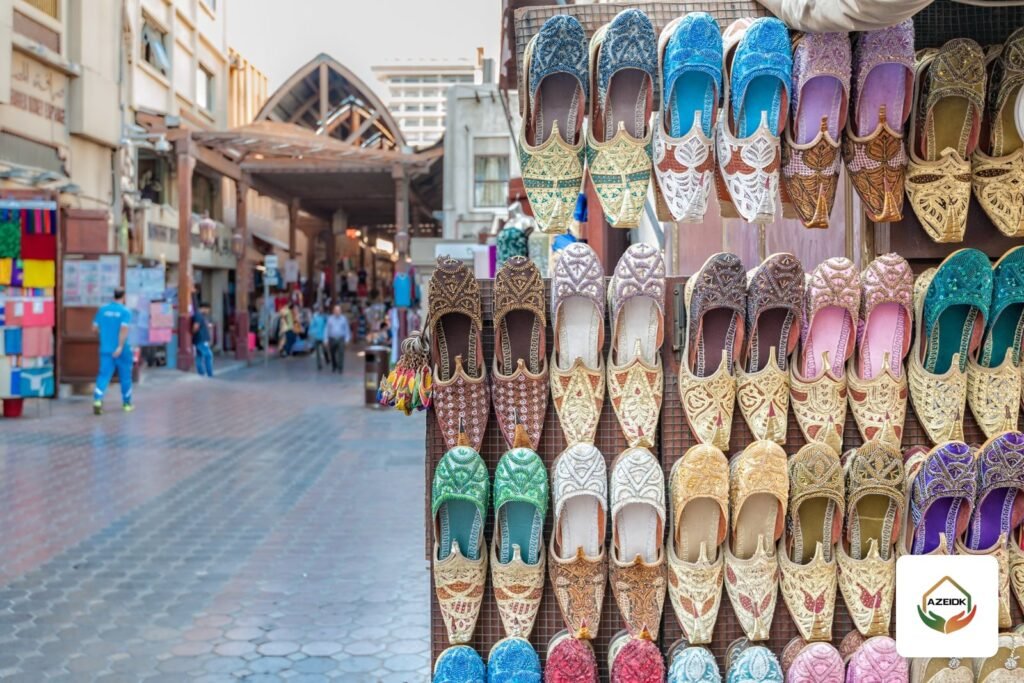
Souq fire safety starts with the right type and number of extinguishers in every shop, a fire alarm that links the shops so everyone hears an alarm from a closed unit, shared CCTV covering lanes and entrances, and clear management that knows who is responsible for the common parts. The Popular Markets Requirements issued by the Ministry of Municipalities and Housing require Civil Defense approval before a licence is issued.
Key takeaways
- The Popular Markets Requirements (1444H / 2022) refer fire protection to the Saudi Fire Protection Code SBC 801.
- The market management office is responsible for cleaning and maintaining the market, shared services, security and safety.
- The biggest risk in rows of adjoining shops is a fire that starts at night in a locked unit and spreads through the shared roof or wall before anyone notices.
- In existing buildings where cabling is hard, radio fire alarm devices certified to EN 54-25 can be considered with the designer.
- The fire, safety and alarm maintenance contract is separate from the CCTV and low-current maintenance contract.
In this article
- Why is souq fire safety different?
- What do the Popular Markets Requirements say about safety?
- How many extinguishers do adjoining shops need, and where?
- Fire alarm: wired or wireless in existing souqs?
- Shared CCTV for shops
- Who pays: owner or tenant?
- Common mistakes in souqs
- Frequently asked questions
- Conclusion
Why is souq fire safety different?
The Popular Markets Requirements define a popular market as a market in one building or a set of connected or separate floors, holding commercial and craft activities that mostly sell clothing, textiles, furniture, glass, pottery, handicrafts, antiques and traditional sweets. That description alone explains the problem: highly combustible goods, in small adjoining shops, owned or rented by many different people.
Older souqs add conditions that raise the risk:
- Shared roofs and walls: a fire in one unit reaches its neighbours through the false ceiling or gaps above the walls.
- Narrow lanes: goods displayed outside the shop narrow the lane and make it hard for Civil Defense crews to get hoses through.
- Temporary wiring: daisy-chained extension leads feeding display lighting, a frequent cause of fires.
- Night closure: shops are locked and nobody sees the smoke when it starts.
These facilities fall under AZEIDK’s malls and commercial buildings sector, but the solutions differ from a modern mall because the building usually already exists and changes are limited.
What do the Popular Markets Requirements say about safety?
Fire and safety items in the requirements include:
- Civil Defense approval before the licence, and SBC 801 for fire prevention and protection.
- Escape routes kept clear, exit doors that open without a key, and illuminated exit signs with 90-minute battery backup.
- An approved evacuation and fire safety plan known to the people working in the market.
- The fire alarm panel connected to the sprinkler water supply valves where sprinklers exist.
- Extinguishers serviced periodically and mounted no higher than 1,500 mm.
- Extension leads not used in place of permanent wiring, earthed sockets and covered distribution boards.
- No LPG cylinders stored in basements or pits, and no storage in exits, stairs or electrical rooms.
- A security room with first aid supplies, and space reserved for CCTV to General Security specifications.
How many extinguishers do adjoining shops need, and where?
The extinguisher is the first line of defence in a souq, because it is in the shopkeeper’s hand before any crew arrives. NFPA 10 uses a maximum travel distance of 75 ft (22.9 m) to the nearest extinguisher for ordinary combustibles (Class A: textiles, wood, paper), plus a maximum area per extinguisher depending on the hazard level. In practice:
| Shop type | Usual extinguisher | Note |
|---|---|---|
| Textiles, clothing, carpets | Multi-purpose dry powder (ABC) or foam | High fire load; extinguisher inside, near the door |
| Furniture and woodwork | ABC powder or foam | Keep the space in front of the extinguisher clear of stock |
| Electronics and phones | CO2 plus an ABC unit | CO2 leaves no residue on equipment |
| Sweets or food with frying | Wet chemical (Class K) plus a fire blanket | Powder alone is not enough for oil fires |
| Shared lanes | Extinguishers owned by market management | Fixed, visible, signed locations |
For a first estimate use the fire extinguisher calculator, and see the NFPA 10 portable extinguishers guide for the standard. AZEIDK supplies fire extinguishers of all common types, along with fire blankets and first aid boxes in its safety equipment range.
Fire alarm: wired or wireless in existing souqs?
For mercantile occupancies (Group M), SBC 801 Section 907.2.7 makes the fire alarm requirement depend on conditions related to occupant numbers and location, checked in the edition of the building permit. Even where a system is not mandatory, a souq of adjoining shops gains a lot from an alarm that links the units, because smoke in a shop closed for the night may go unseen until it reaches the neighbours.
Wired system
The default for new buildings and souqs undergoing full refurbishment: one addressable panel for the market, a detector in every shop, and manual call points in the lanes. The panel shows the exact shop number on alarm.
Wireless system
In old souqs with heritage ceilings or stone walls, running cables can mean major works. Radio fire alarm devices that talk to the panel wirelessly exist for this case. They must be approved for fire alarm use to EN 54-25 or equivalent, not domestic alarms. Before choosing them, check:
- Signal strength between shops through thick walls, surveyed on site before installation.
- Battery life and a replacement plan within maintenance.
- Acceptance of the solution by the consultant and Civil Defense for that specific project.
Wired and addressable systems are covered on the fire alarm systems page. Any choice between the two starts with a site survey and assessment of what exists, as explained in fire systems assessment in existing buildings.
Shared CCTV for shops
In a souq, cameras serve two aims: security against theft, and seeing the start of a fire or a crowd build-up in the lanes. The requirements call for space reserved for cameras to General Security specifications, and installation falls under the Security Surveillance Cameras Law, whose obligations are covered in the Saudi CCTV law article.
A practical model for souqs:
- Shared cameras run by market management: at entrances, lanes, squares and car parks, recorded in the security room.
- In-shop cameras paid by the tenant: at the till and small storeroom, depending on the trade.
- Storage: the required retention period sets recorder capacity, and CCTV coverage planning helps lay cameras out along the lanes.
Available solutions are on the security and surveillance systems page.
Who pays: owner or tenant?
The requirements make the market management office responsible for organising the market and its entrances and exits, cleaning and maintaining the market and shared services, and security and safety. Storage, gas and hazardous material rules apply to everyone operating in the market. The detailed cost split is set by the lease, but the common split is:
| Item | Usually responsible |
|---|---|
| Fire alarm panel, detectors and call points in common areas | Owner or market management |
| Detector inside the shop (part of the market system) | Per lease, often within the owner’s system |
| Shop extinguishers and fire blanket | Tenant |
| Lane extinguishers, exit signs and emergency lighting | Market management |
| Shared cameras and security room | Market management |
| Electrical wiring inside the shop | Tenant, as permitted by the owner |
What matters is one clear maintenance contract for fire, safety and alarm systems across the whole market, and a separate contract for CCTV and low current, rather than each tenant hiring a different firm for part of a shared system. AZEIDK’s preventive and periodic maintenance service covers fire system contracts, including extinguisher maintenance by AZEIDK’s own team.
Common mistakes in souqs
- An extinguisher that is present but out of service date, or hidden behind stock.
- Goods displayed in the lane that narrow it and cover an exit sign or hose cabinet.
- Daisy-chained extension leads running display lighting all night.
- Gas cylinders in sweet shops or small eateries stored in an enclosed space.
- Cameras running but recording stopped for weeks because the disk filled up and nobody noticed.
- An emergency door at the end of the lane locked at night against theft and not unlocked in the morning.
Frequently asked questions
What are souq fire safety requirements in Saudi Arabia?
Civil Defense approval before licensing, SBC 801, clear escape routes and lit exit signs, periodically serviced extinguishers, an approved evacuation plan, space for CCTV, and rules on electrics, gas and storage, as set out in the Popular Markets Requirements.
How many extinguishers does a small souq shop need?
It depends on area and goods. NFPA 10 limits travel distance to the nearest extinguisher to 22.9 m for ordinary combustibles. A small shop usually needs one extinguisher suited to its hazard, near the door.
Is a wireless fire alarm acceptable for shops?
It can be a solution for existing buildings if the devices are approved for fire alarm systems to EN 54-25 or equivalent, and the consultant and Civil Defense accept it for the project.
Who is responsible for CCTV in a souq?
Market management handles shared cameras at entrances and lanes, and each shopkeeper handles cameras inside the shop. All of them fall under the Security Surveillance Cameras Law.
Can one maintenance contract cover fire systems and CCTV?
No. The fire, safety and alarm maintenance contract is separate from the CCTV, low current and access control contract.
Do adjoining shops need fire-rated separation walls?
Separation between shops is set by the building design under the Saudi Building Code and reviewed by the engineering office. In existing buildings this starts with a site survey and assessment of what is there.
Conclusion
A souq needs the basics applied consistently more than complex solutions: the right extinguisher in every shop, an alarm that links the shops, shared cameras that actually record, clear lanes, and one management team following the maintenance contract. Start with a survey and assessment of the market, then put the split of responsibilities between management and tenants in writing.
Managing a souq or a row of adjoining shops? Send the market layout, the number of shops and their trades, and our engineering team will propose extinguisher layout, fire alarm and shared CCTV. Talk to the AZEIDK team
Related guides
- CCTV Maintenance SLA: Response Time, Repair Time and Recording Availability
- Emergency Lighting: Luminaire and Exit Sign Types, Maintained vs Non-Maintained, Duration and Testing
- Fire Systems Cost in Saudi Arabia: What Drives the Price
- Turnstile Gates: Tripod, Flap, Swing or Full Height for Offices, Gyms and Factories