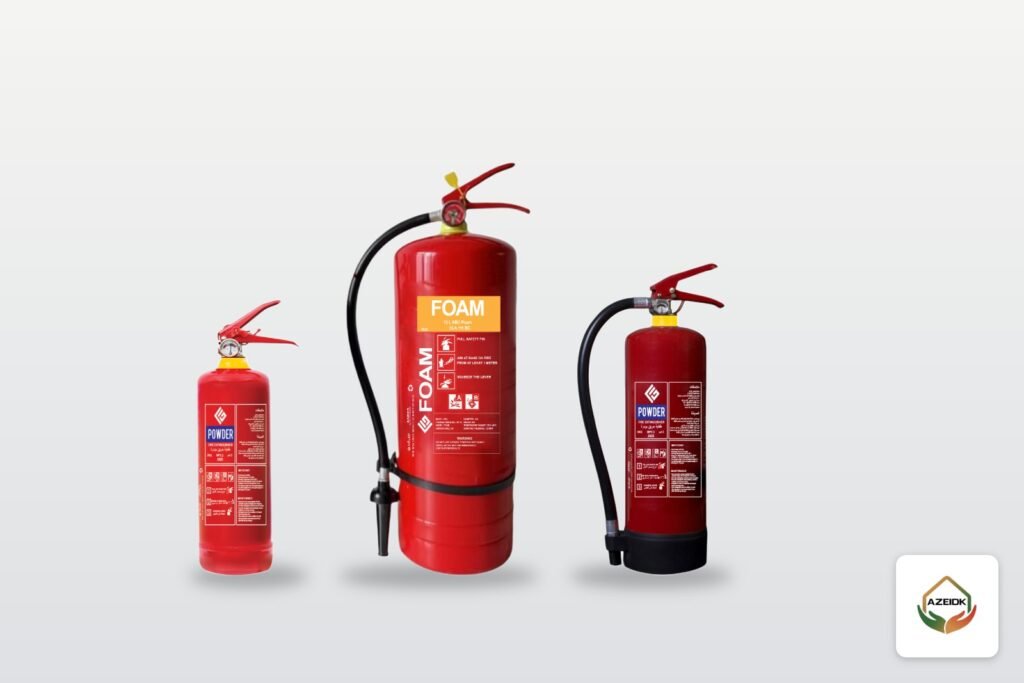
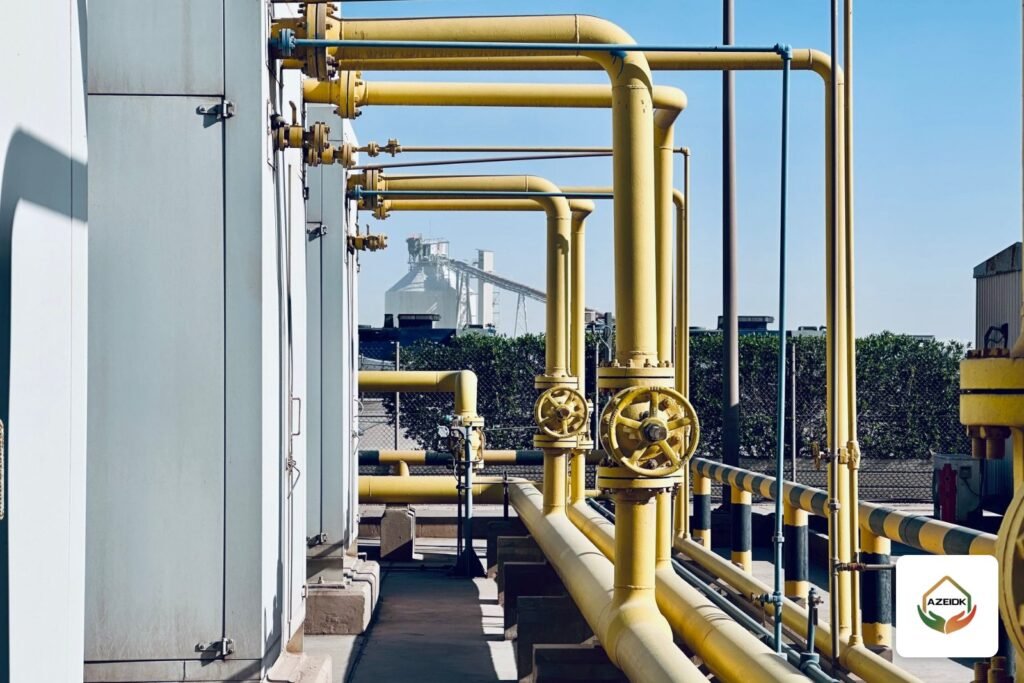
The Private Fire and Rescue Teams Regulation sets when a public or private facility must form its own fire and rescue team, who may operate such teams, and what qualifications team members need. The Umm Al-Qura gazette published the regulation’s guidance manual on 12 November 2021 (7/4/1443H). This article summarises the published text: definitions, covered and excluded facilities, the points condition, and how a team relates to the building’s fixed fire systems.
A private team does not replace fixed fire fighting systems; it works with them, so their readiness stays the basis of any response plan.
Key points
- The regulation updates the one issued by Ministerial Decision No. 8015 dated 8/3/1435H and is based on the Civil Defense Law issued by Royal Decree No. (M/10) dated 10/5/1406H.
- It covers twenty facility types, including hospitals, high-rise buildings, schools, industrial cities, major shopping centres, large warehouses and event sites.
- It applies to covered facilities whose total score exceeds seven points under the regulation’s tables.
- Facilities supervised by the High Commission for Industrial Security, the General Authority of Civil Aviation and the General Directorate of Border Guards are excluded.
- Members are tested to NFPA 1021 (officers), NFPA 1001 (fire fighters) and NFPA 1006 (technical rescue) by a body approved by Civil Defense.
Key definitions in the regulation
- Fire team: a group of qualified, licensed people who carry out firefighting using the available mobile and fixed equipment.
- Rescue team: a group of qualified, licensed people who carry out rescue work with mobile and fixed equipment.
- Qualified person: someone who passes knowledge and skills tests in their specialty under NFPA standards, with tests run and assessed by a body approved by Civil Defense.
- Temporary events: public or private activities held for set periods at temporary or permanent sites that require fire and rescue teams.
- High-rise building: a building with an occupied floor more than 23 metres above the lowest level of Civil Defense access.
- Qualified operator: an entity that has added private fire and rescue team operation to its commercial registration after meeting the operating requirements and obtaining approval from the General Directorate of Civil Defense.
- Specifications and standards: those issued by the Saudi Standards, Metrology and Quality Organization, or the European, American or other standards it adopts.
Facilities covered by the private fire teams regulation
| Group | Examples from the text |
|---|---|
| Health and social care | Hospitals and medical cities; care homes, elderly homes and reform institutions |
| Residential and high-rise | Government or private housing complexes; high-rise buildings |
| Education and government | Schools, universities, colleges and training institutes; government departments, authorities and public institutions |
| Industry and storage | Industrial cities; small industrial facilities; large warehouses; workshop and warehouse zoning plans (covered collectively, not individually) |
| Commercial and leisure | Major shopping centres; clubs and sports cities; amusement parks, recreational gardens and cinemas; permanent and temporary event sites and exhibitions |
| Other | Private institutions and companies; agricultural facilities, forests and reserves; service and municipal sites; train stations within cities and airports; military cities and bases; the Two Holy Mosques and the holy sites |
The points condition: when is a team mandatory?
Being on the list is not enough. The regulation applies to the listed public and private facilities whose total score exceeds seven points under the tables in the regulation file. We recommend calculating the score from the official tables themselves and checking with Civil Defense when in doubt, rather than relying on informal estimates.
Excluded facilities
The regulation applies to facilities under Civil Defense preventive supervision. Facilities and sites supervised by the High Commission for Industrial Security, the General Authority of Civil Aviation or the General Directorate of Border Guards are excluded, and Civil Defense provides support there. Industrial facilities under the High Commission for Industrial Security follow a different path, explained in factory licensing between Civil Defense and HCIS.
What it means for facility owners
- Check coverage: is your activity one of the twenty groups, and does your total exceed seven points under the tables?
- Choose a qualified operator: the operator must have added the activity to its commercial registration and obtained Civil Defense approval, with members qualified to the NFPA standards above.
- Prepare the fixed systems: the team relies on the fixed equipment available, such as hoses, standpipes, fire cabinets and the alarm panel. For high-rise buildings, review the fire command centre room requirements and high-rise fire requirements.
- Do not confuse the team with the safety officer: the safety officer has a separate regulation, covered in the fire safety officer regulation.
- Keep systems ready: regular maintenance under annual maintenance contracts is a practical condition for any response team.
AZEIDK does not operate fire and rescue teams. It supplies, installs and maintains fixed fire systems and supports facilities with Civil Defense requirements and approvals.
FAQ
Does every hospital or mall need a private fire team?
No. The obligation applies to covered facilities whose total score exceeds seven points under the regulation’s tables.
What certifications do private fire and rescue team members need?
The regulation requires passing knowledge and skills tests to NFPA 1021 for team officers, NFPA 1001 for fire fighters and NFPA 1006 for technical rescue, run by a body approved by Civil Defense.
Does the regulation cover factories in industrial cities?
Industrial cities and small industrial facilities are covered groups, but facilities and sites supervised by the High Commission for Industrial Security are excluded.
Where is the official text?
In the Umm Al-Qura gazette: guidance manual for the Private Fire and Rescue Teams Regulation (Arabic).
Conclusion
The Private Fire and Rescue Teams Regulation identifies obligated facilities through a points system and requires an approved operator and NFPA-qualified members. In every case, a team is only as effective as the fixed systems it uses. Send AZEIDK your facility drawings and current system status through a quote request.
Related guides
- ISO Certificates for Companies and Contractors in Saudi Arabia: ISO 9001, 14001 and 45001 in Tenders
- Wire Mesh Cable Tray from Legrand Cablofil: When to Use It for Network and Low-Current Cabling
- Different Types of Fire Sprinkler Heads: K-Factor, Temperature Rating and Response
- CCTV Camera with Audio from Hikvision: Built-in Mic vs Siren and Strobe, and When Audio Recording Is Allowed in Saudi Arabia