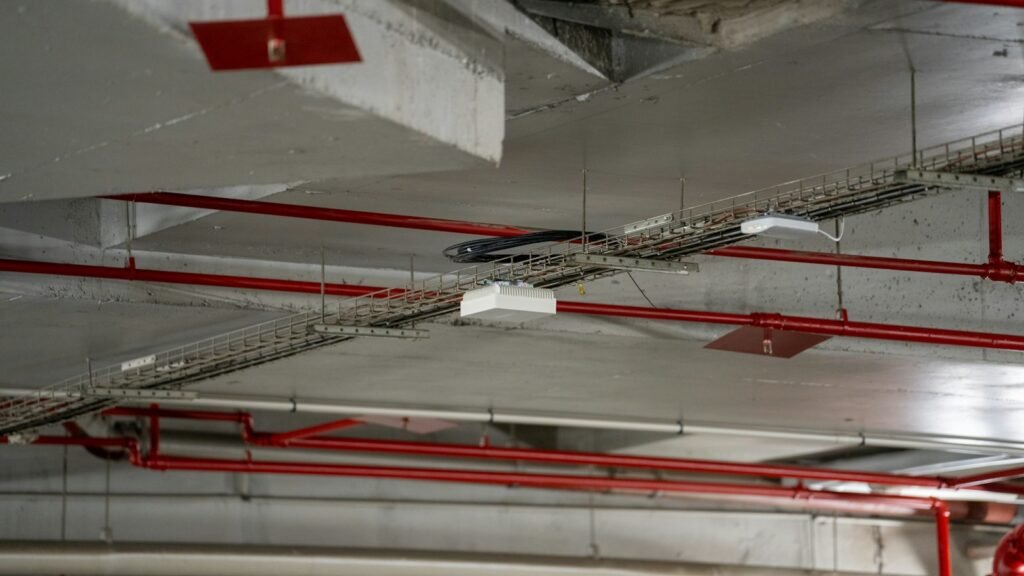
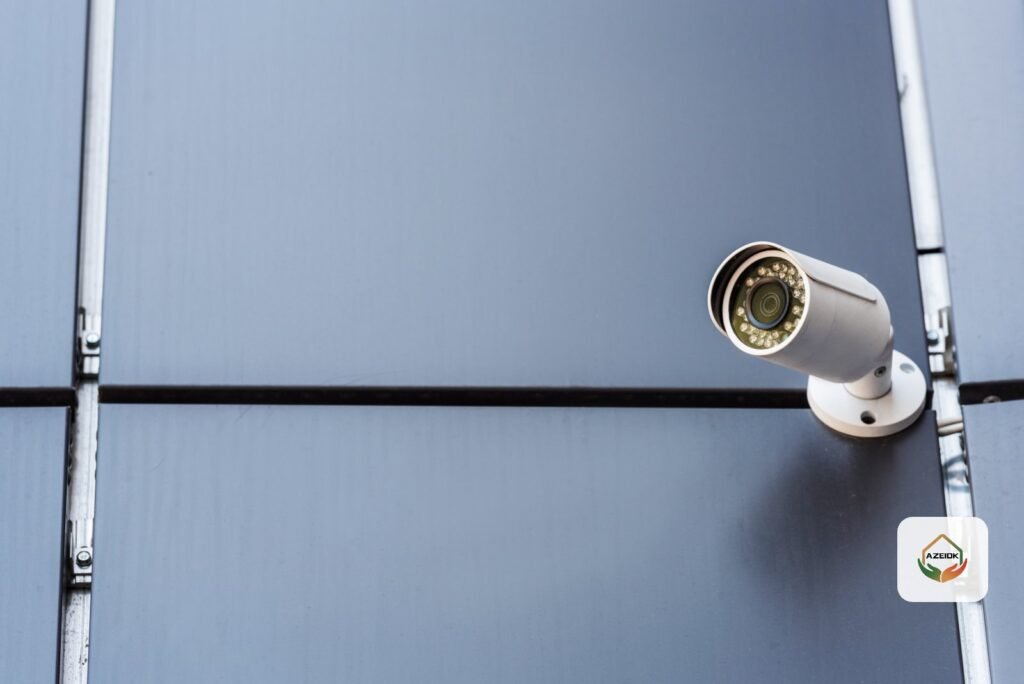
CCTV for gyms means covering the reception, entrances, workout floor, corridors, emergency exits and car park with cameras that capture identifiable faces at the door, while keeping every camera out of changing rooms, toilets and physiotherapy rooms. In Saudi Arabia, the Security Surveillance Cameras Law and its Implementing Regulation set where cameras go and who may view the recordings.
For camera types, resolution, night vision and storage, see our CCTV cameras guide for Saudi Arabia.
This article explains how to zone a gym or fitness centre for surveillance, which cameras and recorders suit each zone, where privacy limits apply, and what to check before handover. AZEIDK supplies Hikvision, Dahua and EZVIZ cameras and recorders through its security and surveillance systems, and sector solutions are on the gyms and sports facilities page.
Key takeaways
- Focus coverage on entrances, reception, the workout floor, corridors, emergency exits, fire equipment areas and the car park.
- No cameras in changing rooms, toilets or physiotherapy rooms: the law prohibits filming there.
- Audio recording on security cameras is not allowed without approval from the competent directorate, so disable built-in microphones.
- Access to recordings is limited to authorised people, with a log of who accessed the system.
- Retention follows the applicable specification document, so size storage on that period, not on a guess.
In this article
- What does the surveillance cameras law require in sports facilities?
- Where should gym cameras go? Zone by zone
- Privacy limits in a gym: where filming is prohibited
- Recorder, storage and retention
- Linking gym cameras to member access and remote viewing
- CCTV for gyms: handover checklist
- Frequently asked questions
- Summary
What does the surveillance cameras law require in sports facilities?
Saudi Arabia issued the Security Surveillance Cameras Law, and its Implementing Regulation was published in the Umm Al-Qura gazette in 2023. Article 2 of the Regulation lists the locations covered by cameras at entities subject to the law, including facility entrances at a level that identifies people, main lobbies and corridors on all floors, reception desks, emergency exits and fire equipment areas, car park entrances and exits with readable number plates, utility rooms (electrical, water tanks, central air conditioning), and stairs and escalators.
Article 8 of the Regulation has a specific provision for women’s salons and women’s sports clubs, naming the locations from that list where cameras are installed. A camera layout from a general gym should therefore not be copied to a women’s club; design from the text itself.
Before design, confirm how your activity is classified and which specification document applies, because the retention period and some technical details come from it.
Where should gym cameras go? Zone by zone
| Zone | Purpose | Typical choice |
|---|---|---|
| Main entrance and gate | Identify faces on entry and exit | High-resolution camera mounted close to face height, with WDR backlight handling for glass entrances |
| Reception and cashier | Record transactions and disputes | Dome camera above the counter covering staff and customer |
| Workout and weights floor | General view and incident review | Wide-angle or varifocal cameras in the corners, enough to avoid blind spots behind machines |
| Class studios | General view only | Corner camera, positioned with mirror reflections and lighting in mind |
| Corridors and emergency exits | Movement and confirming exits are not blocked | Camera covering the corridor length and exit door |
| Electrical and plant rooms | Prevent tampering and unauthorised entry | Simple indoor camera at the door |
| Car park | Number plates at entry and exit | Plate-capture camera at the gate plus overview cameras |
The workout floor is the hardest zone. Large machines, racks and cables create hidden areas, and wall mirrors reflect lighting and infrared at night. Fix the final equipment layout first, then set camera angles on it, not the other way round.
Privacy limits in a gym: where filming is prohibited
Article 6 of the Security Surveillance Cameras Law (issued in 2022) prohibits cameras in operating, medical examination and inpatient rooms, physiotherapy rooms, changing rooms, toilets and private places. Gyms usually have three of these: changing rooms, toilets and showers, and physiotherapy or massage rooms where they exist.
- Do not aim a corridor camera at a changing room door at an angle that shows the inside when it opens.
- Lockers inside a changing room take the same rule; monitor only the room entrance from outside.
- Article 8 of the Regulation prohibits enabling audio recording without the competent directorate’s approval, and many modern cameras have a built-in microphone that must be switched off.
- Pan-tilt-zoom cameras and cameras that overlook areas outside the premises need privacy masks under the same article.
Article 3 limits access to the camera system to authorised people and requires a log of that access. In practice: a separate account for each user on the recorder, view-only rights for reception staff, and export rights for the responsible manager. Under Article 6, recordings are released only on an official request from the competent authorities.
Recorder, storage and retention
Article 6 requires recordings to be kept until an investigation ends or for the period in the specification document, whichever is longer. Disk capacity depends on camera count, resolution, frame rate, compression (H.265 for example) and the required days, so storage is calculated after the camera count is fixed, with headroom for future cameras.
- A network video recorder (NVR) with more channels than today’s need, since gyms expand and add studios.
- Surveillance-rated disks designed for 24/7 operation.
- A UPS for the recorder and switch so recording continues through power cuts.
- Correct, synchronised date and time; footage with the wrong timestamp loses value when it is needed.
For how systems behave during outages, see does CCTV record during a power or internet outage.
Linking gym cameras to member access and remote viewing
Where members enter by face or card, linking each entry event to a snapshot from the entrance camera lets the manager see the person next to the member name in the log. This usually works when both devices sit on one platform or management software that supports both, so choose cameras and access devices together. Face recognition cameras carry their own data protection considerations, covered in face recognition cameras.
Remote viewing on a phone helps owners with several branches, provided each user has a strong password, firmware is kept updated and accounts are not shared.
CCTV for gyms: handover checklist
- Every camera is where the drawing says, and the entrance view shows faces clearly day and night.
- No camera shows changing rooms, toilets or treatment rooms, and no audio recording is enabled.
- Actual retention on the recorder matches the required period with all cameras running.
- User accounts and rights are documented and system access logging is on.
- Date and time are correct, and the recorder and switch are on UPS.
- A final layout with camera numbers is handed to the owner with passwords in a sealed envelope.
Note that CCTV and low current maintenance sits in a separate contract from fire system maintenance, so do not assume the fire contract covers cameras.
Frequently asked questions
Can a gym install cameras in changing rooms?
No. Changing rooms, toilets and physiotherapy rooms are places where cameras are prohibited. Monitor their entrances from outside only.
How many cameras does a gym need?
The gym layout decides it: entrances, reception, corridors, exits and car park first, then the workout floor based on its area and equipment layout. There is no fixed number.
Should the microphone be enabled on workout floor cameras?
No. The Implementing Regulation prohibits enabling audio recording on security cameras without the competent directorate’s approval.
How long must gym CCTV recordings be kept?
For the period in the applicable specification document or until an investigation ends, whichever is longer. Disk size is calculated on that period.
Is the camera layout different in women’s clubs?
Yes. Article 8 of the Regulation has a specific provision for women’s sports clubs that names where cameras are installed, and the design follows it.
Who can view the recordings?
Authorised people only, with a log of their access. Recordings go to other parties only on an official request from the competent authorities.
Summary
A good gym CCTV system starts from a zone plan: what must be covered, what must never be filmed, who can view footage and how long it is kept. Camera and recorder selection follows. For related facilities see gym fire safety requirements and CCTV for restaurants and cafes.
Fitting out a new gym or another branch? Send us the layout and equipment plan, and we will propose camera positions, the recorder and storage size with datasheets. Contact the AZEIDK team
Related guides
- Hikvision or Dahua? Comparing the CCTV Lines AZEIDK Offers in Saudi Arabia
- Risks of Deferred Fire System Maintenance and How to Manage Them
- UL 300, NFPA 17A and NFPA 96: What a Kitchen Suppression System Listing Means and Why Consultants Ask for It
- Upright Sprinkler vs Pendent Sprinkler: The Difference and When to Use Each