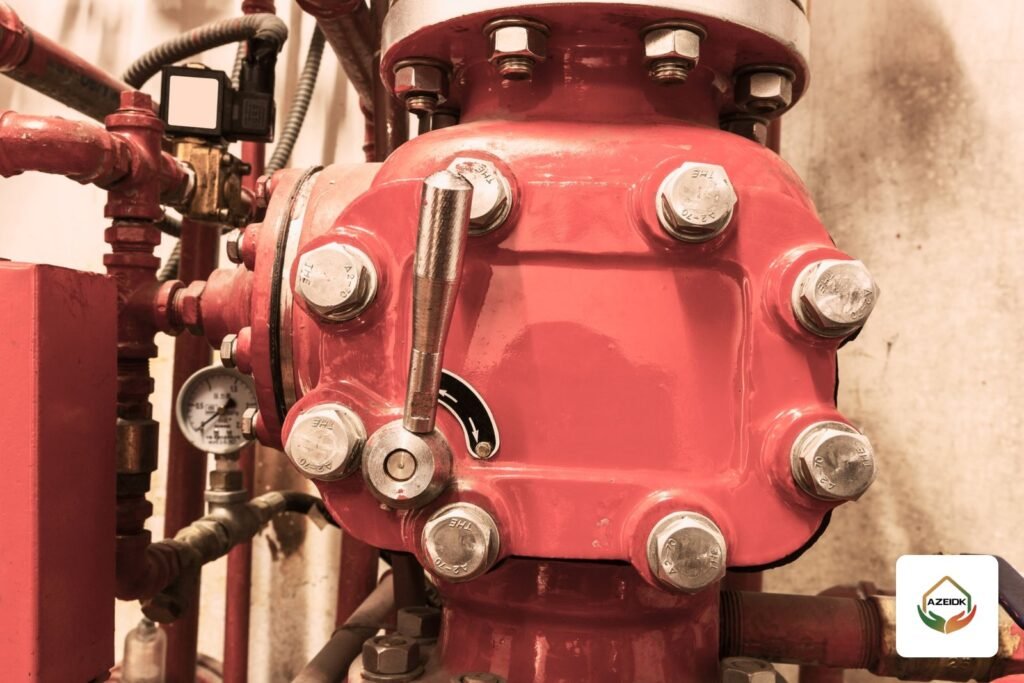
A sprinkler alarm gong, or water motor gong, is a mechanical bell mounted on the outside wall near the alarm valve station that rings under the power of the water itself whenever a sprinkler operates, with no electricity at all. It takes water from the alarm port of the wet alarm check valve, which spins a small turbine that drives a hammer against the gong for as long as water flows. That is why some consultants specify it on sprinkler fire fighting systems, alongside the pressure switch or flow switch that signals the fire alarm panel. This article covers how it works, how it ties in with the alarm valve and retard chamber, and when it is specified instead of, or together with, an electric bell.
Key takeaways
- A sprinkler alarm gong is driven by water flowing in the alarm line. It needs no power and keeps ringing while the valve is open.
- It is fed from the alarm port of a wet alarm check valve such as the AFC ACV-300, usually through a retard chamber that stops false alarms from pressure surges.
- The gong needs a minimum pressure at its nozzle to ring continuously, a strainer on the alarm line and a drain that discharges to an open drain.
- It is tested by opening the alarm test valve without operating any sprinkler. NFPA 25 requires mechanical waterflow alarm devices to be tested quarterly.
- An electric bell is driven by the pressure or flow switch through the fire alarm panel, and many projects use both.
In this article
- What is a sprinkler alarm gong?
- How does the gong work with a wet alarm check valve?
- The role of the retard chamber and alarm test valve
- Sprinkler alarm gong installation requirements
- When is a sprinkler alarm gong specified instead of an electric bell?
- Water motor gong compared with an electric bell
- Testing, maintenance and common gong faults
- Frequently asked questions
- Conclusion
What is a sprinkler alarm gong?
On site it is usually called the “water gong” or just the “gong”. The technical name is water motor alarm. It has three parts: the water motor housing, fixed on the inside face of the wall; a drive shaft that passes through the wall; and the gong with its striker on the outside.
Its job is simple: to tell people outside that the sprinkler system is operating and water is flowing. That matters in warehouses and facilities that are empty at night, on sites where the fire alarm panel is not monitored, and during a power cut, because the gong does not depend on any power source.
How does the gong work with a wet alarm check valve?
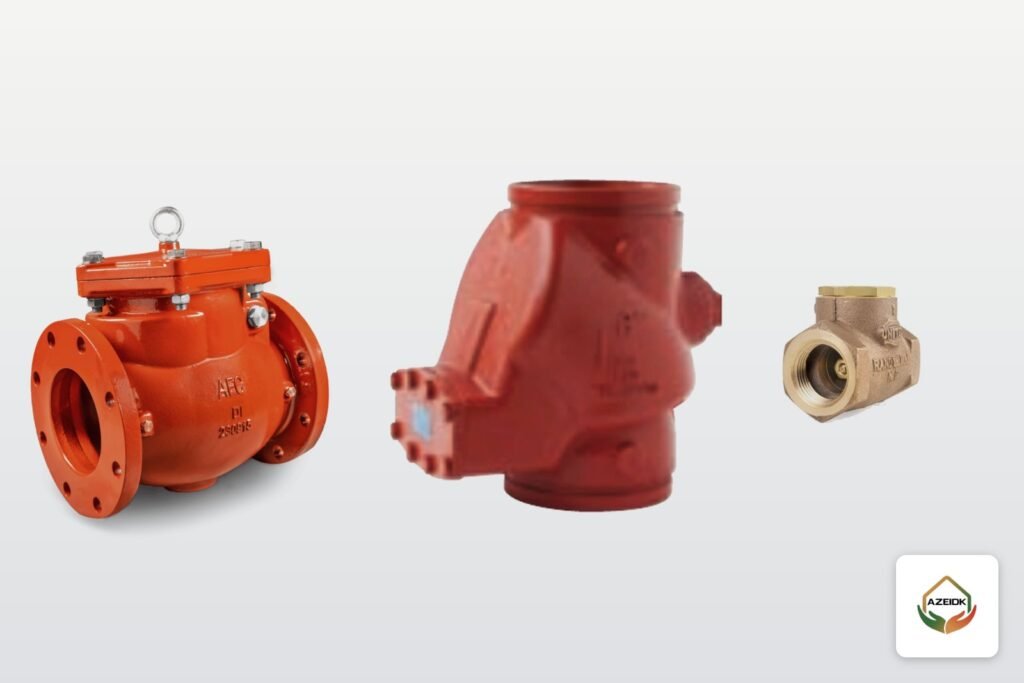
In a wet system, the pipes are full of water at all times and the alarm valve clapper stays closed. When a sprinkler opens, water starts to flow, the clapper lifts and part of the flow enters the alarm port in the valve body. The AFC ACV-300 wet alarm check valve article explains this in detail.
From the alarm port, water runs along the alarm line to the retard chamber, if fitted, then to the pressure switch and the water motor gong. According to the datasheet of one well-known water motor alarm (Viking F-2), water passes through a strainer to a nozzle that turns it into a pressurised jet. The jet spins an impeller, the impeller turns the drive shaft, and the shaft rotates the striker arm that hits the gong. The same datasheet says at least 5 psi is needed at the nozzle for a continuous alarm and that a properly installed unit produces the required 90 dB output.
The gong keeps ringing as long as the clapper stays open. When the system is shut down and pressure is restored, the water left in the alarm line drains through the small drain orifice and the gong stops.
The role of the retard chamber and alarm test valve
Where supply pressure fluctuates, for example when a large pump starts or mains pressure changes, the clapper may lift slightly and let a little water into the alarm line. If that water went straight to the gong, it would ring with no fire. The retard chamber prevents this: a cylinder that fills first and drains small amounts before they reach the gong and pressure switch. The AFC ACV-300 wet alarm check valve page quotes the operating manual: a delay of 5 to 60 seconds and a drain time of under 5 minutes.
The alarm test valve is part of the valve trim. Opening it sends supply water straight to the gong and pressure switch without moving the clapper or operating any sprinkler, so you can confirm that the gong rings and that the signal reaches the fire alarm panel.
Sprinkler alarm gong installation requirements
The exact details come from the datasheet of the gong approved for the project and from the valve trim drawing. Manufacturers’ datasheets generally agree on the points below. The figures shown are from the Viking F-2 datasheet, as an example:
- Location: on the exterior wall closest to the valve station, where it is easy to reach for cleaning.
- Alarm line: pipe of at least 3/4 in (20 mm), in a corrosion-resistant material such as galvanized steel or brass.
- Strainer: a 3/4 in strainer on the alarm line, as close as possible to the valve alarm outlet or the retard chamber outlet.
- Drain: a 1 in drain outlet facing down and discharging to an open drain. A long drain line or one with many elbows drains slowly and delays the alarm.
- Wall thickness: the standard drive shaft suits walls up to about 14 in, and an extension shaft is available for thicker walls.
In Saudi conditions, watch the exposed drain line and keep the gong away from vehicle routes and parking where it could be hit. Make sure the people who will hear it outside know what it means.
When is a sprinkler alarm gong specified instead of an electric bell?
According to NFPA 13, as summarised by the National Training Center, a local waterflow alarm is required on every sprinkler system with more than 20 sprinklers. It can be a water motor gong or an electrically operated notification appliance driven by a waterflow detection device. The International Fire Code (IFC, Section 903.4.2) also requires an approved audible device on the exterior of the building connected to the sprinkler system; on a Saudi project, refer to the matching clause of SBC 801, which is based on the IFC. Neither names the water gong specifically. The choice is left to the designer and the approving authority.
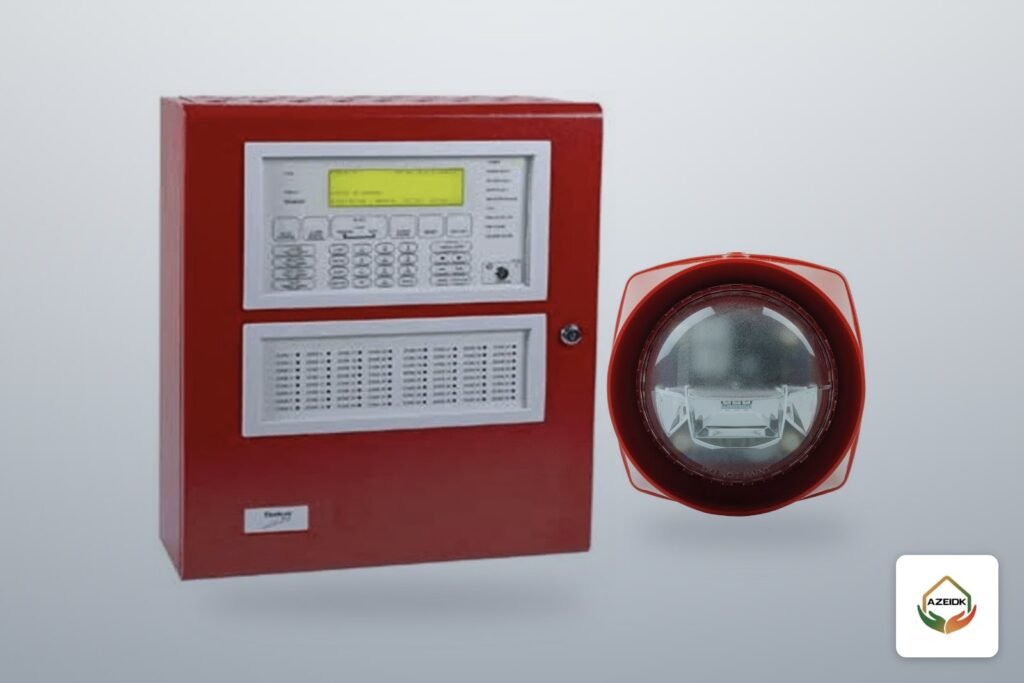
An electric bell such as the Context Plus 6-inch fire bell (CP250BR) runs on 24 V and gives 95 dB at 1 m according to the product page. It is driven by the fire alarm panel from a signal from a Potter VSR flow switch or the valve pressure switch. Its advantage is that it is part of the fire alarm logic and can be supervised. If it is mounted outdoors, it must be suitable for outdoor use, and the product page notes that an IP65 version is available.
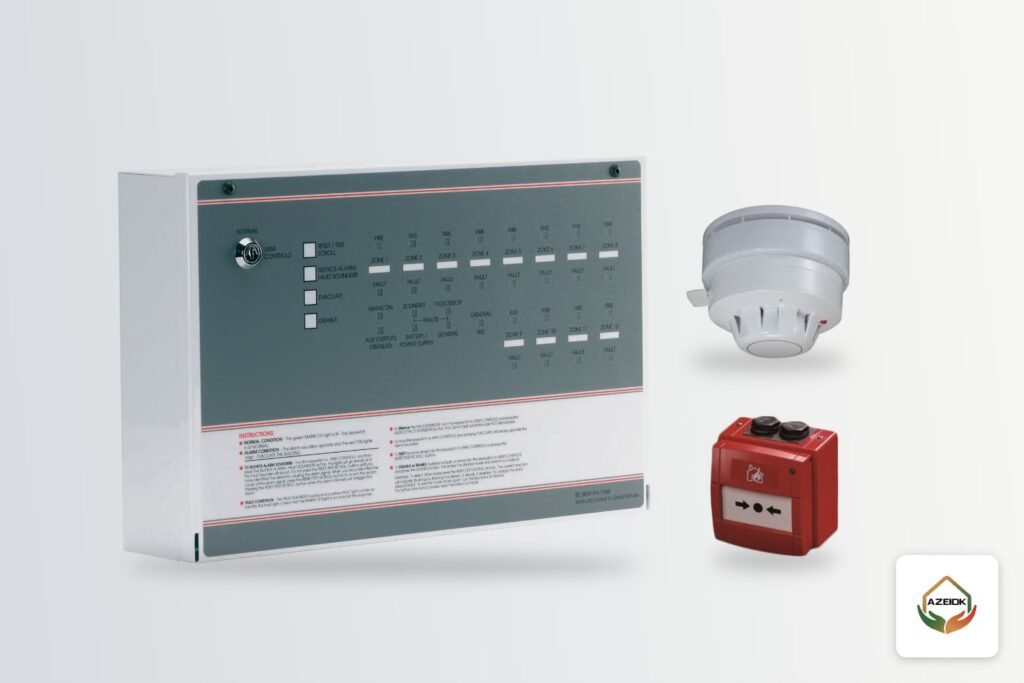
The water gong is usually preferred for facilities without a fire alarm panel monitored around the clock, for sites that want an alarm that works during a power cut, and where the consultant’s specification calls for the complete valve trim as shown in the manufacturer’s drawing. Many projects use both: the water gong outside, and a pressure or flow switch wired to the fire alarm panel inside. For how flow switches connect to an addressable panel, see the article on switch monitor modules for flow switches and valves.
Water motor gong compared with an electric bell
| Item | Sprinkler alarm gong (water motor) | Electric bell |
|---|---|---|
| Power source | Water flow from the alarm line | 24 V from the fire alarm panel |
| During a power cut | Works | Depends on the panel batteries |
| Link to the fire alarm system | Sends no signal, needs a separate pressure switch | Part of the panel circuits |
| Location | Exterior wall near the valve station | Indoor or outdoor, depending on its protection rating |
| Maintenance | Clean the strainer, nozzle and drain line | Test the circuit and the bell |
| Test frequency under NFPA 25 | Quarterly (mechanical device) | Depends on the initiating device: flow and pressure switches semiannually |
Testing, maintenance and common gong faults
Under the NFPA 25 frequency table, as summarised in NICET study guides, mechanical waterflow alarm devices, including water motor gongs, are tested quarterly, and vane-type and pressure switch waterflow devices semiannually. The test is normally run from the alarm test valve or the inspector’s test and drain, after notifying the building manager and the monitoring station. The NFPA 25 guide covers the other periodic checks.
Common faults and their causes:
- The gong does not ring, or rings weakly: a blocked strainer or nozzle, or a closed alarm line valve.
- The gong rings intermittently: binding in the drive shaft or a sticking striker.
- The gong is slow to ring: a long drain line with many elbows, or a retard chamber that needs cleaning.
- The gong rings with no fire: supply pressure surges with no retard chamber or with blocked chamber orifices, or a leak on the system side.
These checks are part of AZEIDK’s fire system maintenance contracts.
Frequently asked questions
What is a sprinkler alarm gong?
A mechanical bell driven by water flowing from the alarm line of the alarm valve. It rings on the outside wall whenever a sprinkler operates, with no electricity.
Is a water motor gong mandatory?
NFPA 13 and the International Fire Code require a local or exterior waterflow alarm, which can be a water gong or an electric appliance. The approved design and the project’s approving authority decide which.
Why does the fire alarm gong ring when there is no fire?
The most common cause is supply pressure surges with no retard chamber, or with its orifices blocked. A leak on the system side or air trapped in the pipes can also cause it.
How do I test the sprinkler gong without operating sprinklers?
Open the alarm test valve on the valve trim. Supply water goes straight to the gong and pressure switch. Check that the gong rings and the panel receives the signal, then return the valve to its normal position.
Does a water gong replace the pressure switch or flow switch?
No. The water gong sends no signal to the fire alarm panel, so a pressure switch on the alarm line or a flow switch on the system is still needed to pass the signal to the fire alarm system.
Where should a sprinkler alarm gong be installed?
On the exterior wall closest to the alarm valve station, with a short alarm line, a strainer and a drain to an open drain, in a spot that is easy to reach for cleaning.
Conclusion
The sprinkler alarm gong is a simple device that runs on water alone and gives a continuous outdoor alarm while the system flows, even without power. It works well when it sits close to the alarm valve with a retard chamber, a clean strainer and a sound drain line, and it is backed by a pressure or flow switch that ties the event to the fire alarm panel. AZEIDK supplies the AFC ACV-300 wet alarm check valve and its trim, electric bells and flow switches, with installation, testing and maintenance.
Setting up an alarm valve station or reviewing its trim? Send us the system drawing and project specification, and our team will go through the trim you need. Talk to the AZEIDK team