Furniture showroom fire safety starts from one fact: modern sofas and mattresses made of foam and synthetic fabrics burn very fast. In 2020 tests by UL’s Fire Safety Research Institute (UL FSRI), rooms furnished with synthetic furniture reached flashover in roughly 3 to 5 minutes. A showroom’s protection therefore depends on early detection, a sprinkler system where the code and design require it, and clear exit routes between the displays.
For the steps to obtain the Salamah certificate from Civil Defense on the Salamah platform, see our guide; our page on Saudi Civil Defense requirements covers the general requirements for buildings and facilities.
This article explains why showroom fires grow so fast, when a sprinkler system is needed, how to design the fire alarm for a large display hall and what owners should check in the attached store. It belongs to our malls and commercial buildings sector page and differs from our article on furniture factory fire protection, which covers manufacturing and wood dust.
Key Points
- In UL FSRI tests (September 2020), synthetic-furnished rooms reached flashover between 3:20 and 4:50 minutes, while natural-furnished rooms took about 30 minutes or more.
- For reference only: the International Fire Code (IFC), as adopted in Washington State for example, requires sprinklers in Group M occupancies used to display and sell upholstered furniture or mattresses above 5,000 sq ft (464 m²). This is a foreign reference value, not a Saudi requirement; the binding rules are the Saudi Fire Code (SBC 801) and Civil Defense approval.
- A large high-ceiling display hall needs a carefully designed detection layout; beam detectors may suit it.
- Large display pieces and canopy beds can obstruct ceiling sprinklers, so displays are reviewed whenever they change.
- An attached store full of plastic-wrapped, stacked furniture carries a higher fire load than the showroom itself.
In this article
- Why do furniture showrooms burn so fast?
- Do furniture showrooms need sprinklers?
- Furniture showroom fire safety: alarm design
- Extinguishers in the showroom and store
- Display aisles and exits
- The attached store: the highest fire load
- CCTV
- Checklist before opening and after every display change
- Maintenance
- FAQ
- Summary
Why do furniture showrooms burn so fast?
Modern upholstered furniture relies on polyurethane foam and synthetic fabrics, which release heat quickly as they burn, so a fire grows from one piece to the whole room in minutes. On 30 September 2020 UL FSRI published experiments comparing identical rooms, one with natural furnishings and one with synthetic:
| Experiment | Natural furnishings | Synthetic furnishings |
|---|---|---|
| 1 | 29:30 min | 3:40 min |
| 2 | Over 30 min | 4:45 min |
| 3 | Over 30 min | 3:20 min |
| 4 | Over 30 min | 4:50 min |
The tests used residential rooms, but the lesson for a showroom is plain: the hall holds dozens of similar pieces close together, sometimes wrapped in plastic. Time for detection and evacuation is short and leaves no room for a faulty detector or a blocked exit.
Do furniture showrooms need sprinklers?
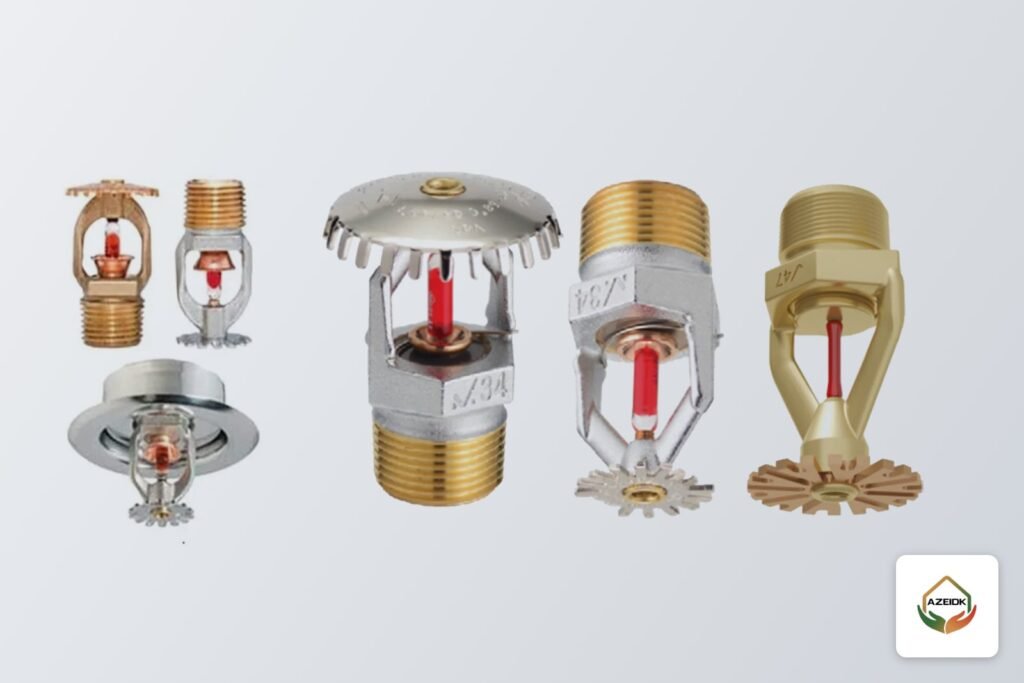
As a foreign reference only: in the International Fire Code (IFC), as shown in Section 903.2.7 as adopted in Washington State, an automatic sprinkler system is required for Group M (mercantile) buildings in cases including a Group M fire area over 12,000 sq ft (1,115 m²), or a Group M occupancy used to display and sell upholstered furniture or mattresses that exceeds 5,000 sq ft (464 m²). In other words, that foreign code holds a furniture showroom to a much lower area threshold than an ordinary shop because of what it sells. Treat these figures as reference, not as a requirement for a project in Saudi Arabia.
In Saudi Arabia the references are the Saudi Fire Code (SBC 801) and the Saudi Building Code (SBC 201). The engineering office determines in the design whether the showroom needs sprinklers and at what hazard class and density, and Civil Defense reviews this for the Salamah certificate. Do not assume a small showroom is exempt, or that an existing building’s sprinklers are enough once the use changes to furniture.
- Obstructions: canopy beds, tall wardrobes, hanging shelves and suspended signage can block the spray from reaching the floor; review them against the obstruction rules of NFPA 13 when designing displays.
- Decorative ceilings: open-grid or timber feature ceilings can change how a sprinkler performs, so show them to the designer before installation.
- Mezzanines: intermediate display floors need sprinklers below and above as the design requires.
- Display changes: every major re-layout means a quick check of what sits under the sprinklers.
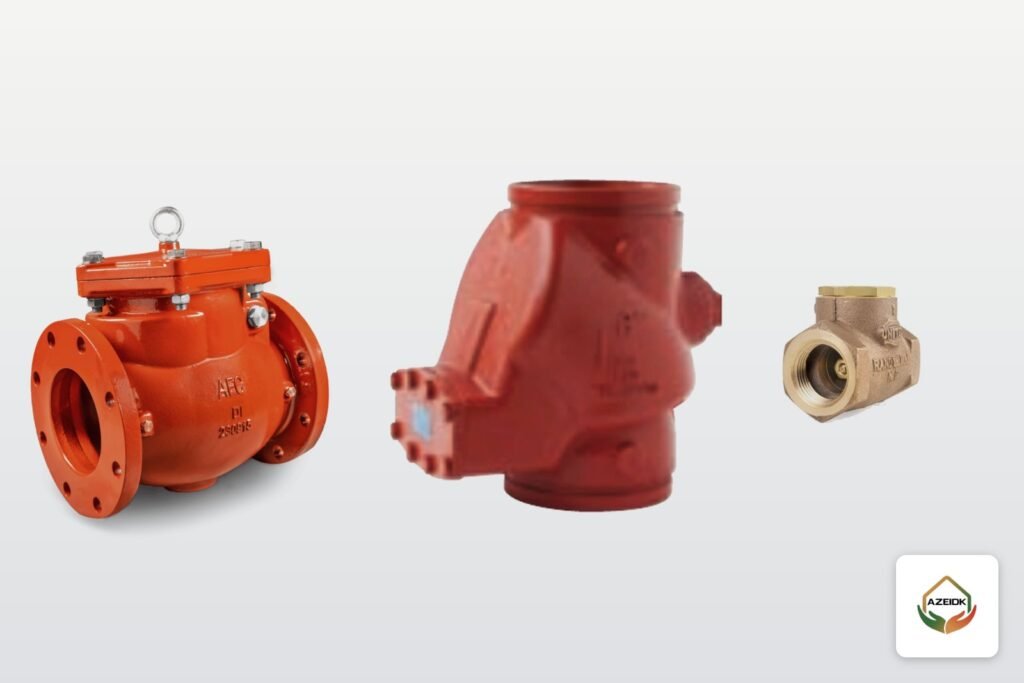
For the differences between system types, see our article on wet, dry and pre-action sprinkler systems. AZEIDK supplies TYCO and Victaulic sprinklers and AFC valves through its firefighting systems offering, along with design and installation.
Furniture showroom fire safety: alarm design
- Early detection comes first because fire development time is short. Optical smoke detectors suit a clean display environment.
- High ceilings: in tall halls the designer may choose beam smoke detectors that cover a long distance with one device, such as the SFP-CBM-100M conventional beam detector.
- An addressable panel for large and multi-floor showrooms, naming the device location across display sections and the store. AZEIDK supplies Context Plus addressable panels in single and multi-loop options.
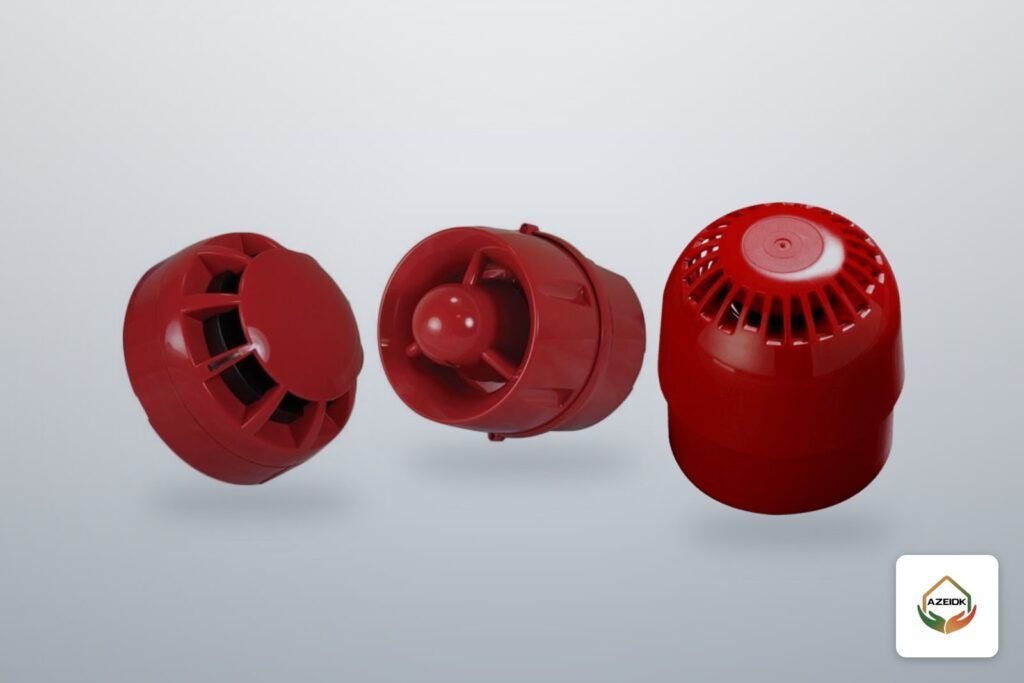
- Sprinkler flow switches wired to the alarm panel so the operator knows a sprinkler has operated.
- Audible alarm covering the hall, store and offices, with manual call points at exits.
Extinguishers in the showroom and store
| Area | Expected fire | Usual extinguisher |
|---|---|---|
| Display hall | Foam, fabric and wood | ABC dry powder or water/foam for solid-material fires |
| Mattress section | Dense foam | ABC dry powder or foam |
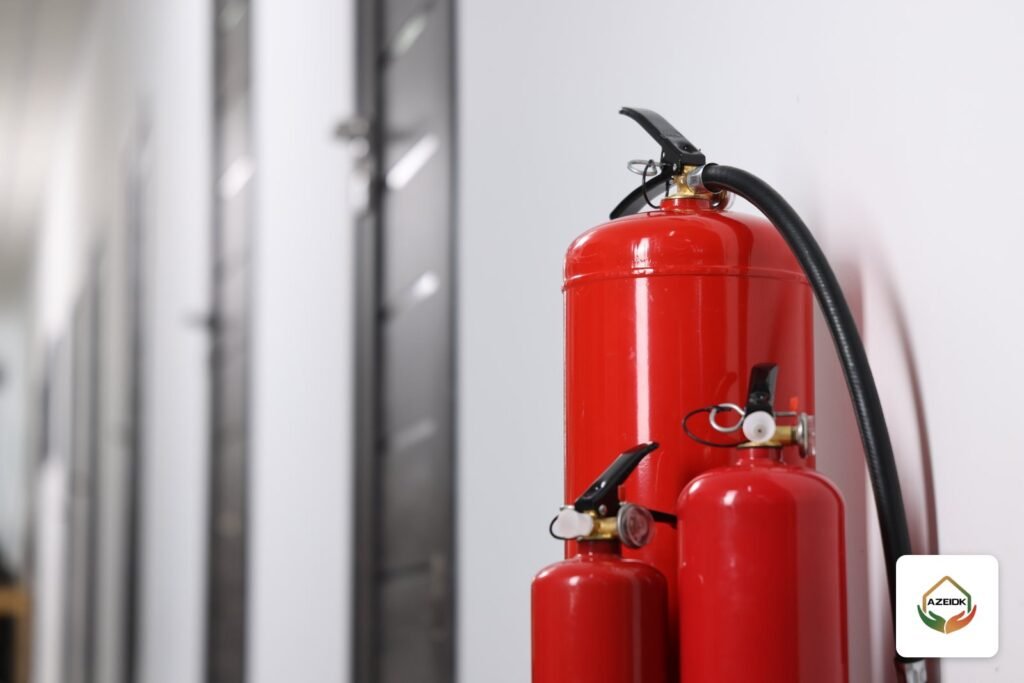
| Attached store | Wrapped furniture and cartons | ABC dry powder; wheeled units in large stores as the design sets |
| Electrical boards and display lighting | Electrical fire | CO2 |
Within its fire extinguisher range, AZEIDK supplies Falcon Gold dry powder units, 6 and 12 litre foam units, wheeled units (25 kg powder; 25 and 50 litre foam) and CO2 units. Fire hose cabinets complete the protection in large showrooms where the design calls for them.
Display aisles and exits
- Straight main aisles leading to exits, not narrowed by extra pieces during sales and seasons.
- Illuminated exit signs visible above tall displays and emergency lighting along aisles; see our article on emergency lighting and exit signs.
- Store doors and rear exits kept clear of incoming deliveries.
- No wrapped furniture stored in aisles or under stairs.
The attached store: the highest fire load
Many showrooms keep a store behind the hall or in a basement, with plastic-wrapped sofas and mattresses stacked close to the ceiling, plus cartons and timber. That space often carries a higher fire load than the showroom. Watch for:
- The clearance between the top of storage and ceiling sprinklers set by the design.
- No battery charging, heaters or plastic-wrap heat sealers near stacked furniture.
- Separating the store from the hall with a wall and fire-rated door where the design requires; AZEIDK supplies Falcon Gold fire-rated doors.
For large standalone stores see our warehouses and logistics sector page.
CCTV
Cameras in a furniture showroom cover the entrance, cashier, main display sections, loading area and store, tracking stock movement and showing how any incident began. AZEIDK supplies Hikvision and Dahua cameras and recorders through its security and surveillance systems.
Checklist before opening and after every display change
- The designer has reviewed sprinkler need for the area and use.
- No displays, canopies or hanging signs blocking sprinklers.
- Detectors cover the hall, store and mezzanine; alarm panel fault-free.
- Flow switches and sprinkler valves supervised and wired to the alarm panel.
- Extinguishers visible and in place, tags up to date.
- Main aisles straight and clear, exit signs visible.
- Store organised, nothing stored in aisles.
Maintenance
Sprinkler and alarm systems need periodic inspection and testing, and extinguishers a monthly check. AZEIDK provides preventive and periodic maintenance contracts for firefighting, alarm systems and extinguishers with its own team, and Civil Defense approval support before issuing or renewing the Salamah certificate.
FAQ
Does a furniture showroom need fire sprinklers?
The design decides under the Saudi code based on area and use. For reference only, the International Fire Code (IFC) sets a special 464 m² threshold for upholstered furniture and mattress sales; it is not a Saudi requirement, and SBC 801 and Civil Defense remain binding.
Why do furniture fires grow so fast?
Foam and synthetic fabrics release heat quickly. In UL FSRI tests, synthetic-furnished rooms reached flashover in roughly 3 to 5 minutes.
Which detector suits a high-ceiling showroom?
The designer may choose beam smoke detectors that cover long distances, or point detectors depending on height and area.
Do display pieces affect sprinklers?
Yes. Canopy beds, tall wardrobes and hanging signs can block the spray; the designer reviews them when displays are planned and changed.
Which extinguisher suits a furniture showroom?
ABC dry powder or foam for solid-material fires in the hall and store, and CO2 for electrical boards.
Does the attached store need separate protection?
It often carries a higher fire load than the hall, so the design covers it with detection, sprinklers and extinguishers and may require a fire-rated door.
Summary
Furniture showroom fire safety means preparing for a fire that develops in minutes. Review sprinkler need with the designer, design early detection for a large hall, keep aisles straight and exits visible, and treat the attached store as the highest-risk point.
Opening a furniture showroom or converting an existing shop? Send us the layout with hall and store areas and we will review sprinklers, fire alarm and extinguishers with you, with datasheets. Contact the AZEIDK team
Related guides
- Voice Evacuation in Makkah Hotels and Pilgrim Housing: Multilingual Messages and Peak Crowds
- Voice Evacuation in Sports Halls and Covered Arenas: Clarity Against Reverberation, Speaker Layout and Fire Alarm Link
- Cold Storage Fire Protection: Challenges and Solutions
- Lithium Battery Storage in Warehouses and E-Scooter Shops: Thermal Runaway Risk and Protection